Almost nobody starts looking for Linktree alternatives because the links stopped working. They start looking because of the logo. Linktree puts its own branding on every free page, and the plan that removes it is the third one up, at 12 dollars a month billed annually. That is 144 dollars a year to take a logo off a page with eight links on it.
So the honest way to compare these tools is to line up what each one charges for the same thing: a page that looks like yours, on a domain you control, without someone else’s name at the bottom. Every price below was taken from the vendor’s own pricing page on 17 September 2026, in US dollars. Two of the best known alternatives are also no longer independent tools, which is covered further down.
What Linktree Charges Before You Compare Anything
The Linktree pricing page lists a free plan plus three paid tiers. Starter is 6 dollars a month billed annually, or 8 dollars if you pay monthly, and it adds basic analytics and the ability to sell digital products with a 9 percent fee. Pro is 12 dollars a month annually, or 15 monthly, and this is the tier that removes Linktree branding and unlocks custom themes, fonts and layouts. Premium is 30 dollars a month annually, or 35 monthly, and drops the seller fee to zero.
Two numbers matter for the comparison. The first is 144 dollars a year, which is the real annual cost of a Linktree page with no Linktree logo on it. The second is 9 percent, which is what Starter takes from anything you sell. Hold those next to the tools below and the gaps get obvious quickly.
Six Linktree Alternatives Worth Moving To
These are ordered by how differently they approach the problem, not by a score. Each one is better than Linktree at something specific and worse at something else, so read the fit line rather than the price alone.
1. Carrd, the Cheapest Way to Lose the Branding
Carrd is not a link-in-bio tool. It is a one-page website builder, which turns out to be the same thing with more control. The free account gives you three sites on a carrd.co subdomain with Carrd branding. Pro Lite is 9 dollars a year and removes the branding. Pro Standard is 19 dollars a year and adds custom domains with SSL, forms, embeds, analytics and meta tags across 10 sites. Pro Plus is 49 dollars a year for 25 sites, password protection, redirects and downloadable site files.
Put that against Linktree Pro. Carrd asks 19 dollars a year for a branding-free page on your own domain. Linktree asks 144 dollars a year for a branding-free page on theirs. The catch is real though: Carrd hands you a blank canvas and a drag-and-drop editor rather than a template with your links already stacked. If you want something live in four minutes, this is the wrong tool. If you want something that looks like a site rather than a list, it is the right one.
Carrd also runs a 7-day Pro trial that does not ask for a card, which is unusual enough to be worth using before you commit.
2. Beacons, the Most Generous Free Plan If You Sell Anything
Beacons is built around creators who make money rather than creators who collect clicks. The free plan includes a customisable link in bio, unlimited digital product sales at a 9 percent seller fee, affiliate links, a media kit that updates itself and 50 email sends a month. Linktree charges 6 dollars a month for the equivalent selling ability at the same 9 percent.
Creator is 8.33 dollars a month on the annual plan, which works out at 100 dollars a year, and it adds a free custom domain, custom domain URLs for your store products and 500 email sends a month. Creator Plus at 25 dollars a month, or 300 a year, drops the seller fee to zero, lets you keep 100 percent of affiliate commissions and adds unlimited courses and memberships. Creator Max is 75 dollars a month.
The maths is simple. If you sell nothing, Beacons is a decent free page. If you sell steadily, the jump from 9 percent to 0 percent at 300 dollars a year pays for itself somewhere around 3,300 dollars of annual sales, and every dollar after that is yours.
3. Campsite.bio, Built for Running Several Profiles at Once
Campsite.bio splits its pricing into Personal and Organizations, which tells you who it is for. On the personal side, Free covers unlimited links and customisation, Pro is 7 dollars a month and adds multiple profiles from one account, in-depth analytics covering views, clicks, referrers and geography, opt-in forms, tracking pixels and a custom domain. Pro Plus is 24 dollars a month for six profiles, four collaborators, lifetime analytics and CSV export.
The organisation tiers are 14 and 29 dollars a month and swap collaborators for proper member management, which matters when the person who built the page leaves. Every paid plan comes with a 10-day trial. If you run bio links for more than one account, this is the tool where that stops being a stack of separate logins.
4. Taplink, When the Page Needs to Take Bookings and Payments
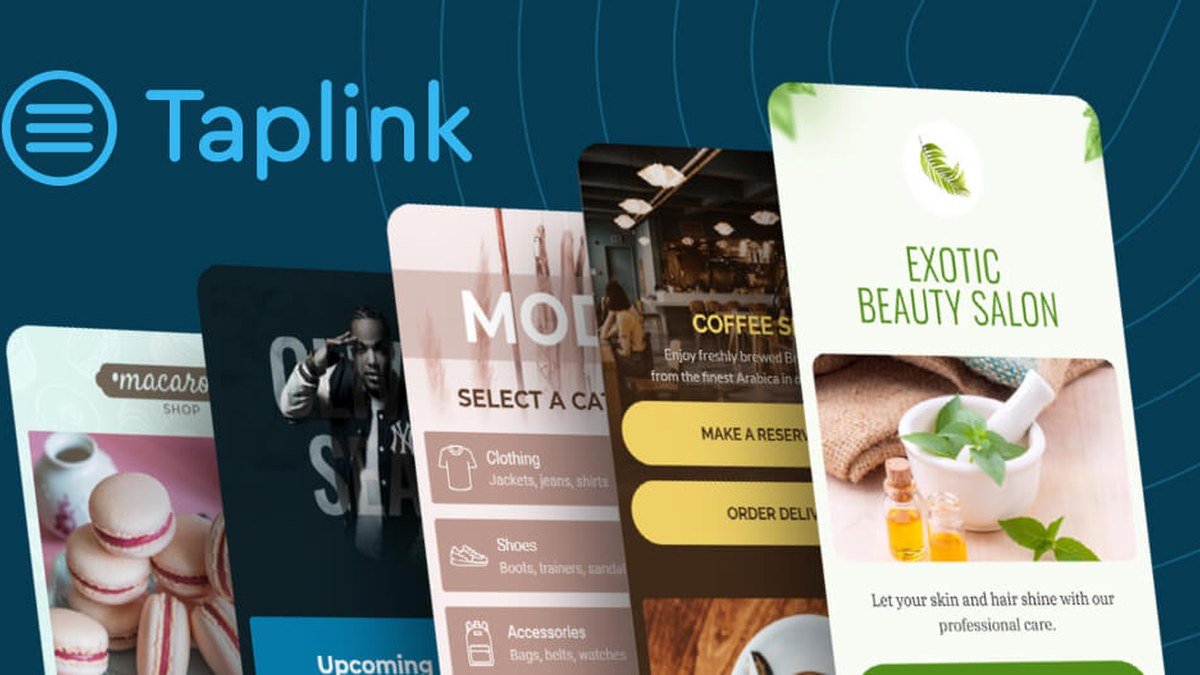
Taplink is aimed at salons, tutors, coaches and small shops rather than influencers, and the feature list shows it: application forms, price lists, payment acceptance, a small CRM, automated emails, countdown timers and scheduled blocks. The Basic plan is permanently free and covers unlimited links, custom design, maps, page view statistics and a QR code.
PRO is 4 dollars a month on the 12-month term, which is 48 dollars a year, and adds professional templates, media blocks, price lists, custom HTML and click analytics. BUSINESS is 8 dollars a month, or 96 a year, and that is the tier that carries the things a small business actually needs: payments, lead capture forms, a custom domain with an SSL certificate, and removal of Taplink branding.
At 96 dollars a year for branding removal plus a custom domain plus checkout, Taplink undercuts Linktree Pro by nearly 50 dollars while doing considerably more. The trade is design polish. Taplink pages look functional rather than beautiful.
5. Bio.link, One Plan Instead of a Tier Puzzle
Bio.link has taken the opposite approach to everyone else on this list. Rather than four tiers with features fenced off between them, the site presents a single plan at 7.49 dollars a month with a free trial, and everything is in it: unlimited sites and visitors, a custom domain, full white-label with no Bio.link branding, built-in analytics and SEO, an email list and newsletter builder, publishable posts and an AI chat assistant. The company says more than 1.5 million people use it.
Its own pricing page makes the argument by listing what each piece would cost separately and putting the total at 84 dollars a month. Treat that as marketing rather than arithmetic, but the underlying point holds: at 7.49 a month you are not going to hit a paywall halfway through setting the page up. The thing to check before committing is that the page shows one paid plan and a trial rather than a free forever tier, so budget for it.
6. Milkshake, the One You Build on Your Phone
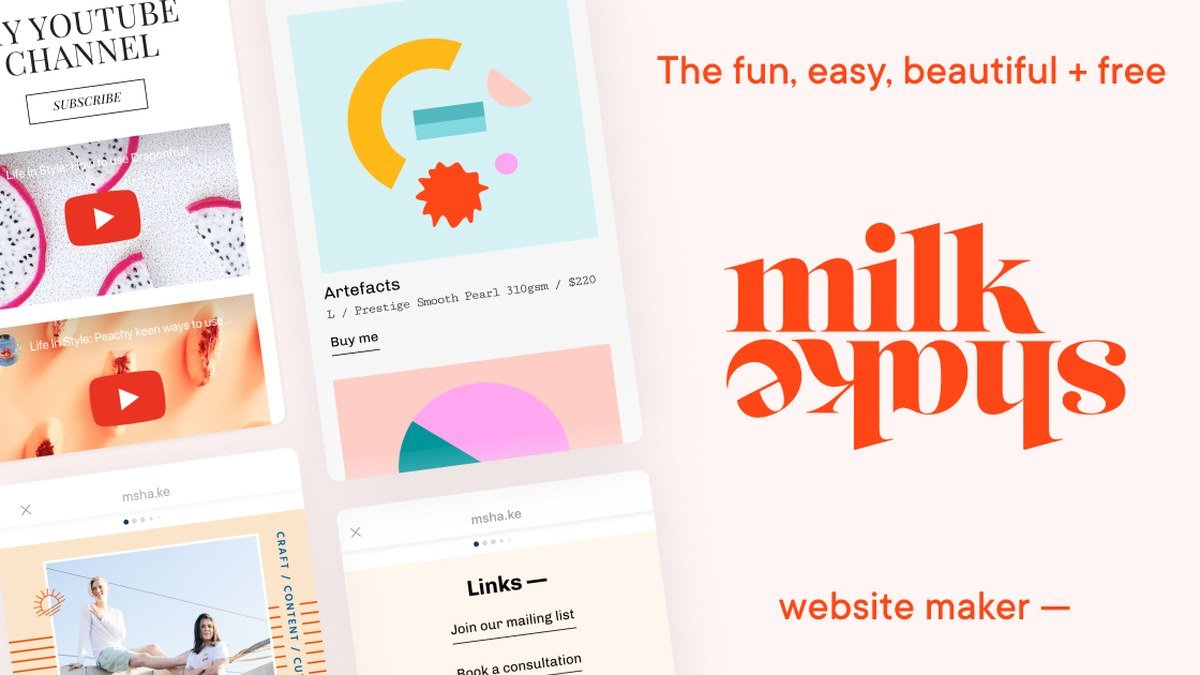
Milkshake is free and it is an app, not a website you log into on a laptop. You build the page on your phone, in portrait, with your thumbs, which sounds like a limitation and is actually the point: the people clicking your link are on phones, and so is the person making it. It is published by Codelbee and sits in the Productivity category on the App Store, rated 4.9 from more than 14,700 ratings, and carries 4.6 from over 29,000 ratings on Google Play with more than a million downloads.
Milkshake makes the most sense as a second opinion rather than a main tool. If you have twenty minutes on a train and want a page that looks designed rather than assembled, it will get you there faster than anything else here. If you need analytics, a custom domain or a checkout, look at one of the five above instead.
Price Comparison at a Glance
| Tool | Free plan | Cheapest paid plan | Custom domain included on |
|---|---|---|---|
| Linktree | Yes | Starter, $6/mo billed annually ($8 monthly) | Not stated on the pricing page |
| Carrd | Yes, 3 sites | Pro Lite, $9/year | Pro Standard, $19/year |
| Beacons | Yes | Creator, $8.33/mo ($100/year) | Creator |
| Campsite.bio | Yes | Pro, $7/mo | Pro |
| Taplink | Yes, permanently | PRO, $4/mo ($48/year) | BUSINESS, $8/mo ($96/year) |
| Bio.link | Free trial | $7.49/mo | Included |
| Milkshake | Yes, free app | No paid tier advertised | Not stated |
Prices were read from each vendor’s own pricing page on 17 September 2026 and are shown in US dollars. Annual and monthly rates differ on most of these tools, so the figure you see at checkout depends on the term you pick.
Two Alternatives You Will Still See Recommended That No Longer Exist
Plenty of lists still name Bento and Linkpop. Both are gone, and it is worth knowing why before you spend an afternoon signing up for one.
- Bento was the design-led favourite for a couple of years. Type bento.me into a browser today and it returns a 301 redirect straight to linktr.ee. Linktree owns it, which means the tool people recommended as the Linktree alternative now is Linktree.
- Linkpop was Shopify’s free link-in-bio product with native checkout. linkpop.com now 301 redirects to shopify.com. There is no product page left to read.
Both redirects were checked on 17 September 2026. The wider lesson is that this category consolidates fast, which is an argument for picking tools that let you point a domain you own at the page. If the tool dies, you move the domain and your printed QR codes still work.
Moving Off Linktree Without Losing Traffic
The switch itself takes about twenty minutes. The part people get wrong is the order.
- Build the new page first and leave it unpublished or on a temporary URL. Do not cancel anything yet.
- Copy every link across, including the ones buried at the bottom that you forgot were there. Open each one.
- If you are using a custom domain, point it at the new tool and wait for the SSL certificate to issue. This is the step that takes real time, usually minutes but occasionally hours.
- Update the URL in every bio you control: Instagram, TikTok, YouTube, X, your email signature, your invoices. Make a list before you start or you will miss two of them.
- Leave the Linktree page live for a fortnight with a single link at the top pointing at the new page.
- Only then downgrade or delete the Linktree account.
One thing worth doing while you are in there: if the page is going to handle payments or logins, take a moment on the account security for whichever tool you pick. A bio link is a public front door to everything you do, and it is usually protected by the oldest password in your collection.
Frequently Asked Questions
What is the cheapest way to remove Linktree branding?
Not on Linktree. Its own branding removal sits on the Pro plan at 12 dollars a month billed annually, which is 144 dollars a year. Carrd removes its branding on Pro Lite at 9 dollars a year, and adds a custom domain at 19 dollars a year on Pro Standard. That is the largest gap on this list by a wide margin.
Which Linktree alternative has the best free plan?
Beacons if you sell things, because the free tier includes unlimited digital product sales at a 9 percent fee plus affiliate links and a media kit. Taplink if you do not, because its Basic plan is described as permanently free and still covers unlimited links, custom design, maps and a QR code. Campsite’s free plan sits between the two.
Do I need a custom domain for a link in bio page?
You do not need one, but it is the only thing on this page that protects you from the tool closing or being bought. Everything else is a feature. A domain you own is an address you keep, and the redirects at bento.me and linkpop.com are what happens to people who did not have one. The same logic applies to anything you publish, which is part of why platform income is worth treating as rented rather than owned.
Is a link in bio page bad for SEO?
It is neutral for your own site and mildly negative for the bio page itself, because a page that is almost entirely outbound links has very little for a search engine to rank. That is not a reason to avoid one. It is a reason not to expect the page to pull search traffic, and to point the links at pages that can.
Can I use more than one of these at the same time?
Yes, and quite a few people do. A common split is a Carrd page on a custom domain for anything permanent and a free Beacons or Taplink page for a campaign that runs for six weeks. Nothing in any of these terms stops you, and running the second one free costs nothing but the setup time.