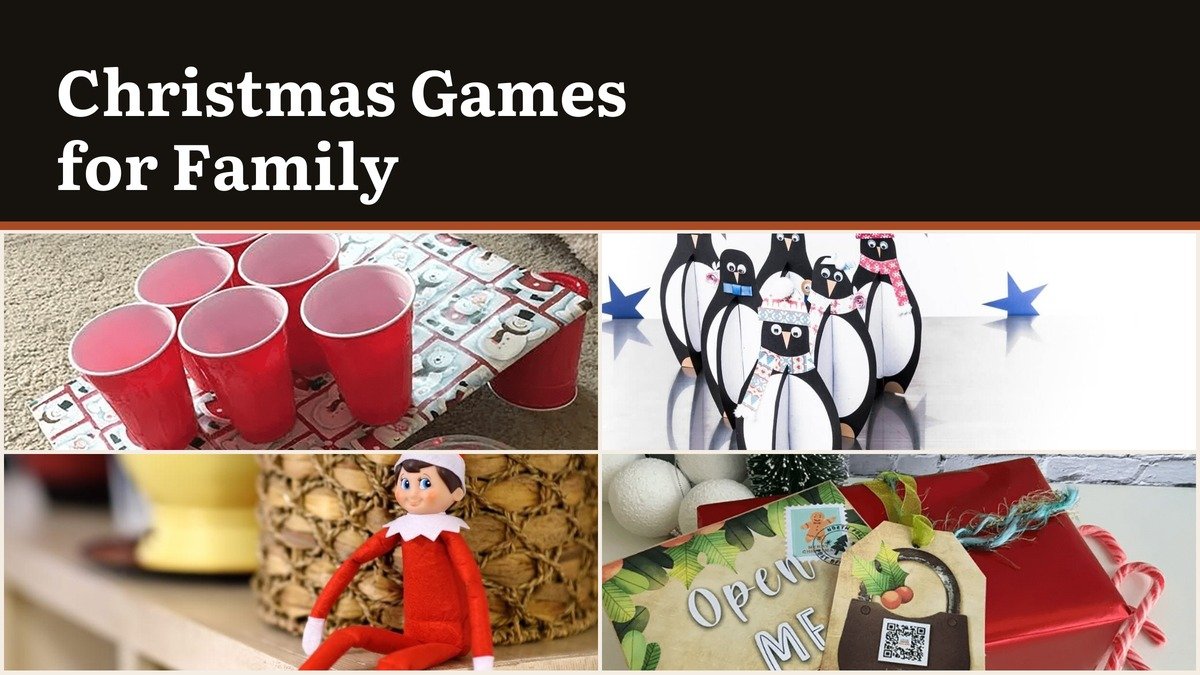
Good Christmas games for family nights share three traits: simple rules, supplies from around the house and a winner a five-year-old can be. They run from a hunt for candy canes to a gingerbread contest, and each needs only a few players, a few supplies and a short stretch of the evening.
Christmas Day 2026 is Friday, December 25, so Thursday, December 24 is the family evening most households fill. The games are sorted by what they ask of the players: hunting, throwing and racing, or sitting around one table.
Which Christmas Games Work for a Mixed-Age Family?
Hunts, toss games and the gift swap work best for mixed ages. Young children can find hidden candy canes, toss jingle bells and open gifts, while older players take on charades, the escape game and the gingerbread contest. Choose one game from each group and no age gets bored.
Christmas Games for Family Night: Ages, Supplies and Setup Time
| Game | Best for | Supplies | Setup |
|---|---|---|---|
| 1. Elf on the Shelf hide and seek | Young children | A Scout Elf | Hide it each night |
| 2. Candy cane hunt | Young children | Wrapped canes, bags, flashlights | 10 minutes |
| 3. Christmas pickle hunt | All ages | A pickle ornament, a tree | 2 minutes |
| 4. Pin the nose on Rudolph | Young children | Poster paper, a red pom-pom, a blindfold | 10 minutes |
| 5. Jingle bell toss | All ages | Plastic cups, cardboard, bells | 10 minutes |
| 6. Gift wrap relay | Teams of any age | Boxes, paper, tape, ribbon | 5 minutes |
| 7. Penguin skittles | Children and adults | Printable penguins, a ball | 30 minutes to make |
| 8. Santa limbo | 3 or more players | A pillow, a stick | 2 minutes |
| 9. White elephant | Teens and adults | One wrapped gift each | 5 minutes |
| 10. Christmas charades | 4 or more players | Prompt slips, a timer | 10 minutes |
| 11. Gingerbread house contest | All ages | Premade houses, icing, candy | 20 to 30 minutes of play |
| 12. Christmas escape game | Older children and adults | A printable and a present | 15 minutes |
Hide and Seek Christmas Games for Younger Children
Little children like to search, so these four games turn the house into the playing field.
1. Elf on the Shelf Hide and Seek: One New Spot Every Morning

The tradition began with Carol Aebersold and her twin daughters, Chanda Bell and Christa Pitts, who self-published a book and an elf kit in 2005. Each kit pairs the book with a Scout Elf. In the story, the elf flies to the North Pole every night in December to report to Santa, then returns and hides in a new spot for the children to find in the morning. Its makers call it an interactive hide-and-seek game, and for a household that already has an elf, the game costs nothing extra. Read the full story of the Elf on the Shelf tradition to see how the elf began.
2. Candy Cane Hunt: Easy, Medium and Tricky Spots
Hide wrapped candy canes around the house or yard. Decide how many canes each player should find, then split the hiding places into easy, medium and tricky so younger children win sometimes. Give each player a small bag and a flashlight for dim corners, set a time limit and offer bonus canes for the cleverest finds.
3. Christmas Pickle Hunt: First Finder Opens First
Hang a pickle ornament deep in the tree branches before anyone is in the room. The first person to spot it opens a present first, or takes a small prize. The game fits any family with a tree and takes seconds to set up. If a gift swap is on the evening’s schedule, it settles who opens first.
4. Pin the Nose on Rudolph: Blindfold, Spin, Stick
Draw a large Rudolph on poster paper with bold eyes and antlers and leave the nose blank. Tape the poster at reaching height. Each player puts on the blindfold, spins gently twice and tries to pin a red pom-pom on the spot. Hand out small prizes for the best guess, the silliest attempt and the most dramatic spin, so every child wins something.
Toss, Bowl and Race Games for the Living Room
These games reward steady hands and fast teammates, and none of them needs a shopping trip.
5. Jingle Bell Toss: Cups on a Board

Stick plastic cups to a piece of cardboard and toss bells, balls or anything else small into them. Mark a throw line with tape and give each cup a point value. Whoever scores the most points wins a prize. Wrapping paper on the board makes it look like part of the decorations.
6. Gift Wrap Relay: A Neat Package, Fast
Split the family into teams and hand each a box, paper, tape and ribbon. One player wraps, then tags the next teammate, and the relay ends when everyone has wrapped once. Keep the rules short: no cutting more than once, tape only at the seams and no peeking under the paper. Give one prize for the neatest package and another for the fastest lumpy one.
7. Penguin Skittles: Christmas Bowling

Print and build a set of paper penguins, stand them in a triangle and roll a bauble at them. The craft is half the fun, so let the children assemble the set before the party, which also gives a quiet job to anyone who is early. Each turn scores the penguins that fall, and the highest total wins.
8. Santa Limbo: The Pillow Belly Challenge
Each player tucks a pillow under a shirt to make a Santa belly. Set a limbo stick at a starting height, and every player passes under it once. Lower the stick a little after each round, and anyone who makes it through goes again. The last player standing wins. It needs three or more players and a clear floor.
Christmas Games for Everyone at the Table
Once the little ones are slowing down, these four hold the room for older children and adults.
9. White Elephant: One Gift, Three Steals
Every player brings one wrapped gift under the agreed price. Players draw numbers, and the first player opens a gift from the pile. After that, each turn is a choice: open a new gift or steal an open one. A gift can be stolen up to three times in a round, and the player with number 1 can trade with anyone at the very end. Plan the number of steals or swaps before the first gift is opened, because groups use different limits.
For a family with young children, keep gifts small and let the youngest play last, when the best gifts are already open and every steal is a cheer.
10. Christmas Charades: Short Rounds, Everyone Acts
Charades brings shy relatives out of their shells and suits mixed ages. Split into teams and write prompts on slips: carols, Santa, a snowball fight, decorating the tree. The actor may not speak or signal letters. Keep each turn to 60 or 90 seconds and rotate actors often, so every guest takes a turn. Playing to 20 points gives the game a clear end.
11. Gingerbread House Contest: Funniest, Neatest, Most Colorful
Set out premade houses, icing, candies and a timer, and give each team the same supplies and a clean workspace. Plan on 20 to 30 minutes. Players can team up or build alone, and judging by category, such as funniest, neatest, most colorful or most imaginative, gives every house an award. Happy messes are part of the game.
12. Christmas Escape Game: Solve the Clues

A Christmas escape game is a free printable puzzle that plays at home. A wrapped present with a lock tag, as in the photo, makes a good centerpiece for it, and a team of older children and adults works well together. Hand out the clues at the table after dinner.
Where the Gift Swap Got Its Name: A Timeline From the 1890s
The gift swap has a longer history than the name white elephant. Newspapers in the 1890s promoted a new social trend of swap parties, where guests traded items sight unseen. Around 1901, a Kentucky newspaper ran a piece on a party exchange of small bundles wrapped so that no one could guess the contents. The earliest rules awarded prizes for the best bargain and the worst bargain, and the person who got the worst gift had to tell a story, sing a song or entertain the group.
The phrase white elephant party first appeared in a joke in 1907, and real party notices followed in 1908. By 1911 the events were commonly called by that name. Interest surged in the Great Depression, when reusing gifts made economic sense, faded during World War II and returned in the 1950s. The name comes from the story of the King of Siam, now Thailand, who supposedly ruined a courtier by giving him a sacred white elephant. That story is a legend with no basis in fact: in Buddhist tradition a white elephant was a sign of status and good fortune. More background is in this look at how white elephant parties began.
Match the Game to the Age and the Time You Have
- Under 10 minutes of prep: the pickle hunt, Santa limbo, charades or the candy cane hunt.
- Children under six: the elf hide and seek, the candy cane hunt, the pickle hunt and pin the nose on Rudolph.
- Teams of cousins: the gift wrap relay, charades and the gingerbread contest.
- A table of adults: white elephant, charades and the escape game.
- Evenings with a break: put the jingle bell toss in a hallway or corner so it can run while dinner is served.
- A quiet end to the night: a quiz, such as these Christmas trivia questions and answers, or a joke round from this collection of Christmas jokes for kids.
- A film afterward: set up a projector with an inflatable movie screen for a backyard or living-room screening.
Frequently Asked Questions
What Christmas games work for kids and grown-ups together?
Hunts, relays and the gift swap work for every age. Use easy, medium and tricky hiding places in a candy cane hunt so children and adults both find something, and team adults with children in the gift wrap relay.
How long should a gingerbread house contest last?
Plan on 20 to 30 minutes. Give every team equal supplies and a timer, and decide the award categories before the building starts.
Is the story about the King of Siam true?
No. It is a legend. Owning a white elephant was an honor in Siam, and it is unlikely the rulers gave them away as a punishment.
How do you keep a candy cane hunt fair for small children?
Mark hiding places as easy, medium and tricky, and decide in advance how many canes each child should find. Bonus canes for clever finds keep older children busy.