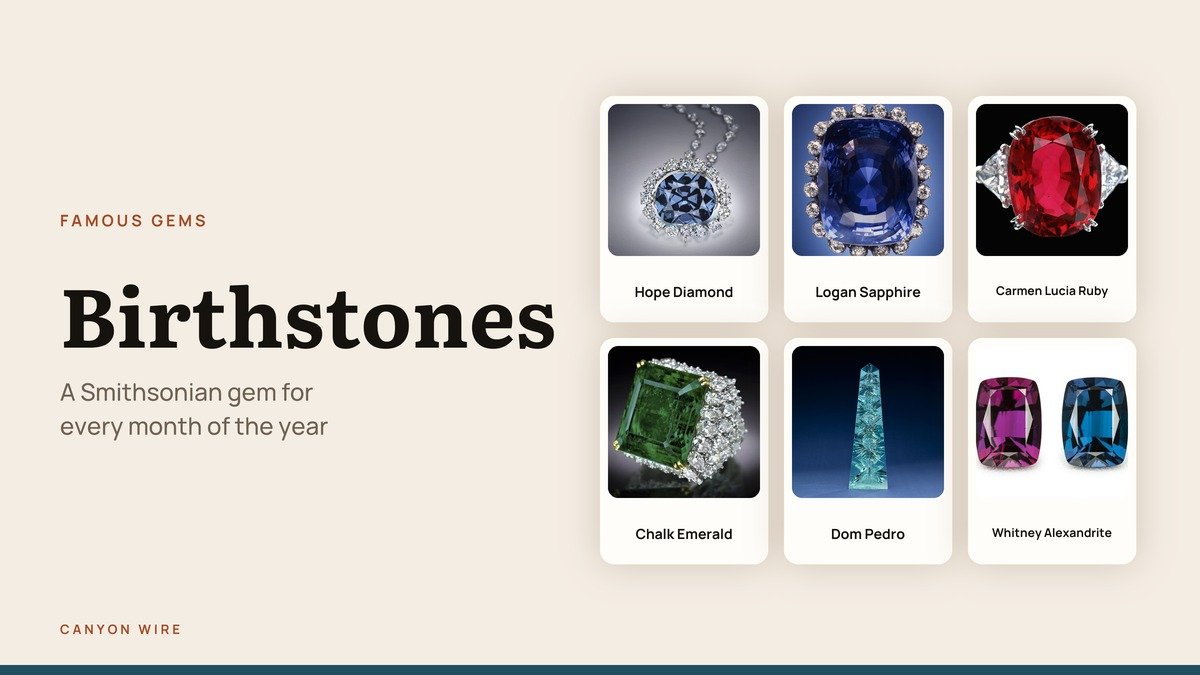
Birthstones are the gems linked to each calendar month, and the U.S. list now has 21 of them across 12 months. Some months keep a single classic stone, like April’s diamond, while June, August and December each have three to choose from.
This 2026 guide pairs every month with a famous example from the Smithsonian’s National Gem Collection, from the Hope Diamond to a 10,363-carat aquamarine, and covers the colors, hardness and history that matter when you are picking one to wear or give.
Birthstone Colors and Stones for All 12 Months
The “traditional” column shows the main stone on the 1912 list that standardized American birthstones. The modern chart kept every one of them and added options.
| Month | Modern birthstones | Colors | Traditional (1912) |
|---|---|---|---|
| January | Garnet | Deep red | Garnet |
| February | Amethyst | Purple | Amethyst |
| March | Aquamarine, bloodstone | Pale blue, dark green | Bloodstone |
| April | Diamond | Clear | Diamond |
| May | Emerald | Green | Emerald |
| June | Pearl, alexandrite, moonstone | Cream, color-change, white | Pearl |
| July | Ruby | Red | Ruby |
| August | Peridot, spinel, sardonyx | Light green, pink, banded | Sardonyx |
| September | Sapphire | Deep blue | Sapphire |
| October | Opal, tourmaline | Multicolor, pink | Opal |
| November | Topaz, citrine | Yellow, golden orange | Topaz |
| December | Tanzanite, turquoise, zircon | Blue-violet, sky blue, blue | Turquoise |
The 12 Birthstones and Their Most Famous Examples
Each month below features a gem from the National Gem Collection at the Smithsonian’s National Museum of Natural History, along with what sets that birthstone apart.
1. January Birthstone: Garnet
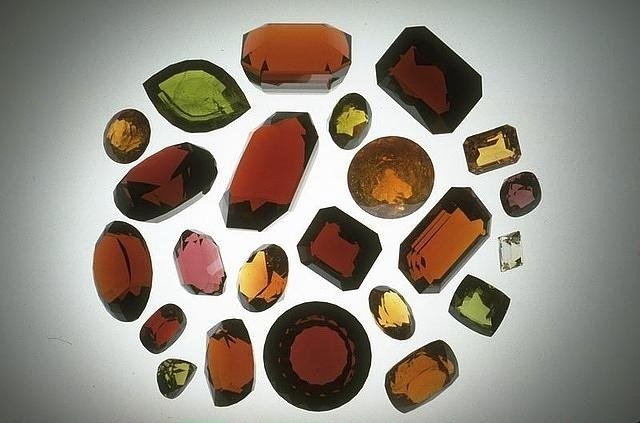
Featured gem: A spread of garnet species | Mohs hardness: 6.5 to 7.5
The photo shows why garnet is more than a red stone. The Smithsonian’s set covers several of the five gem species, from pyrope, whose Greek name means firelike and which is the reddest garnet, to green demantoid and orange spessartine.
Victorian jewelry leaned on Bohemian pyrope from what is now the Czech Republic, and the Smithsonian holds an antique Bohemian garnet hair comb donated in 1937. Today much of the world’s garnet comes from Africa, including green tsavorite from Kenya, Tanzania and Madagascar. Garnet is also the traditional second-anniversary gift.
2. February Birthstone: Amethyst
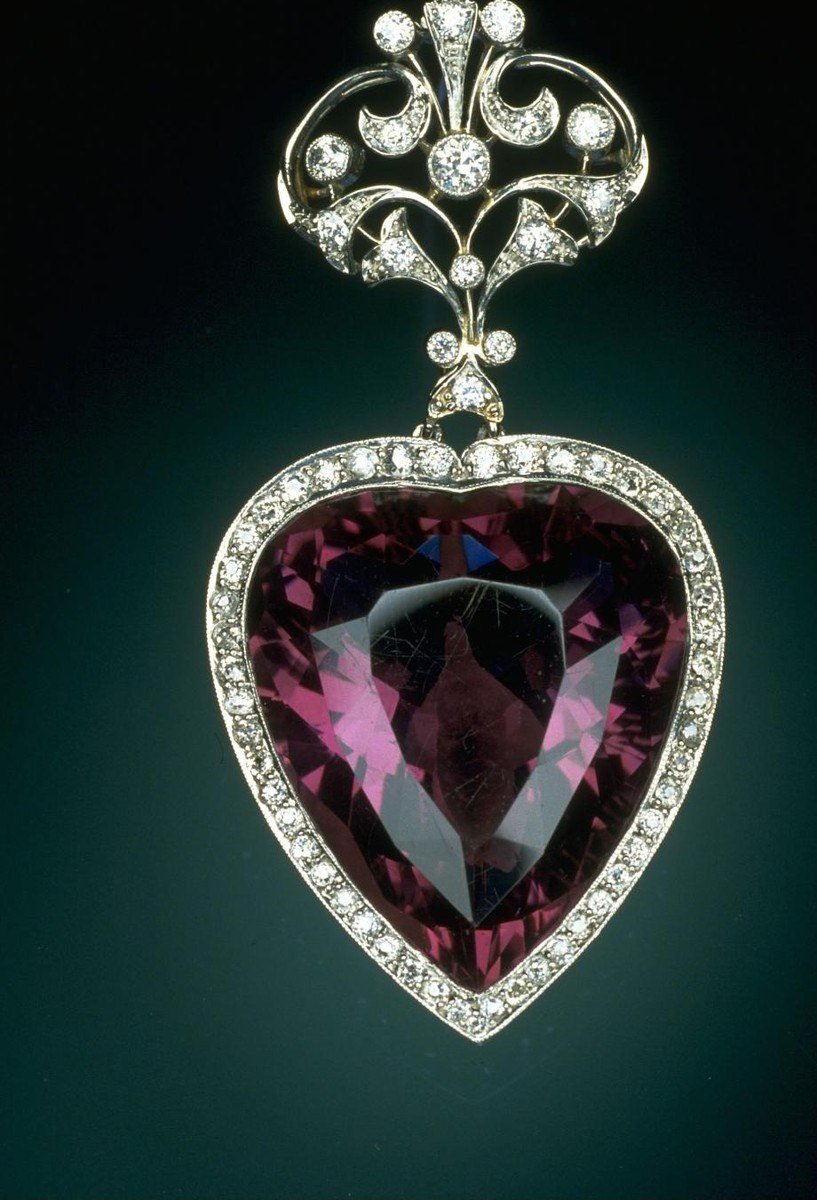
Featured gem: The Amethyst Heart Brooch, 96 carats | Mohs hardness: 7
This Edwardian brooch, made between 1901 and 1915, centers on a 96-carat heart-shaped amethyst, probably from Brazil, and was donated in 1973. Brazil’s 19th-century discoveries are what turned amethyst from a royal luxury into an affordable stone.
Amethyst is purple quartz, and heat treatment is common and permanent. Lab-created amethyst has been around since the 1970s and is hard to tell from natural without testing. It is the sixth-anniversary gem.
3. March Birthstone: Aquamarine and Bloodstone
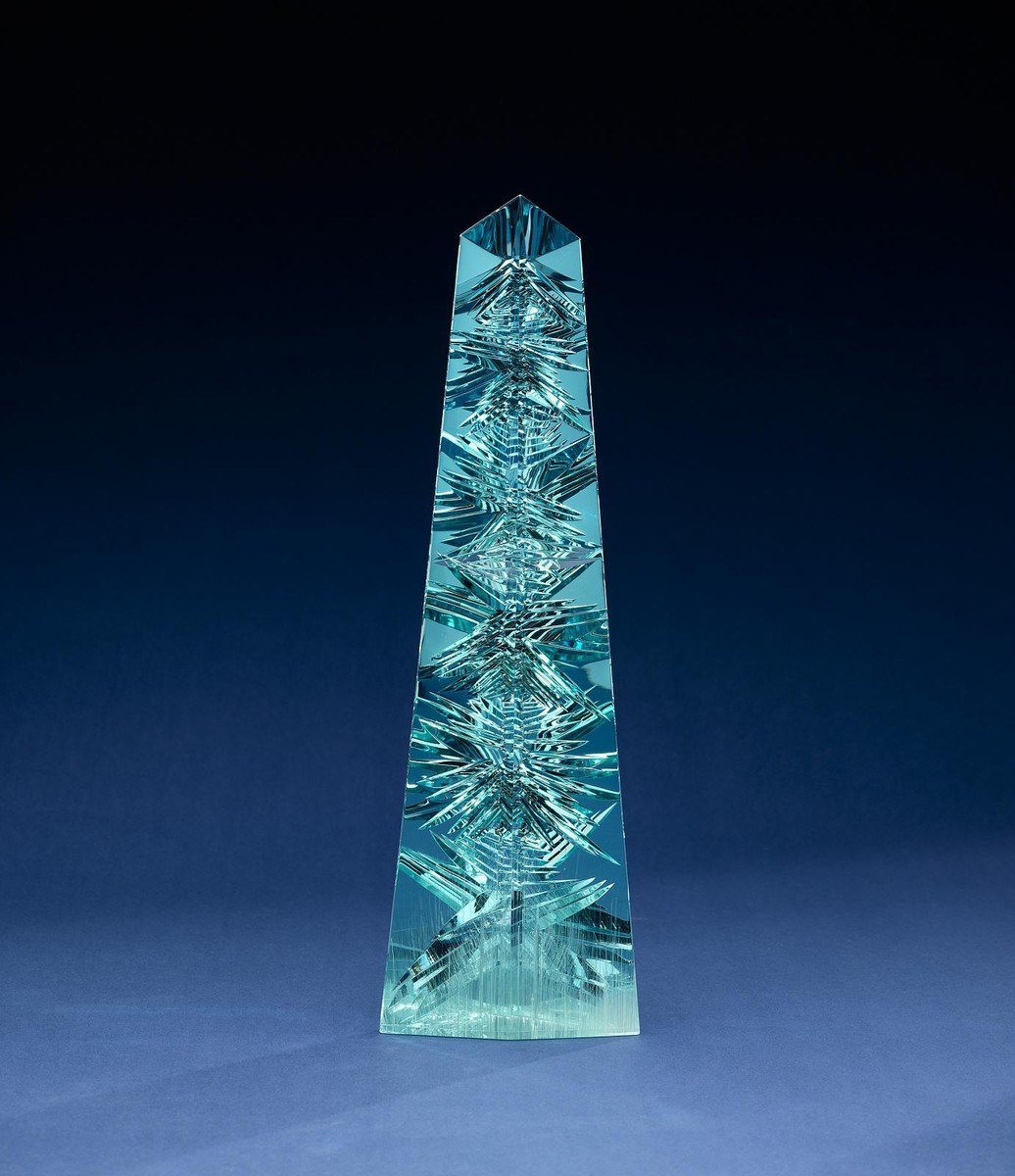
Featured gem: The Dom Pedro aquamarine, 10,363 carats | Mohs hardness: 7.5 to 8 (aquamarine)
The Dom Pedro is believed to be the largest faceted aquamarine in the world: a 10,363-carat obelisk about 14 inches tall, cut from Brazilian crystal by Bernd Munsteiner and given to the Smithsonian in 2011. Most fine aquamarine still comes from Minas Gerais, Brazil.
Aquamarine is blue beryl and handles everyday wear. Pakistan’s Karakoram range, Nigeria, Madagascar and Colorado’s Mount Antero also produce it. March’s second stone, bloodstone, is dark green chalcedony with red spots, mostly mined in India.
4. April Birthstone: Diamond
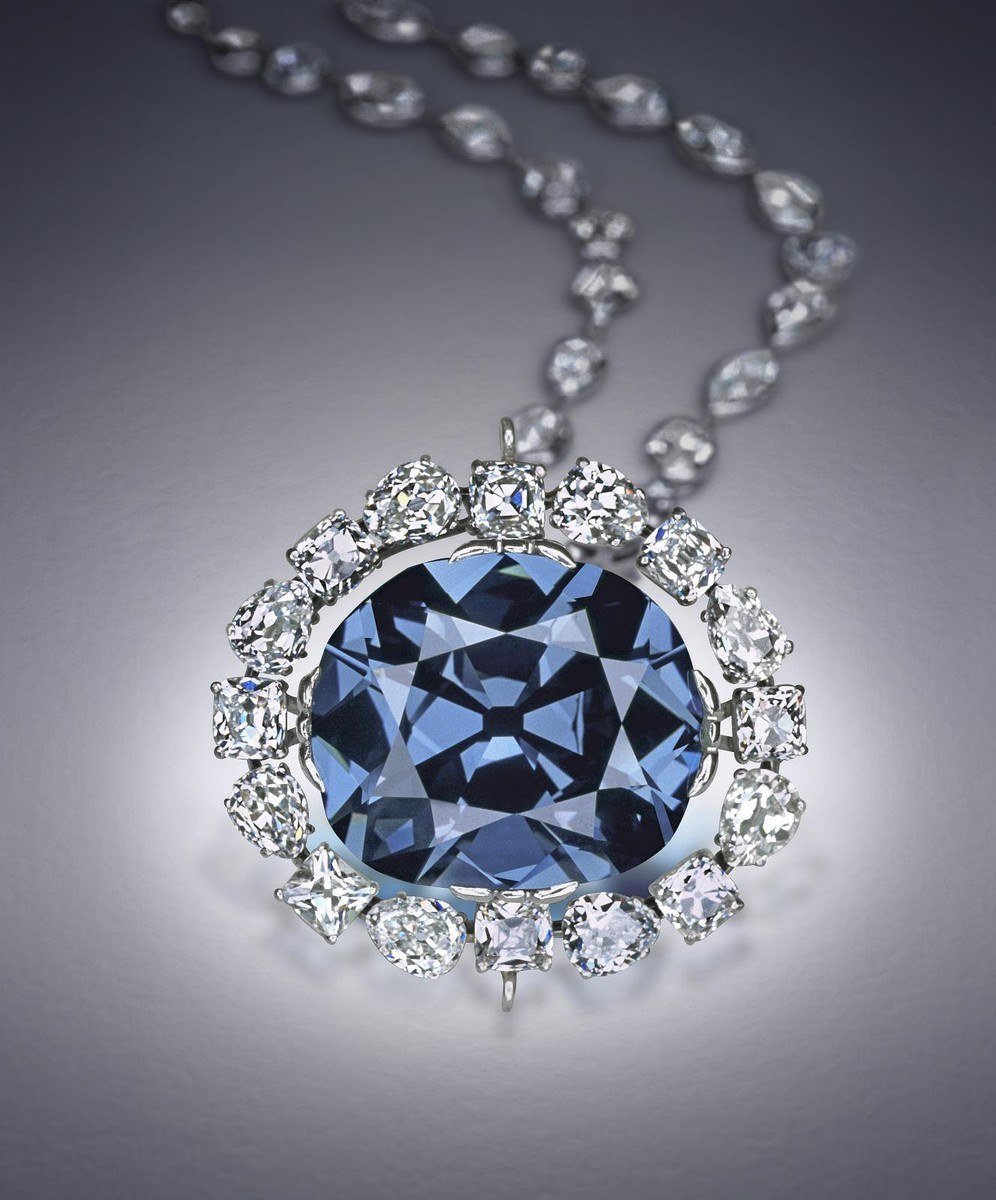
Featured gem: The Hope Diamond, 45.52 carats | Mohs hardness: 10
One of the world’s most famous diamonds is blue, not white. The 45.52-carat Hope Diamond came from India, and GIA links its history to the Golconda region and a sale to France’s Louis XIV in 1668. Harry Winston gave it to the Smithsonian in 1958.
Diamond is the only gem at 10 on the Mohs scale. The 3,106-carat Cullinan, found in 1905, yielded the 530-carat Cullinan I. Diamond marks the 60th and 75th anniversaries.
5. May Birthstone: Emerald
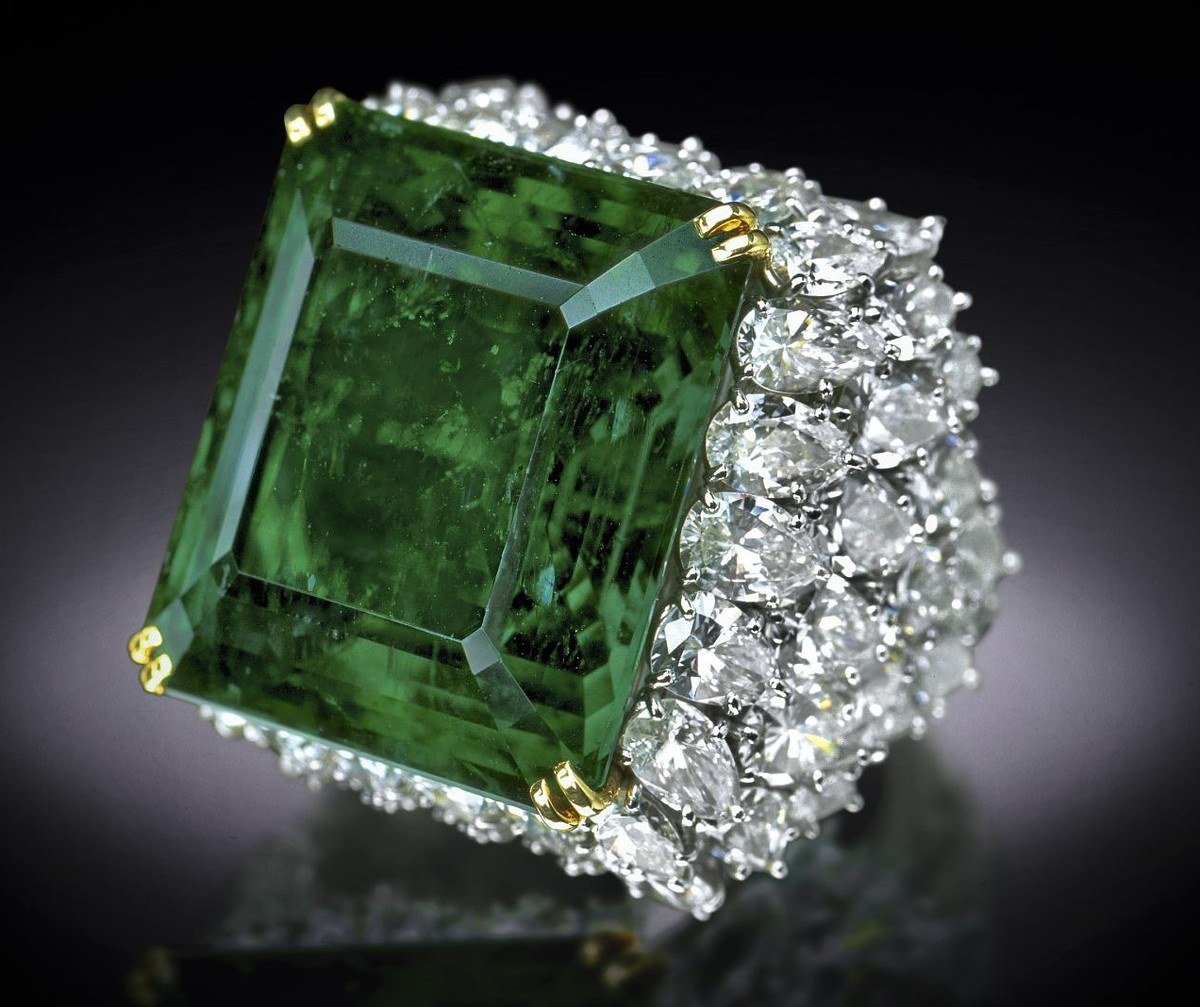
Featured gem: The Chalk Emerald, 37.80 carats | Mohs hardness: 7.5 to 8
The Chalk Emerald is a 37.80-carat Colombian stone, recut from 38.4 carats, that legend links to a necklace of a Maharani of Baroda. Harry Winston set it with pear-shaped diamonds, and it was donated in 1972.
Colombia’s mines differ in color: Muzo emeralds run darker pure green, Chivor lighter and bluish, Coscuez yellowish. Emeralds are commonly fracture-filled, so they should never go in an ultrasonic cleaner. They mark the 20th and 35th anniversaries.
6. June Birthstone: Pearl, Alexandrite and Moonstone
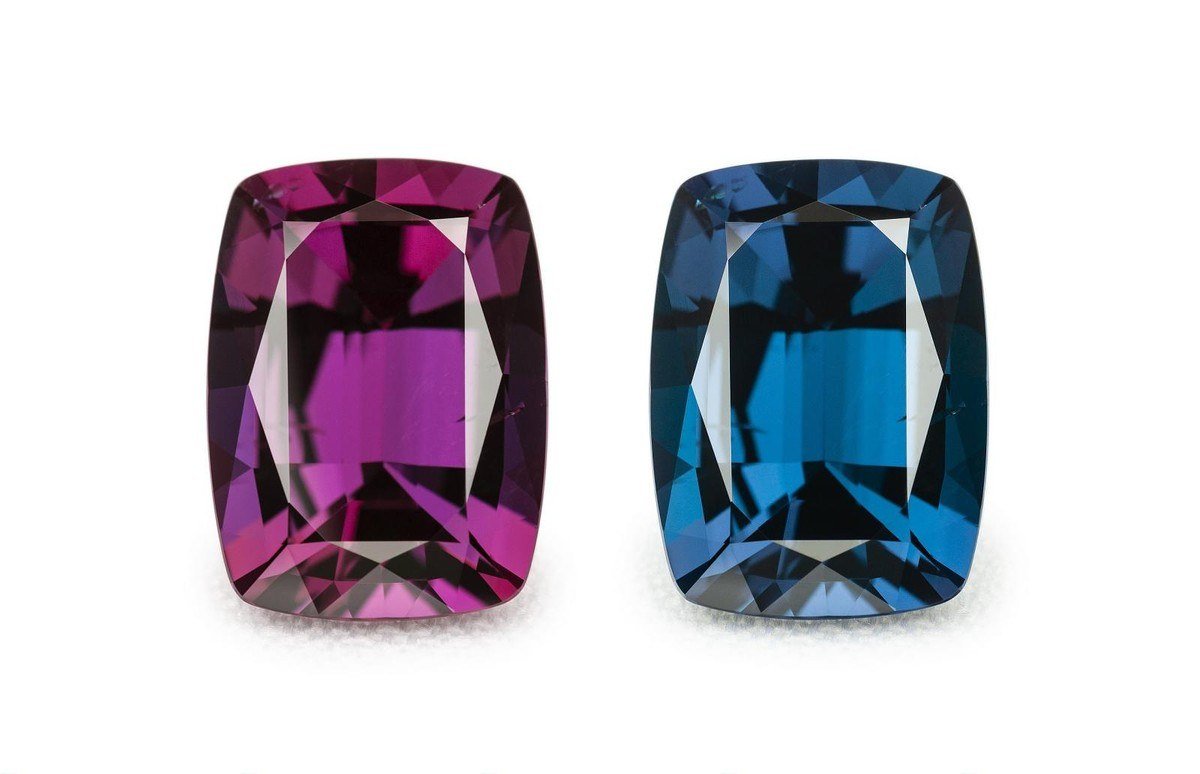
Featured gem: The Whitney Alexandrite, 17.08 carats | Mohs hardness: 8.5 (alexandrite)
Alexandrite’s trick is a color change, and the Whitney Alexandrite shows it: raspberry red under incandescent light and teal in daylight. The 17.08-carat stone is from the Hematita mine in Brazil, and the Smithsonian notes that alexandrites over 5 carats are extremely rare.
June’s other stones are softer. Pearl, the only organic birthstone, rates just 2.5 to 3, and La Peregrina, a 50.56-carat natural pearl, sold for $11.8 million at Christie’s in 2011. Moonstone, a glowing feldspar mainly from India and Sri Lanka, also scratches easily.
7. July Birthstone: Ruby
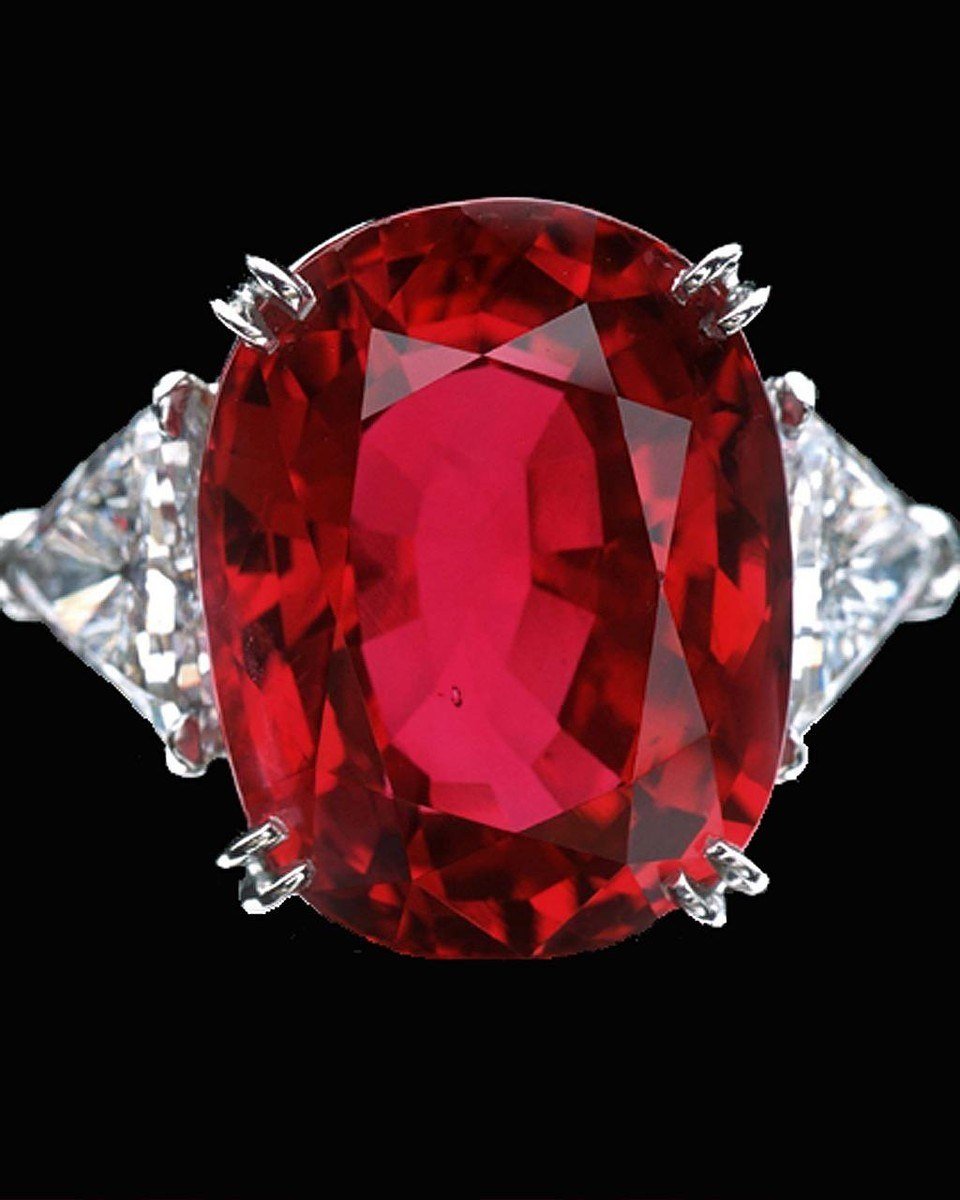
Featured gem: The Carmen Lucia Ruby, 23.10 carats | Mohs hardness: 9
The Carmen Lucia is the largest faceted ruby in the National Gem Collection: 23.10 carats, mined in Myanmar’s Mogok valley in the 1930s and given in 2004. Mogok’s deep red stones, sometimes called “pigeon’s blood,” set the standard for ruby.
Ruby and sapphire are the same mineral, corundum, and chromium supplies the red. Heat treatment is common, while glass-filled rubies are lower quality and need gentle cleaning. Ruby marks the 15th and 40th anniversaries.
8. August Birthstone: Peridot, Spinel and Sardonyx
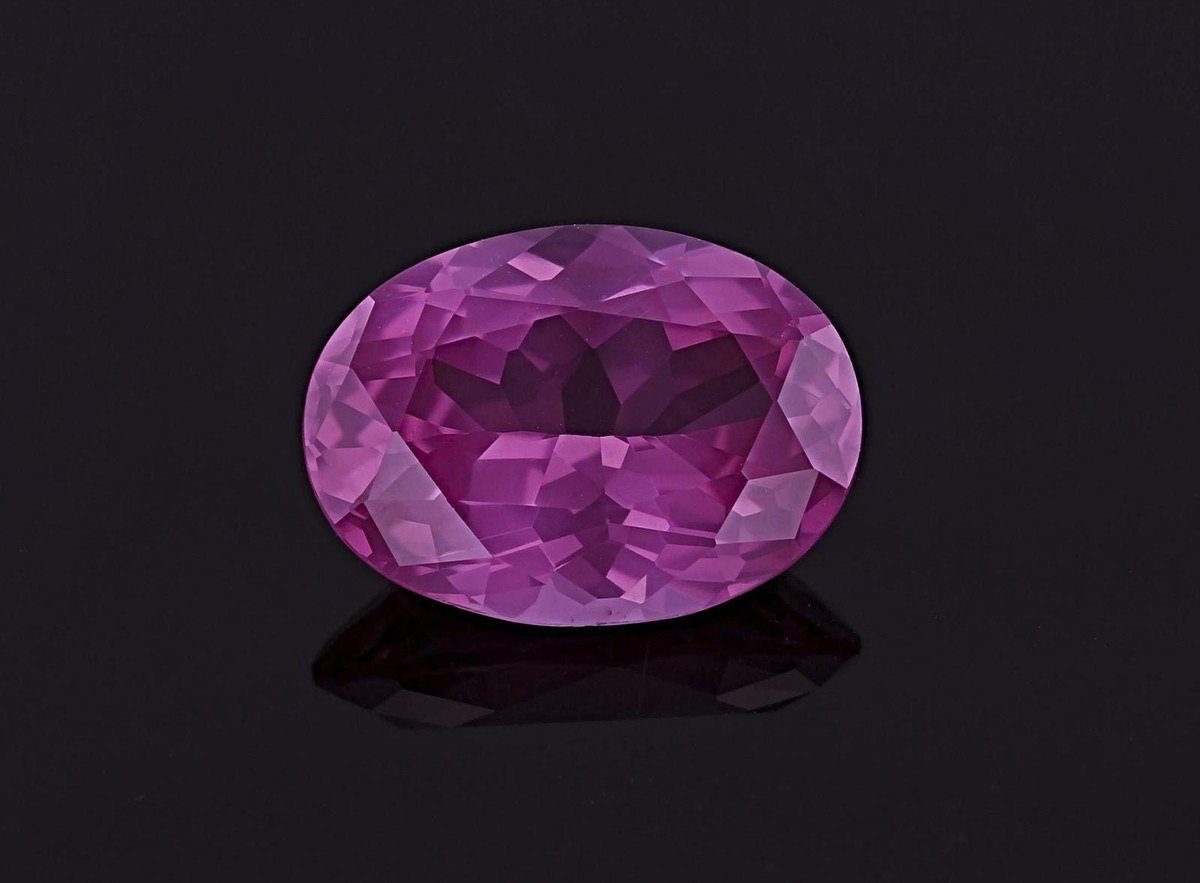
Featured gem: A Tanzanian pink spinel, 5.78 carats | Mohs hardness: 8 (spinel)
This 5.78-carat pink spinel was the first spinel from Tanzania to enter the National Gem Collection, in 2007, the same year a notable deposit was found there. Spinel became an August birthstone in 2016.
For centuries spinel was mistaken for ruby; the roughly 170-carat Black Prince’s “Ruby” in Britain’s Imperial State Crown is one. August’s green peridot is softer and best kept out of daily rings, and banded sardonyx was used for Roman seals because hot wax did not stick to it.
9. September Birthstone: Sapphire
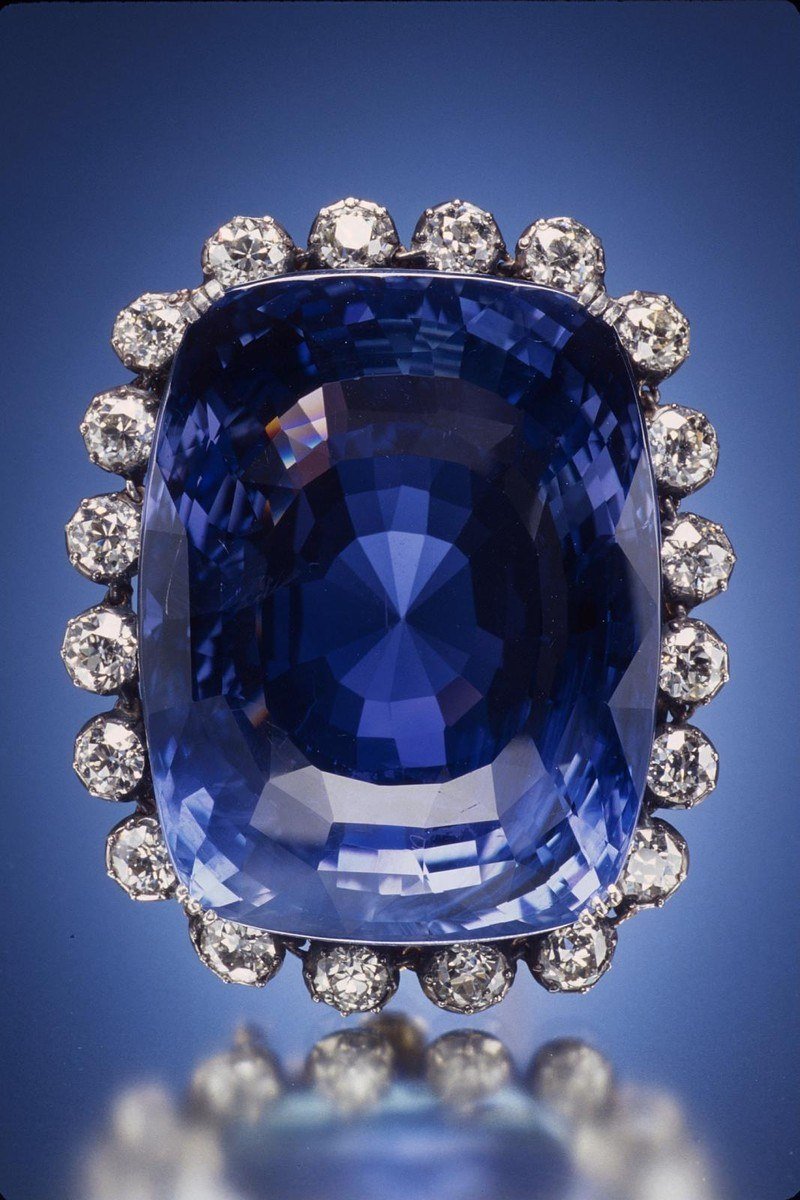
Featured gem: The Logan Sapphire, 423 carats | Mohs hardness: 9
The 423-carat Logan Sapphire from Sri Lanka is one of the largest faceted blue sapphires known and the heaviest mounted gem in the National Gem Collection. A GIA report in 1997 found no sign of heat treatment. It was donated in 1960.
Sri Lanka has mined sapphires for more than 2,000 years. Kashmir stones, found around 1881, remain the most prized, and Montana is a notable U.S. source. Sapphire has no cleavage, making it a sound choice for a ring.
10. October Birthstone: Opal and Tourmaline
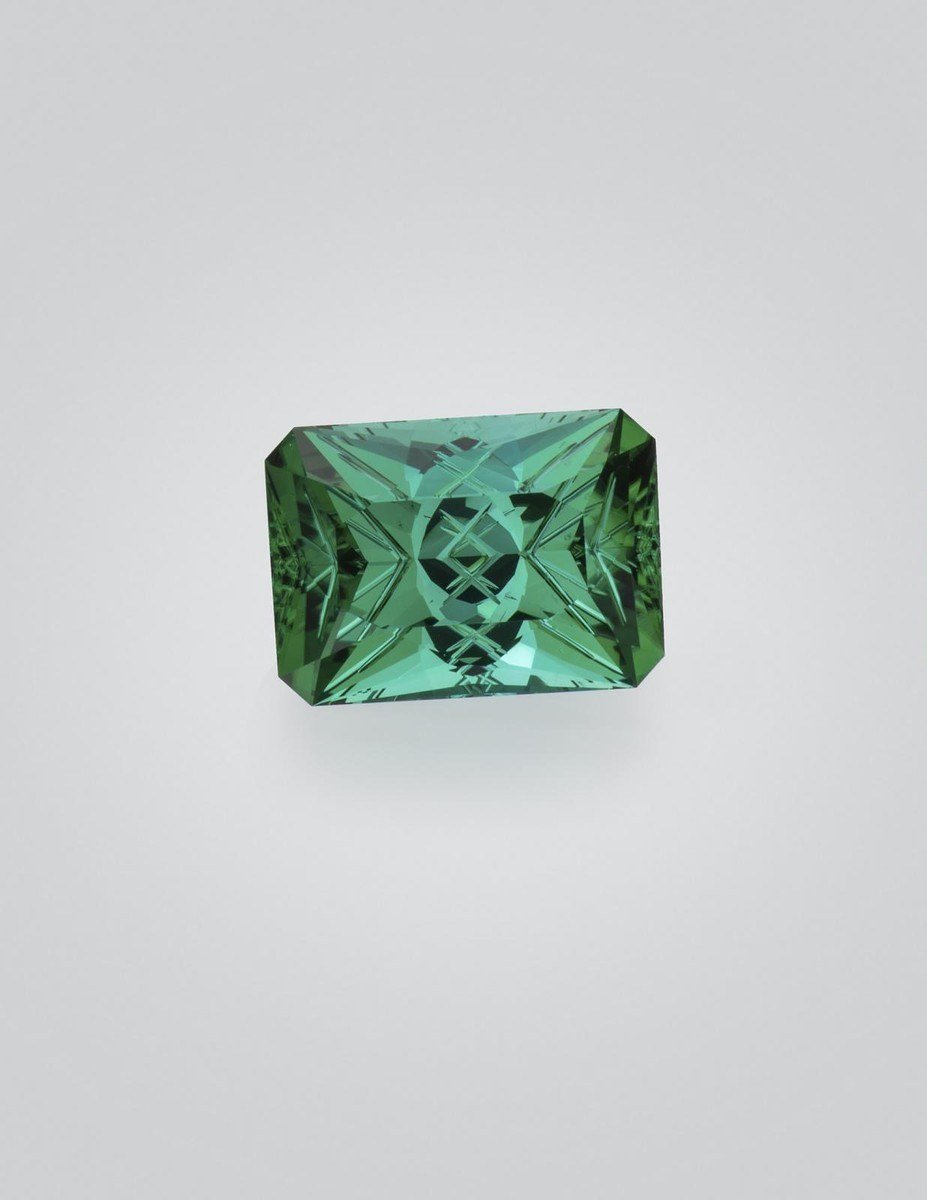
Featured gem: The Havey tourmaline, 30.62 carats | Mohs hardness: 7 to 7.5 (tourmaline)
The Havey tourmaline is a 30.62-carat bluish green elbaite from the Havey Quarry in Maine, cut by Larry Woods and donated in 2014. Maine has been a tourmaline source since Mount Mica was found in 1820.
Tourmaline gets its name from a Sinhalese word for “stone with mixed colors,” and copper-bearing Paraiba tourmaline was found in Brazil in the late 1980s. October’s other stone, opal, ranks only 5 to 6.5 and can crack with sudden temperature changes; Australia supplies most of it.
11. November Birthstone: Topaz and Citrine
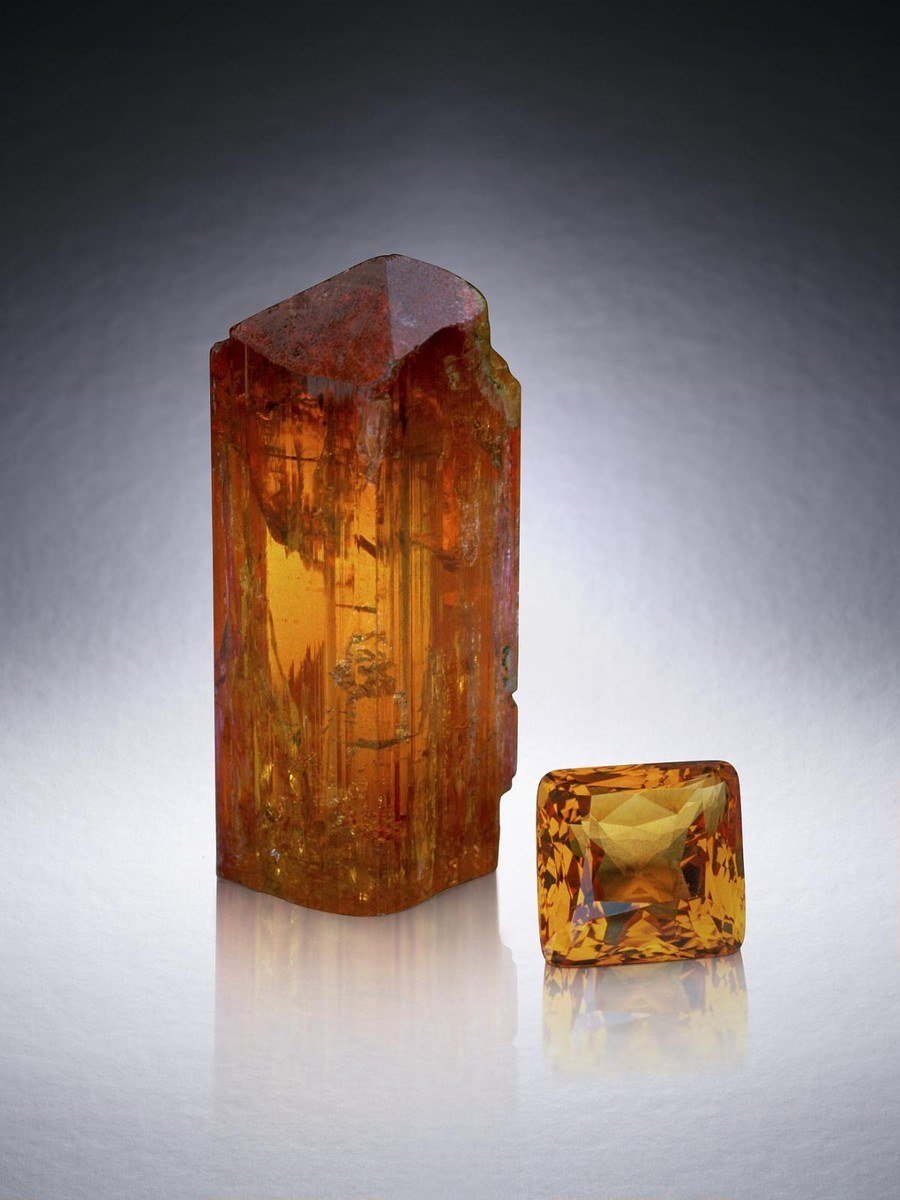
Featured gem: Imperial topaz from Ouro Preto, Brazil | Mohs hardness: 8 (topaz)
The Smithsonian pairs an 875.4-carat imperial topaz crystal with a 93.6-carat cut gem, both from Ouro Preto in Brazil. Until the 1950s, the museum notes, topaz was known almost only as a yellow-golden gem.
Today most blue topaz is colorless topaz that has been irradiated and heated. November’s other birthstone, citrine, is usually heat-treated amethyst, according to GIA. Topaz is hard but can split from a sharp knock.
12. December Birthstone: Tanzanite, Turquoise and Zircon
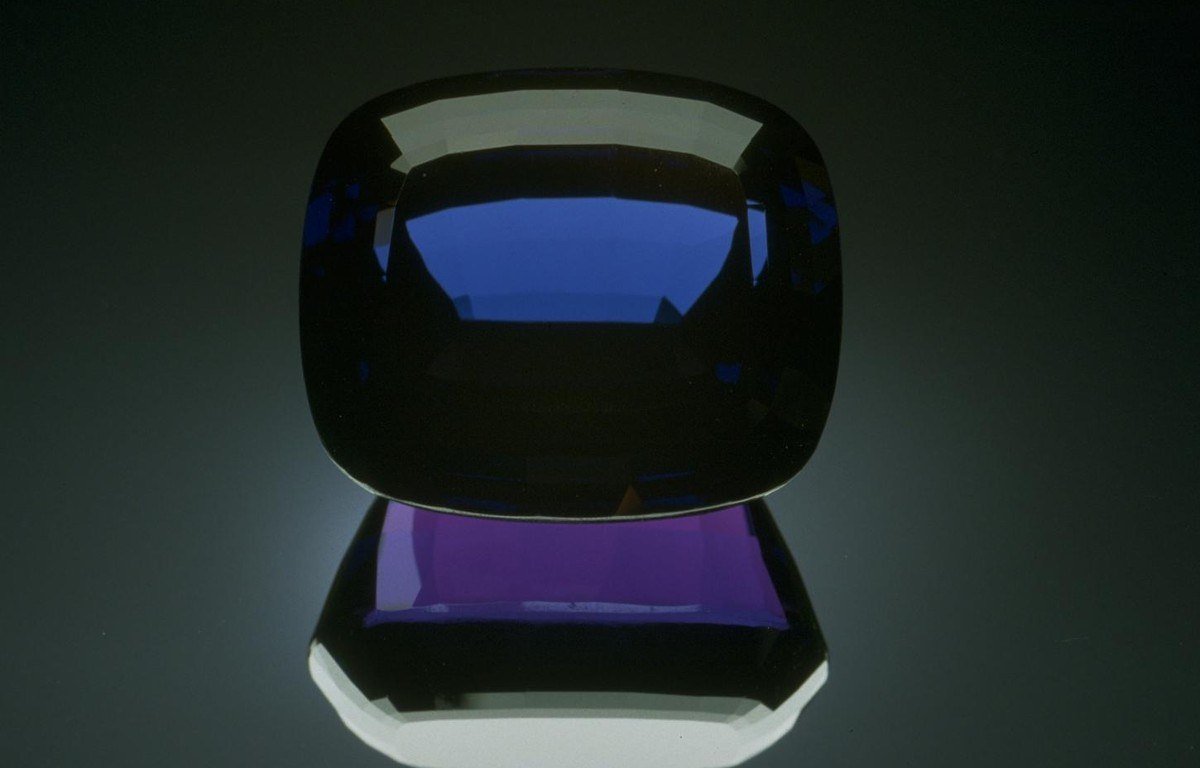
Featured gem: A 122.70-carat tanzanite | Mohs hardness: 6 to 7 (tanzanite)
This 122.70-carat tanzanite shows the stone’s strong pleochroism: it looks blue, violet or red depending on the viewing angle. Tanzanite is mined commercially only in the Merelani Hills of Tanzania, located in 1967, and joined the December list in 2002.
Turquoise, December’s oldest stone, now comes chiefly from China, the largest producer, with U.S. output centered in Arizona and Nevada. Zircon, added in 1952, is often heat-treated to blue. All three are softer stones best kept out of rough daily wear.
Birthstones Ranked by Hardness
Hardness on the Mohs scale measures scratch resistance from 1 to 10. It is the quickest way to judge whether a birthstone can handle a ring worn every day or belongs in earrings and pendants:
| Mohs hardness | Birthstones |
|---|---|
| 10 | Diamond (April) |
| 9 | Ruby (July), sapphire (September) |
| 8.5 | Alexandrite (June) |
| 8 | Topaz (November), spinel (August) |
| 7.5 to 8 | Aquamarine (March), emerald (May) |
| 7 to 7.5 | Tourmaline (October) |
| 7 | Amethyst (February), citrine (November) |
| 6.5 to 7.5 | Garnet (January) |
| 6.5 to 7 | Peridot, sardonyx (August), bloodstone (March) |
| 6 to 7.5 | Zircon (December) |
| 6 to 7 | Tanzanite (December) |
| 6 to 6.5 | Moonstone (June) |
| 5 to 6.5 | Opal (October) |
| 5 to 6 | Turquoise (December) |
| 2.5 to 3 | Pearl (June) |
Hardness is not the whole story. Topaz rates 8 but has poor toughness and can split, and emerald is hard but usually fracture-filled. Pearl, opal and turquoise scratch easily, and moonstone, topaz and tanzanite have perfect cleavage, so a hard knock can split them.
From the High Priest’s Breastplate to Kansas City
The idea of 12 sacred stones comes from the breastplate of the Israelite high priest, set with four rows of three stones for the 12 tribes. In the first century, Josephus wrote in his Antiquities of the Jews that the stones could stand for the months or for the signs of the zodiac.
For centuries, though, there was no agreed list. Mineralogist George Frederick Kunz traced the custom of wearing your own month’s stone to 18th-century Poland. In August 1912, the National Association of Jewelers approved a standard American list at its meeting in Kansas City, which is the basis of the chart used today.
Why Some Months Have Two or Three Birthstones
Extra stones arrived in stages, each decided by the jewelry trade:
- 1912: the first list already gave five months an alternate, including aquamarine for March, moonstone for June, peridot for August and tourmaline for October.
- 1952: the Jewelry Industry Council of America added alexandrite and citrine, confirmed pink tourmaline, and swapped December’s lapis lazuli for zircon.
- 2002: the American Gem Trade Association added tanzanite for December.
- 2016: Jewelers of America and the American Gem Trade Association added spinel for August.
Not everyone welcomed the additions. Kunz objected in 1913 to giving any month more than one stone. When tanzanite was added, the trade association’s own research found that fewer than 10 percent of buyers named their birthstone as the main reason for buying a gem.
Lab-Grown Birthstones and Treated Stones
Lab-grown versions of many birthstones are on the market, and federal rules set how they are sold: under the FTC Jewelry Guides, 16 CFR 23.25, a seller cannot call a lab-grown or imitation stone a “birthstone” or use a gem name like ruby unless a term such as “laboratory-grown,” “laboratory-created” or “simulated” comes right before it. “Faux” does not count as a disclosure.
Treatments are just as common in natural stones. Before buying, ask:
- Is it natural, laboratory-grown or a simulant?
- Has it been heated, filled, dyed, coated or irradiated?
- Does the treatment change how I should clean or wear it?
- Is there an independent lab report for a valuable stone?
The FTC also treats names like “yellow emerald” for golden beryl and “green amethyst” for prasiolite as misleading, so watch for creative labels.
Choosing a Birthstone Gift
A birthstone personalizes a gift without guesswork about taste. A few practical pointers:
- For a daily ring, favor the hard stones: diamond, ruby, sapphire, alexandrite, spinel or aquamarine.
- For softer stones like opal, pearl or turquoise, choose earrings, a pendant or a brooch.
- In months with several options, pick by color or budget; the stones are equally official.
- Pair the stone with a handwritten card; our list of birthday wishes and messages has lines to start from.
Birthstones follow calendar months, while star signs change around the 20th of each month, so a person can have two different “birth” symbols. Our guide to the zodiac signs has the sign dates.
Frequently Asked Questions
What is the most popular birthstone month?
There is no official ranking, but searches for October, August and December birthstones are among the highest. All three months have more than one stone to choose from.
What is the difference between modern and traditional birthstones?
Traditional stones are the main ones from the 1912 list, such as bloodstone for March and sardonyx for August. Modern birthstones include later additions like alexandrite, spinel and tanzanite.
Which birthstone is the rarest?
Among the 21, large alexandrite is one of the rarest; the Smithsonian notes alexandrites over 5 carats are extremely rare. Tanzanite is mined commercially in only one place, Tanzania’s Merelani Hills.
Is a birthstone the same as a zodiac stone?
No. Birthstones follow calendar months under the jewelry trade’s list. Zodiac stone lists are separate and are not standardized.