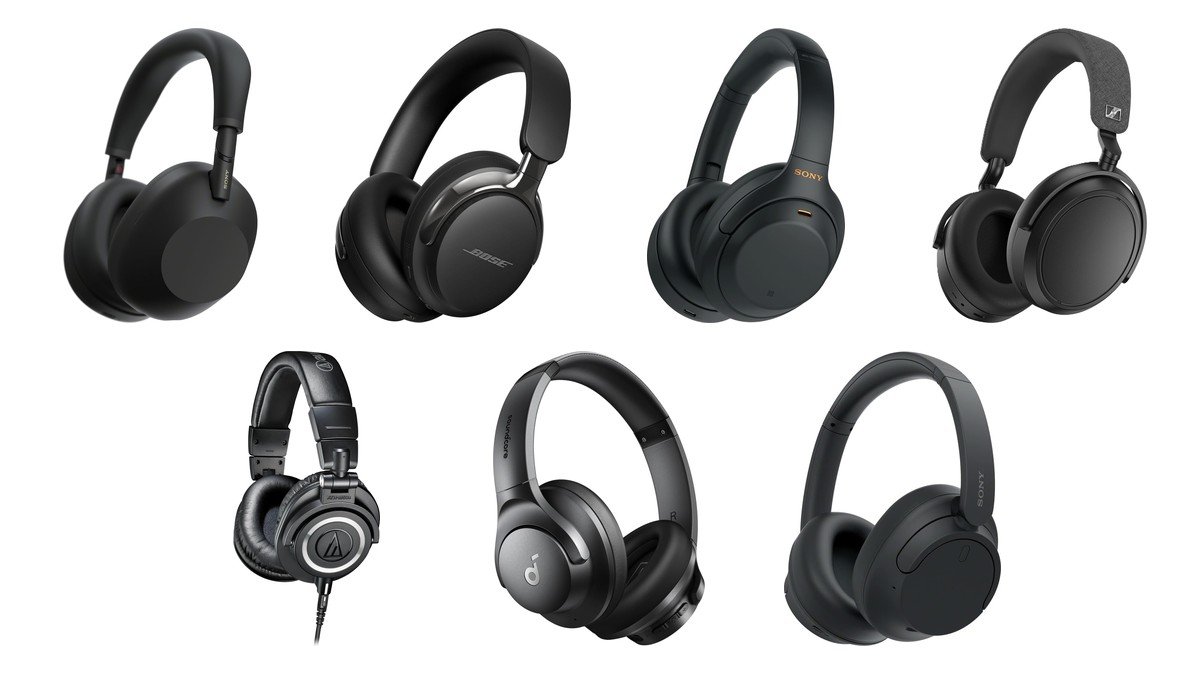
Over-ear headphones are bought for one of three reasons: to hear less of the world, to hear more of the music, or to be heard clearly on calls. Almost every review treats those as the same purchase. They are not, and the pair that wins on one is usually mid-table on the others.
The seven below cover all three cases, from a flagship with twelve microphones to a wired studio pair with no battery at all. Specifications come from each manufacturer’s own listing, and battery figures are quoted the way the brand quotes them, which as the section below explains is not a like-for-like comparison.
We may earn a commission when you buy through the Amazon links on this page, at no extra cost to you. Products were selected on published specifications; prices and availability change, so check the listing before buying.
The Seven Compared
Read the battery column carefully. Some brands quote it with noise cancelling on, some with it off, and one quotes two figures because its spatial audio mode costs seven hours.
| Model | Battery | Noise cancelling | Connection |
|---|---|---|---|
| Sony WH-1000XM6 | Not stated on listing | Adaptive, 12 mics, QN3 processor | Wireless |
| Bose QuietComfort Ultra (2nd Gen) | 30 h, 23 h with Immersive Audio | Quiet and Aware modes | Wireless plus USB-C audio |
| Sony WH-1000XM4 | 30 h | Dual Noise Sensor | Wireless |
| Sennheiser Momentum 4 | 60 h | Adaptive, plus transparency | Wireless |
| Audio-Technica ATH-M50x | Not applicable | None, passive isolation only | Wired, detachable cable |
| Soundcore Q20i | 40 h with ANC, 60 h without | Hybrid, 4 mics | Wireless |
| Sony WH-CH720N | 35 h | Dual Noise Sensor, V1 processor | Wireless |
1. Sony WH-1000XM6: Twelve Microphones and the Processor That Reads Them
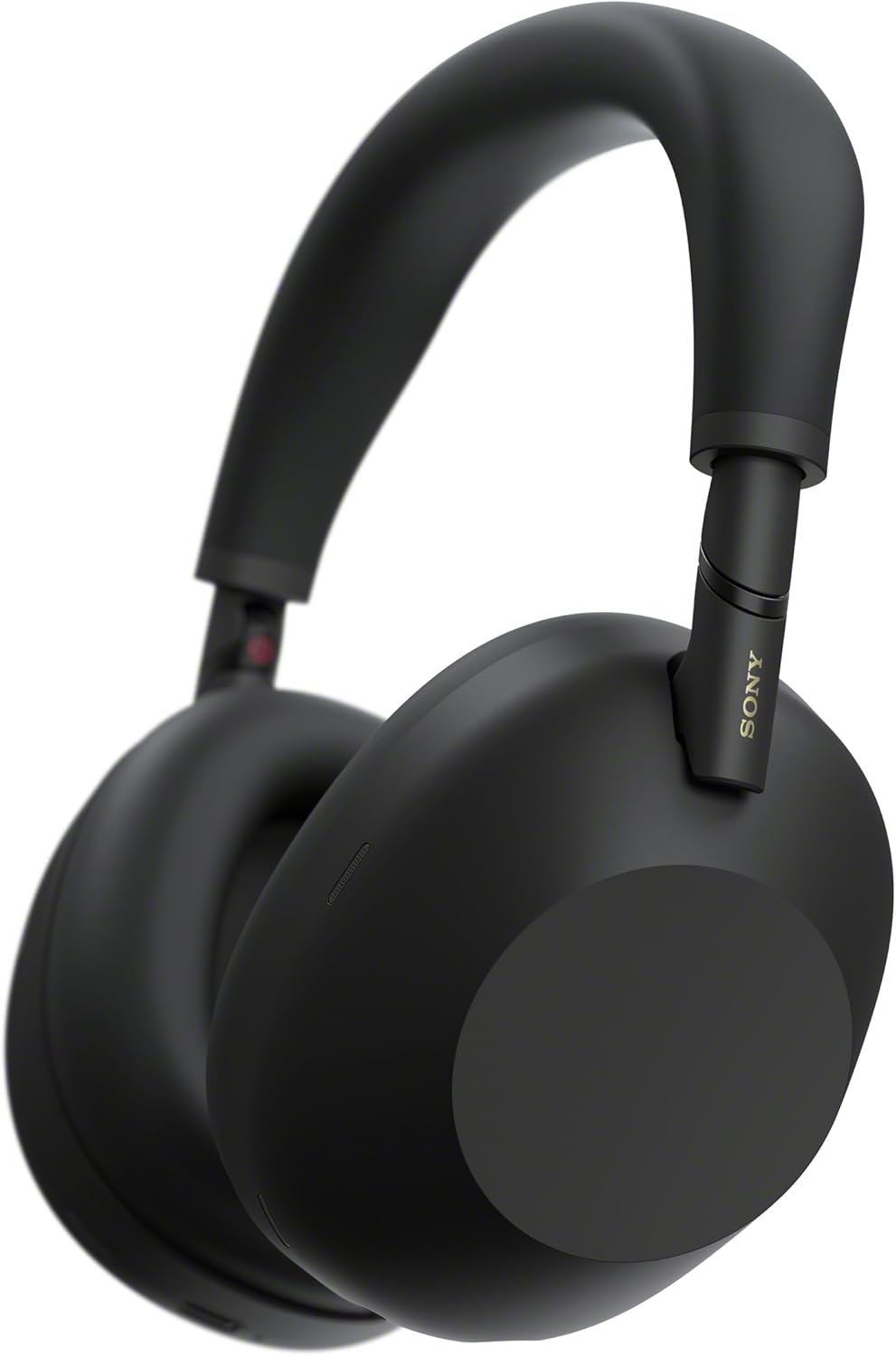
The headline change over the XM5 is the HD Noise Canceling Processor QN3, which Sony says runs seven times faster than the QN1 it replaces and manages twelve microphones in real time. More microphones only help if something can process them quickly enough to adapt as the noise around you changes, which is the argument for the new chip rather than for the microphone count on its own.
Calls use a separate six-microphone AI beamforming system with wind-resistant design, which is the part most flagship headphones get wrong. The frame folds again after Sony dropped folding on the XM5, and the case closes magnetically. The headband is wider and asymmetrical, with a stepless slider.
What it does well
- QN3 processor, which Sony rates at seven times the speed of the XM5’s QN1.
- Twelve microphones optimised in real time for cancellation.
- Separate six-mic beamforming array with wind resistance for calls.
- Folds flat again, with a compact magnetic-closure case.
What to know before buying
- Sony does not state a battery figure on this listing, which is a notable omission at this price.
- The most expensive pair here, and the XM4 further down covers most of the same ground.
2. Bose QuietComfort Ultra (2nd Gen): The Spatial Audio Pair, With Wired USB-C Calling
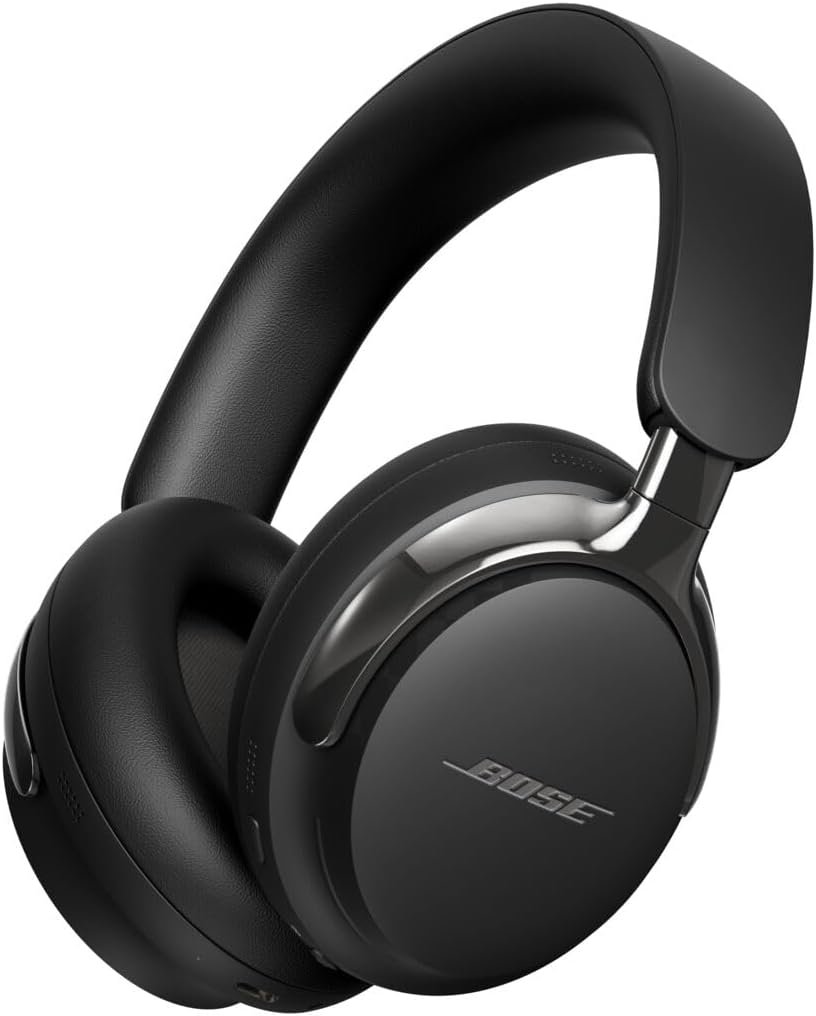
Bose’s case rests on two things Sony does not match. The first is spatialised audio, which pushes the soundstage out in front of you rather than leaving it inside your head, plus a Cinema Mode that rebalances background and effects for video. The second is quieter but more practical: USB Voice lets you take calls over USB-C using the built-in mic, so a laptop with a crowded Bluetooth stack is no longer a problem.
Noise cancelling runs as Quiet Mode or Aware Mode, or a combination of cancellation with awareness. Bose quotes up to 30 hours, dropping to 23 with Immersive Audio running.
What it does well
- Spatialised audio and a Cinema Mode for video.
- USB-C wired calling with the built-in microphone.
- Quiet and Aware modes, or both combined.
- AI background-noise suppression on the call mics.
What to know before buying
- Immersive Audio costs seven hours of battery, so the 30-hour figure is the number without the feature you bought it for.
- Spatial audio is divisive and worth trying before committing.
3. Sony WH-1000XM4: Two Generations Old and Still the Value Pick
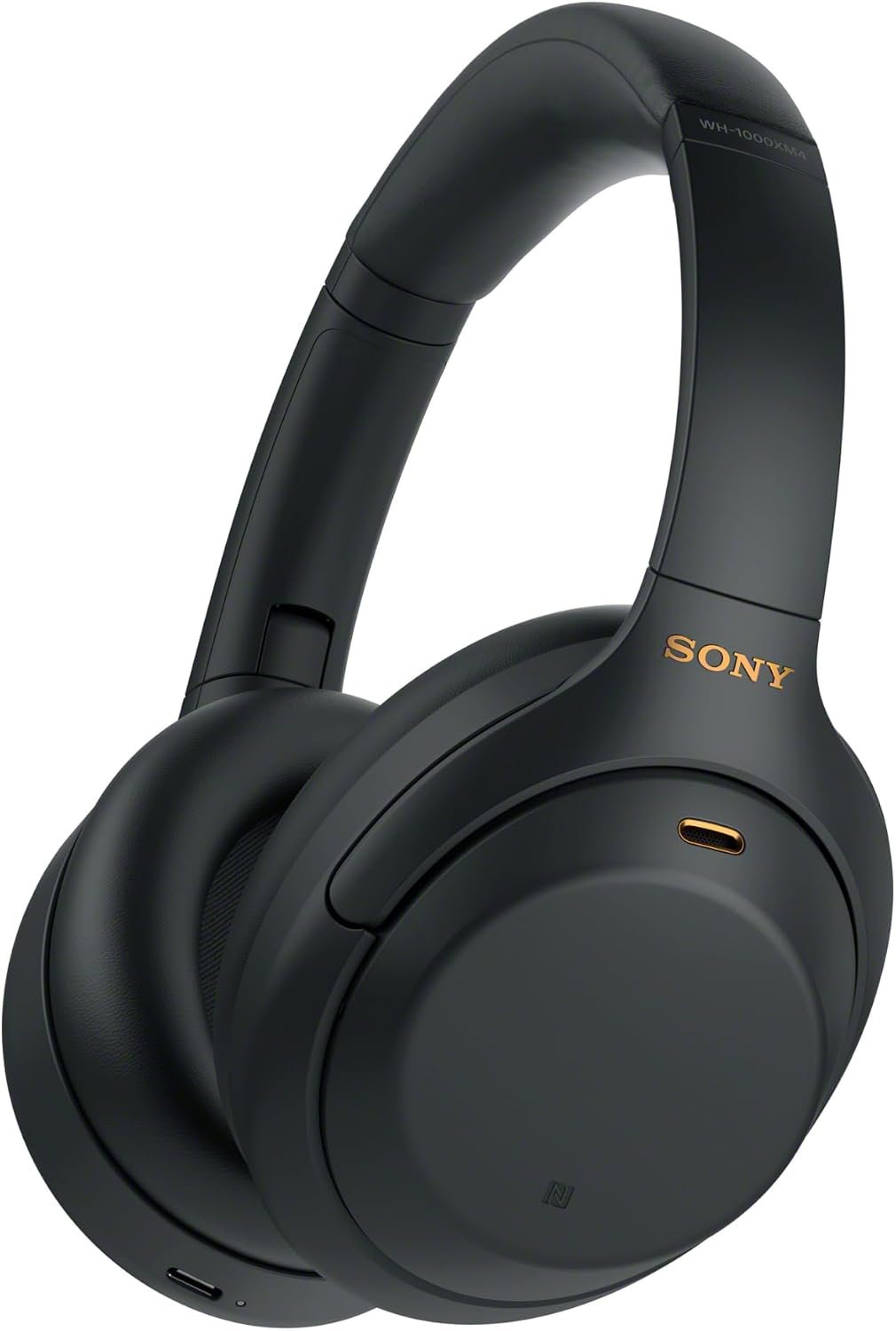
The XM4 remains on sale because it is still very good and now costs considerably less than the XM6. Thirty hours of battery, a ten-minute charge for five hours of playback, touch controls on the earcup, and Dual Noise Sensor cancellation that was class-leading when it launched and is merely excellent now.
Two features here are genuinely useful and were dropped or changed later. Speak-to-Chat automatically drops the volume when you start talking, and wearing detection pauses playback when you take the headphones off. If your budget is the constraint, this is the pair to buy and you will not spend the difference improving on it.
What it does well
- 30-hour battery with a 10-minute charge giving five hours.
- Speak-to-Chat lowers the volume automatically when you speak.
- Wearing detection pauses playback when removed.
- Five microphones for call pickup.
What to know before buying
- Two generations behind on processing, and it shows most on calls in wind.
- Touch controls are less reliable with gloves or wet hands.
4. Sennheiser Momentum 4: Sixty Hours, Which Is Double Almost Everything Else
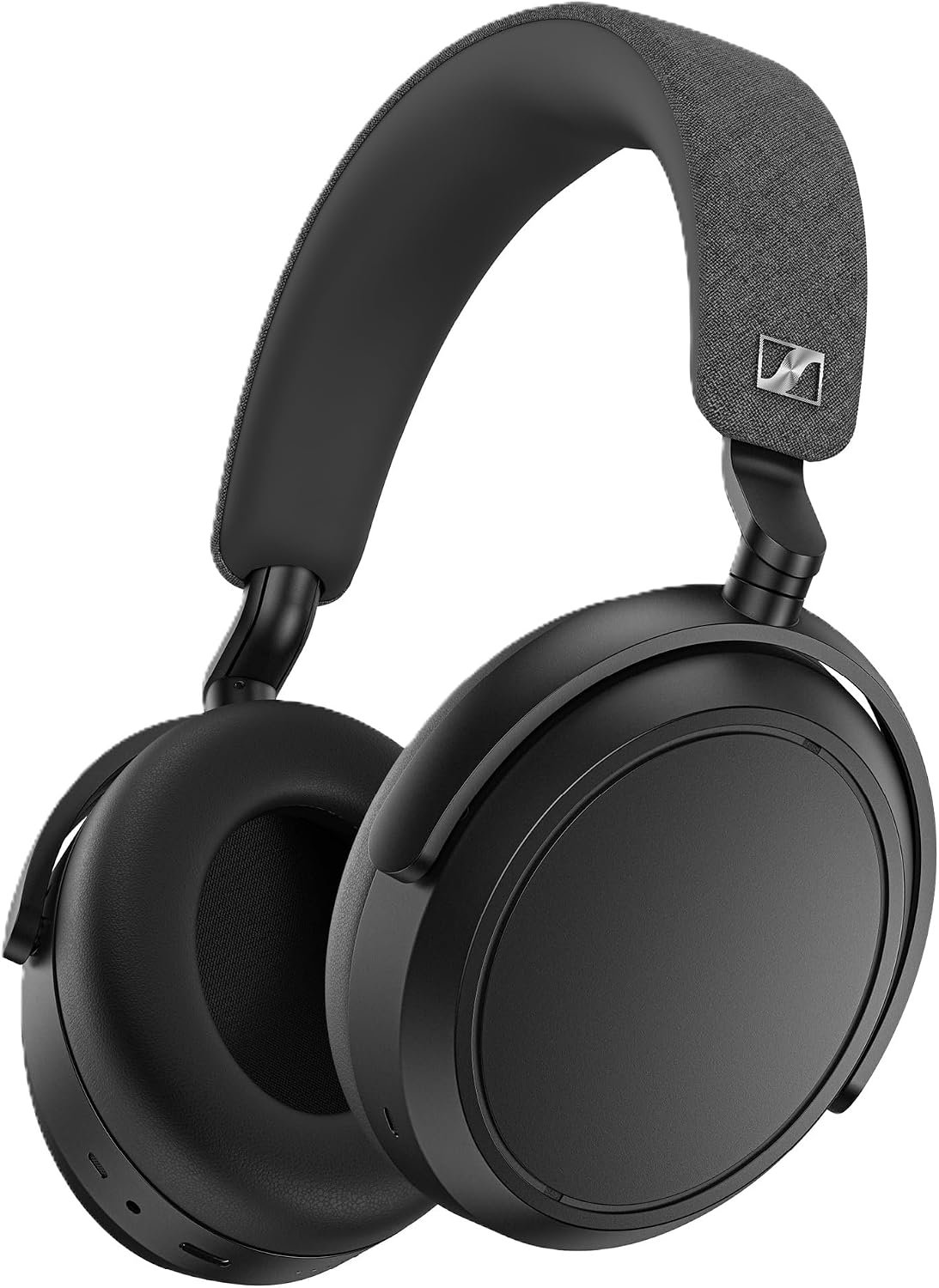
Sixty hours is not an incremental advantage. It is the difference between charging weekly and charging roughly once a month, and for anyone who travels or simply forgets, it outweighs a marginally better cancellation algorithm. Sennheiser pairs it with 42mm transducers and aptX Adaptive, which matters if your phone supports it and is irrelevant if it does not.
The Smart Control Plus app carries a proper equaliser with presets and sound modes, and Sennheiser has kept shipping firmware updates to the platform. Calls run through four digital beamforming microphones with wind-noise suppression.
What it does well
- 60 hours of battery, roughly double most of this group.
- 42mm transducers with aptX Adaptive support.
- Full equaliser with presets in the Smart Control Plus app.
- Four beamforming mics with wind-noise suppression.
What to know before buying
- aptX Adaptive needs a phone that supports it, which rules out iPhones.
- The styling is plainer than the Sony and Bose, and the fabric headband collects dust.
5. Audio-Technica ATH-M50x: No Battery, No Cancellation, and the Reason Studios Buy Them
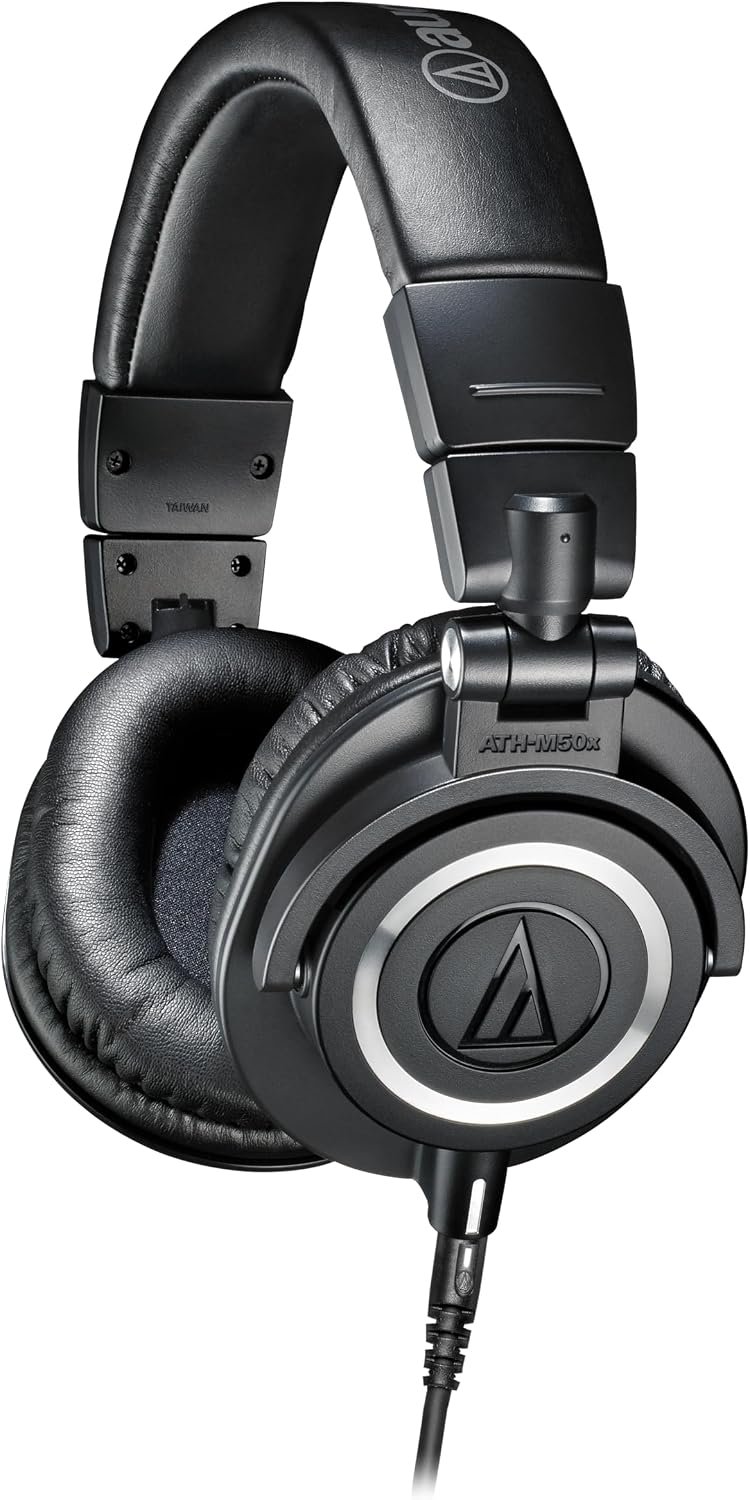
The M50x is the odd one out and belongs here anyway. It is a wired studio monitor with 45mm drivers, rare earth magnets and copper-clad aluminium voice coils, built to reproduce what was recorded rather than to flatter it. There is no battery to die, no firmware, no app, and nothing to pair.
The circumaural cups isolate passively, which blocks a useful amount of noise without any processing, and they swivel 90 degrees for one-ear monitoring. The cable detaches, which is the single most common failure point on headphones and the reason a pair like this outlasts three wireless sets.
What it does well
- 45mm drivers built for accurate rather than flattering reproduction.
- Detachable cable, so the usual failure point is a replaceable part.
- 90-degree swivelling earcups for one-ear monitoring.
- Nothing to charge, pair or update.
What to know before buying
- No active noise cancelling at all, only the passive isolation of the cups.
- Wired only, so a phone without a headphone jack needs an adapter.
6. Soundcore Q20i: Hybrid Cancellation at a Fraction of the Flagship Price
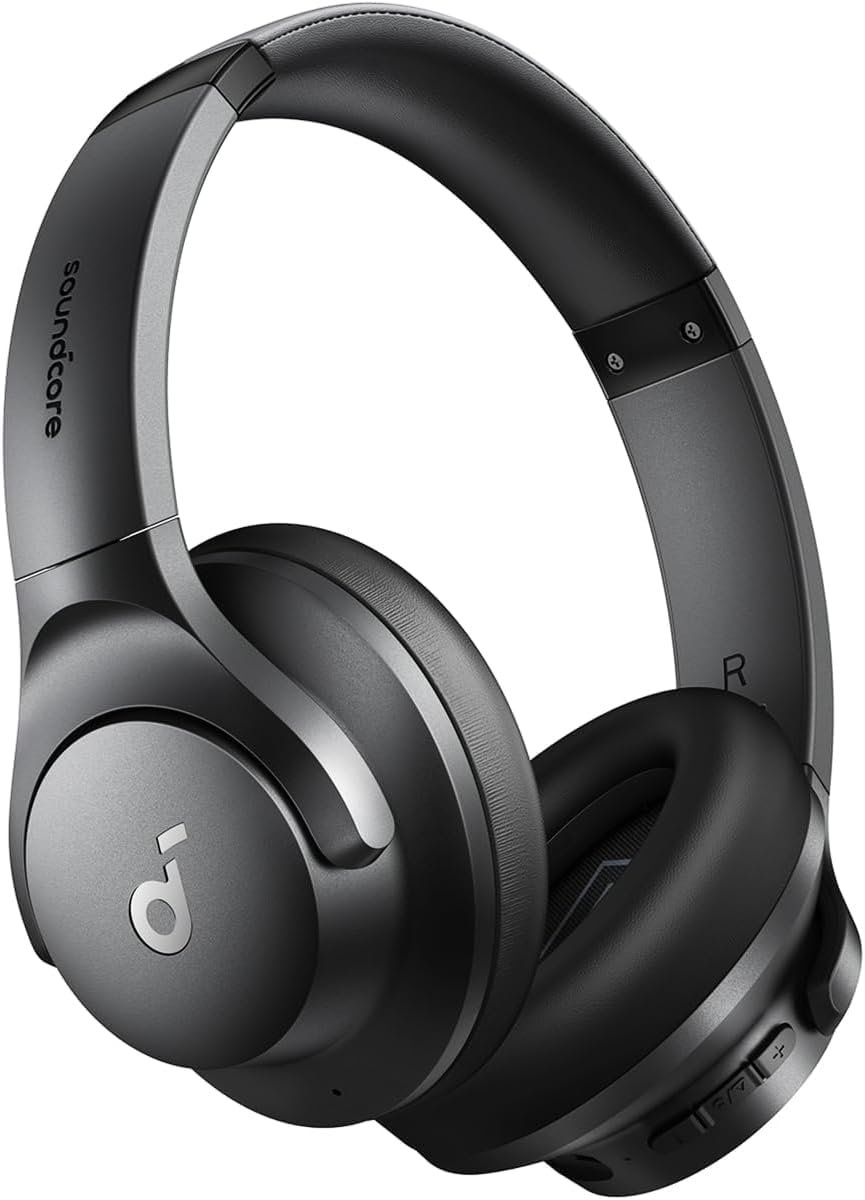
Hybrid cancellation means microphones on both the inside and the outside of the cup, two of each here, which is the architecture the expensive pairs use. Anker claims up to 90 percent of external noise reduced. Treat the percentage as marketing and the architecture as real: this is a considerably more capable system than the single-mic feedforward cancellation usually found at this price.
Battery is 40 hours with cancellation on and 60 with it off, it holds two Bluetooth connections at once, and the app carries a 22-preset equaliser. The 40mm drivers with BassUp are tuned for emphasis rather than accuracy.
What it does well
- Hybrid ANC with two internal and two external microphones.
- 40 hours with ANC on, 60 hours without.
- Dual connection to two devices with instant switching.
- App equaliser with 22 presets and a transparency mode.
What to know before buying
- BassUp tuning is heavy-handed and worth flattening in the app if you want accuracy.
- Bluetooth 5.0 rather than a newer revision, and no aptX Adaptive.
7. Sony WH-CH720N: 192 Grams, Which You Notice by Hour Three
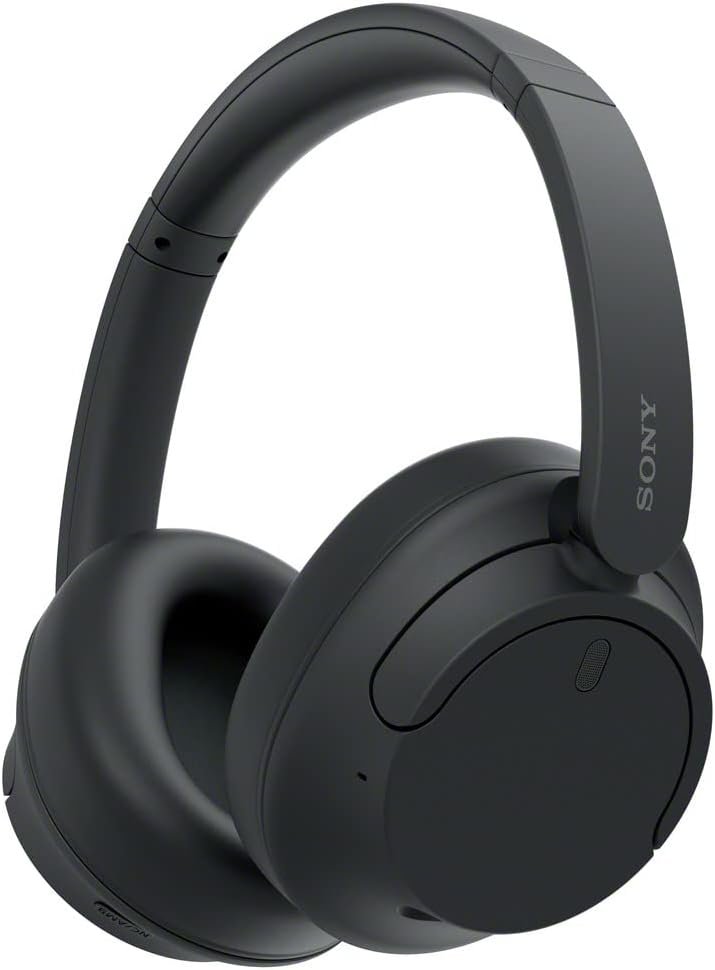
At 192 grams this is the lightest wireless noise cancelling headband Sony has made, and weight is the specification that decides whether headphones get worn for a full working day or taken off at lunch. Nothing else here competes on that, including the pairs that cost several times more.
It runs Sony’s Integrated Processor V1, the same chip family as the more expensive models, with Dual Noise Sensor cancellation, adaptive sound control and DSEE upscaling. Battery is 35 hours, and three minutes of charge returns an hour of playback.
What it does well
- 192 grams, the lightest wireless ANC pair Sony makes.
- 35-hour battery with a three-minute charge giving an hour.
- Integrated Processor V1 with Dual Noise Sensor cancellation.
- Adaptive Sound Control adjusts to your surroundings.
What to know before buying
- Lighter construction means more plastic and less of the premium feel of the 1000X range.
- Cancellation is a clear step below the XM4, let alone the XM6.
What Noise Cancelling Removes, and What It Cannot
All of these systems work the same way. A microphone samples the sound arriving at your ear, the processor generates a waveform inverted against it, and the two cancel. That principle, active noise control, works best on sound that is low-frequency and continuous, because the processor can predict what comes next.
This is why the same headphones feel transformative on a plane and disappointing in a cafe. Engine drone, air conditioning, train rumble and road noise are steady and low, and they mostly vanish. Speech, cutlery, a barking dog and a child are sudden and broadband, and they largely get through. No amount of extra microphones changes the physics, which is worth knowing before you spend flagship money expecting silence in an open-plan office.
Where processing does help is adaptation speed, and that is the real argument for Sony’s QN3 chip and its twelve microphones: not more cancellation at a steady state, but faster adjustment as you move between environments. For unpredictable noise, the passive isolation of a well-sealed cup like the ATH-M50x does more than people expect, which is why studio monitors block speech well while cancelling nothing at all.
Battery Figures Are Quoted Four Different Ways
The battery column in the table is the least comparable row of numbers on this page, and the brands know it. Bose is the most honest, publishing both 30 hours and the 23 you actually get with Immersive Audio running. Soundcore quotes both states too. Sony quotes a single figure for the XM4 and CH720N, and states none at all for the XM6.
What to check before you trust any of them:
- Whether the figure assumes noise cancelling is on, which typically costs a third of the runtime.
- Whether a spatial or immersive audio mode is running, which on the Bose costs a further seven hours.
- What volume the test assumed, which is almost never published.
- Whether a fast-charge figure is quoted, which matters more day to day than the headline number.
That last point is underrated. The XM4 returns five hours from a ten-minute charge and the CH720N an hour from three minutes, which in practice means you are never actually caught out, regardless of the headline. Sennheiser’s 60 hours is the one figure here large enough that the distinction stops mattering. If you are also kitting out a portable setup, our portable power stations comparison runs into the same problem of vendors quoting capacity in incompatible ways.
Which Over-Ear Headphones to Buy
For most people the Sony WH-1000XM4 is still the right purchase. It does 90 percent of what the XM6 does for a fraction of the money, and the features it has that the newer models changed, Speak-to-Chat and wearing detection, are ones people actually use.
Buy the WH-1000XM6 if you want the best cancellation available and take a lot of calls outdoors, and the Bose QuietComfort Ultra if spatial audio appeals or you need wired USB-C calling. Choose the Sennheiser Momentum 4 if charging is the thing that annoys you, the ATH-M50x if you are monitoring or mixing rather than commuting, the Soundcore Q20i if the budget is tight and you still want real hybrid cancellation, and the WH-CH720N if you will wear them all day and weight matters more than outright silence. If it is game audio you are chasing, the handhelds in our best gaming handhelds roundup pair with any of the wireless models here.
Frequently Asked Questions
Are over-ear headphones better than earbuds?
For sustained listening, usually yes. A sealed cup isolates passively before any processing happens, the larger drivers move more air, and the batteries are far bigger, which is why 30 to 60 hours is normal here and five to eight is normal for earbuds. Earbuds win on pocketability and nothing else that matters to sound.
How loud is too loud when using headphones?
The World Health Organization links hearing loss to both the level and the duration of exposure, and the risk rises as each increases. Noise cancelling helps indirectly here: when the background is quieter you stop turning the volume up to mask it, which is the usual route to damaging levels on a commute.
Does noise cancelling drain the battery?
Yes, typically by around a third. The Soundcore Q20i is the clearest illustration on this page, quoting 40 hours with cancellation on and 60 with it off. Most brands publish only the figure that flatters them, so assume a quoted number without a stated condition is the optimistic one.
Do I need wired headphones for music production?
For monitoring and mixing, wired is still the sensible default, which is why the ATH-M50x is on this list. Bluetooth introduces latency that makes tracking against a click difficult, and lossy codecs plus tuned-in bass emphasis work against hearing the recording as it actually is. For listening rather than producing, wireless is fine.