The iPhone 18 Pro Max is the heaviest iPhone Apple has made. It weighs 249 grams before you put anything on it, which means the case you choose changes how the phone feels more than it ever has.
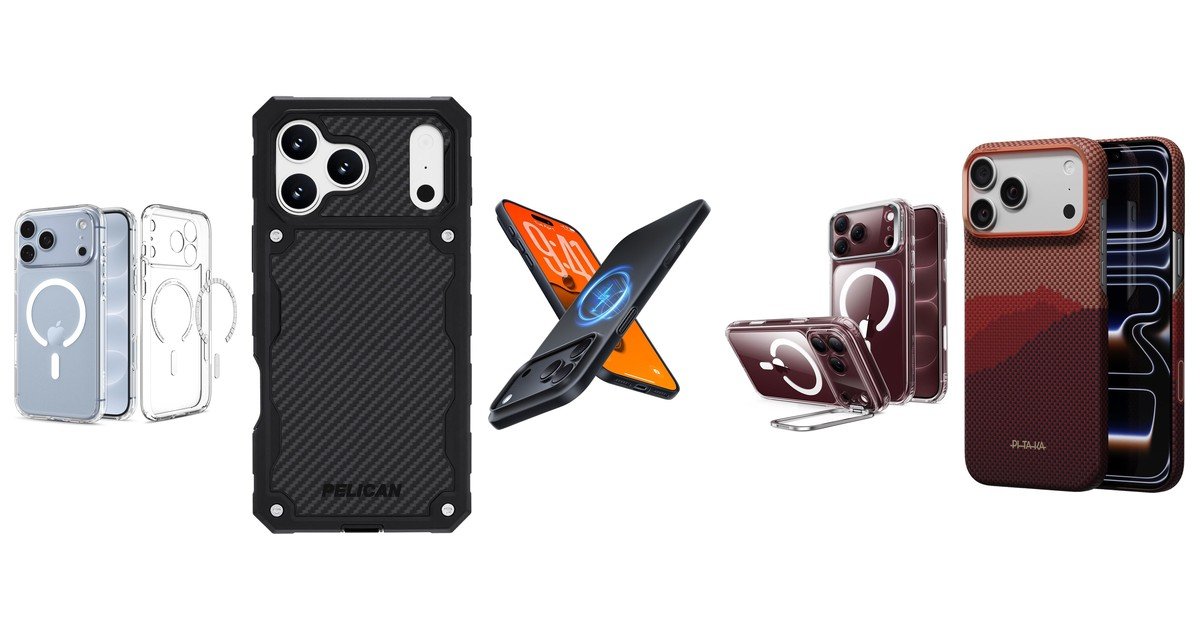
These are five cases worth buying, each for a different reason: the best all-rounder, the toughest, the thinnest, the one with a built-in stand, and the one for people who hate the feel of a case.
CanyonWire is an Amazon Associate. We earn from qualifying purchases made through links on this page, at no extra cost to you.
The 5 Best iPhone 18 Pro Max Cases
| # | Case | Style | Standout feature | Best for |
|---|---|---|---|---|
| 1 | Spigen Ultra Hybrid MagFit | Clear | Anti-yellowing resin, air cushion corners | Most people |
| 2 | Pelican Shield | Rugged | Hard armoured shell with MagSafe | Building sites and trades |
| 3 | TORRAS Magnetic Slim Fit | Ultra thin | Matte hard back, minimal bulk | Keeping the phone pocketable |
| 4 | ESR Classic Hybrid Flex Stand | Clear with stand | Built-in kickstand, Camera Control cutout | Watching video |
| 5 | PITAKA Aramid Fibre | Minimal | Aramid weave, close to caseless | Hating cases |
1. Spigen Ultra Hybrid MagFit: Best Overall
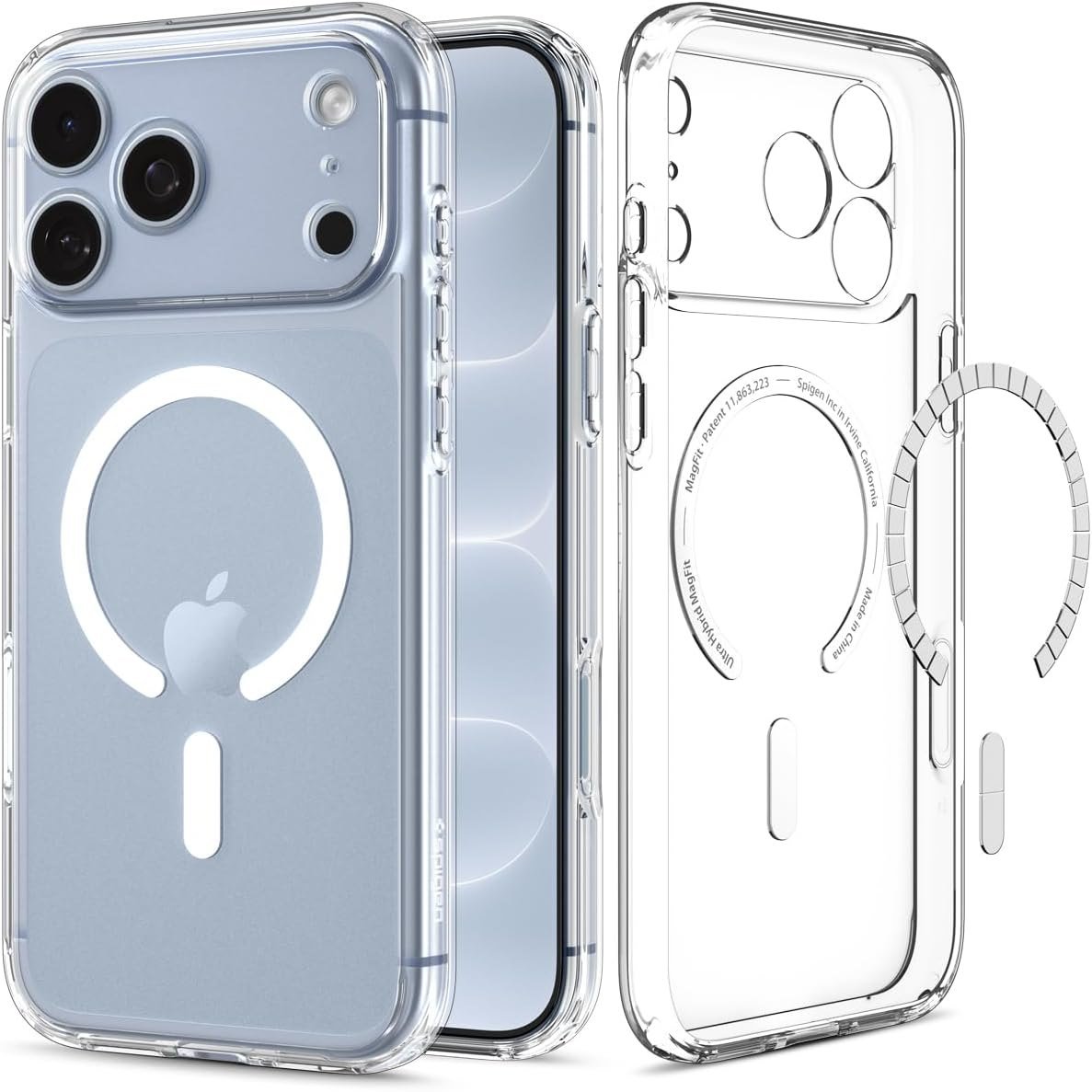
The Ultra Hybrid is the case most people should buy, and it has been for several iPhone generations. A hard clear back, a flexible bumper, and air cushion corners that take the energy out of a drop on to a corner, which is how phones actually break.
The MagFit version has the magnet ring built in, so MagSafe charging and wallets snap on properly rather than approximately. Spigen uses an anti-yellowing resin for the clear back, which is the single thing that ruins cheap clear cases after four months in a pocket.
What works:
- Anti-yellowing resin keeps the clear back clear.
- Air cushion corners target the part that actually cracks.
- Built-in magnet ring for proper MagSafe alignment.
What to watch:
- Clear backs always show dust at the edges eventually.
- Not enough armour for genuinely rough work.
2. Pelican Shield: Most Rugged
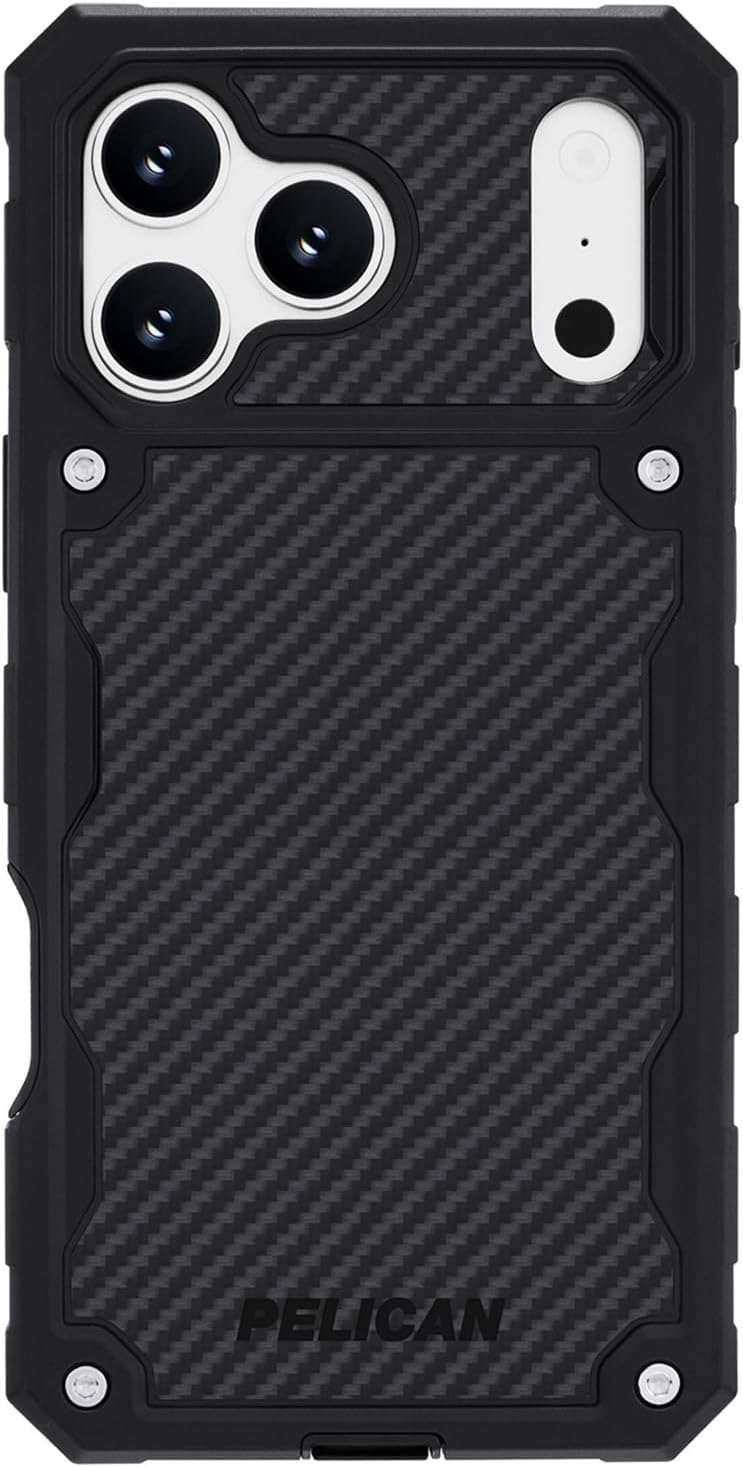
Pelican built its name on cases that protect camera gear in transit, and the phone line runs on the same logic. The Shield is the armoured end of its range, with a hard outer shell over a shock-absorbing liner and MagSafe magnets built in.
This is the one to buy if the phone lives on a work site, in a toolbag or on a boat. It is also the one that makes a 249 gram phone feel considerably heavier, so buy it for a reason rather than for reassurance.
What works:
- Genuinely armoured construction from a brand that specialises in it.
- MagSafe magnets included rather than an afterthought.
- Raised lip protects the camera plateau when set down.
What to watch:
- Adds real bulk and weight to an already heavy phone.
- Rugged cases make one-handed use harder.
- The most expensive option here.
3. TORRAS Magnetic Slim Fit: Thinnest Protection
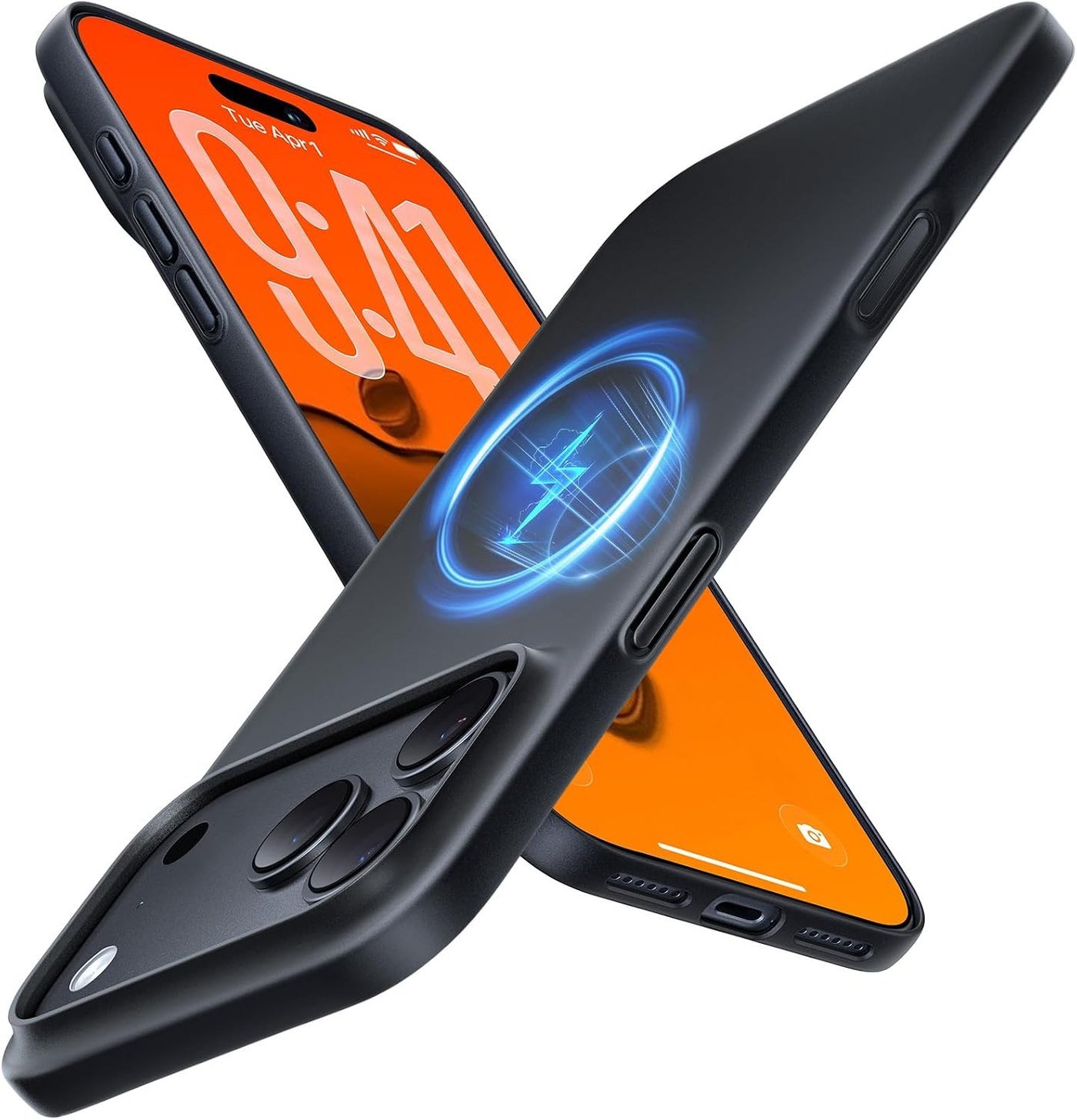
At 249 grams the iPhone 18 Pro Max is already a lot of phone, and a thick case turns it into a brick. The TORRAS Magnetic Slim Fit goes the other way: a matte hard back, minimal side walls and the magnet array still built in.
The matte finish is doing more work than it looks. It resists fingerprints, and it gives the phone grip that a glossy clear case does not, which is the practical argument for slim cases being safer than they sound.
What works:
- Adds very little thickness or weight.
- Matte finish resists fingerprints and adds grip.
- Full MagSafe magnet array despite the thin profile.
- Will not yellow the way clear plastic does.
What to watch:
- Thin cases offer the least drop protection here.
- Hides the phone colour you paid for.
- Low side walls mean less screen-down protection.
4. ESR Classic Hybrid with Flex Stand: Best Built-In Stand
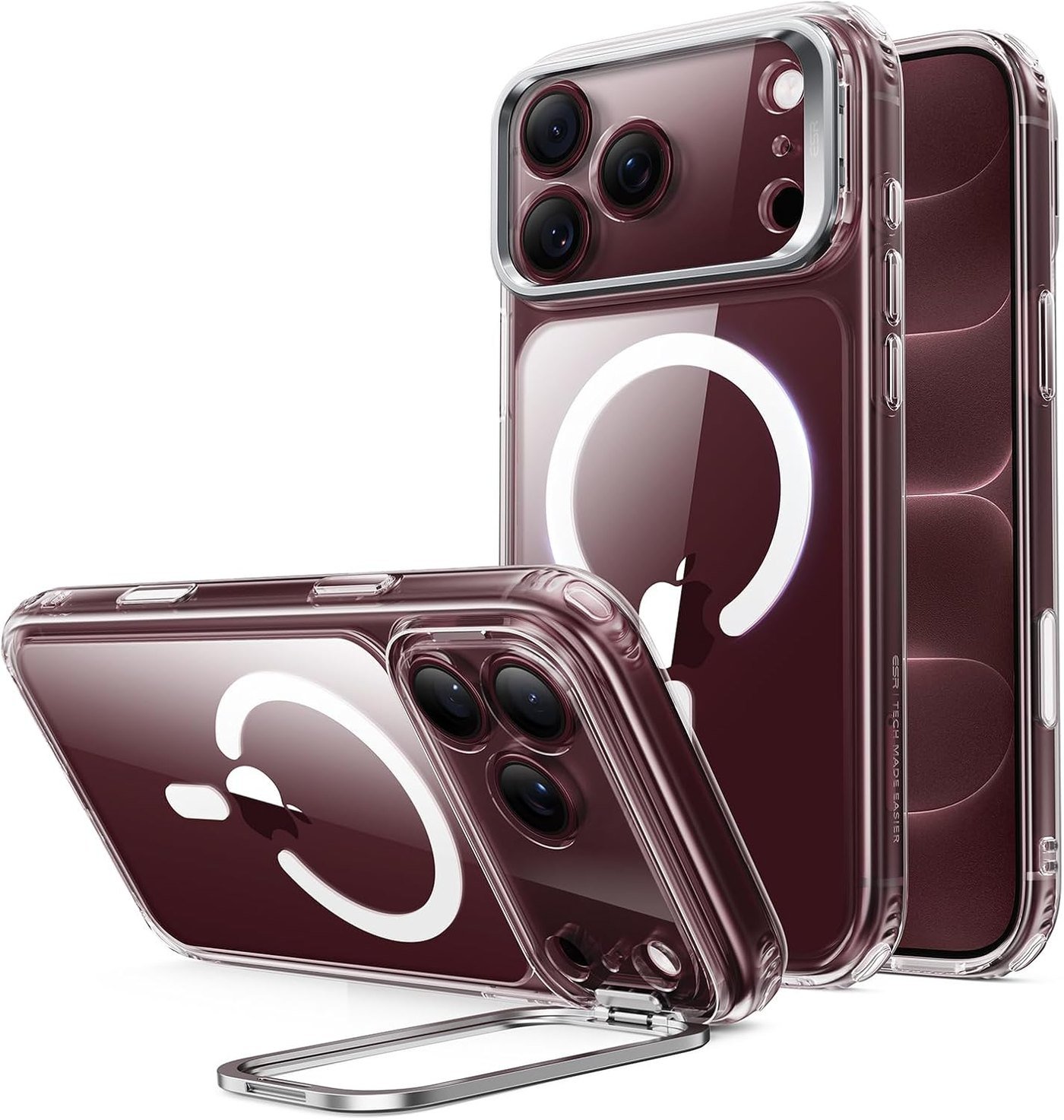
A kickstand sounds like a gimmick until you spend a flight propping a phone against a cup. ESR’s Flex Stand folds flat into the back and holds the phone at whatever angle you want, in portrait or landscape.
ESR builds the clear back with UV resistance to slow yellowing and a fingerprint-resistant finish. The case also has a dedicated Camera Control cutout, which matters because that button is a capacitive strip rather than a normal clicker and a badly cut case makes it unreliable.
What works:
- Kickstand works in both orientations and folds flush.
- UV-resistant clear back to resist yellowing.
- Proper Camera Control cutout rather than a rough hole.
What to watch:
- The stand adds a seam and a little thickness.
- Clear plastic still yellows eventually, just slower.
- Kickstands are a weak point if the case is dropped open.
5. PITAKA Aramid Fibre: Best Minimal Case
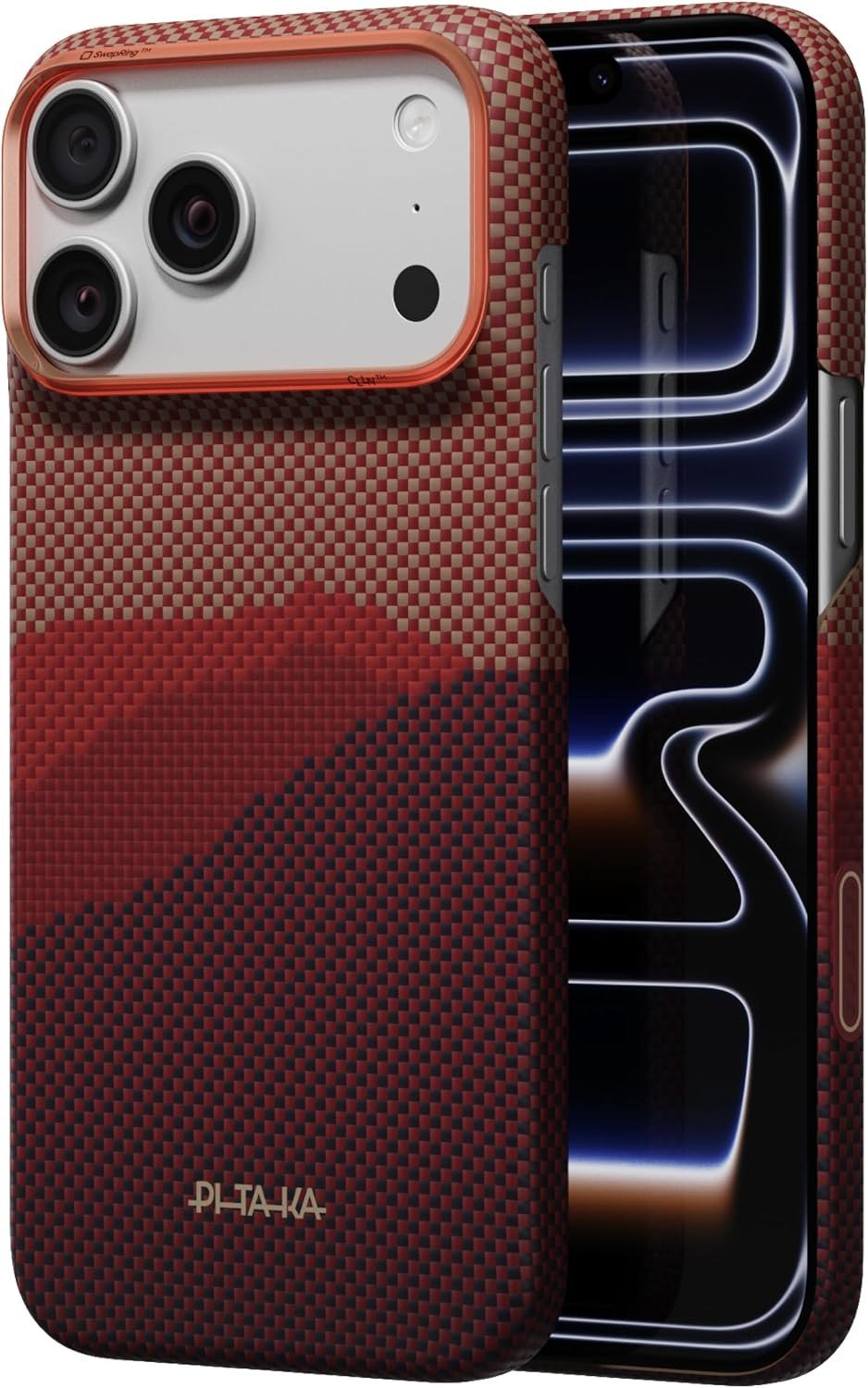
PITAKA weaves its cases from aramid fibre, the material family used in body armour and racing bodywork. The result is a case under a millimetre thick that PITAKA markets as a caseless feeling, because you can still tell what the phone underneath is shaped like.
Buy it for grip and scratch protection rather than drop protection. It will save the back glass and the finish from everyday wear. It will not save the phone from a drop on to concrete, and PITAKA does not claim it will.
What works:
- Extremely thin, with almost no added bulk.
- Aramid weave grips well and does not discolour.
- Keeps the phone close to its original dimensions.
- Distinctive finish rather than another clear shell.
What to watch:
- Minimal drop protection by design.
- Costs more than thicker, tougher cases.
- No raised lip worth speaking of around the camera.
Which of These Five Should You Buy?
If you want one answer: the Spigen Ultra Hybrid MagFit. It is the case that suits the most people, it protects the corners that actually break, and the clear back does not go yellow on you. Past that, buy for how you use the phone:
- You drop your phone and you know it. Pelican Shield, and accept the extra bulk as the price of not cracking a $1,299 phone.
- You carry it in a front pocket. TORRAS Magnetic Slim Fit adds almost nothing to the thickness.
- You watch a lot of video. ESR Classic Hybrid with Flex Stand, because the stand folds flat and works in both orientations.
- You want the phone to still look like the phone. PITAKA’s aramid fibre case, at about a millimetre thick.
Buy the case before the phone lands. The iPhone 18 Pro Max ships on 18 September, and the first week out of the box is when a new phone is most likely to hit the floor.
What Actually Matters on an iPhone 18 Pro Max Case
Four things separate a good case from a cheap one on this specific phone:
- A real magnet array, not just MagSafe compatible. The iPhone 18 Pro Max supports MagSafe and Qi2 charging up to 25W. A case without magnets forces you to aim the charger, and slow or failed charging usually traces back to a case that only claims compatibility.
- A proper Camera Control cutout. Camera Control is a touch-sensitive control, not a plain button. Cases either cut a clean opening or fit a conductive cover. A thick plastic flap over it makes swipe gestures unreliable.
- A raised lip around the camera plateau. The camera housing is the tallest part of the phone, so it takes the scratches every time you set the phone down face up.
- Weight you are willing to carry. The phone is 249 grams. A heavy armoured case can push the total past 320 grams, which is a genuinely different object in a jacket pocket.
Anti-yellowing matters only on clear cases, and it is the difference between a case that still looks new next summer and one that looks like old sellotape. If you want a clear case, pay for the resin. If you do not care about seeing the phone, a matte case sidesteps the problem entirely.
Worth pairing with a screen protector, since Ceramic Shield 2 resists scratches but is not immune.
Frequently Asked Questions
Does the iPhone 18 Pro Max need a case?
It has an aluminium unibody with Ceramic Shield 2 on the front and Ceramic Shield on the back, and it is rated IP68 to six metres for 30 minutes. It is the toughest iPhone so far.
None of that helps against a corner drop on to pavement, and a replacement back is expensive out of warranty. A case is cheap insurance on a phone that starts at $1,299.
Will any case work with MagSafe charging?
No. Cases without a magnet array let the phone charge but do not align it, and misalignment is the usual cause of slow or interrupted wireless charging.
Look for a built-in magnet ring. All five cases here have one. The iPhone 18 Pro Max supports up to 25W over both MagSafe and Qi2.
Do clear cases still turn yellow?
Cheap ones do, usually within months, because UV light and skin oils break down the plastic. Better cases use UV-resistant or anti-yellowing resin, which slows it down considerably.
It slows the process rather than stopping it. If a permanently clean look matters more than seeing the phone, buy a matte case instead.
Which case is best if I hate bulk?
PITAKA’s aramid fibre case, which is roughly a millimetre thick. The TORRAS Magnetic Slim Fit is the next thinnest while still giving you a raised edge around the screen.
Both trade drop protection for pocketability. That is a reasonable trade if you are careful, and a bad one if you are not.
Should I buy a case before the phone arrives?
Yes. All five of these ship now, and the iPhone 18 Pro Max lands on 18 September. A phone is most at risk in its first week, when it is out of the box, being handed round and not yet part of your muscle memory.
Ordering ahead also means you are not carrying it bare for three days waiting on delivery.
Do I need a screen protector as well as a case?
A case guards the corners, the back and the camera plateau. It does nothing for the middle of the screen, which is what your keys scratch when the phone goes face down in a bag.
Ceramic Shield 2 is tough, but it is still glass. We compare the options in our guide to the best iPhone 18 Pro screen protectors.