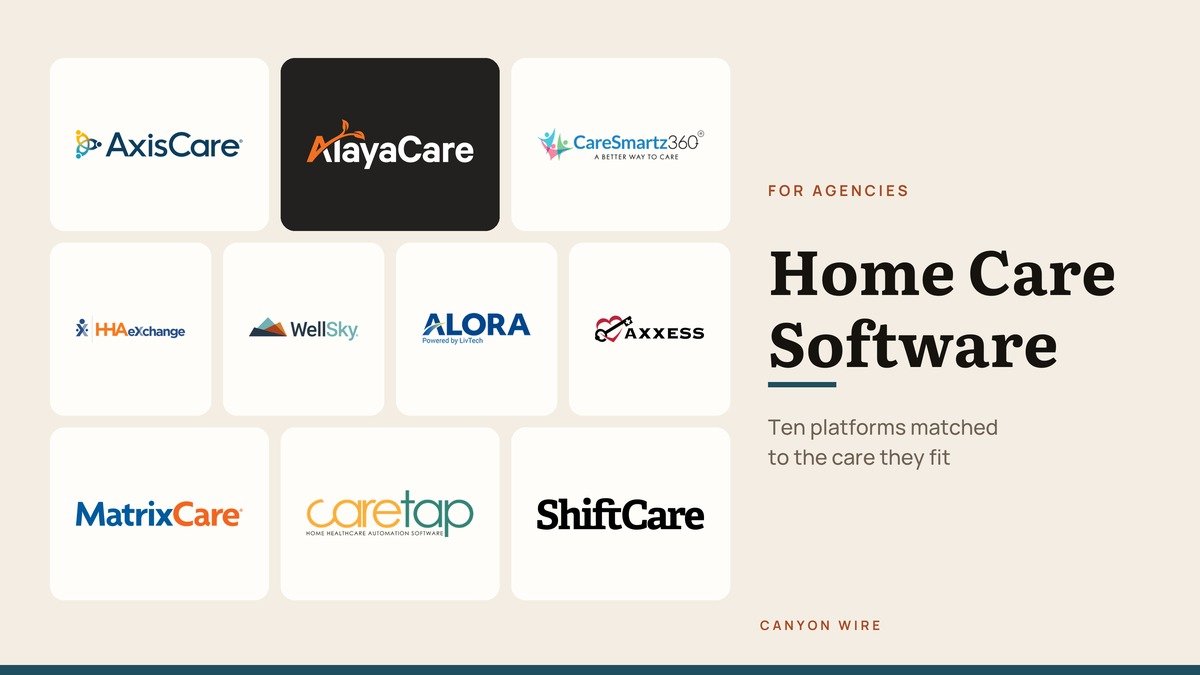
Choosing home care software is less about who has the longest feature list and more about who your payer is. A Medicaid personal care agency and a private-pay companion service need different machinery, and buying the wrong one shows up as denied claims rather than a bad demo.
The ten platforms below are grouped by the kind of agency each one is built for, with care lines, verification and price taken from each vendor. Two publish a number. The rest quote, and two of those band the quote by how many clients you carry.
What Home Care Software Does for an Agency
At its simplest, home care is help delivered where someone lives, from bathing and meals to skilled nursing. The software behind it does three jobs: it rosters caregivers against an authorization or care plan, it proves the visit happened, and it turns the hours into a claim the payer accepts.
The proof step is where most of the compliance risk sits. Section 12006 of the 21st Century Cures Act required states to put electronic visit verification in place for Medicaid personal care services from January 2020 and home health services from January 2023, per the Medicaid.gov EVV guidance.
Scale explains the rest. The Bureau of Labor Statistics put home health and personal care aide employment at 4,677,100 in 2025, with 18 percent growth projected through 2035 and roughly 760,500 openings a year at a median wage of $17.21 an hour. Software that a new hire cannot learn in a shift costs real money.
Home Care Software Compared: Fit, Verification and Price
All ten platforms appear here. The verification column paraphrases what each vendor states on the product page reached from its own navigation.
| # | Platform | Built for | Visit verification | Published price |
|---|---|---|---|---|
| 1 | HHAeXchange | Medicaid-funded personal care | A core feature, with a state-sponsored EVV portal | Quote |
| 2 | CareSmartz360 | Small agencies that need EVV on day one | Included in the entry plan | Quote, four plans by active clients |
| 3 | AxisCare | Agencies adding a skilled line | Listed as a feature, plus automatic visit verification in its AI suite | Quote, four tiers by client count |
| 4 | WellSky Personal Care | Private duty, or Medicare home health | Named as real-time EVV on the WellSky Home Health page | Quote |
| 5 | AlayaCare | Several service lines at once | Listed as a platform module | Quote, three growth tracks |
| 6 | Alora Health | Areas with poor mobile coverage | Built in, with GPS and telephony | Quote, by users or patients |
| 7 | Axxess | Clinical home health and hospice | Not named on its home care page | Quote |
| 8 | Caretap | Small agencies wanting a listed price | Built in, with mobile and landline clock-ins | Starter from $199 a month |
| 9 | MatrixCare | Groups running home and facility care | Not named on its private duty page | Quote |
| 10 | ShiftCare | Australian NDIS and aged care | GPS-verified clock in and out, built for Australian rules | From A$8 per user a month |
Ten Platforms, Matched to the Agency They Fit
1. HHAeXchange: The default when Medicaid pays the bills
Built for: Medicaid-funded personal care. Care lines: Personal care, IDD, self direction. Price: Quote.
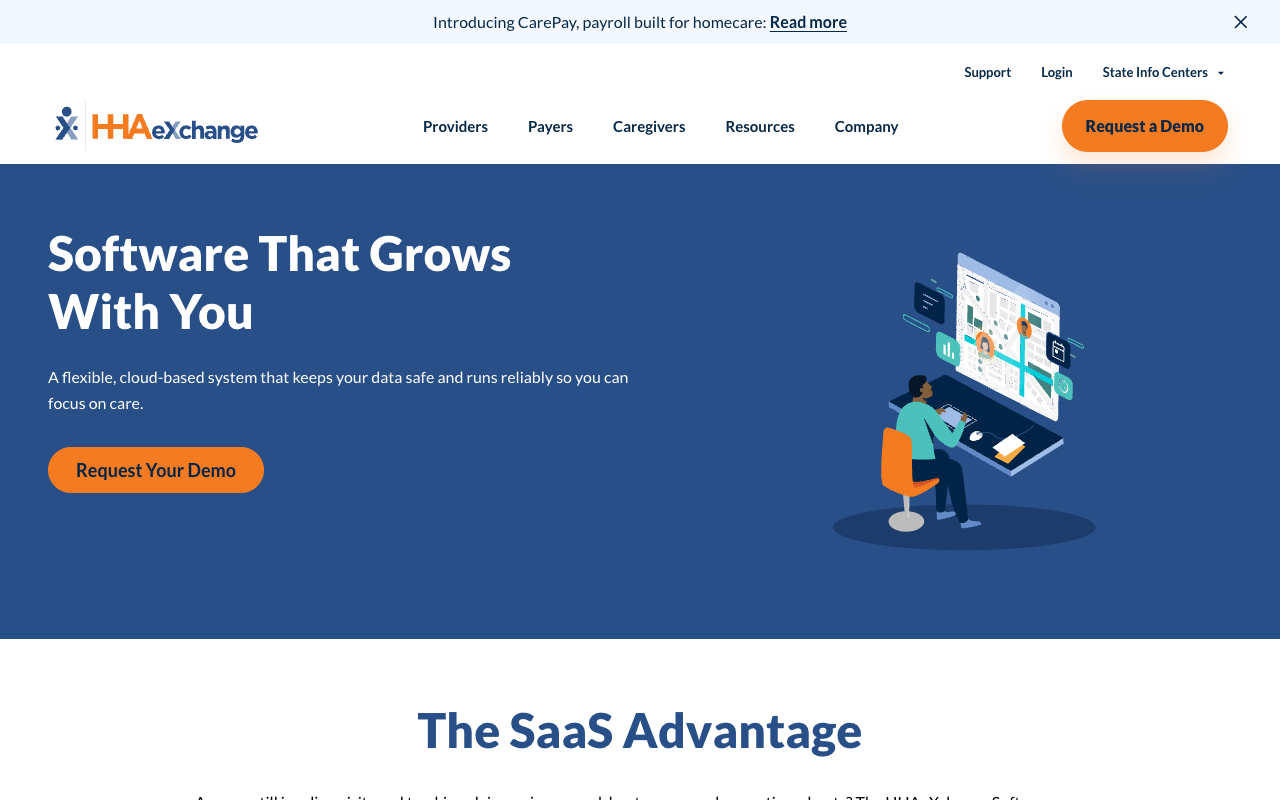
If state Medicaid dollars fund most of your hours, start here. HHAeXchange sells to payers as well as providers, and says it works with more than 180 managed care organizations and 30 state Medicaid programs alongside over 32,000 US providers. It confirms 485 million visits a year and handles $38 billion in annual payments.
Provider features run to electronic visit verification, a state-sponsored EVV portal, scheduling driven by authorizations and plans of care, billing and payroll that validate visits before claims leave, and insight dashboards for compliance and staffing. The caregiver app is offered in more than 20 languages. A payroll product called CarePay is the newest addition.
2. CareSmartz360: The entry plan a small agency can actually use
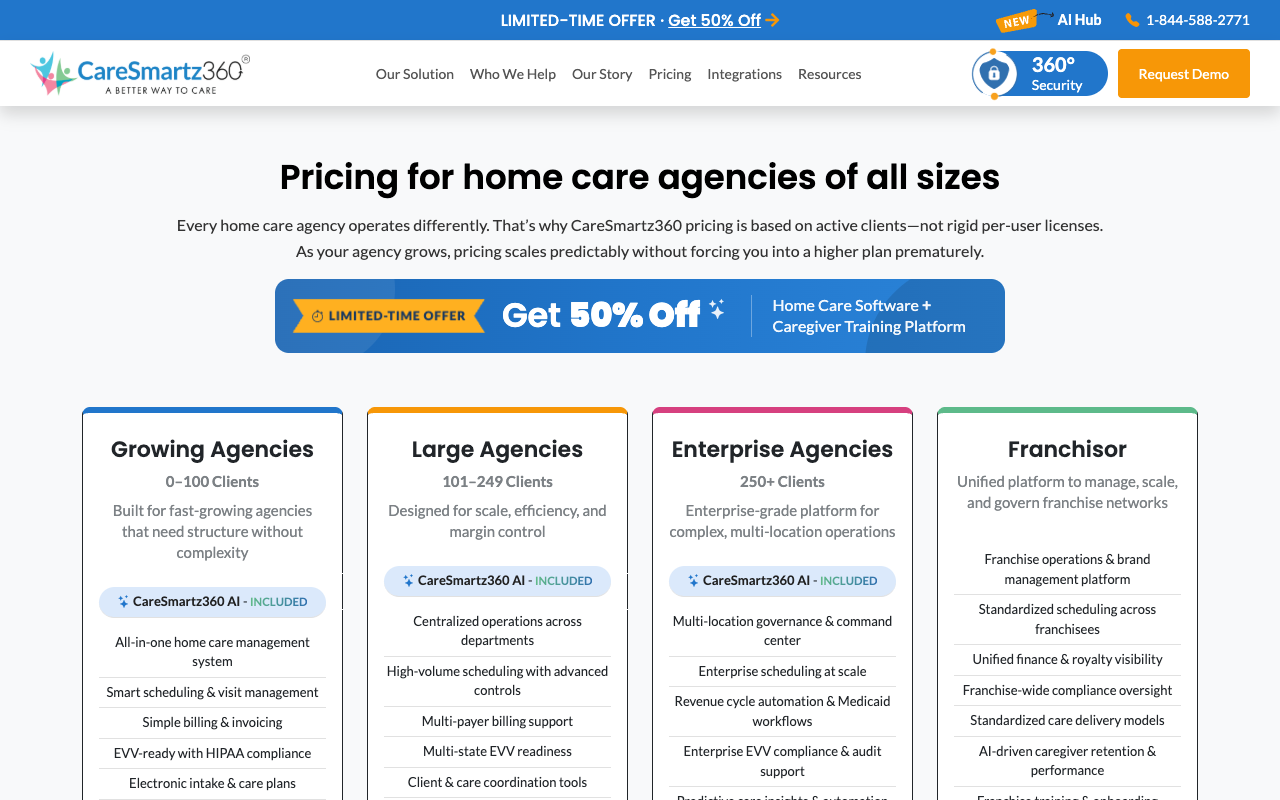
Built for: Small agencies that need EVV on day one. Care lines: Home care agencies, including franchisors. Price: Quote, four plans by active clients.
Many platforms hold verification back for a higher tier. CareSmartz360 does not: its Growing Agencies plan, for zero to 100 clients, already includes scheduling, simple billing, EVV, electronic intake and care plans, mobile apps, HIPAA-compliant storage and onboarding with data migration.
Above that sit Large Agencies at 101 to 249 clients, Enterprise at 250 or more, and a Franchisor plan for brands managing royalties and standardized scheduling across franchisees. Pricing is set by active clients a month rather than seats, so a quiet month costs less. Caregiver training is handled through Learn2Care.
3. AxisCare: Room to add skilled nursing later
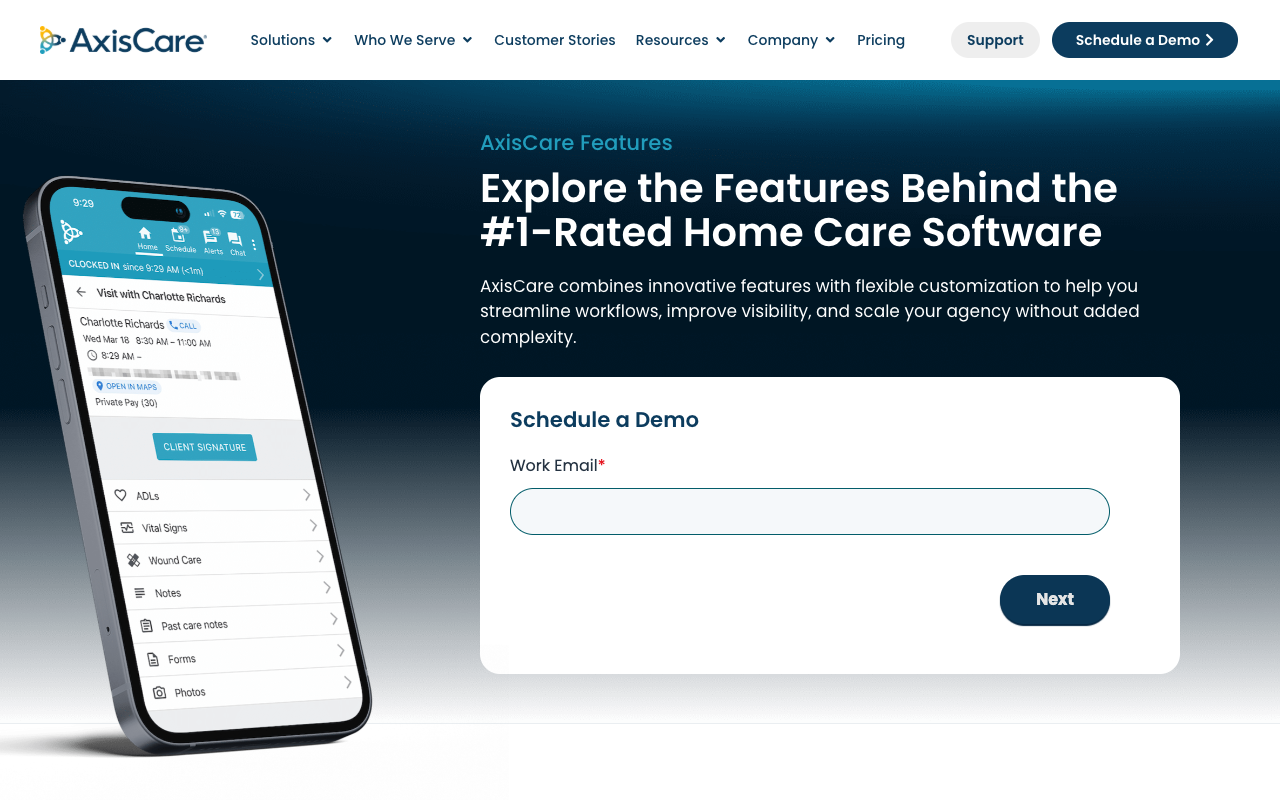
Built for: Agencies adding a skilled line. Care lines: Home care, skilled care, IDD. Price: Quote, four tiers by client count.
AxisCare runs home care, skilled care and IDD services from one system, which is the difference between adding a nursing line and replacing your software to add it. Care planning, plan of care, practitioner orders, visit forms, vital signs and wound care sit in the skilled module.
On the admin side it lists billing, custom forms, custom reporting, business intelligence, client and family portals, two-way chat, medication reminders and payment processing, with revenue cycle work split between Medicaid and VA billing. The Texas company bands its quotes at 25 clients, 40 to 500, 500 to 1,000 and 1,000 or more.
4. WellSky: Two products, and you must pick the right one
Built for: Private duty, or Medicare home health. Care lines: Non-medical private duty home care. Price: Quote.
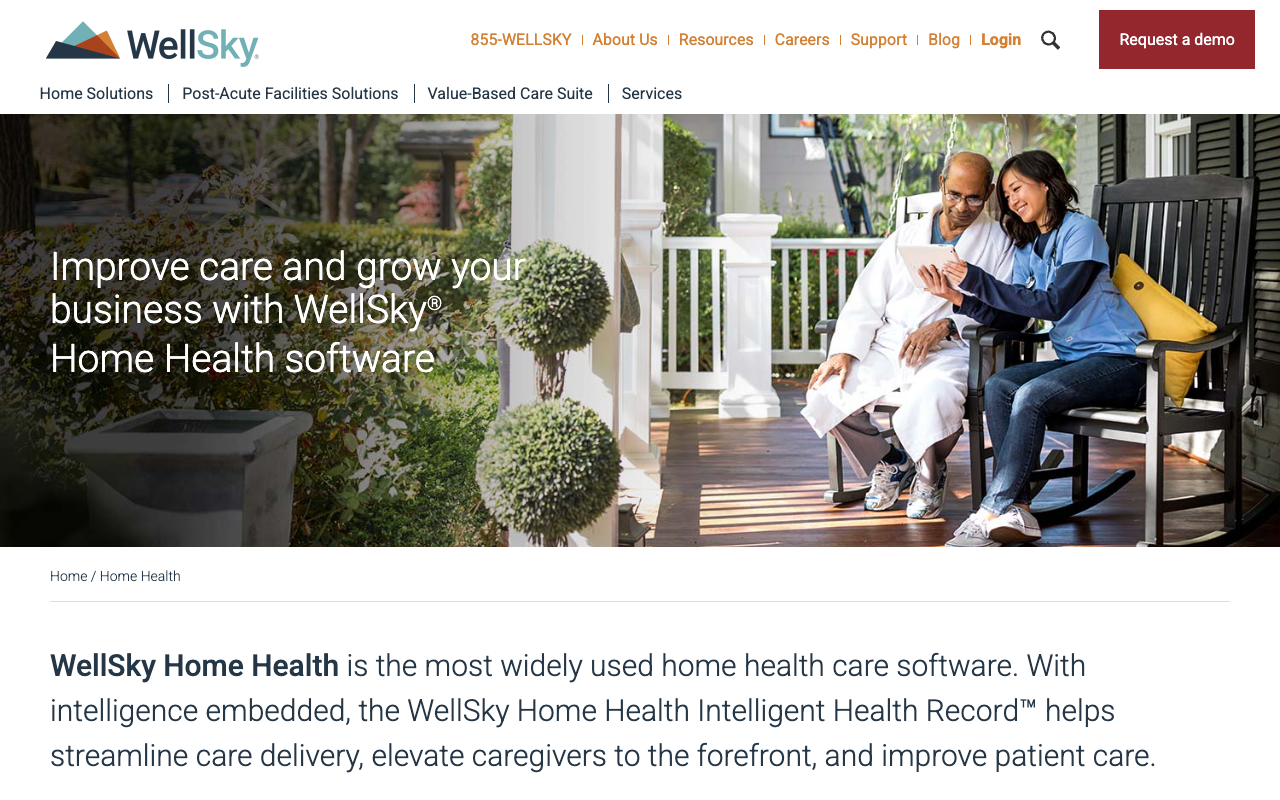
WellSky is the one name on this list where the purchase can go wrong before anything is installed. WellSky Personal Care is built for non-medical private duty organizations. WellSky Home Health is a separate clinical record for Medicare-certified agencies, described as the most widely used home health care software.
Personal Care focuses on growth analytics for referral marketing, applicant tracking and screening, caregiver engagement and family communication, with AI workflows branded SkySense. Home Health is where real-time EVV, OASIS quality routing, Medicare and managed-care claims and CareInsights predictive analytics live. Name your care type on the first call.
5. AlayaCare: For an agency running several service lines
Built for: Several service lines at once. Care lines: Home care, infusion, private duty nursing, pediatrics, IDD. Price: Quote, three growth tracks.
AlayaCare covers the widest spread of service lines here: home care, infusion, private duty nursing, pediatrics, and intellectual and developmental disabilities, with payor routes named for insurance, private pay, Medicaid and Veterans Affairs. It says more than 700 customers use it.
The platform is sold as configurable modules rather than one bundle, covering intake, scheduling, workforce management, payroll, visit management, revenue cycle management, EVV, care planning and a family portal, plus named AI agents for intake, scheduling, billing and clinical work. Separate regional sites serve the United States, Canada, and Australia and New Zealand.
6. Alora Health: When caregivers cannot rely on mobile data
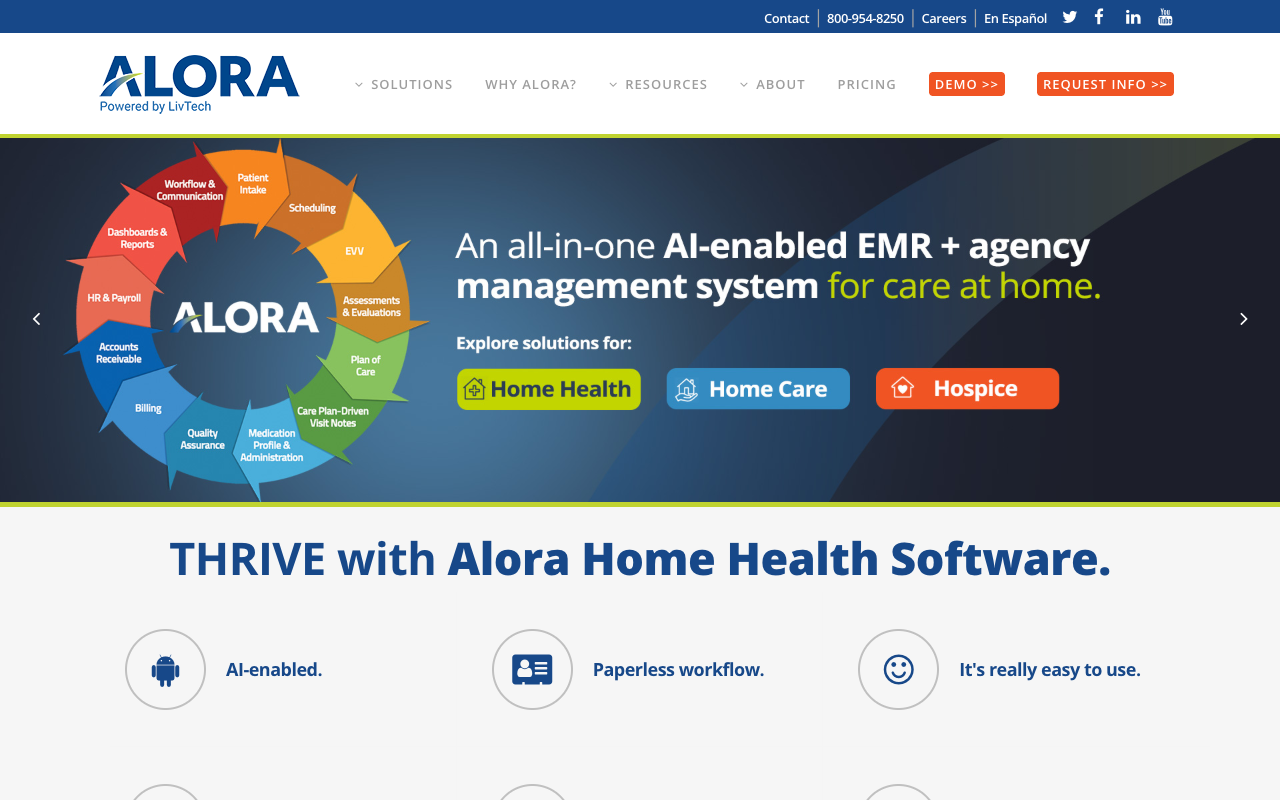
Built for: Areas with poor mobile coverage. Care lines: Home health, home care, hospice, pediatric, companion care. Price: Quote, by users or patients.
Alora states that its EVV is built in and compliant with the 21st Century Cures Act, with both GPS and telephony capture. The telephony half is the point: a caregiver without a working data connection clocks in from the client landline, and the visit still verifies.
The Atlanta company runs home health, home care and hospice from one record, bills Medicare, Medicaid, commercial insurance, VA and private pay, and turns OASIS data into views tied to Star Ratings and Home Health Value-Based Purchasing. Quotes depend on staff count or patients served. Its iPhone app last shipped an update in September 2025.
7. Axxess: Clinical breadth with services wrapped around it
Built for: Clinical home health and hospice. Care lines: Home health, home care, hospice, palliative care. Price: Quote.
Axxess spans home health, home care, hospice and palliative care, and sells revenue cycle management, staffing, patient engagement and training and certification as separate products. It describes itself as a global platform used by more than 10,000 organizations.
The home care product is framed as one solution for intake, scheduling, human resources, documentation, family communication and billing. Electronic visit verification is not named on that page, which is worth raising early if Medicaid personal care is a meaningful share of your hours. Separate iPhone apps ship for home care and home health.
8. Caretap: A price on the page and a landline fallback
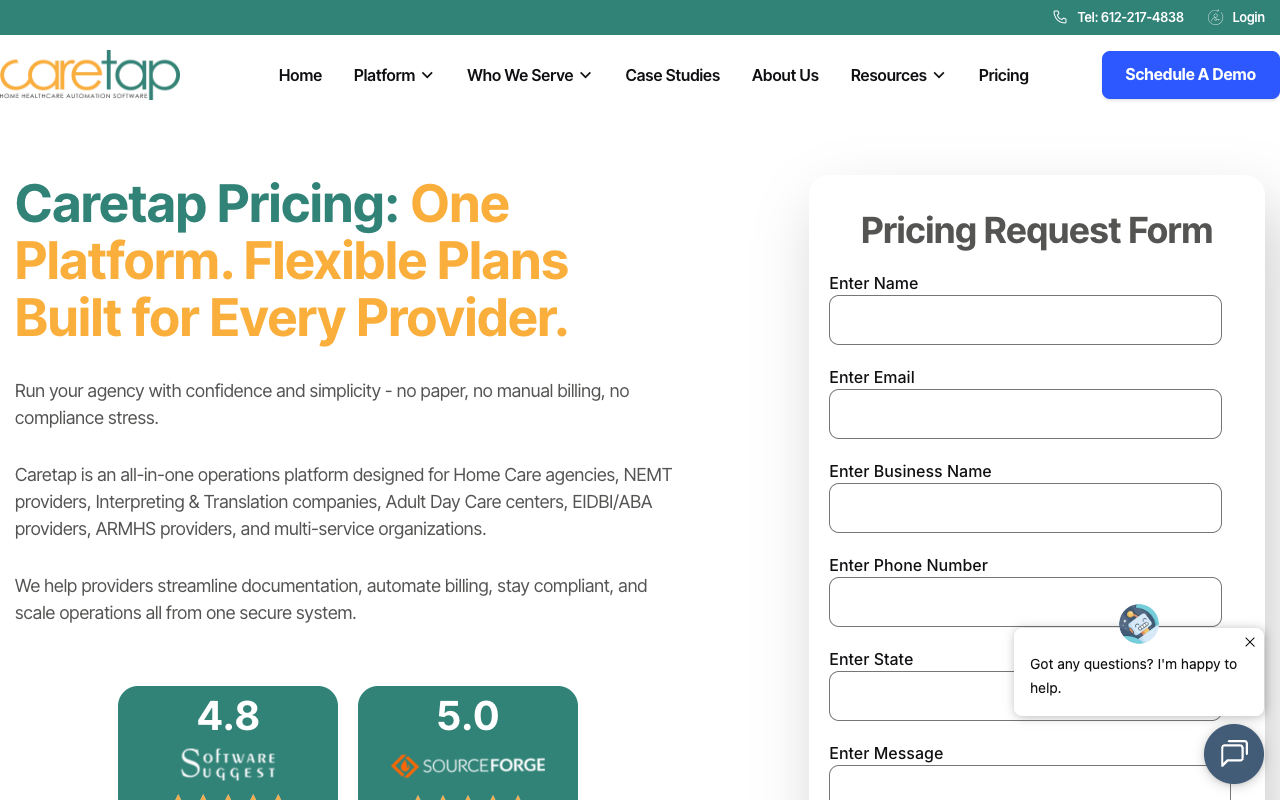
Built for: Small agencies wanting a listed price. Care lines: Home care, NEMT, adult day care, ABA, interpreting. Price: Starter from $199 a month.
Caretap and ShiftCare are the only two platforms here that publish a figure. The Caretap Starter plan is listed at $199 a month, shown as $99 for the first four months, covering scheduling, digital documentation with e-signatures, basic billing workflows and standard support. Anything larger is quoted.
Visit verification logs time, date and location with signature capture, and accepts mobile or landline clock-ins. The company also serves non-emergency medical transport, adult day care, ABA and interpreting providers, and reports more than 28,000 caregiver users and over $460 million in claims processed last year.
9. MatrixCare: One vendor for home and facility together
Built for: Groups running home and facility care. Care lines: Private duty, home health, hospice, skilled nursing, senior living. Price: Quote.
MatrixCare earns its place when home care is one line inside a larger care organization. The same vendor covers private duty and home care, home health, hospice and palliative care, skilled nursing, senior living and life plan communities, which few competitors match.
Its private duty product leads on recurring schedules and tasks, caregiver-compatibility matching, referral source management, family engagement through role-based views, and mobile visit notes with task tracking and time and attendance. Support is advertised as available 24/7. EVV is not named on that page, so put it on the demo agenda.
10. ShiftCare: Cheapest on paper, and built for another country
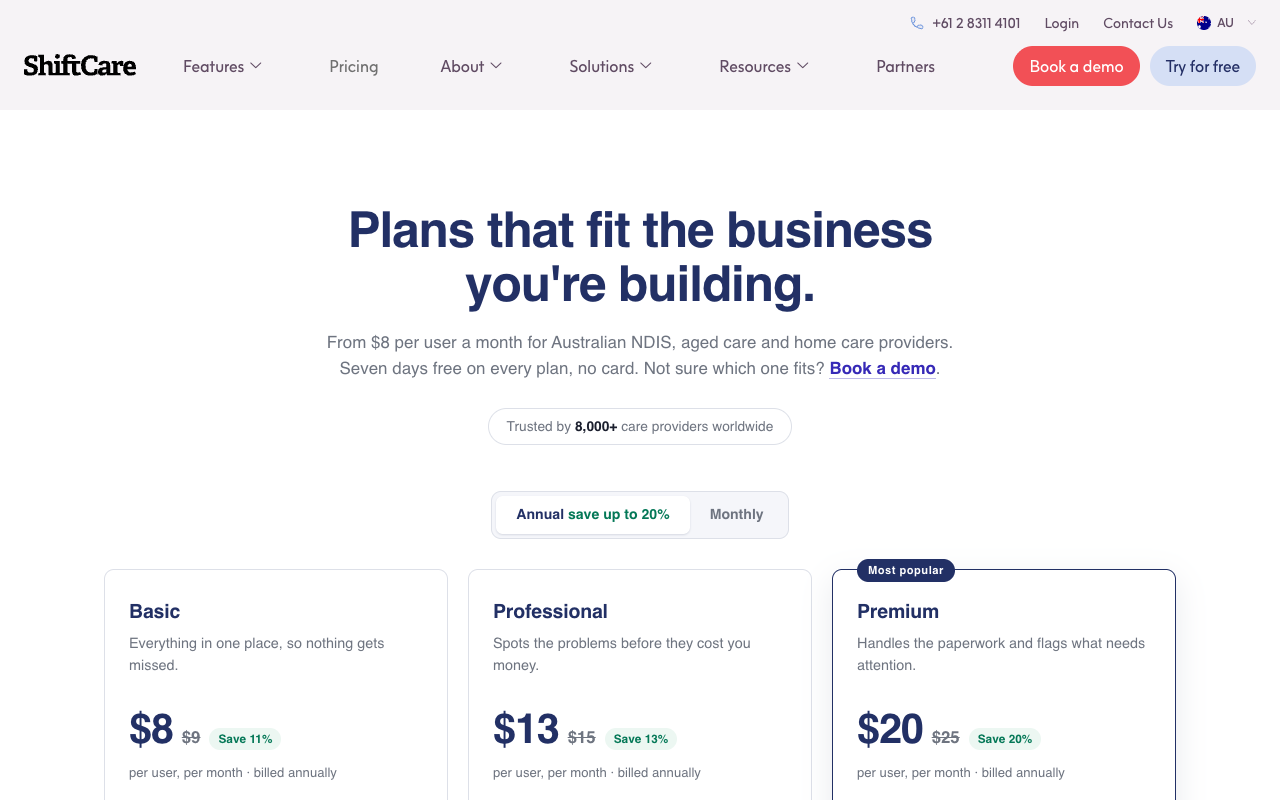
Built for: Australian NDIS and aged care. Care lines: NDIS, aged care and home care in Australia. Price: From A$8 per user a month.
ShiftCare publishes the lowest price in this group: A$8 per user a month on Basic billed annually, A$13 on Professional and A$20 on Premium, with a seven-day free trial, no card required, and a five-staff minimum. Those figures are Australian dollars, excluding GST.
The product is written for NDIS, aged care and home care providers across Australia, with bulk NDIS claim uploads, direct NDIA claims through PRODA, and shift costing that runs on Premium plans in Australia only. Clock in and out is GPS verified and the app works offline, but a US agency gets none of the Medicaid machinery it needs.
The Six Things Every Medicaid Visit Must Record
Federal law is precise about the contents of a verified visit. Under 42 U.S.C. 1396b(l)(5)(A), an electronic visit verification system must confirm all six of the following.
- The type of service performed
- The individual receiving the service
- The date of the service
- The location of service delivery
- The individual providing the service
- The time the service begins and ends
Any platform selling into Medicaid work has to produce those six fields in the format your state accepts. That is a question with a yes or no answer, and it belongs in the first conversation rather than the contract review.
What Shaped This Order
The list is ordered by how clearly each platform answers a specific agency profile, starting with the hardest constraint to work around. Medicaid billing and state verification come first, because a platform that cannot file where you bill is unusable at any price.
After that: how many care lines the vendor supports on its own site, whether verification is described on the page you would buy from, and how recently the caregiver iPhone app was updated in the App Store. Award badges and vendor rankings were left out entirely.
Running a Demo That Tells You Something
Ask for the caregiver view first. Office dashboards demo well and change nothing about whether a visit gets verified. Put a phone in airplane mode, open the app, and see what the clock-in does. Alora and Caretap both offer a landline fallback for exactly that case.
Bring your own billing rules rather than accepting the sample data. Run one real authorization, one real split shift and one overnight visit through the scheduler, and ask what the claim looks like at the other end. Software pricing in this market behaves much like the quote-only tiers we found in review management software.
Get the quote in writing with its assumed client count, since AxisCare and CareSmartz360 both band by active clients. For families arranging care without an agency, the documents usually come before the software, and our guides to living wills and power of attorney cover what to put in place first.
Frequently Asked Questions
Which home care software is best for a small agency?
CareSmartz360 includes EVV, scheduling, billing and mobile apps in its entry plan for agencies under 100 clients, which is the cheapest route to a compliant set-up. Caretap is the alternative if you want a number before the sales call, with a Starter plan listed at $199 a month.
Do any home care platforms offer a free trial?
ShiftCare offers seven days with no credit card and a five-staff minimum, and it is the only one of the ten advertising a self-serve trial. The rest run on scheduled demos. ShiftCare is built for Australian NDIS and aged care, so a US agency should treat it as a look at the category rather than a shortlist entry.
What does home care software need to integrate with?
Payroll and accounting at minimum, plus your state verification system if you bill Medicaid. AxisCare lists payroll, HR, CRM, caregiver training and applicant onboarding integrations, AlayaCare offers an API and marketplace, and ShiftCare connects to Xero, MYOB and QuickBooks Online for the Australian market.
Is home care software the same as home health software?
No. Home care covers non-medical personal care and companionship. Home health is skilled, often Medicare-certified clinical care that needs OASIS assessments and clinical notes. WellSky sells the two as separate products, while Alora, Axxess and MatrixCare cover both inside one platform.