Separating the best Nicolas Cage movies from the merely entertaining ones is a fascinating exercise, because few actors have taken so many wild creative risks. The same performer who won an Oscar for a shattering portrait of addiction has played a face-swapping terrorist, a paramedic haunted by ghosts, a doll-making serial killer and a heightened version of himself.
The lineup below starts at the top and counts down. Each placement rewards the moments when Nicolas Cage channels his famous intensity into something truthful, whether that means going enormous or going almost completely still. Several of these films come from directors with strong personal styles, which suits an actor who has always been at his best when a filmmaker gives him room to experiment.
Best Nicolas Cage Movies Compared: Year, Role and Director
| # | Movie | Year | Role | Director |
|---|---|---|---|---|
| 1 | Leaving Las Vegas | 1995 | Ben Sanderson | Mike Figgis |
| 2 | Adaptation. | 2002 | Charlie Kaufman / Donald Kaufman | Spike Jonze |
| 3 | Pig | 2021 | Rob Feld | Michael Sarnoski |
| 4 | Face/Off | 1997 | Castor Troy | John Woo |
| 5 | Wild at Heart | 1990 | Sailor | David Lynch |
| 6 | Bringing Out the Dead | 1999 | Frank Pierce | Martin Scorsese |
| 7 | Matchstick Men | 2003 | Roy Waller | Ridley Scott |
| 8 | Longlegs | 2024 | Longlegs | Osgood Perkins |
| 9 | Dream Scenario | 2023 | Paul Matthews | Kristoffer Borgli |
| 10 | The Unbearable Weight of Massive Talent | 2022 | Nick Cage / Nicky | Tom Gormican |
1. Leaving Las Vegas (1995): The Oscar-Winning Peak
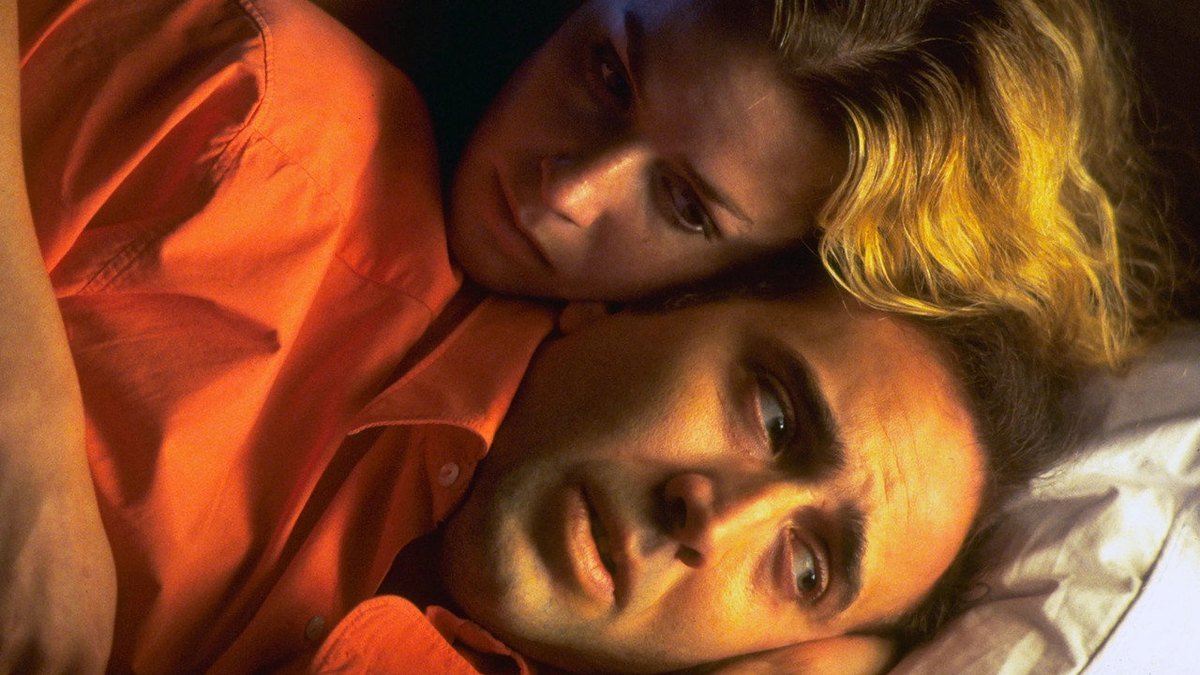
There is nothing glamorous about the city in Mike Figgis's Leaving Las Vegas. Cage plays Ben Sanderson, a once-successful screenwriter who has lost his marriage, his child and finally his job to alcohol, and who decides to move to the desert and drink until it kills him. On the Strip he meets Sera, played by Elisabeth Shue, a sex worker hiding her own pain, and they agree to accept each other exactly as they are. Julian Sands plays Yuri, the pimp who controls Sera's life.
Cage gives a performance of astonishing honesty, refusing to sentimentalize Ben's addiction while letting his charm and tenderness shine through. The scenes with Shue are achingly intimate, as Ben and Sera offer each other the only comfort they can. The role brought him the Academy Award for Best Actor, the Golden Globe for Best Actor in a Drama and the Screen Actors Guild Award for a leading actor, at the 1996 ceremonies. Nothing else in his career quite matches it, so it sits first.
2. Adaptation. (2002): Double Trouble

Charlie Kaufman wrote himself into the screenplay of Adaptation., and Spike Jonze cast Cage to play him. The film follows Kaufman's agonizing attempt to adapt Susan Orlean's nonfiction book about a Florida orchid poacher, while his carefree twin brother Donald, also played by Cage, breezes into screenwriting with a cliché-packed thriller. Meryl Streep plays Orlean, Chris Cooper plays the charismatic, gap-toothed orchid thief John Laroche, and Tilda Swinton plays the executive waiting on Charlie's script.
The genius of the performance lies in how clearly Cage separates the brothers through posture, voice and energy, so viewers soon forget they are watching one actor. Charlie's anxious inner monologues are painfully funny, and the final act, which mischievously turns into the kind of movie Donald would write, lets Cage play broad and deep at once. It earned a Best Actor nomination at the 2003 Academy Awards and ranks second as his most inventive work.
3. Pig (2021): The Quiet Comeback
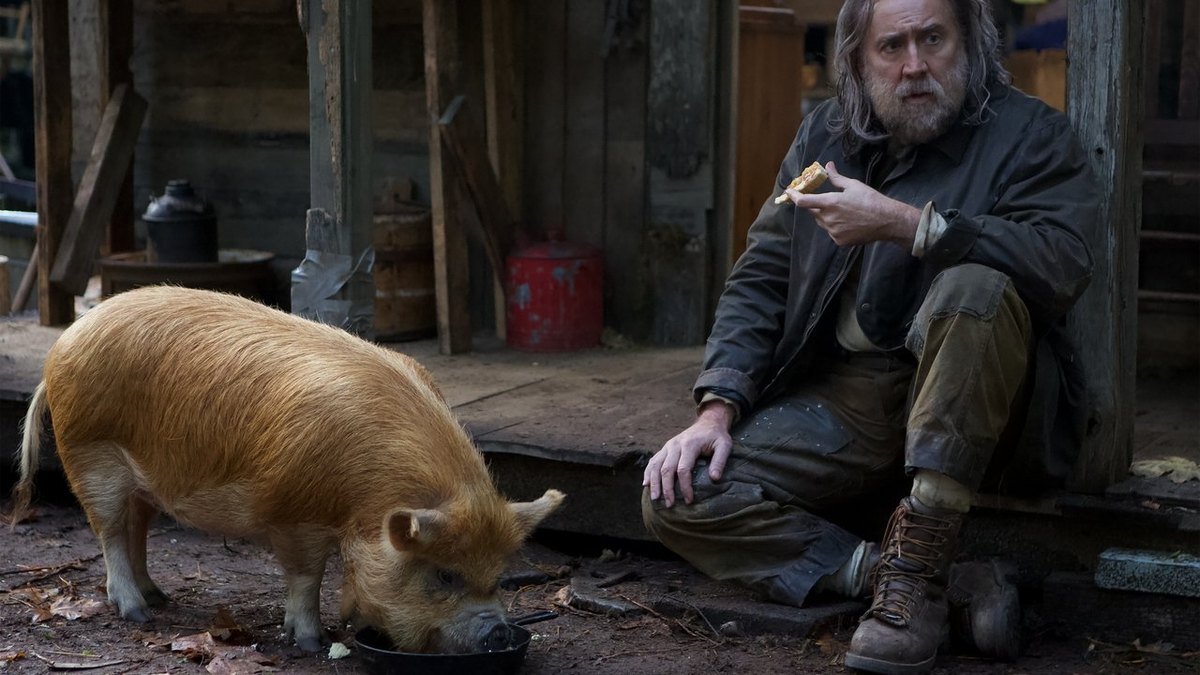
In Pig, directed by Michael Sarnoski, Cage plays Rob Feld, a bearded hermit who hunts truffles in the forests outside Portland with the help of a beloved pig. After intruders steal the animal, Rob heads into the city with Amir, the ambitious young supplier who buys his truffles, played by Alex Wolff. As they move through the local restaurant world, it becomes clear that Rob was once a revered figure in it. Adam Arkin plays Darius, Amir's cold and powerful father.
What makes Pig special is how completely it subverts expectations. There are no shootouts, only conversations, and Cage delivers them with a weary, soft-spoken gravity that is almost hypnotic. He plays grief as a constant, physical weight, and when Rob finally explains what he wants, the moment is shattering. It ranks third because it reminded audiences that, given the right material, Cage remains one of the finest dramatic actors of his generation.
4. Face/Off (1997): Operatic Action
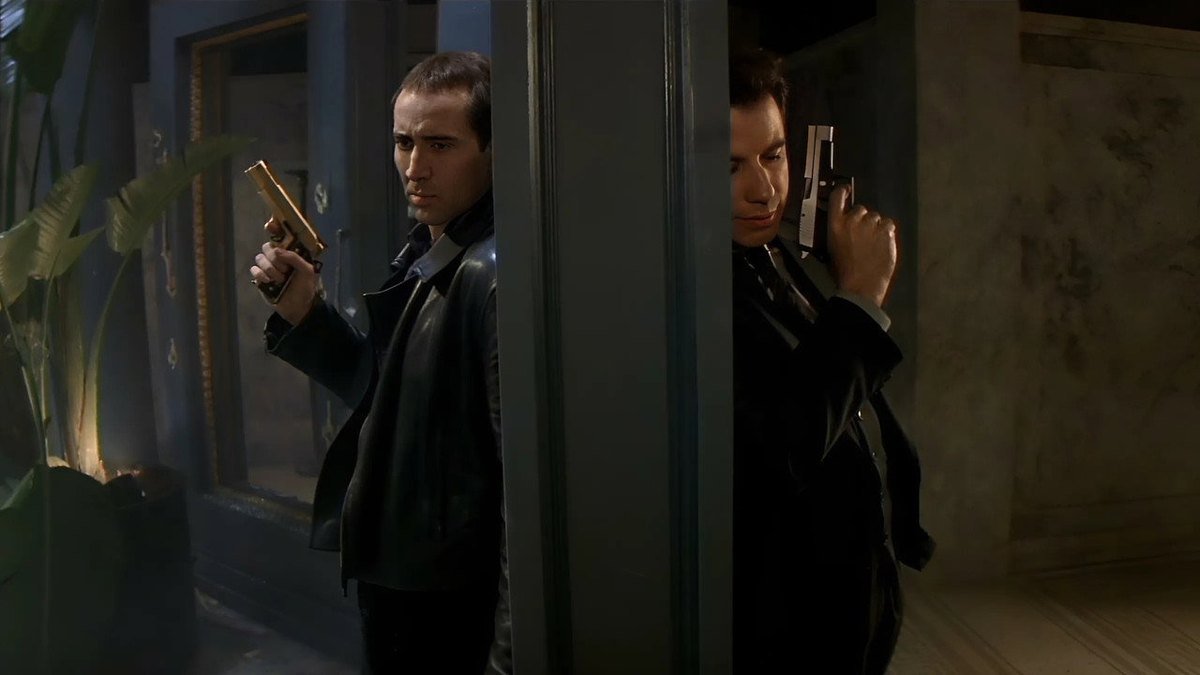
Hong Kong action master John Woo brought his trademark slow-motion gunfights and flying doves to Face/Off, a gloriously absurd thriller built on a face-swap premise. Cage plays Castor Troy, a terrorist who has planted a bomb somewhere in Los Angeles, and John Travolta plays Sean Archer, the FBI agent obsessed with catching him. When Archer has Troy's face surgically grafted onto his own to go undercover in prison, Troy steals Archer's face and life in return. Joan Allen plays Archer's wife, Eve, and Alessandro Nivola plays Pollux, Castor's brother.
Cage gets to play hero and villain in the same film: the gleeful, preening Troy in the opening act, then Archer trapped in Troy's body for the rest. He nails Travolta's mannerisms while giving Archer genuine anguish, especially inside the prison. Few action films have let their stars go this big. It ranks fourth because it is the purest distillation of his larger-than-life screen presence, and it is a blast from start to finish.
5. Wild at Heart (1990): Lynchian Romance
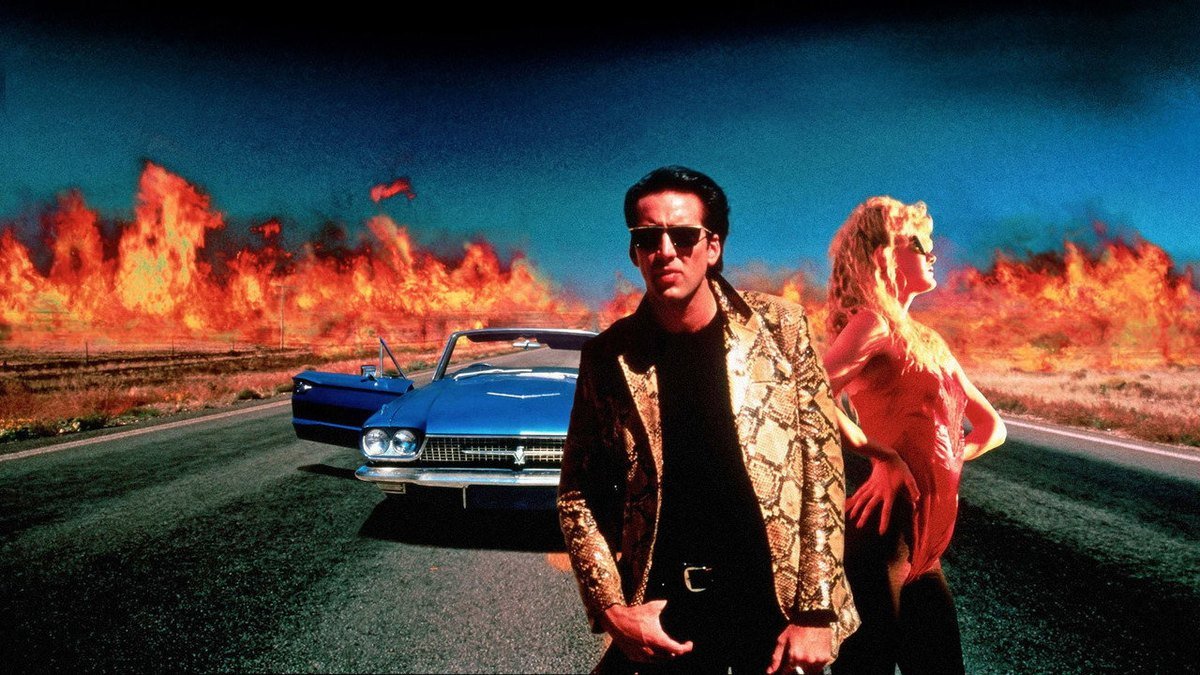
David Lynch's Wild at Heart is a feverish road movie in which Cage plays Sailor Ripley, a young man fresh out of prison who goes on the run with his girlfriend Lula, played by Laura Dern. Lula's unhinged mother, Marietta Fortune, played by Diane Ladd, wants Sailor out of her daughter's life for good and hires killers to track the couple across the American South. Along the way they cross paths with Bobby Peru, a grotesque and menacing drifter played by Willem Dafoe.
Cage plays Sailor as a sincere romantic with a rockabilly swagger, prone to sudden violence and devoted to his snakeskin jacket. He even serenades Lula with Elvis Presley songs, and he plays those moments with complete conviction. The film is deliberately extreme, but his performance gives it a beating heart. It ranks fifth because it showed how well his larger-than-life instincts fit the world of a visionary filmmaker.
6. Bringing Out the Dead (1999): Scorsese's Night Shift
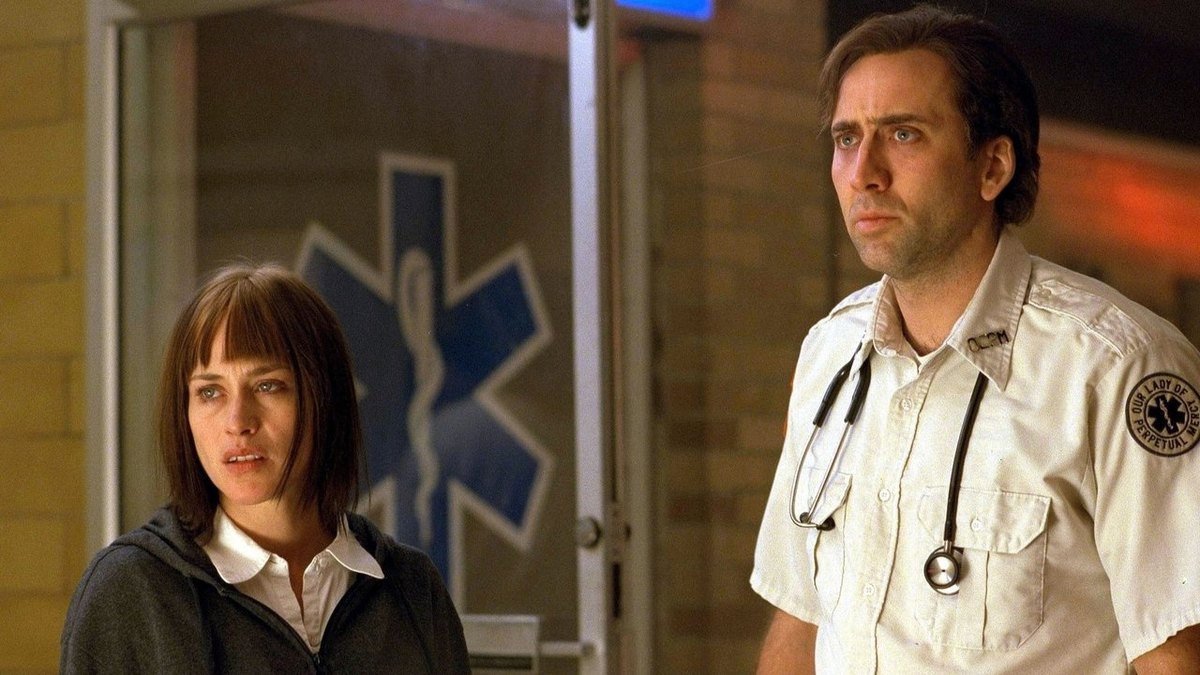
Martin Scorsese's Bringing Out the Dead, written by Paul Schrader, follows Frank Pierce, a burned-out New York paramedic working night shifts in Hell's Kitchen in the early 1990s. Haunted by visions of a young woman named Rose whom he failed to save, Frank drives the streets over several nights with a rotating series of partners. John Goodman plays the food-obsessed Larry, Ving Rhames plays the evangelical Marcus, and Patricia Arquette plays Mary Burke, the daughter of a man Frank revives.
Cage's hollow-eyed exhaustion is the film's engine. Frank is desperate to save someone, anyone, and Cage plays his insomnia and guilt with jittery, hallucinatory intensity that suits Scorsese's restless camera. It ranks sixth because the film is episodic and bleak, but it is one of the most underseen performances of his career and a fascinating companion to Taxi Driver, which Schrader also wrote.
7. Matchstick Men (2003): Con Artist Comedy
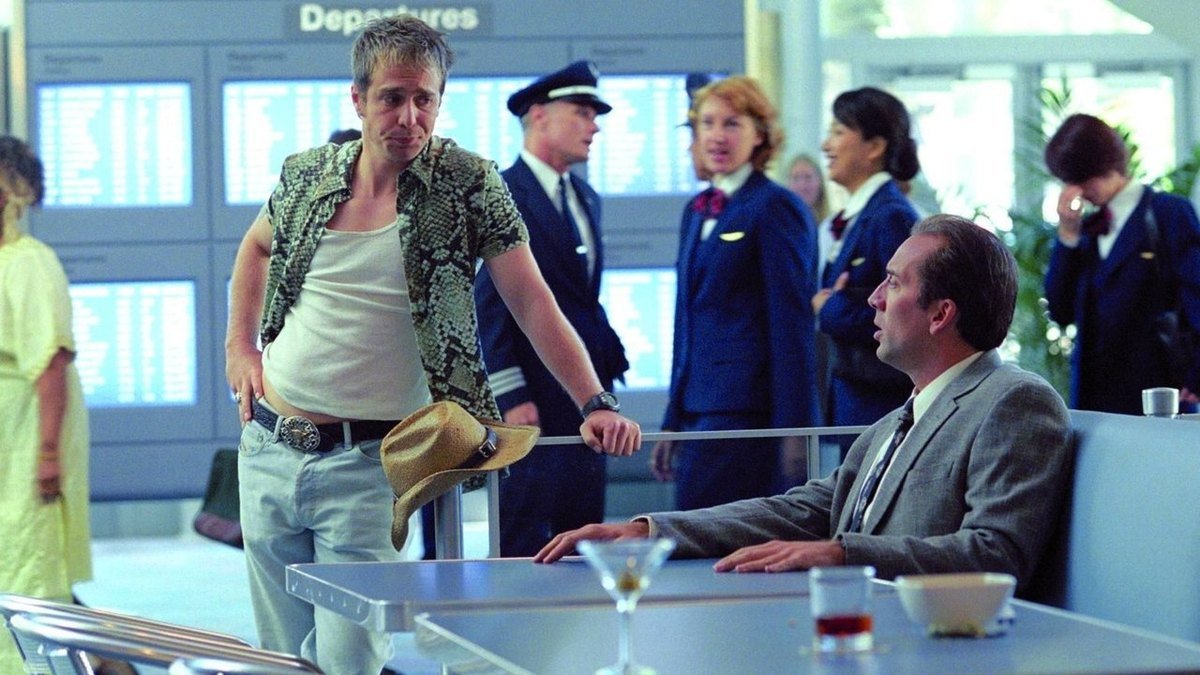
Ridley Scott's Matchstick Men stars Cage as Roy Waller, a successful Los Angeles con artist whose obsessive-compulsive disorder turns everyday life into a battle with tics, germs and rituals. With his protégé Frank Mercer, played by Sam Rockwell, Roy is planning a major scam when he discovers that he has a teenage daughter, Angela, played by Alison Lohman. Bruce Altman plays Dr. Klein, the psychiatrist who encourages Roy to reconnect with her.
Cage balances Roy's anxious physical comedy with a touching fatherly awakening, as Angela insists on learning the family trade. His scenes with Lohman are funny and tender, and his rapport with Rockwell gives the cons real snap. It ranks seventh because the plot's clever twists matter as much as the performance, but it is one of his most finely detailed character studies and a reminder of how precise he can be.
8. Longlegs (2024): Pure Nightmare Fuel

Osgood Perkins's Longlegs follows FBI agent Lee Harker, played by Maika Monroe, as she investigates a string of family murder-suicides across Oregon, each linked to coded letters signed by a mysterious figure. Cage plays that figure, a pale, deranged doll maker almost unrecognizable beneath heavy makeup, who appears only in brief, horrifying scenes. Blair Underwood plays Agent Carter, Lee's supervisor, and Alicia Witt plays Ruth Harker, her guarded, deeply religious mother.
Cage's limited screen time makes every appearance count. His Longlegs is a shrieking, unpredictable presence, played with a high-pitched voice and unsettling glee that leaves a lasting chill. It ranks eighth because it is effectively a supporting role in a film built around Monroe, but it stands among the most frightening horror movies of recent years and shows his willingness to disappear completely.
9. Dream Scenario (2023): Satirical Spin
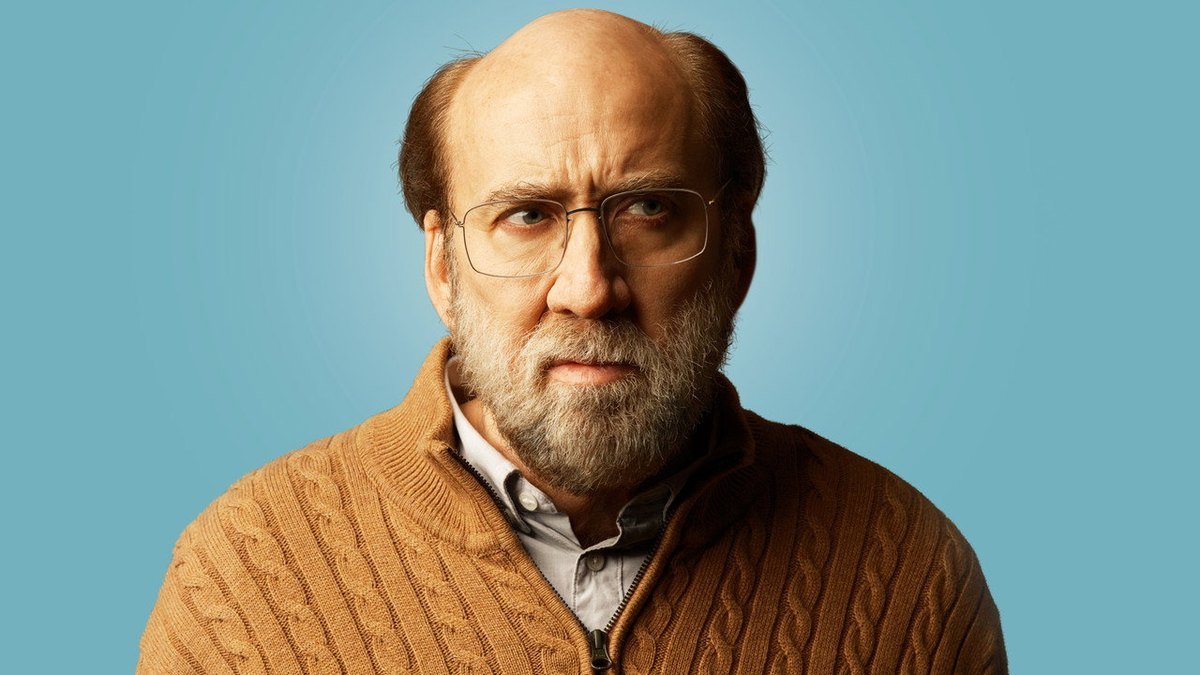
Kristoffer Borgli's Dream Scenario casts Cage as Paul Matthews, a balding, painfully ordinary biology professor who suddenly begins appearing in the dreams of millions of strangers. At first he is merely a passive bystander in those dreams, and Paul enjoys his unexpected fame. Then the dreams turn violent, and the public turns on him. Julianne Nicholson plays his wife, Janet, Michael Cera plays Trent, a marketing executive eager to exploit his celebrity, and Tim Meadows plays Brett, a colleague at the university.
Cage plays Paul's awkwardness and wounded vanity with superb comic precision, and he finds real sadness in a man who craves recognition but cannot control what it becomes. The film works as a sharp satire of viral fame and public shaming, and Cage is the reason it never becomes a gimmick. It ranks ninth because it is a smaller, more modest film, but it is one of his smartest late-career choices.
10. The Unbearable Weight of Massive Talent (2022): Playing Himself

Tom Gormican's The Unbearable Weight of Massive Talent casts Cage as a fictionalized version of himself, a struggling actor named Nick Cage who is deep in debt and desperate for a comeback. He reluctantly accepts a large fee to attend the birthday party of Javi Gutierrez, a wealthy superfan played by Pedro Pascal, at his estate in Mallorca. Then the CIA recruits Nick to spy on Javi, who may be involved in a kidnapping. Sharon Horgan plays Olivia, Nick's ex-wife, and Ike Barinholtz plays Martin, a CIA agent.
The film is a loving, self-mocking celebration of Cage's career, and he clearly relishes sending up his own image, especially in scenes with Nicky, a younger, brasher version of himself who appears as an imaginary alter ego. His buddy-comedy chemistry with Pascal is the film's greatest asset. It closes out the top ten because it plays more as a tribute than a showcase, but no other film captures his unique place in movie culture so well.
Where to Start With Nicolas Cage Movies
His filmography is enormous and uneven, so a good starting point makes all the difference.
- For his greatest dramatic work: Leaving Las Vegas, then Pig.
- For something clever and meta: Adaptation., followed by The Unbearable Weight of Massive Talent.
- For classic over-the-top action: Face/Off, with The Rock and Con Air as natural follow-ups.
- For horror: Longlegs, then Mandy if you can handle something even stranger.
- For auteur cinema: Wild at Heart and Bringing Out the Dead, which pair him with David Lynch and Martin Scorsese.
Viewers who want lighter fare should try Raising Arizona and Moonstruck, the 1987 comedies that first made him a star.
Nicolas Cage Awards and Nominations
Cage's major awards cluster around strikingly different roles: a doomed alcoholic and a blocked screenwriter with an imaginary twin.
- Leaving Las Vegas: Academy Award for Best Actor, Golden Globe for Best Actor in a Drama and the Screen Actors Guild Award for a leading actor (1996 ceremonies).
- Adaptation.: Academy Award nomination for Best Actor (2003 ceremony).
His Oscar win came early, before his action-movie run, and it remains the anchor of his reputation as a serious actor, even through the years when his blockbusters and genre films drew more attention than his dramatic work.
The Cage Renaissance: His Late-Career Revival
Few careers have enjoyed a second wind like the one Cage began around 2018. Mandy reintroduced him to audiences as a fearless, uncompromising performer, and the run that followed has been one of the most interesting of any actor of his generation.
Color Out of Space paired him with cosmic horror, Pig revealed a stunning new restraint, and The Unbearable Weight of Massive Talent let him affectionately skewer his own legend. He then played Dracula in the horror comedy Renfield, a mocked and haunted everyman in Dream Scenario and a terrifying killer in Longlegs. More recently he has taken on The Surfer, a psychological thriller about a man unraveling at the Australian beach where he grew up.
What unites these films is trust. Directors have learned to give Cage the space to be either enormous or almost silent, and the results have been some of the most rewarding work of his life.
Frequently Asked Questions
What is the best Nicolas Cage movie?
Leaving Las Vegas tops the ranking for his Oscar-winning performance as Ben Sanderson, followed by Adaptation. and Pig.
Did Nicolas Cage win an Oscar?
Yes. He won Best Actor for Leaving Las Vegas at the 1996 Academy Awards and was nominated again for Adaptation. in 2003.
Who does Nicolas Cage play in Longlegs?
Cage plays the title character, a disturbed serial killer known as Longlegs, opposite Maika Monroe as FBI agent Lee Harker.
Has Nicolas Cage played himself in a movie?
Yes. In The Unbearable Weight of Massive Talent he plays a fictionalized version of himself named Nick Cage, alongside a younger alter ego called Nicky.