The right business plan template depends on who will read the plan. A detailed template with eight sections suits lenders and investors, and a one-page template with nine blocks suits an owner who needs a working plan in as little as an hour.
The headings have not changed in 2026: a plan is a roadmap to structure, run and grow a business, and it can help win funding or bring in new partners. Paste the headings into a blank document, delete the prompts that do not fit, and fill in every blank that remains.
What Is the Best Business Plan Template?
The best business plan template is the traditional one for any plan a lender or investor will read, because each section gets its own heading and its own detail. The lean one-page template is the better pick for a simple business or a quick start, and it can take as little as one hour.
Business Plan Template Sections and the Question Each Answers
| # | Template section | The question it answers |
|---|---|---|
| 1 | Executive summary | What is this company, and why will it succeed? |
| 2 | Company description | Which problem does it solve, for whom, and with what edge? |
| 3 | Market analysis | How big and how crowded is the industry, and where is the opening? |
| 4 | Organization and management | Who runs it, and under which legal structure? |
| 5 | Service or product line | What is sold, and what does the customer gain? |
| 6 | Marketing and sales | How do customers arrive, stay and buy? |
| 7 | Funding request | How much money is needed, in what form and for what? |
| 8 | Financial projections | Will the figures hold up over five years? |
| 9 (optional) | Operations | Where does the daily work happen, and with what? |
| 10 (optional) | Appendix | Which documents support the assumptions? |
Which Business Plan Template Fits: Traditional or Lean?
The traditional template is the longer of the two. It asks for detail in every section, takes more work upfront and can run to dozens of pages, which is why lenders and investors commonly ask for it. It fits a detail-oriented owner, a business that plans to request financing from traditional sources, or anyone who wants one thorough record of the business.
The lean template trades depth for speed. It summarizes only the most important points, is typically one page and can be finished in as little as an hour. It fits a relatively simple business, an owner who needs to explain the idea quickly, or a founder who expects to rework the plan every few months.
Many owners fill in both. The lean version forces a decision on the value proposition and the customer, and the traditional version then supplies the depth a bank wants to see.
Traditional Business Plan Template: Copy and Fill In
Use as many of these sections as make sense. A plan does not need to follow the outline exactly, and the funding request can go when no outside money is involved.
1. Executive Summary
Fill this in last and keep it to what a busy reader needs first.
- Company name and location: ______
- Mission statement in one sentence: ______
- Product or service: ______
- Leadership team: ______ | Employees: ______
- Why the business will succeed: ______
- If asking for financing, the amount needed ______ and the high-level growth plan ______
2. Company Description
- Problem the business solves: ______
- Specific customers it serves: ______
- Competitive advantages, such as experts on the team or a strong location: ______
3. Market Analysis
Industry classification codes such as NAICS help narrow the data to read, and the Census Bureau’s Annual Business Survey is one place to start for the industry outlook.
- Industry outlook and trends: ______
- Target market: ______
- Main competitors and what each does well: ______
- What I can do better: ______
4. Organization and Management
A solo owner can choose sole proprietor, and some of the same questions of rates, contracts and taxes appear in freelancing tips for US-based workers.
- Legal structure (C or S corporation, general or limited partnership, sole proprietor, LLC): ______
- Who runs the business and how it is organized: ______
- Organization chart attached: yes / no
- Resumes or CVs of key people attached: ______
5. Service or Product Line
- What I sell: ______
- Benefit to the customer: ______
- Product lifecycle stage: ______
- Copyright or patent plans: ______
- Research and development: ______
6. Marketing and Sales
The financial section refers back to this one, so give real figures wherever possible.
- How I attract customers: ______
- How I keep customers coming back: ______
- How a sale happens, step by step: ______
7. Funding Request
Sizing the request starts with a cost list, and the startup cost of a dropshipping store shows what such a list looks like for an online business.
- Amount needed over the next five years: ______
- Debt or equity, with terms: ______
- Time period covered: ______
- Use of funds: ______
- Future plans, such as paying off debt or selling the business: ______
8. Financial Projections
Match these to the funding request. Sales taken from invoices are the cleanest starting point, and free invoice apps that stay free record them from day one.
- Established business: three to five years of past income, balance sheet and cash flow figures: ______
- Collateral: ______
- Next five years: forecasted income statements, balance sheets and cash flow statements: ______
- Capital expenditure budget: ______
- First year shown by quarter or by month: ______
- Charts or graphs included: yes / no
9. Operations (optional)
- Where the daily work happens: ______
- Suppliers and key equipment: ______
10. Appendix (optional)
- Contracts, leases and purchase orders: ______
- Intellectual property filings: ______
- Resumes of key managers: ______
- Market research data and anything else that backs up an assumption: ______
Lean Business Plan Template: Nine Blocks on One Page
A lean plan is a chart with a handful of elements: value proposition, infrastructure, customers and finances. Give each block a sentence or two, no more.
- Key partnerships: the other businesses and services you will work with, such as suppliers, manufacturers, subcontractors and similar strategic partners.
- Key activities: what you will do to gain a competitive advantage.
- Key resources: staff, capital and intellectual property, plus anything available to you as a business owner.
- Value proposition: one clear, compelling statement of what the business offers the market.
- Customer relationships: automated or personal, in person or online, from first contact to finish.
- Customer segments: a specific group, because a business cannot be for everybody.
- Channels: the most important ways you will reach those customers.
- Cost structure: whether the business reduces cost or maximizes value, and the most significant costs.
- Revenue streams: direct sales, membership fees, advertising space or a mix.
One-Page Business Plan Template: Fill-In Sentences
For a plan that fits on a single page, complete each sentence in turn. Square brackets mark the blanks.
- [Business name] helps [specific customers] with [problem] in [location].
- The industry is [outlook], and the closest competitors are [names], which do [strength] well.
- The business is a [legal structure] run by [people and roles].
- It sells [products or services], and the customer gains [benefit].
- Customers find it through [channel], buy by [route] and return because [reason].
- It needs [amount] for [use of funds] over [time period].
- Year one is forecast by month, with revenue of [figure] and costs of [figure], and a five-year forecast follows.
A fictional dog-walking service, Leash and Loop, shows the level of detail:
- Leash and Loop helps busy apartment dwellers with midday dog walks in one city neighborhood.
- The industry is steady, and the closest competitors are two pet-care apps and a kennel, which do booking and boarding well.
- The business is an LLC run by one owner and one part-time walker.
- It sells 30-minute walks and weekly packages, and the customer gains a tired dog and a flexible day.
- Customers find it through building bulletin boards, buy by text message and return because the same walker comes each time.
- It needs $12,000 for a van lease deposit and insurance over twelve months.
- Year one is forecast by month, and a five-year forecast follows.
A lean plan often leaves a lender wanting more detail, so keep the traditional template filled in as a second version.
Companion Worksheets to Keep Beside the Plan
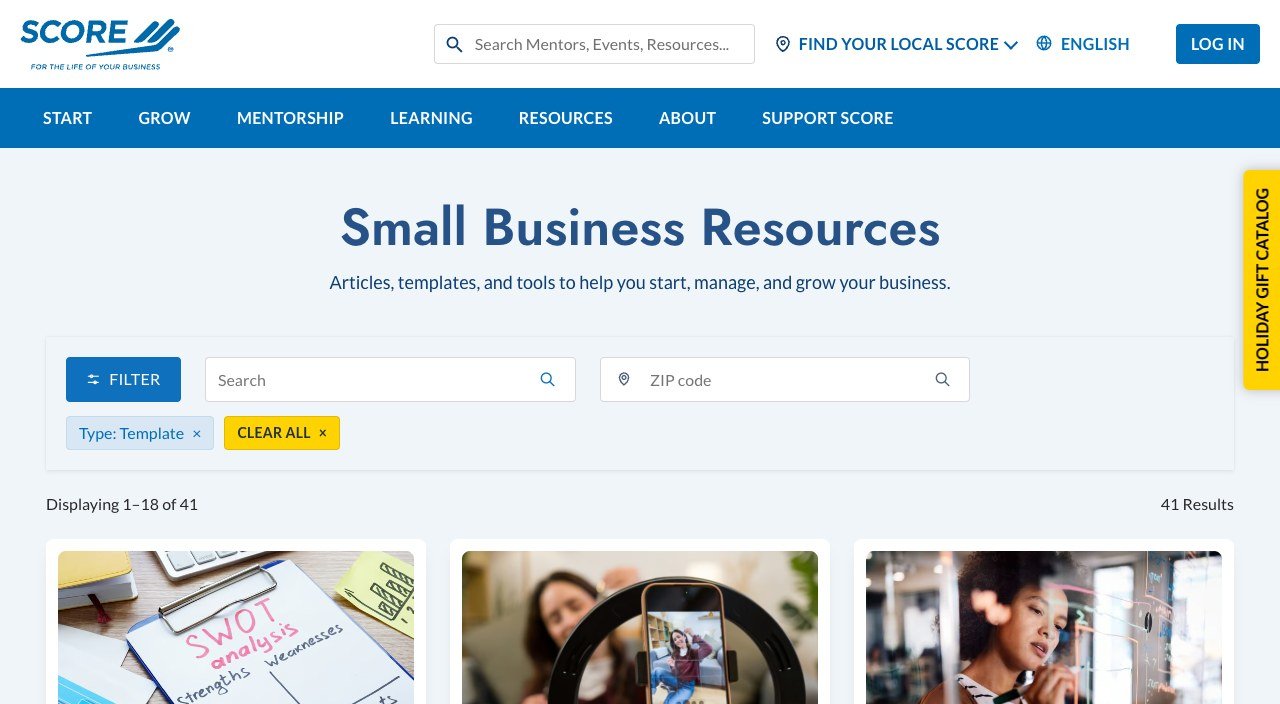
Several worksheets support the financial and market sections and can be attached to the appendix once complete:
- A SWOT worksheet for the market analysis
- A 12-month profit and loss for the first year
- A 3-year profit and loss projection
- A startup expenses sheet for the funding request
- A personal financial statement for the owners
- A business model canvas for the one-page version
A filled-in SWOT sheet feeds the competitor prompts in section 3, the startup expenses sheet gives the funding request its use-of-funds lines, and the profit and loss sheets become the first draft of the forecast. Keeping them as separate files makes each easy to update when a quote or a price changes.
Before You Fill In a Business Plan Template

- Pick the reader. A lender or investor points to the traditional template, and a personal roadmap points to the lean one.
- Work out the costs. A startup cost estimate feeds the funding request and the projections.
- Research the market. Competitor names, strengths and gaps go into section 3.
- Collect the documents. Resumes, leases and quotes belong in the appendix.
- Set a review date. The plan is meant to be refined, so book the next edit.
Ten minutes spent gathering these items saves hours later. A blank template feels slow when the costs, competitors and documents are still scattered across a phone and an inbox, and quick when they are already in one folder.
How Lenders and Investors Read a Plan Template
Lenders and investors usually want the traditional version. A small business loan normally starts at a bank or credit union, where a plan, an expense sheet and five years of projections improve the odds of approval. A business a bank sees as high risk can still qualify through an SBA loan guarantee.
For an SBA 7(a) loan, the maximum is $5 million and the application goes to a local lender, not to the SBA. What the application contains depends on loan size and the lender’s processing method, so ask which documents are needed. A venture capital investor measures the plan against its own criteria, and most funds back one industry, region or stage of growth.
- For a bank or credit union, complete sections 1 to 8, with the projections matched to the request
- For an SBA-guaranteed loan, ask the local lender for its document list before sending anything
- For a venture investor, lead with the market analysis and show the industry, geography or stage fit
- For a partner or a new hire, the one-page version is usually the right length
Whichever audience the plan serves, the template works best as a living file. Save a dated copy each time a major assumption changes, such as a new lease, a price rise from a supplier or a second location, so the history of the thinking stays visible next to the current version.
Frequently Asked Questions
Which sections of a business plan template can be skipped?
There is no right or wrong way to write a plan, so any section that makes no sense for the business can go. The funding request is the usual one to drop when no outside money is needed, and the appendix and operations sections are optional by design.
How many years should the financial template cover?
Five years going forward, with the first year by quarter or month. An established business also includes the last three to five years of income statements, balance sheets and cash flow statements.
Is a one-page plan enough for a bank?
Sometimes, though many lenders want more detail than one page holds. A filled-in traditional template ready to send avoids the delay.
How often should the template be updated?
Regularly. A plan guides each stage of starting and managing a business, and lean plans in particular are meant to be refined as the business learns.