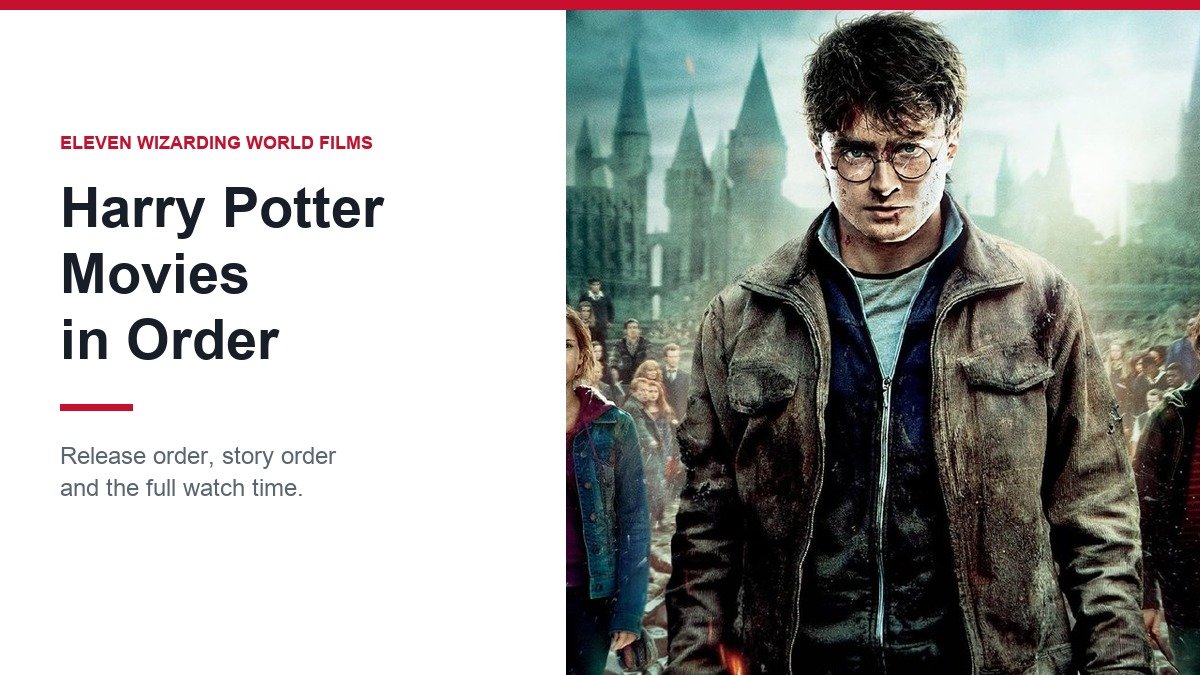
The Harry Potter movies in order run Sorcerer’s Stone, Chamber of Secrets, Prisoner of Azkaban, Goblet of Fire, Order of the Phoenix, Half-Blood Prince, then Deathly Hallows Part 1 and Part 2. Release order and story order are identical for all eight, so there is nothing to rearrange.
The only real ordering question is the three Fantastic Beasts films, which are set decades earlier but were made afterwards. Both orders are laid out below, with runtimes, the total watch time and where the natural breaks fall.
All 11 Films in Release Order
Eleven films span 2001 to 2022. The eight Potter films adapt seven books, because the last was split in two.
| # | Film | Year | Runtime |
|---|---|---|---|
| 1 | Sorcerer’s Stone | 2001 | 2h 32m |
| 2 | Chamber of Secrets | 2002 | 2h 41m |
| 3 | Prisoner of Azkaban | 2004 | 2h 21m |
| 4 | Goblet of Fire | 2005 | 2h 37m |
| 5 | Order of the Phoenix | 2007 | 2h 18m |
| 6 | Half-Blood Prince | 2009 | 2h 33m |
| 7 | Deathly Hallows: Part 1 | 2010 | 2h 26m |
| 8 | Deathly Hallows: Part 2 | 2011 | 2h 10m |
| 9 | and Where to Find Them | 2016 | 2h 13m |
| 10 | The Crimes of Grindelwald | 2018 | 2h 14m |
| 11 | The Secrets of Dumbledore | 2022 | 2h 22m |
The eight Potter films come to 19 hours and 38 minutes. Adding the Fantastic Beasts trilogy takes the whole wizarding world to 26 hours and 27 minutes, which is a long weekend rather than a long evening.
The Eight Films, One by One
Each entry gives the year, the runtime and what the film is actually about, in the order they should be watched.
1. Harry Potter and the Sorcerer’s Stone (2001)
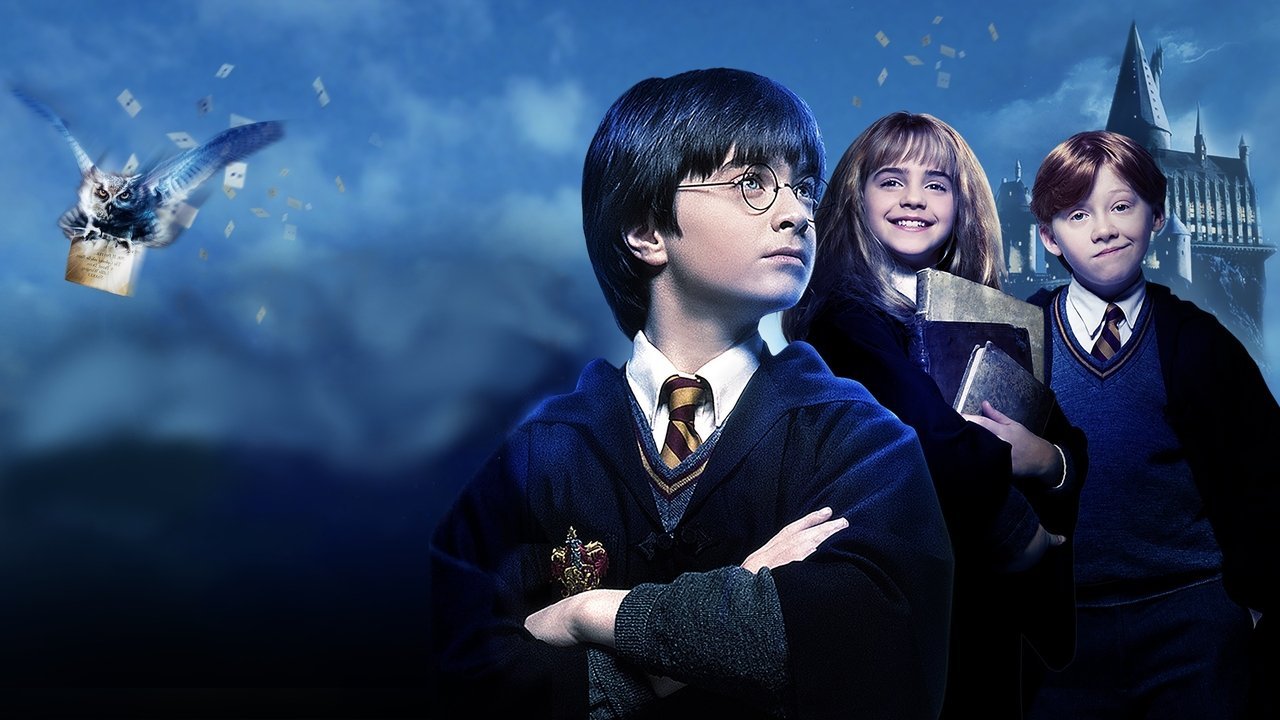
2h 32m. Harry turns eleven, learns he is a wizard and reaches Hogwarts, where a three-headed dog is guarding something. Released outside the United States as Harry Potter and the Philosopher’s Stone, which is the title the book carries everywhere except America.
2. Harry Potter and the Chamber of Secrets (2002)
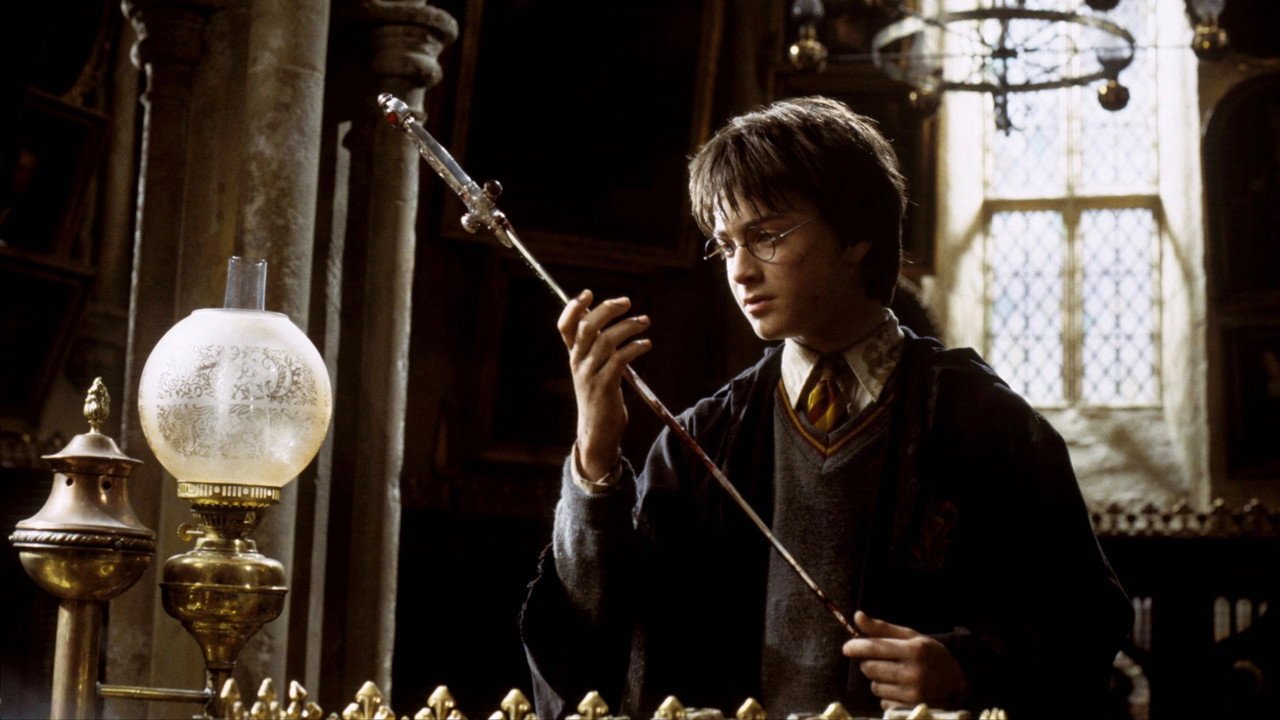
2h 41m. A house-elf warns Harry away from school, students are petrified one by one, and a diary answers back when written in. At 161 minutes it is the longest film in the series, and the last made before the tone darkens for good.
3. Harry Potter and the Prisoner of Azkaban (2004)
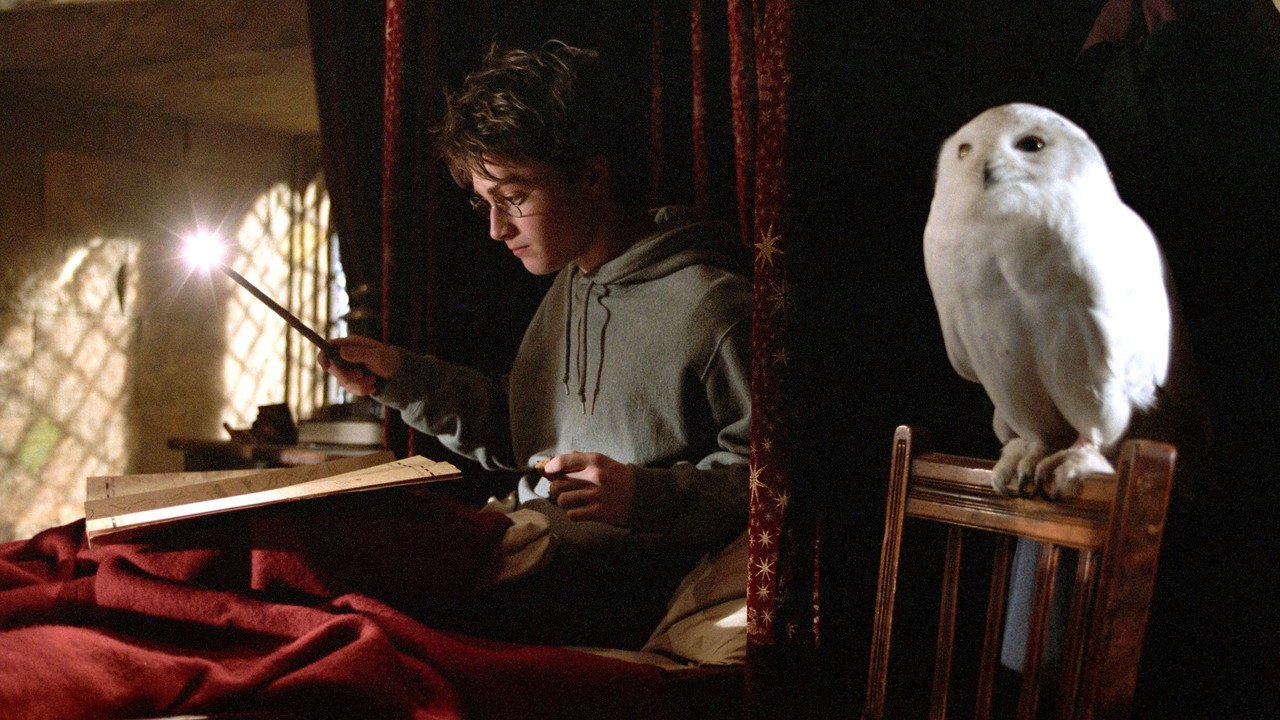
2h 21m. An escaped prisoner is hunting Harry and the school is ringed by dementors. This is the tonal break in the series: grey light, real weather, handheld cameras and a different director, and nothing afterwards returns to the storybook look of the first two.
4. Harry Potter and the Goblet of Fire (2005)
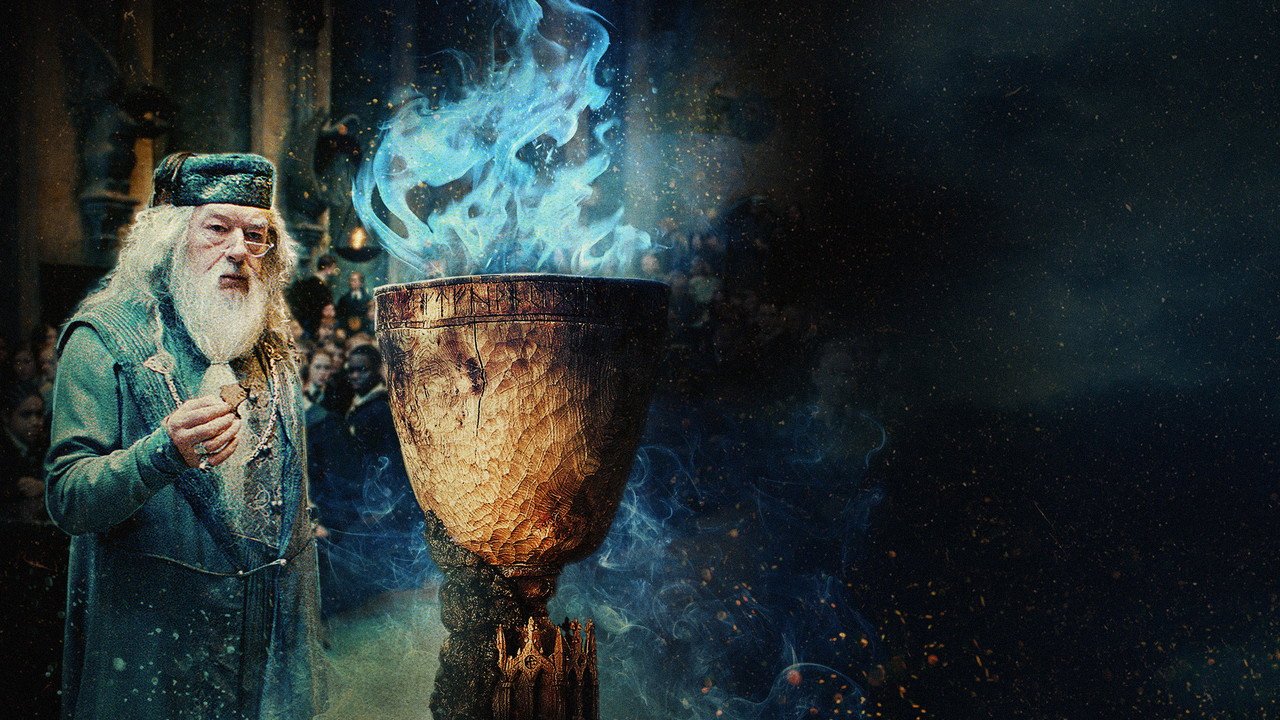
2h 37m. Harry is entered into a lethal international tournament he is too young for, and the final task ends in a graveyard rather than a victory. The first film in the series rated PG-13 rather than PG, and the point at which the story stops being for children.
5. Harry Potter and the Order of the Phoenix (2007)
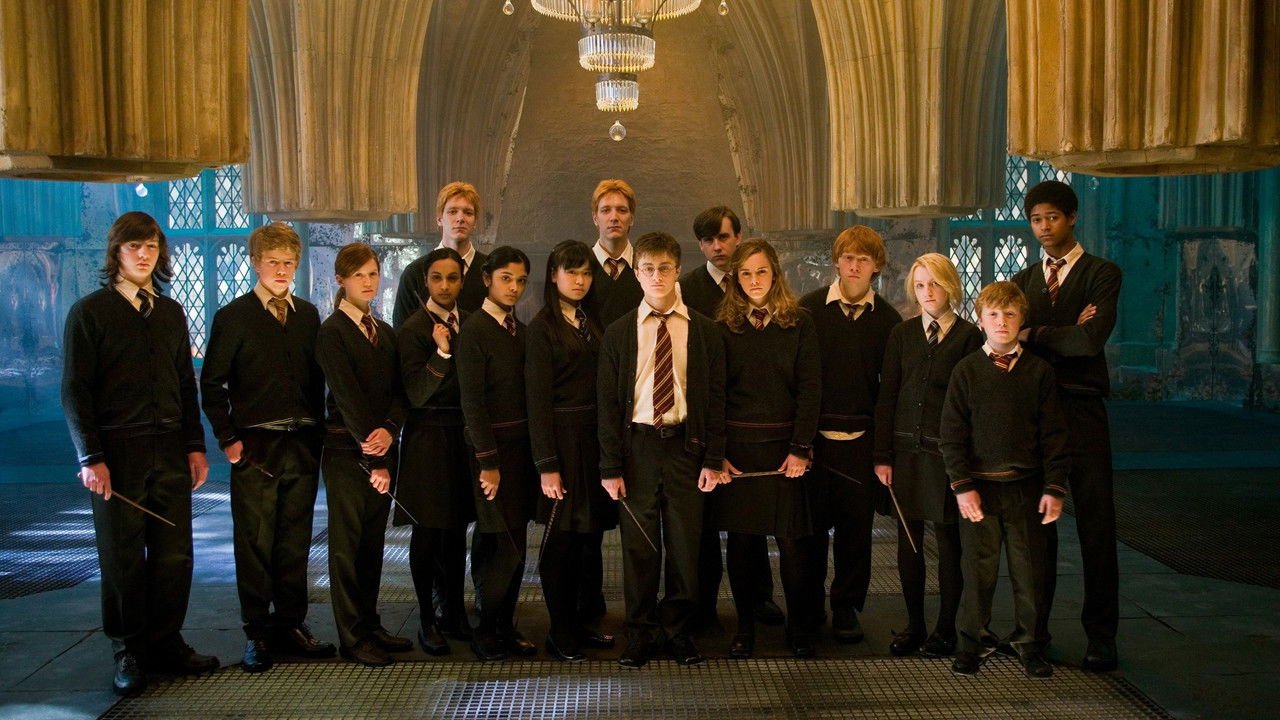
2h 18m. The Ministry refuses to accept that Voldemort has returned and installs Dolores Umbridge at Hogwarts to keep order. David Yates takes over as director here and stays for every remaining film. It is the shortest adaptation of the longest book in the series.
6. Harry Potter and the Half-Blood Prince (2009)
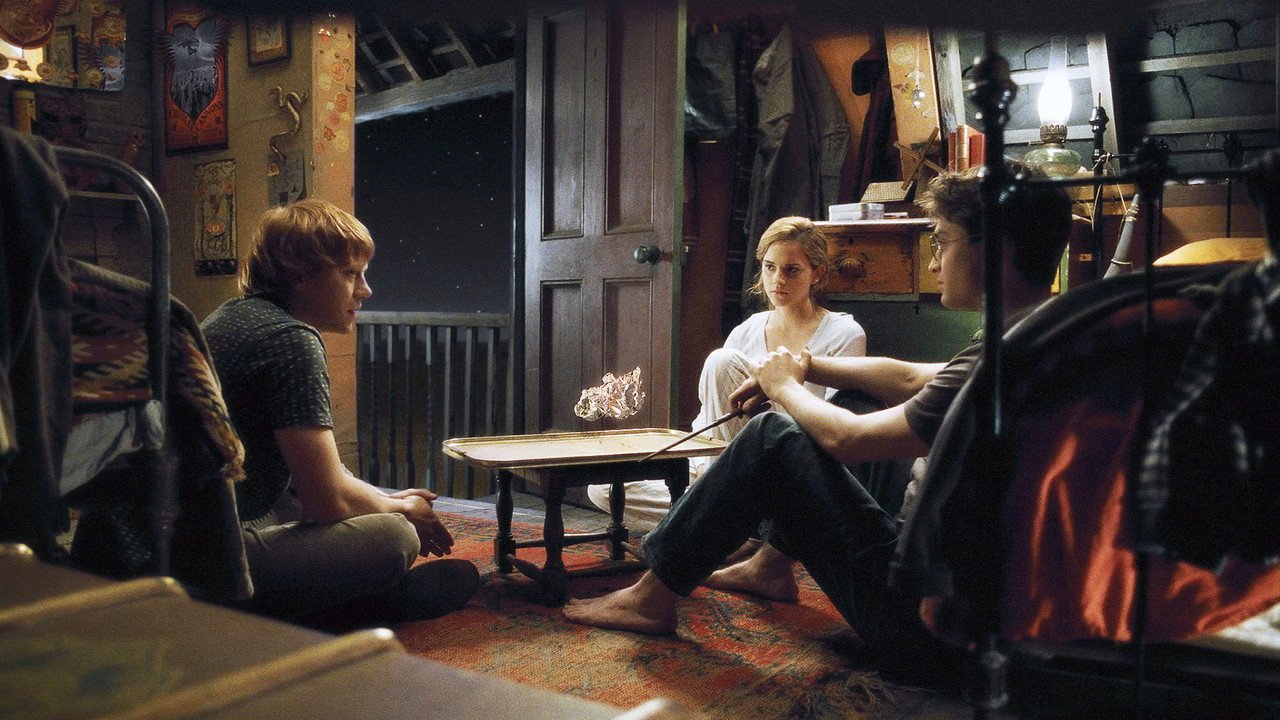
2h 33m. Harry finds a potions textbook annotated by a previous owner while Dumbledore walks him through Voldemort’s past, memory by memory. It ends the school era, and despite being the second darkest entry it carries a PG rating.
7. Harry Potter and the Deathly Hallows: Part 1 (2010)
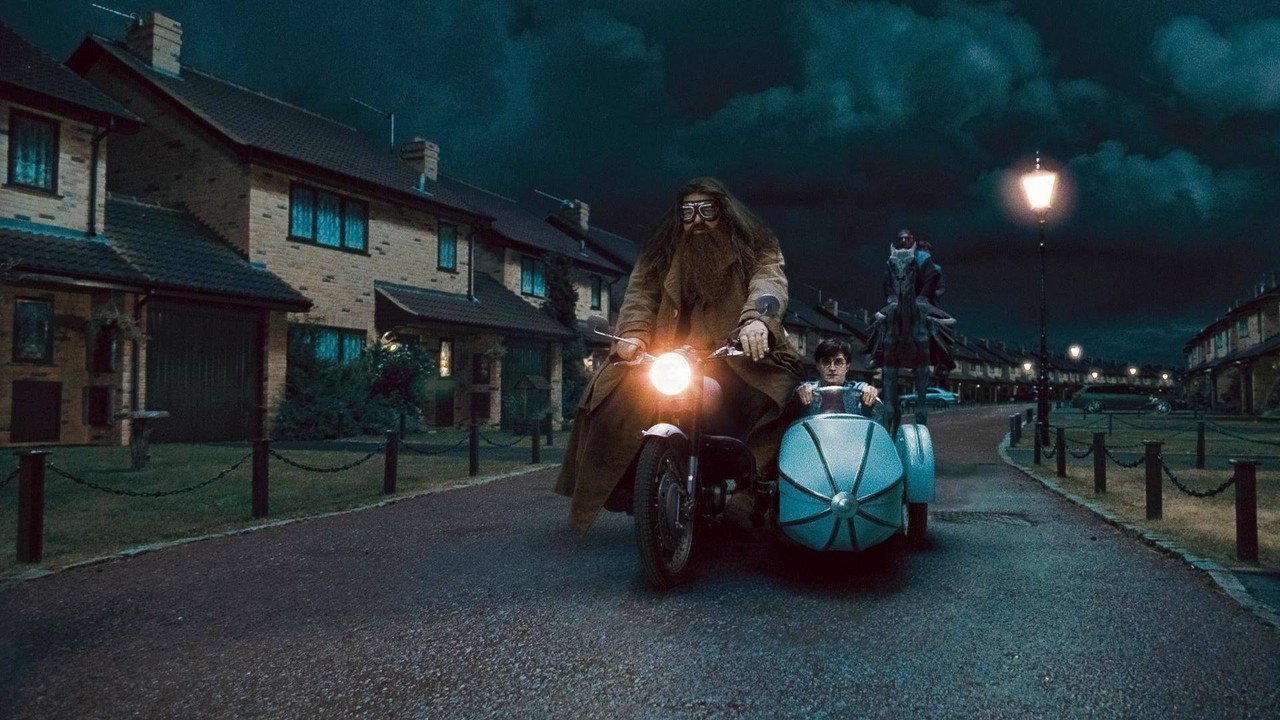
2h 26m. No Hogwarts, no lessons and no adults: three teenagers camping across Britain hunting objects they do not know how to destroy. Splitting the last book in two gave this half the room to be slow, which is either its weakness or the whole point of it.
8. Harry Potter and the Deathly Hallows: Part 2 (2011)
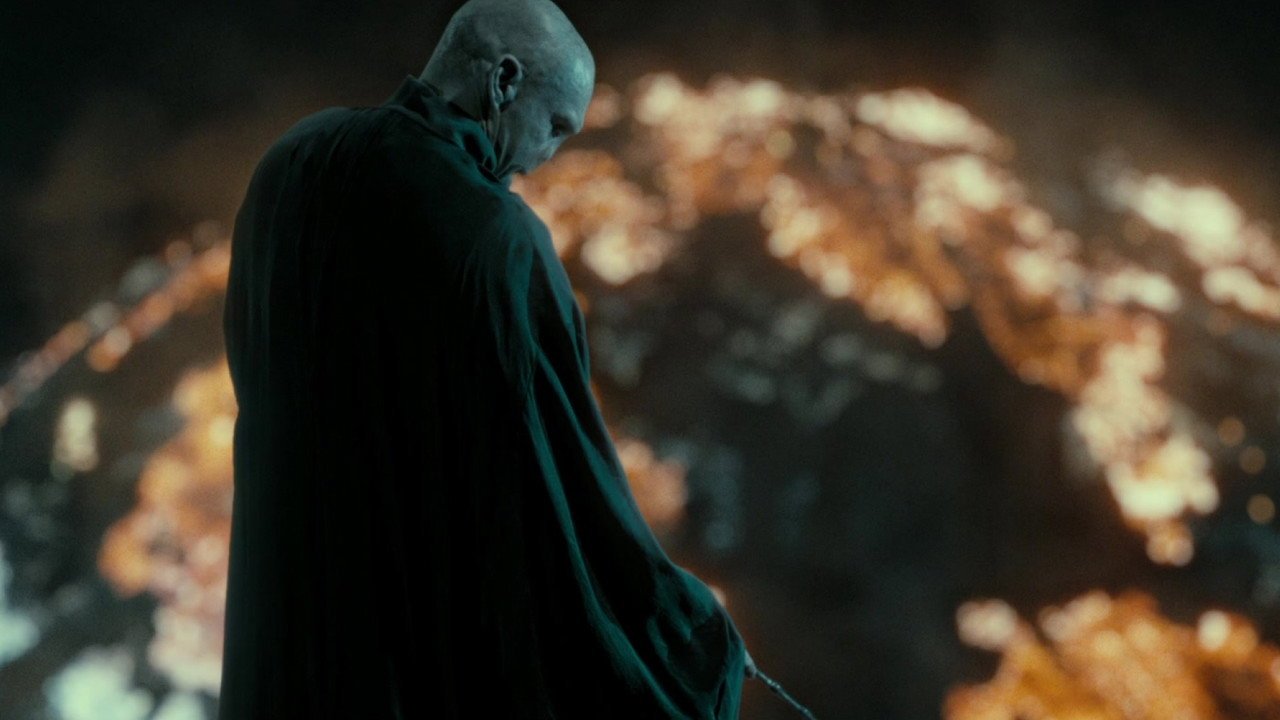
2h 10m. The Battle of Hogwarts, start to finish. At 130 minutes it is the shortest film in the series and the only one that plays as a single continuous sequence rather than a school year.
Chronological Order Puts Fantastic Beasts First
The other way to order the series is by when the story happens. That moves the three Fantastic Beasts films to the front, because they are set generations before Harry is born.
| # | Film | When it is set |
|---|---|---|
| 1 | Fantastic Beasts and Where to Find Them | 1926 |
| 2 | Fantastic Beasts: The Crimes of Grindelwald | 1927 |
| 3 | Fantastic Beasts: The Secrets of Dumbledore | The 1930s |
| 4 | Harry Potter and the Sorcerer’s Stone | Harry’s first year |
| 5 | Harry Potter and the Chamber of Secrets | Second year |
| 6 | Harry Potter and the Prisoner of Azkaban | Third year |
| 7 | Harry Potter and the Goblet of Fire | Fourth year |
| 8 | Harry Potter and the Order of the Phoenix | Fifth year |
| 9 | Harry Potter and the Half-Blood Prince | Sixth year |
| 10 | Harry Potter and the Deathly Hallows: Part 1 | The year out of school |
| 11 | Harry Potter and the Deathly Hallows: Part 2 | The same year, concluding |
The first Fantastic Beasts film opens in 1926 New York and the second follows a year later in Paris, with the third continuing into the 1930s. Their subject is Gellert Grindelwald and the young Albus Dumbledore, which is the history the later Potter films only refer to.
The casting of Grindelwald changed mid-trilogy, with Johnny Depp playing him in the second film before Mads Mikkelsen took over for the third. It is one of the more visible recastings in a modern franchise, and sits oddly against the range covered in our pick of the best Johnny Depp movies.
Which Order to Actually Use
Release order wins for a first watch, and it is not a close call. Chronological order is worth it only on a rewatch, and even then for a specific reason.
- Release order preserves every reveal. The Fantastic Beasts films name characters and objects the Potter films treat as mysteries.
- Fantastic Beasts assumes you know Dumbledore. Its emotional weight depends on a relationship the Potter films spend years establishing.
- The prequels were written for an audience that had seen the eight. They are not an entry point and were never built as one.
- Chronological order suits a rewatch if you want the Grindelwald history to land before the references to it.
- The eight themselves never reorder. Whatever you do with the prequels, films 1 to 8 always run 1 to 8.
Splitting the Marathon
Nineteen and a half hours is more than two full working days of viewing. The series divides neatly into four sittings of roughly five hours each, and each pair has its own character.
| Sitting | Length | What it covers |
|---|---|---|
| Films 1 and 2 | 5h 13m | The Columbus pair, bright and faithful |
| Films 3 and 4 | 4h 58m | The turn: Azkaban changes the look, Goblet changes the rating |
| Films 5 and 6 | 4h 51m | The Ministry arc and the end of school |
| Films 7 and 8 | 4h 36m | The finale, written as one film and best watched as one |
The one pairing worth protecting is the last. Deathly Hallows was shot as a single production and split for release, so Part 1 deliberately ends without resolving anything. Watching the two halves weeks apart is the most common way to spoil the ending of the series.
Four sittings is roughly the same shape a long franchise rewatch takes, though the wizarding world is considerably shorter than the Marvel movies in order.
What Changes Across the Eight
- The rating. Films 1 to 3 are PG, Goblet of Fire is the first PG-13, and the series finishes PG-13 apart from Half-Blood Prince, which went back to PG.
- The director. Chris Columbus made the first two, Alfonso Cuarón the third, Mike Newell the fourth, and David Yates the last four.
- The look. Azkaban drops the storybook brightness for grey light, real weather and handheld cameras, and nothing afterwards goes back.
- The setting. Seven of the eight are built around a school year. Deathly Hallows Part 1 leaves Hogwarts entirely, which is why it feels so different.
- The runtime. It does not track the books. The second film is the longest and the eighth is the shortest, though the final novel is roughly twice the length of the second.
Seven Books, Eight Films
The mismatch between the book count and the film count trips people up when they try to pair the two. Seven novels were adapted into eight films, and the extra film is entirely at the end.
- Books one to six map one to one. Each became a single film, in order, with no material moved between them.
- Book seven became two films. Deathly Hallows was cut in half, with Part 1 covering the hunt and Part 2 the battle.
- Nothing was skipped and nothing was merged. Unlike most long adaptations, no instalment covers two books or none.
- The split was a first at this scale. Cutting a final novel into two films became a standard studio option afterwards.
That is why the numbering stays easy. Film four is book four, film six is book six, and only the last pair needs explaining.
Frequently Asked Questions
What is the correct order to watch the Harry Potter movies?
Release order: Sorcerer’s Stone, Chamber of Secrets, Prisoner of Azkaban, Goblet of Fire, Order of the Phoenix, Half-Blood Prince, Deathly Hallows Part 1, Deathly Hallows Part 2. It is also the story order.
Do I watch Fantastic Beasts before or after Harry Potter?
After. They are set decades earlier but were made for an audience that already knew the eight films, and they spoil several things the Potter films hold back.
How many Harry Potter movies are there in total?
Eight Harry Potter films, plus three Fantastic Beasts films set in the same world, for eleven in all.
How long does it take to watch all the Harry Potter movies?
19 hours and 38 minutes for the eight, or 26 hours and 27 minutes for all eleven wizarding world films.