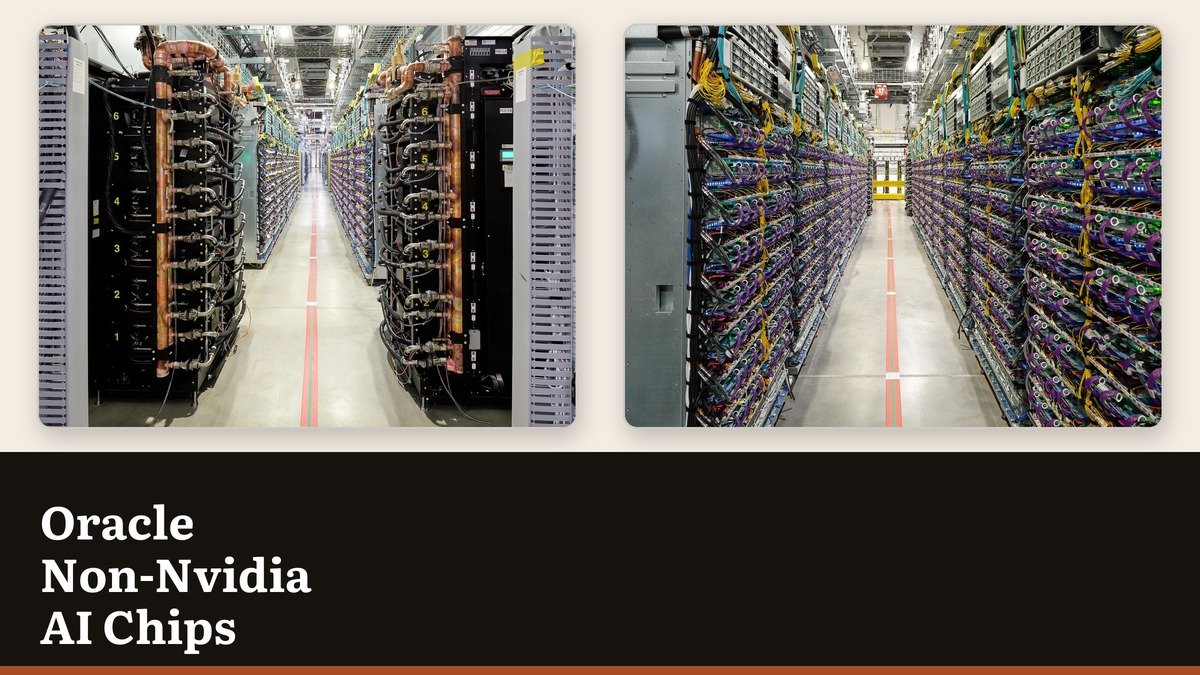
Oracle non-Nvidia AI chips are coming to its cloud in numbers. At Oracle AI World on 27 October the company said OCI will offer accelerators from Google, Cerebras, SambaNova and Positron, with AMD, Intel and OpenAI’s Jalapeño expected later.
The headline item is Google. Oracle would be the first major cloud provider outside Google to rent out its tensor processing units.
Which Oracle non-Nvidia AI chips land first
Exactly one is bookable today. Positron AI’s Atlas inference chip is generally available on OCI now, and on the day of the announcement it was the only non-Nvidia accelerator Oracle described that way.
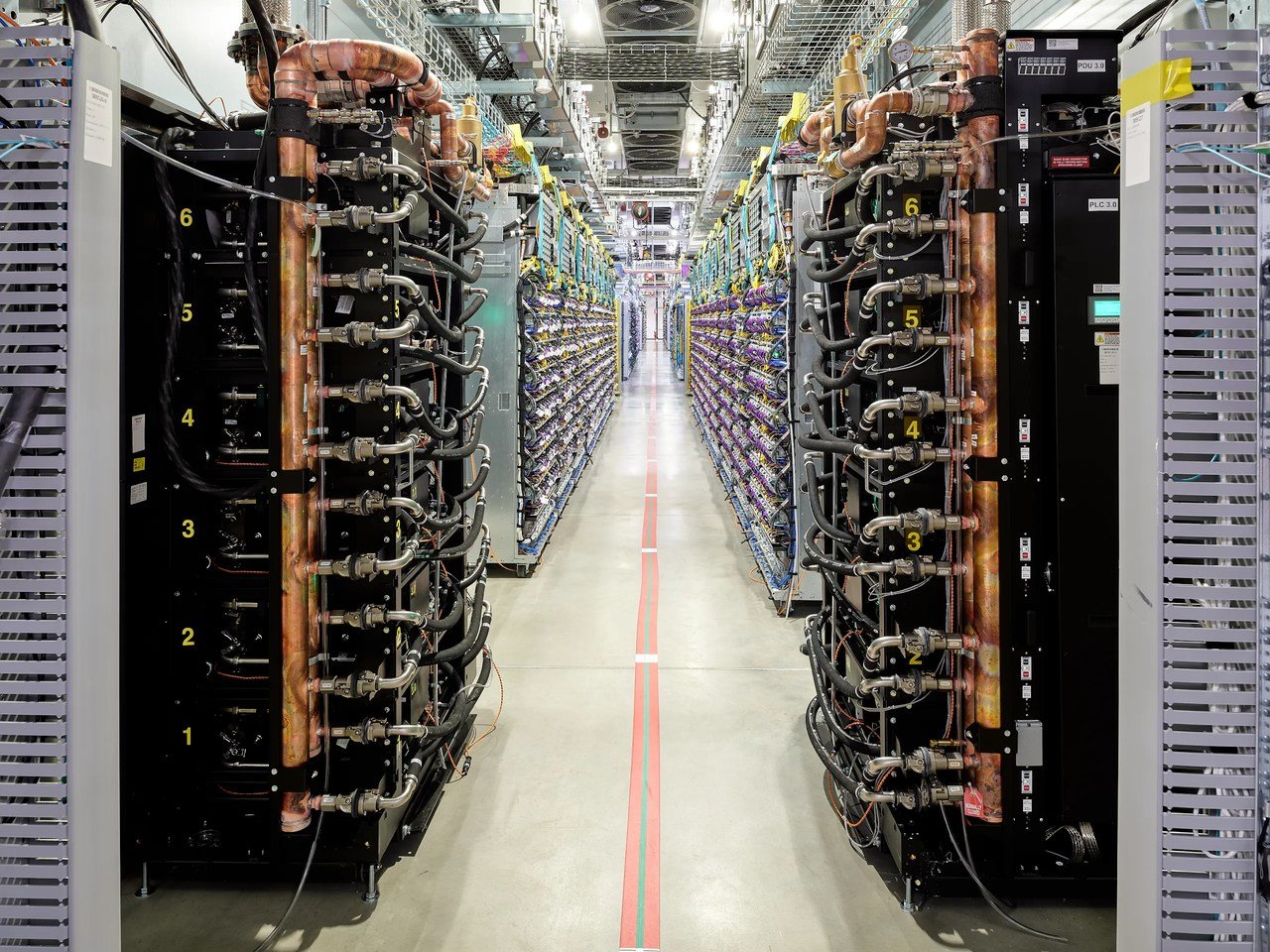
Everything else carries a date or no date at all. Google’s eighth-generation parts, the TPU 8t for training and the TPU 8i for inference, arrive during calendar 2027 and ramp across several years. Cerebras inference is also a 2027 item. SambaNova’s SN50 inference chips are planned with nothing attached, and the AMD, Intel and Jalapeño additions have no timing at all.
Reading the list by availability rather than by brand changes its weight considerably. Four of the five named vendors are roadmap entries, and the single shipping option is an inference part from the smallest company in the group.
What stays at the centre
Nvidia. Oracle said so directly, calling it the primary partner and the best general-purpose option, and its Vera Rubin NVL72 systems and Vera CPUs are already generally available on OCI. Set against a roadmap of mostly 2027 arrivals, that is the practical position for the next year or more.
Describing this as Oracle moving away from Nvidia would therefore overstate it. The accurate version is a cloud widening its catalogue while its main supplier stays its main supplier.
The reason clouds want more suppliers
Allocation and cost. A provider dependent on one accelerator vendor accepts that vendor’s supply schedule and pricing, and supply has been the limiting factor on cloud expansion for two years running. Several of the chips named are inference-specific, which is where cost per token decides whether a customer’s product makes money.
It is the same pressure showing up everywhere this week. Amazon will sell its own accelerators externally from late 2027, and SpaceX signed for roughly $40bn of GPU financing to lock in delivery for the first half of that year.
There is a commercial motive Oracle has less reason to spell out. A cloud that can host whatever accelerator a large customer has standardised on is a cloud that keeps the customer, and the appearance of OpenAI’s Jalapeño on the list points directly at that kind of arrangement.
What to measure it against
Dates that do not move. A five-vendor roadmap with one shipping product is a promise, and hardware promises in cloud have a habit of arriving late. The TPU ramp is the one worth tracking, since it would put a direct competitor’s flagship training silicon inside Oracle’s data centres. Data Center Knowledge listed the full lineup from the event.