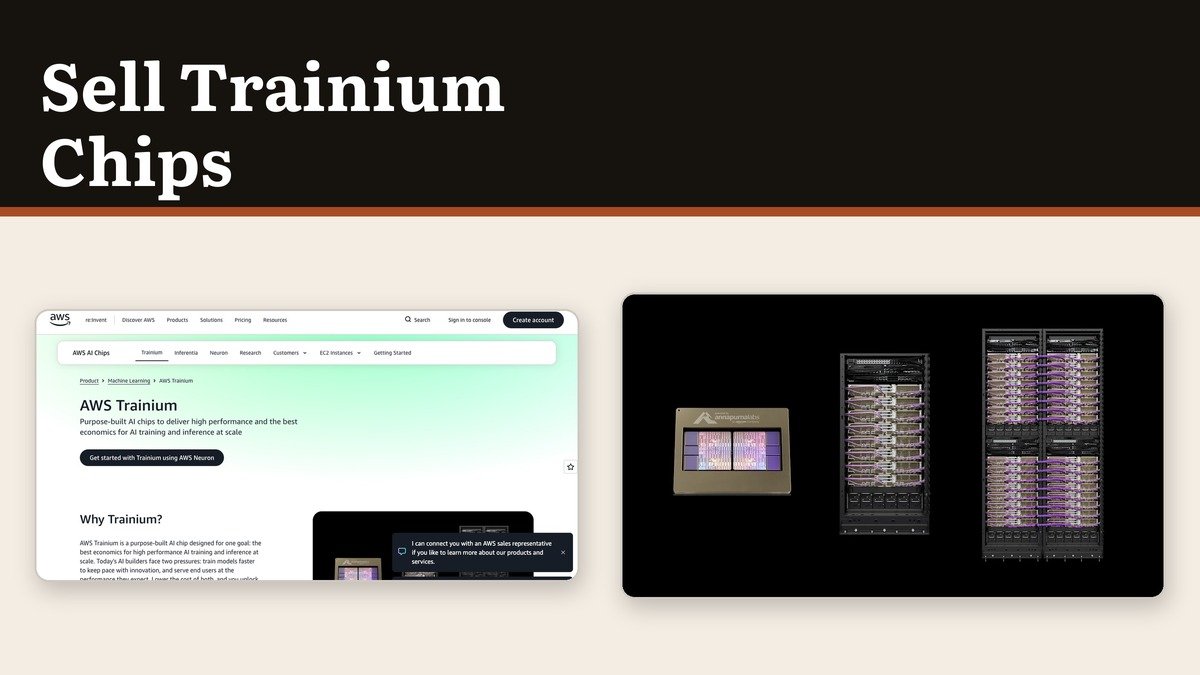
Amazon has decided to sell Trainium chips to people who are not AWS customers. Andy Jassy gave the date on the third-quarter earnings call on 29 October: late 2027, with customer demand as the stated reason.
The chips have so far been something you rent by the hour inside Amazon’s own cloud. Putting them on the open market makes Amazon a hardware vendor competing for the same buyers it currently serves as a landlord.
The arithmetic behind the decision to sell Trainium chips
Jassy set out the trade-off plainly, and it is the most useful thing he said. An accelerator kept inside AWS generates rental revenue across five to six years. The same accelerator sold to an outside buyer generates its revenue once, immediately, and then leaves the fleet.
Choosing the slower, larger number is the default for a cloud business, which is why the date is 2027 rather than now. Jassy said the split between external sales and internal use would be reconsidered about once a year, so this is a dial rather than a switch.
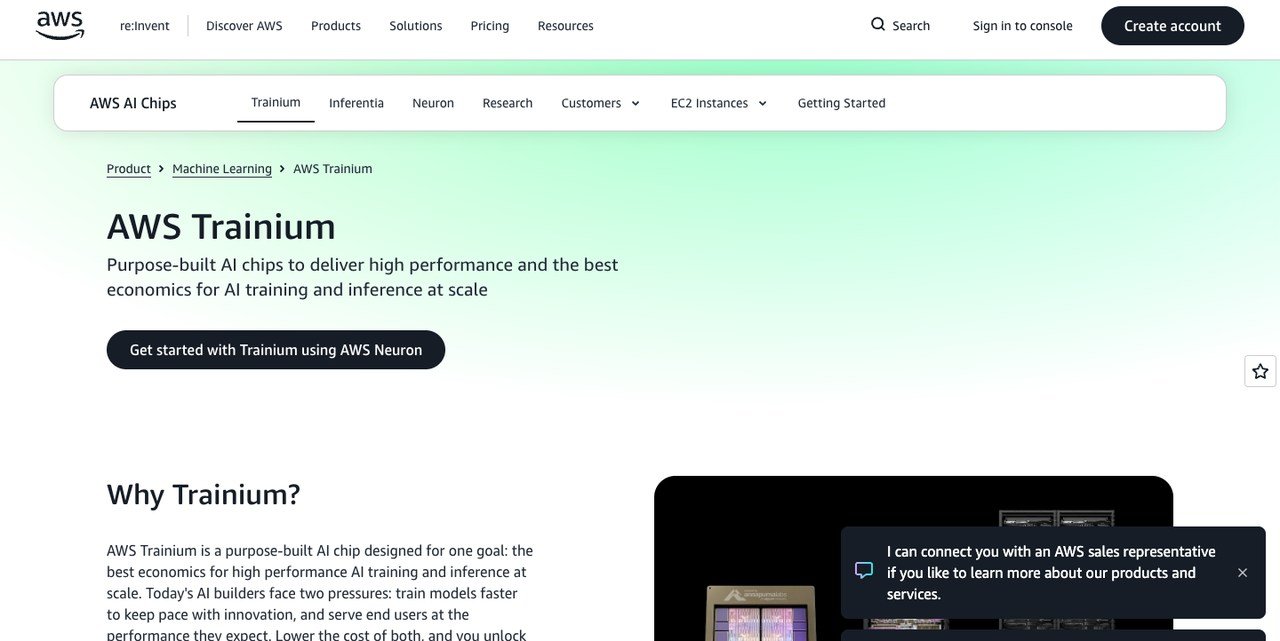
Amazon is not starting from nothing
The chip operation passed a $25bn annual revenue run rate according to Amazon’s June quarter results, and the April shareholder letter had already raised the prospect of selling racks to third parties. What the earnings call added was commitment and a timeframe.
Jassy also made a claim worth recording, since it will be tested: by his count only about two companies in the world run a cloud business at scale and also design a chip strong enough to sell to others.
The scale of that claim is easy to miss. A $25bn run rate would make the chip operation a substantial semiconductor company on its own, sitting inside a cloud business, and it got there without selling a single unit to an outside buyer.
What has not been said
No launch customer. No pricing. No indication of how much of the fleet gets diverted. Those three gaps are what separate a plan from a product, and none of them was filled on the call.
Context from the same week is not encouraging about the difficulty of the market Amazon is entering. Intel lost almost 29% in one session after guiding below expectations, a company whose entire business is selling chips to other people. Coverage of the call put the target squarely in late 2027.
How to read it from outside
For buyers, the practical question is whether a Trainium rack can be run without AWS software around it, and nothing announced so far answers that. For Amazon, the measure of success is not unit sales but whether external demand turns out to be large enough to justify giving up years of rental income.
Readers following how this hardware actually gets used can start with our comparison of AI image generators, which run on exactly this class of accelerator. The gap between a chip that works well in its designer’s own data centre and one that works well in a stranger’s is where most custom silicon projects have quietly stopped, and late 2027 is when Amazon finds out which side of that line Trainium falls on.