
Intel shares fall days happen, but not like this one. The stock closed down almost 29% at $65.76 on Friday 30 October, its heaviest single-session loss since 1974, after the company published a forecast that landed more than a billion dollars short of what the market had penciled in.
What makes the reaction unusual is that the results themselves were fine. The damage came from three months of guidance and one sentence from the finance chief about personal computers.
The numbers that made Intel shares fall
For the current quarter Intel guided to revenue of $15bn to $16bn and adjusted earnings of 25 cents a share. LSEG consensus was $17.1bn and 43 cents. Even the optimistic end of Intel’s own range sits a billion dollars under the estimate.
The quarter just reported went the other way. Adjusted earnings came in at 52 cents a share, ahead of forecasts, and data centre revenue reached $7.3bn. Chief financial officer David Zinsner explained the caution plainly, saying the company sees “the PC slowdown continuing at least through the first half of next year”.
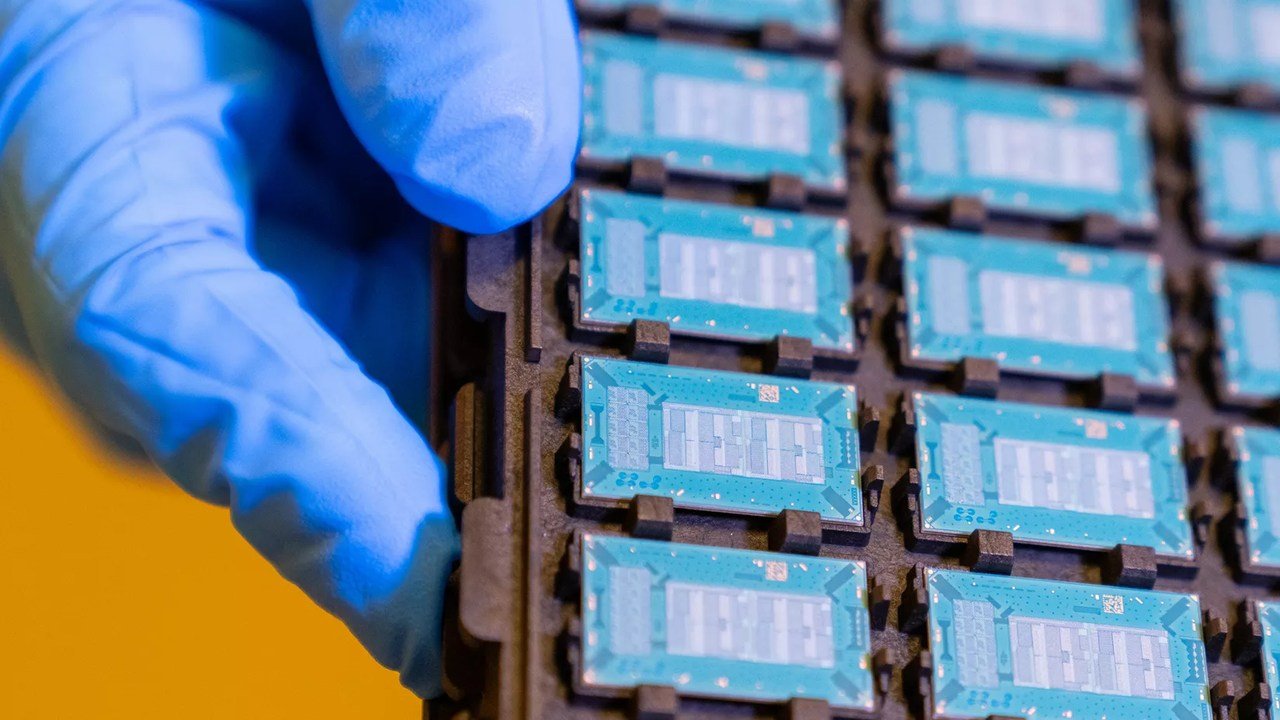
That slowdown is the consumer market. Readers pricing up a machine from our laptop buying guide or assembling one with the help of our breakdown of PC components are the demand Intel has told investors it is not counting on returning soon.
A factory explosion inside the forecast
Part of the shortfall is physical. Intel expects to lose about $600m of revenue across two quarters following an explosion at a fabrication plant in Israel, which chief executive Lip-Bu Tan described as an “unfortunate and tragic accident”. Tan said separately that Intel expects to announce foundry customers over the next two quarters, the milestone the turnaround case rests on.

The losses spread well past one chipmaker
Washington owns roughly 10% of Intel, and that holding shed about $12bn of value during the session, though the government is still ahead on what it paid. Nvidia, another Intel shareholder, fell 4% and watched around $6bn come off its stake.
Across the market the Nasdaq Composite finished down 2.9%. Amazon eased 1.4% after a third-quarter miss, keeping its 2026 capital spending plan at $220bn. Broadcom lost more than 5%, Qualcomm fell 11%, and Alphabet had already posted its worst day on record the session before with a drop of more than 12%. Bank of America, Roth Capital Partners, Seaport Research Partners and D.A. Davidson all moved Intel to neutral from buy, and CNBC counted the government stake loss at about $12bn.
What would change the story
Two things, on the company’s own account. The first is the PC cycle, and Zinsner has already told investors not to expect it before the second half of next year, which is why the guidance reads the way it does. The second is foundry: Tan said Intel expects to name customers within two quarters, and that business is the whole argument for the company as something other than a maker of PC chips.
It is also worth keeping the record straight on the scale of the fall. This was the worst day since 1974 rather than the worst ever, a line that needed a close below about $64.50 and did not get one. The quarter that was actually reported beat on earnings and grew the data centre business to $7.3bn.