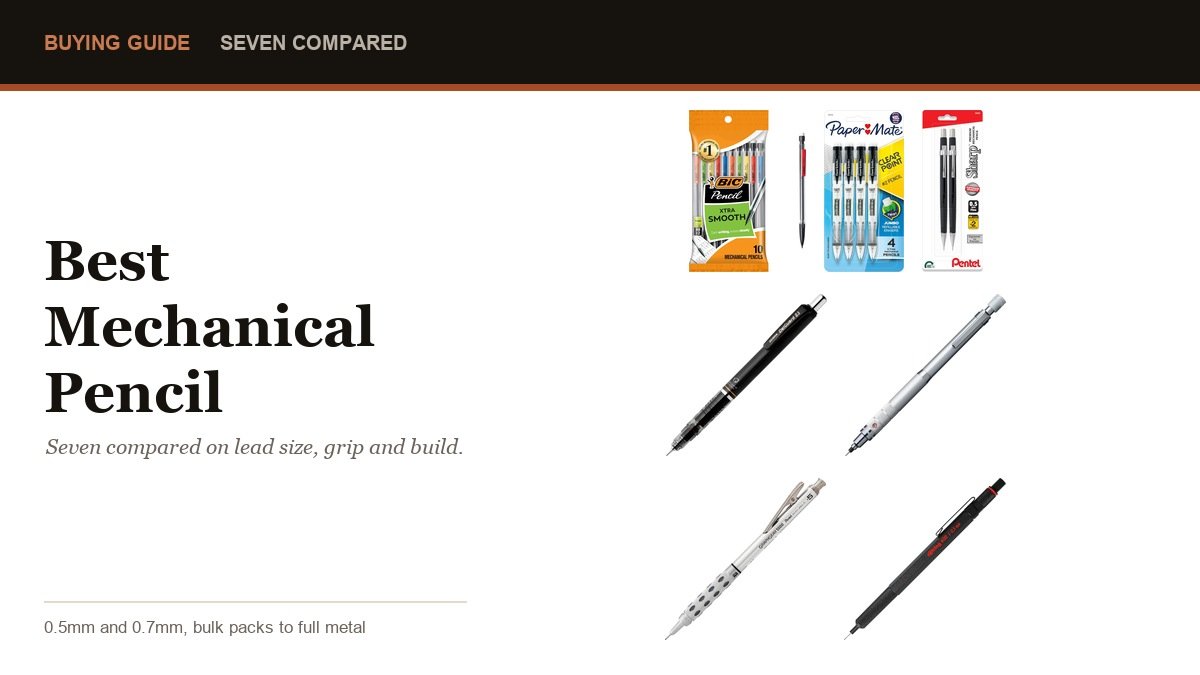
The best mechanical pencil for you depends on one decision you make before any of the others: whether you want a pencil you will replace and forget, or one you will still be using in ten years. The gap between a ten-pack for a school bag and a machined metal drafting pencil is enormous, and both are the right answer for somebody.
Seven are compared below, from bulk plastic packs to full-metal drafting tools, with the lead size, the mechanism and the thing each one actually does differently. Every model here is a current listing, and the specifications come from the makers rather than from a sales page.
| # | Pencil | Lead | Body | Suits |
|---|---|---|---|---|
| 1 | BIC Xtra-Smooth | 0.7mm | Plastic | School bags and bulk buying |
| 2 | Paper Mate Clearpoint | 0.7mm | Plastic, soft grip | Writing without changing grip |
| 3 | Pentel Sharp P205 | 0.5mm | Plastic, metal tip | Rulers, templates, everyday precision |
| 4 | Zebra DelGuard | 0.5mm | Plastic | Heavy-handed writers who snap lead |
| 5 | uni Kuru Toga Roulette | 0.5mm | Metal grip | Keeping a sharp point without effort |
| 6 | Pentel GraphGear 1000 | 0.5mm | Metal, retractable | Carrying a drafting pencil in a pocket |
| 7 | rOtring 600 | 0.5mm | Full metal, hexagonal | Buying once and keeping it |
Five of the seven are 0.5mm, which is the default for a reason: fine enough for small handwriting and technical work, thick enough that it does not snap constantly. The two 0.7mm entries are the cheap bulk packs, where a thicker lead survives a rucksack better.
1. BIC Xtra-Smooth: Best for Buying in Bulk
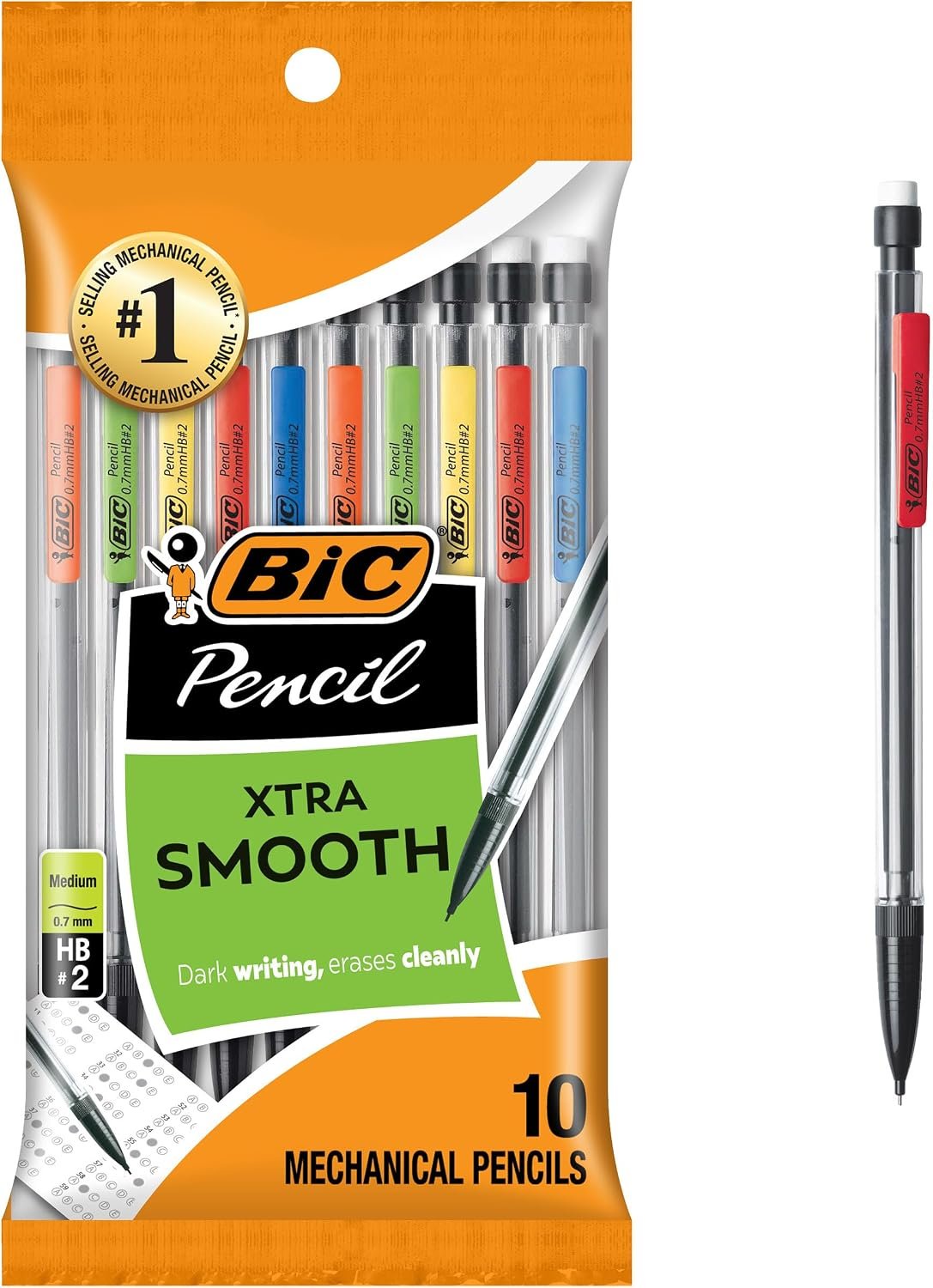
This is the pencil most people have actually used. A ten-count pack of 0.7mm No. 2 pencils with erasers, sold to be scattered through bags, desks and cars without anyone minding when one disappears.
The lead advances by clicking the eraser at the top, the mechanism is entirely plastic, and BIC sells it as a No. 2 equivalent, which is the grade most American schools ask for. It never needs sharpening, which is the entire pitch.
- What it does well: costs almost nothing per pencil, writes acceptably, and losing one is not an event.
- What to know: the plastic clip snaps, the eraser is small, and the grip is bare barrel.
2. Paper Mate Clearpoint: Best Cheap Pencil to Actually Hold
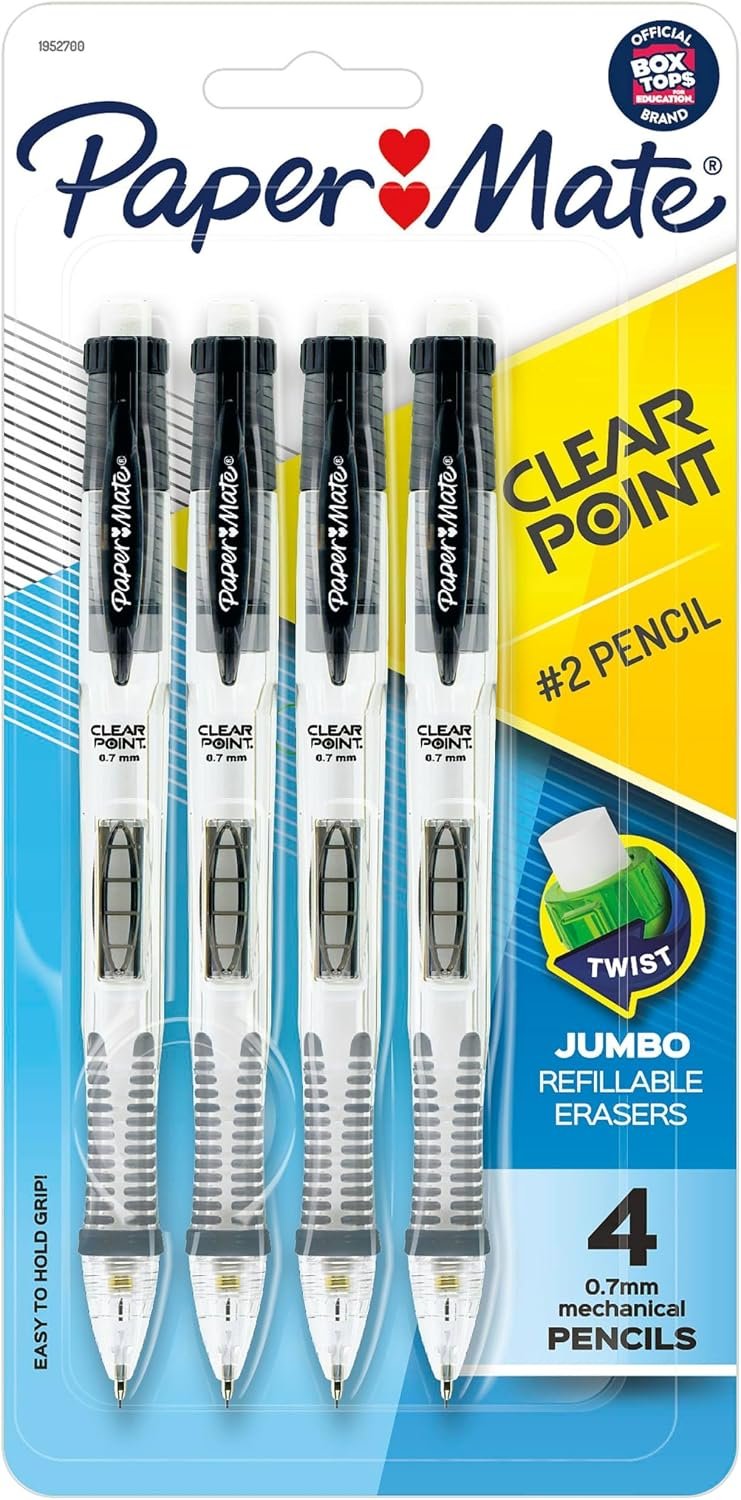
The Clearpoint costs a little more than a bulk BIC and fixes the two things that make cheap pencils annoying: the grip and the reload. A soft grip section covers the barrel where your fingers sit.
Its distinguishing feature is side lead advance. A button on the side of the barrel pushes the lead out, so you never have to shift your hand to the top button mid-sentence. The eraser is refillable rather than a stub that vanishes.
- What it does well: side advance, a real grip, and a refillable eraser at a low price.
- What to know: still a plastic body, and 0.7mm HB is a softer, broader line than 0.5mm.
3. Pentel Sharp P205: The One Professionals Keep Buying
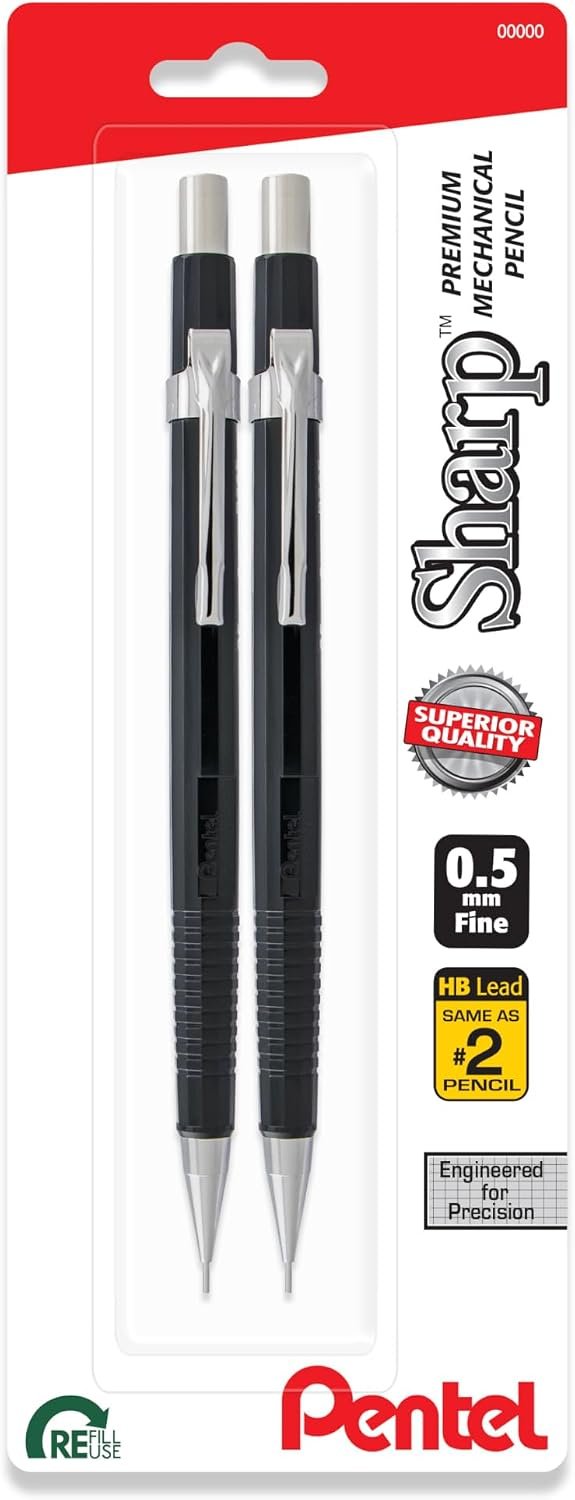
Pentel calls the Sharp its best-selling mechanical pencil, and it has looked essentially the same since the 1970s. A plastic barrel, a metal tip, no grip section and no cleverness anywhere.
The detail that matters is the 4mm fixed lead sleeve. That thin metal tube is long enough to run along a ruler or a template edge without the barrel getting in the way, which is why it sits in engineering offices rather than pencil cases. It comes loaded with Pentel Super Hi-Polymer HB lead.
The same sleeve is also why it will eventually stab through a bag lining. This is a desk pencil, not a pocket one, a distinction that matters as much as any drawing software choice for people who work on paper first.
- What it does well: a 4mm sleeve for ruler work, decades of proven reliability, very light in the hand.
- What to know: the fixed sleeve is exposed, so it is not a pocket pencil.
4. Zebra DelGuard: Best for People Who Snap Lead
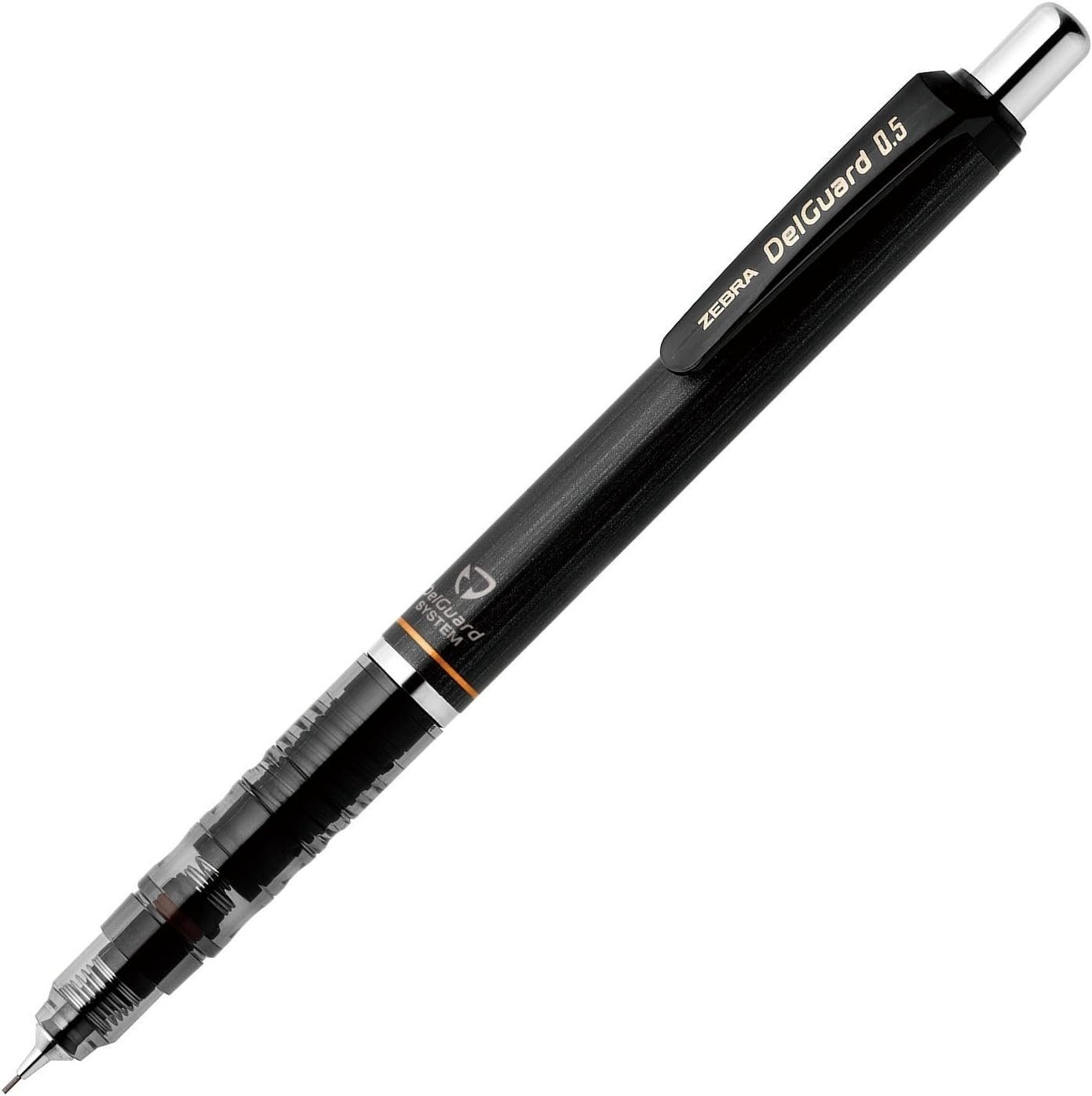
If you press hard enough to break 0.5mm lead several times a page, the DelGuard is built for exactly that problem. Zebra fits a spring system that absorbs vertical pressure and a metal sleeve that shifts to take sideways force.
Zebra describes the mechanism as protecting the lead so it does not break regardless of the angle or the pressure applied. In practice it does not make lead unbreakable, it makes the everyday amount of over-pressing survivable.
- What it does well: genuinely reduces lead breakage for heavy-handed writers.
- What to know: the cushioning gives the tip a slight sponginess that precision users dislike.
5. uni Kuru Toga Roulette: Best for a Point That Stays Sharp
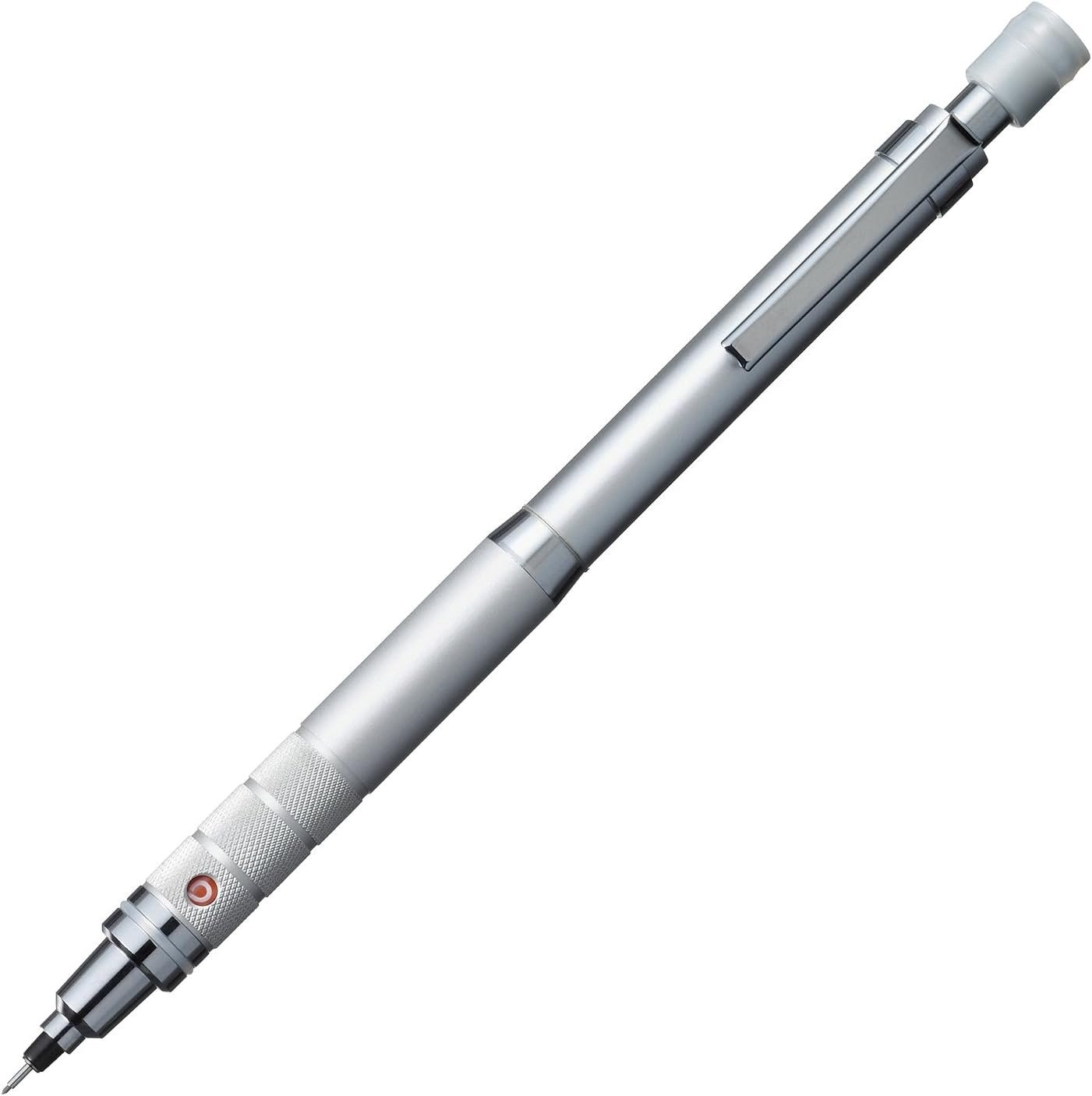
Every ordinary mechanical pencil wears its lead into a wedge, so your line starts fine and turns fat within a paragraph. The Kuru Toga fixes that mechanically: a clutch inside rotates the lead slightly every time you lift it off the paper, so the wear stays even and the tip stays conical.
Mitsubishi Pencil, which makes uni, lists the launch of Kuru Toga mechanical pencils with automatic lead core rotation as a milestone in its company history. The Roulette is the upgraded version, with a knurled metal grip and more weight than the plastic original.
- What it does well: a consistently fine line, which matters most for small handwriting.
- What to know: the rotation needs you to lift the pencil, so printing benefits more than fast cursive.
6. Pentel GraphGear 1000: Best Drafting Pencil You Can Pocket
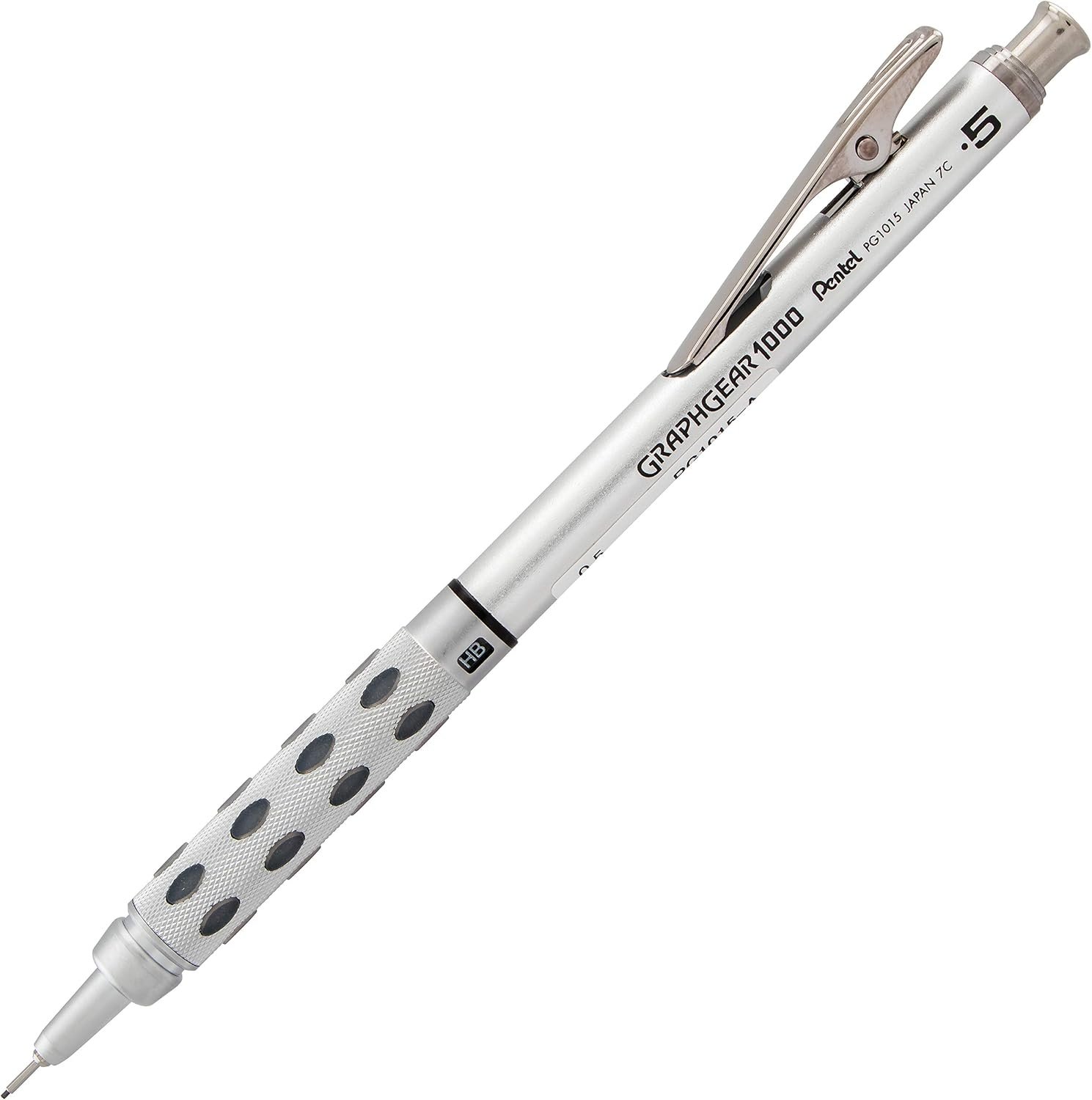
The GraphGear 1000 solves the P205 problem. It has the same long sleeve a drafting pencil needs, but Pentel’s dual-action retractor pulls the tip back inside the barrel when you click the clip, so it can live in a pocket.
The rest is built for long sessions: a chiselled metal grip inlaid with soft latex-free pads, and a lead hardness indicator on the barrel so you can see which grade is loaded without writing a test line.
It is also noticeably heavy and front-weighted, which some people love and others find tiring. That is a preference rather than a flaw, and it is worth handling one before committing.
- What it does well: retractable tip, hardness indicator, and a grip designed for hours.
- What to know: heavy and long, and the retraction mechanism adds parts that can fail.
7. rOtring 600: Best Buy-It-Once Mechanical Pencil
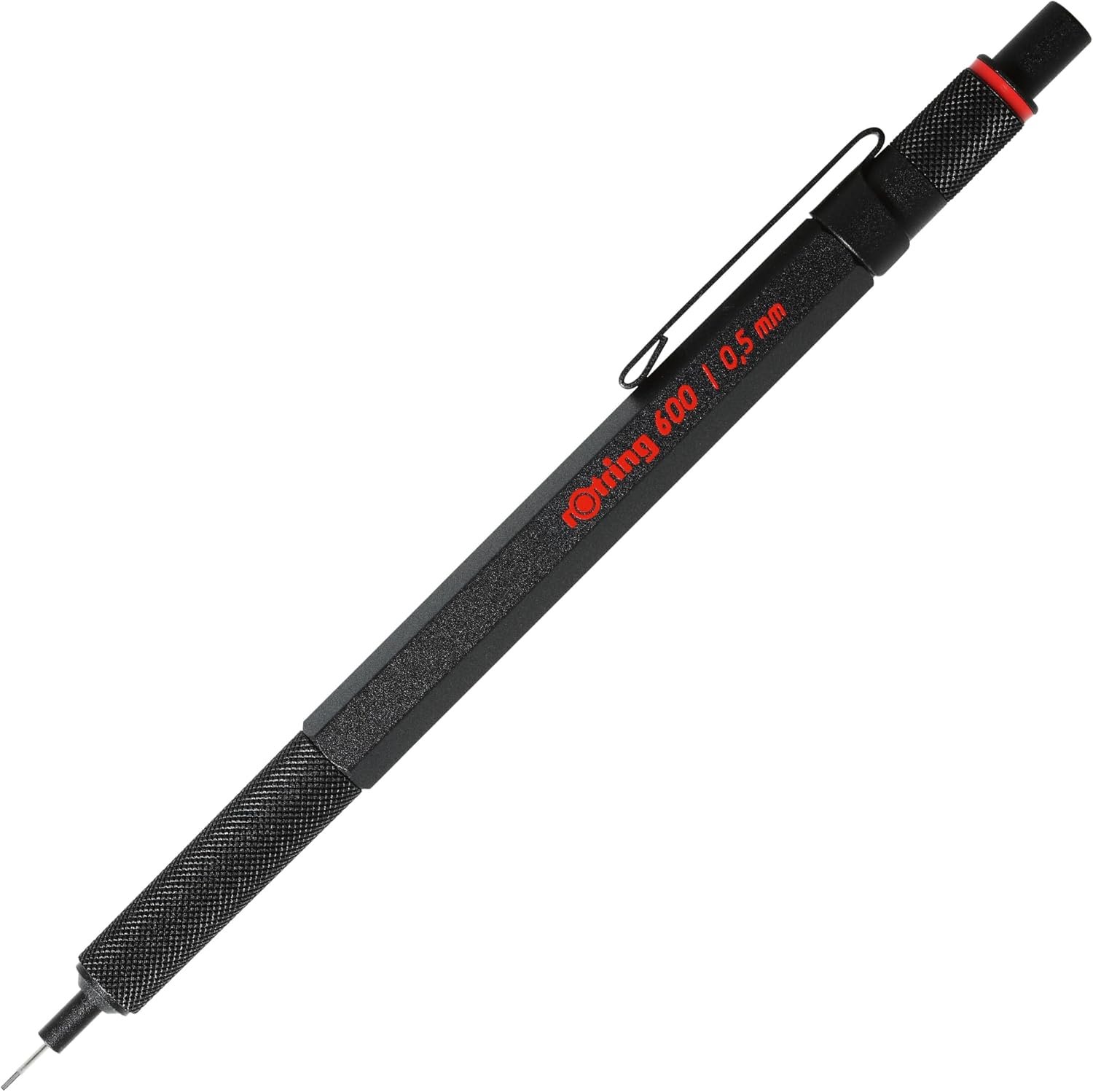
The 600 is the one people keep for decades. A full metal body, a knurled metal grip and a hexagonal barrel, machined rather than moulded, with a weight that makes every plastic pencil feel like a toy afterwards.
rOtring describes a brass mechanism for precise lead advancement and a fixed lead guidance sleeve that keeps the view of the page clear for ruler-based drawing. The hexagonal barrel is not styling: it stops the pencil rolling off a sloped desk.
There is a lead grade indicator and an eraser hidden under the push button, though the eraser is token. This is the most expensive pencil here by a wide margin and the only one that feels like a tool rather than a supply.
- What it does well: all-metal build, superb balance, and a fixed sleeve for technical work.
- What to know: heavy, costs many times what the plastic pencils do, and the eraser is tiny.
Lead Size Decides More Than Brand
Before comparing mechanisms, pick a lead width. It changes the line, the breakage rate and how often you are clicking for more lead, and it matters more than which logo is on the barrel.
- 0.3mm: technical drawing and very small handwriting. Snaps if you press at all firmly.
- 0.5mm: the default. Fine enough for detail, sturdy enough for daily writing.
- 0.7mm: the school and bulk-pack size. Darker, broader, far harder to break.
- 0.9mm and up: sketching and shading, where a broad soft line is the point.
Grade matters alongside width. HB is the standard supplied in nearly every pencil here, while a softer B or 2B lays down a darker line for drawing, and a harder H holds a crisper edge for technical work. Refill lead is sold by both width and grade, so both need to match.
Why a Metal Body Changes How You Write
The jump from the plastic pencils to the metal ones is the biggest step in this list, and it is not really about durability. It is about weight distribution and where the pencil wants to sit in your hand.
- Balance: metal pencils are front-weighted, so the tip stays planted with less grip pressure.
- Fatigue: less grip pressure over an hour of notes is the difference most people actually feel.
- Knurling: a machined grip holds without the tackiness of rubber, which degrades over years.
- Rolling: a hexagonal barrel stays where you put it on a sloped surface.
None of that helps if you lose pencils. Anyone who leaves a pencil in a lecture hall every other week should buy the bulk pack and spend the difference elsewhere, the same logic that applies to digital planners versus a paper diary.
Which Mechanical Pencil to Buy
For school or a house full of pencils, buy the BIC ten-pack and stop thinking about it. For daily writing where comfort matters, the Paper Mate Clearpoint fixes the grip and the reload for very little money. For anyone using a ruler, the Pentel Sharp P205 is still the standard, and has been for fifty years.
If you break lead constantly, the Zebra DelGuard is built for that specific complaint. If your line going blunt is the irritation, the Kuru Toga Roulette solves it mechanically. The GraphGear 1000 is the drafting pencil you can carry, and the rOtring 600 is the one to buy if you would rather own a single good tool than a drawer of adequate ones. Note-takers weighing paper against a screen may also want our comparison of note taking apps.
Frequently Asked Questions
What is the best mechanical pencil?
For most people, the Pentel Sharp P205 in 0.5mm: light, cheap, and built with a 4mm sleeve that suits both writing and ruler work. If budget is the priority, the BIC Xtra-Smooth bulk pack. If you want one pencil for the next decade, the rOtring 600.
Are mechanical pencils #2 pencils?
The lead grade decides that, not the pencil. HB lead is the equivalent of a No. 2 wooden pencil, and BIC markets its Xtra-Smooth as a No. 2 mechanical pencil. Most pencils here ship with HB lead, so they qualify, but always check the grade printed on the refill tube.
Can you use a mechanical pencil on a scantron or exam sheet?
Usually yes with HB or No. 2 lead, but the rule is set by the exam board rather than the pencil. Some standardised tests still specify a wooden No. 2, and thinner 0.3mm and 0.5mm lines can read faintly on older scanners. Check the instructions for your specific exam and take a wooden spare.
How do you refill a mechanical pencil?
Unscrew or pull off the top cap, which usually holds the eraser, and drop refill leads into the barrel, then replace the cap and click. Match both the width and the grade to the pencil, since 0.5mm lead will not feed in a 0.7mm mechanism and vice versa.
Related Articles
- Best Graphic Design Software Compared
- Best Team Communication Tools: 7 Chat Apps Compared
- Best Inventory Management Software: 8 Compared
- Best Desk Mat: 7 Compared on Size, Material and Finish
- US Passport Renewal: Fees, Timings and Who Can Renew Online
As an Amazon Associate, CanyonWire earns from qualifying purchases.