You can check your credit score for free through many credit card issuers and lenders, and you can pull your full credit reports from Equifax, Experian and TransUnion every week at AnnualCreditReport.com. Those reports do not include a score, so in 2026 the reliable routine is to check both: the reports for errors, the score for progress.
Time needed: one sitting to pull all three reports online, since AnnualCreditReport.com delivers them immediately, and three to six months for small score gains to show, the window myFICO gives. The steps below cover where each number comes from, how to fix mistakes, the habits that move a score and how to lock your file. This is general information, not financial advice.
What You Need Before You Start
The bureaus verify your identity before releasing a report. The Federal Trade Commission (FTC) says to have these ready:
- Your full name, current address, Social Security number and date of birth.
- Your previous address if you moved in the last two years.
- Details only you would know, such as your monthly mortgage payment, for the security questions each bureau asks separately.
- A login for any credit card or bank account you hold, since many show a score inside the account.
What Does a Credit Score Measure?
A credit score is a prediction of how likely you are to repay a loan on time, built from your credit reports. The CFPB says lenders, landlords and insurers use it, and it sets your interest rate and credit limit. Most scores run from 300 to 850, and you have many of them, not one.
The two main models cut the same scale differently, so one number can earn two labels. Here is where sample scores land on FICO and on VantageScore 3.0 and 4.0:
| Score | FICO tier | VantageScore tier |
|---|---|---|
| 820 | Exceptional (800 to 850) | Superprime (781 to 850) |
| 760 | Very Good (740 to 799) | Prime (661 to 780) |
| 700 | Good (670 to 739) | Prime (661 to 780) |
| 665 | Fair (580 to 669) | Prime (661 to 780) |
| 620 | Fair (580 to 669) | Near Prime (601 to 660) |
| 590 | Fair (580 to 669) | Subprime (300 to 600) |
| 550 | Poor (300 to 579) | Subprime (300 to 600) |
The 665 row shows the gap: Fair to FICO, Prime to VantageScore. FICO calls 670 the start of good credit.
How to Check Your Credit Reports for Free
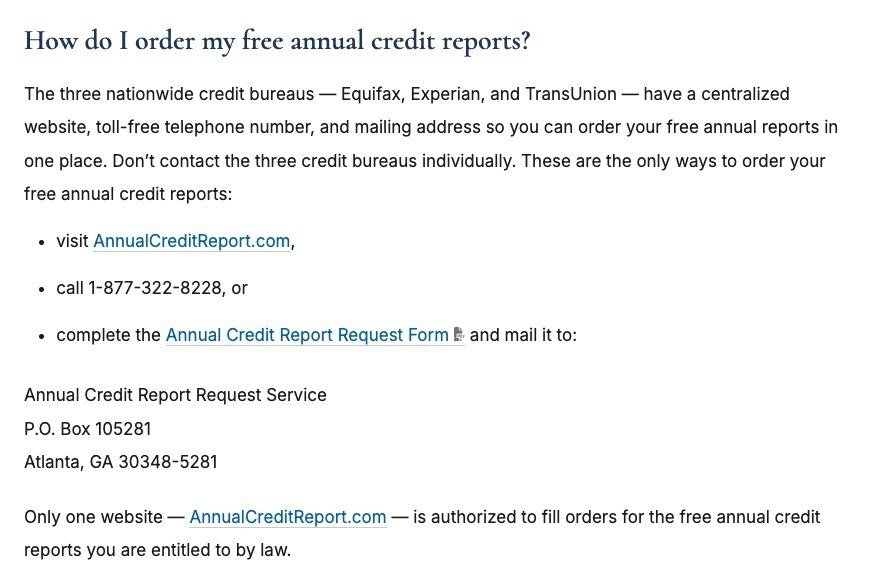
Federal law gives you a free report from each bureau every 12 months, and the three bureaus have permanently extended free weekly access. The FTC lists only three official ways to order:
- Go to AnnualCreditReport.com, typing the address yourself, since imposter sites use misspellings of it.
- Or call 1-877-322-8228.
- Or mail the Annual Credit Report Request Form to Annual Credit Report Request Service, P.O. Box 105281, Atlanta, GA 30348-5281.
- Answer the identity questions for each bureau, even if you order all three at once.
- Download or print each report and save it with the date.
You’ll know it worked when you have three reports, one per bureau, each showing your identifying details and your account and payment history. Online orders arrive immediately; phone and mail orders are processed and mailed within 15 days.
AnnualCreditReport.com and the bureaus will not email you asking for your Social Security number. Treat any message that does as a scam, a habit covered in our guide on how to protect your privacy online.
Where to Get the Score Itself
The CFPB names three main routes to an actual number:
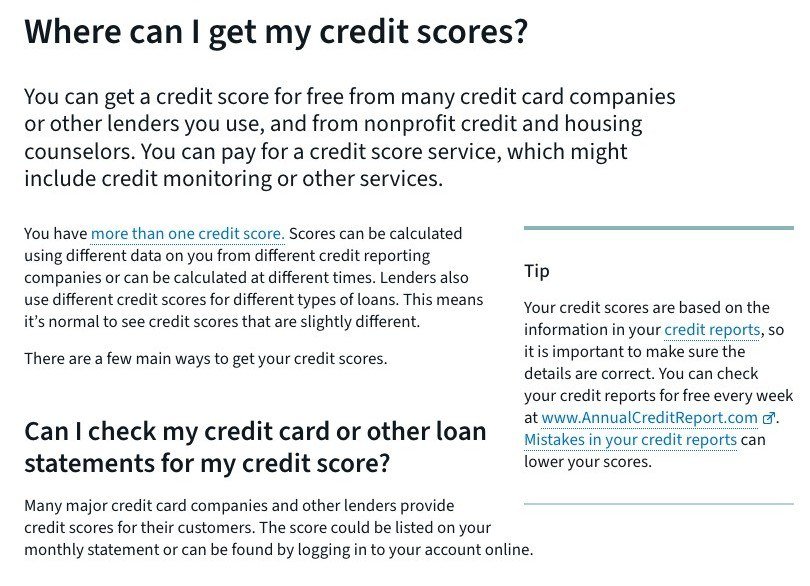
- Check your card or loan statement. Many major issuers print the score on the monthly statement or show it after you log in.
- Ask a nonprofit counselor. Credit counselors and housing counselors trained by the U.S. Department of Housing and Urban Development can often give you a free report and score.
- Use a score service. Some are free and ad-supported; others sell scores, such as the FICO Score at myfico.com, often bundled with monitoring.
You’ll know it worked when you have a three-digit number and the name of the company that calculated it. Watch free trials, which can roll into a monthly fee, and know that buying a score never obliges you to buy other services. Small gaps between apps are normal: each may use a different bureau, model or date.
How to Dispute Errors Before They Cost You Points
Mistakes in a report can lower your score, and fixing them is free. The federal steps to dispute errors on your credit report run through the bureau first, then the company that reported the data:
- Write to the bureau showing the error: Equifax (866) 349-5191, Experian (888) 397-3742 or TransUnion (800) 916-8800 also take disputes by phone and online.
- Include your contact details, the report confirmation number, each account number in question, why it is wrong and what you want changed.
- Attach a copy of the report with the items circled, plus copies, not originals, of your documents.
- Send it by certified mail with a return receipt and keep copies.
- Send a second dispute to the furnisher, the bank, card company or landlord that reported the data.
You’ll know it worked when the bureau reports its results back and the item is corrected or removed. Furnishers generally must investigate within 30 days. If one stands by the data, you can ask the bureaus to add a statement explaining your side to your file.
Seven Steps That Raise a Credit Score
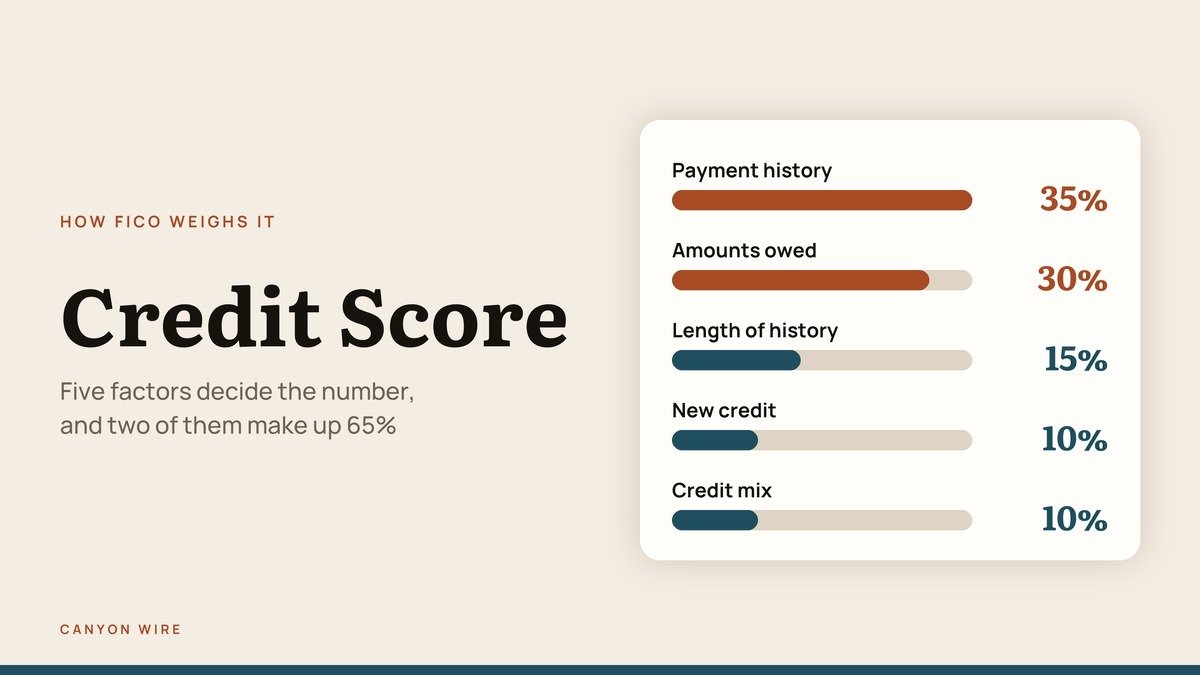
FICO weights payment history at 35% and amounts owed at 30%, so the first two steps carry most of the effect:
- Pay every bill on time. Set up automatic payments or reminders. A payment reported just 30 days late can hurt, and on-time payments after a slip make old problems fade.
- Keep card balances low. myFICO advises using less than 30% of your limits, ideally under 10%. The balance on your statement is usually what gets reported.
- Pay debt down rather than moving it. The CFPB warns that piling several balances onto one card can hurt if it pushes that card near its limit.
- Leave old cards open. Closing them cuts available credit, which can raise your utilization.
- Apply only for credit you need. Each hard inquiry costs most people fewer than five points.
- Build a thin file with the right products. The CFPB points to secured credit cards and credit builder loans, and myFICO adds becoming an authorized user on a relative’s card.
- Recheck your reports. Pull them again before any big application and after any dispute.
You do not need to carry a balance to score well. The CFPB says paying cards in full each month helps get the best scores and keeps interest at its lowest.
Hard vs. Soft Inquiries: Which Checks Count
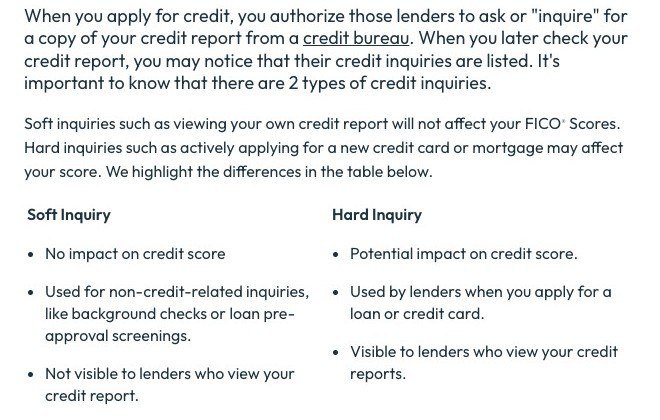
Checking your own score or report is a soft inquiry and never lowers it. Hard inquiries come from lenders after you apply. They stay on a report for up to two years but affect FICO Scores for only one, according to myFICO’s guide to how credit inquiries affect your score.
Shopping for one loan is treated gently. FICO counts several inquiries in a 14 to 45 day window as one, and it ignores mortgage, auto and student loan inquiries made in the 30 days before scoring. When you buy a car, compare auto loan offers inside that window rather than spreading applications over months.
How to Freeze Your Credit Without Losing Points
A credit freeze stops anyone, including you, from opening new credit in your name. The FTC says it is free to place or lift and does not affect your score. To set one up:
- Contact Equifax, Experian and TransUnion separately, online, by phone or by mail.
- Request the freeze at each one; it lasts until you lift it.
- Before applying for credit, a job or an apartment, lift it at the bureau the lender will use.
- Put it back once the check is done.
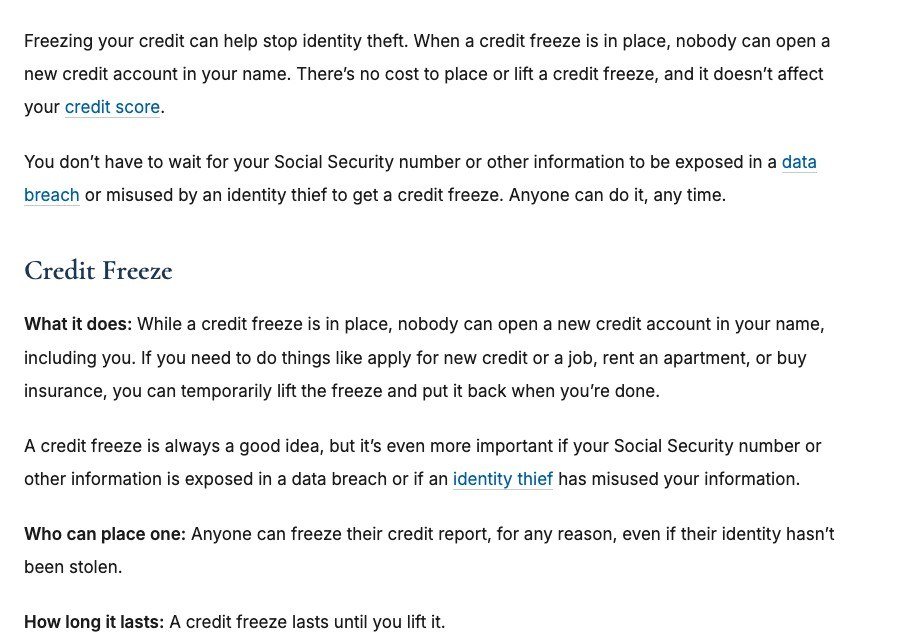
You’ll know it worked when each bureau confirms the freeze. Under the federal freeze timing rules, bureaus must place an online or phone freeze within one business day and lift it within one hour; mail requests take up to three business days. For a lighter option, an initial fraud alert lasts one year and needs only one bureau. Parents can also request a free freeze for a child under 16.
How Long Negative Marks Stay on Your Report
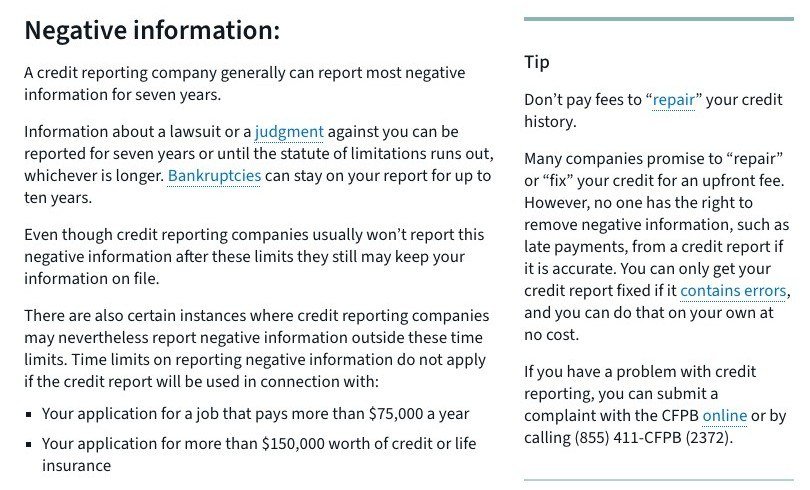
The CFPB says most negative information can be reported for seven years and bankruptcies for up to ten. A judgment can stay seven years or until the statute of limitations runs out, whichever is longer. Paying a collection does not remove it; it stays the full seven years.
Medical debt is treated more gently. Since July 1, 2022, paid medical collections no longer appear on reports, and in April 2023 the three bureaus removed medical collections under $500.
Common Mistakes That Drag a Score Down
- Paying a “credit repair” company. No one can remove accurate negative information, and you can dispute real errors yourself at no cost.
- Ordering reports from look-alike sites instead of AnnualCreditReport.com.
- Closing your oldest card to tidy up your wallet.
- Opening several new accounts quickly when your history is short, which lowers your average account age.
- Opening accounts only to improve your credit mix, which myFICO says probably will not raise the score.
- Forgetting to lift a freeze before applying, which blocks the new account until you do.
Frequently Asked Questions
Does checking my credit score lower it?
No. Your own checks are soft inquiries, which do not affect scores and are visible only to you. Only hard inquiries from credit applications count.
How often can I get my credit report for free?
Every week, from each of the three bureaus, at AnnualCreditReport.com. If a lender denies you because of your report, you can also get an extra free report by asking within 60 days of that notice.
How long does it take to raise a credit score?
myFICO says small changes often appear within three to six months. Recovering from late payments or high balances takes longer, and most negative items age off after seven years.
Why is my score different on different apps?
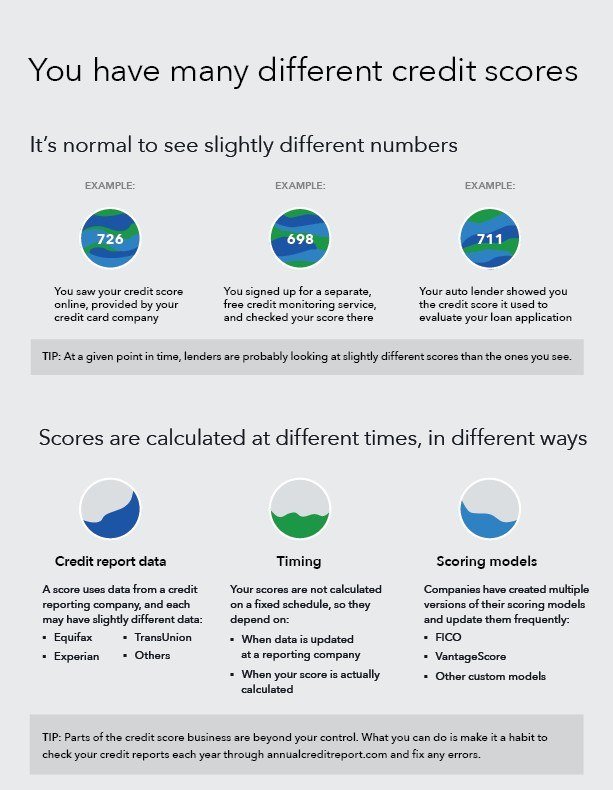
Each score can use a different bureau’s data, a different model such as FICO or VantageScore, and a different calculation date. The CFPB calls slightly different numbers normal.