The lemon law lets you return a defective new car to the manufacturer for a refund or replacement when repeated repairs fail. A handful of states extend similar rights to used cars bought from a dealer. The paperwork matters as much as the defect: a notice sent to the wrong company or a deadline missed by a few weeks can end a claim.
This guide focuses on those practical traps. It covers the written notice states require, the hard filing deadlines, the free arbitration programs, the used-car laws in New York, New Jersey and Massachusetts, and the vehicles that fall outside the rules.
How the Lemon Law Works in Plain Terms
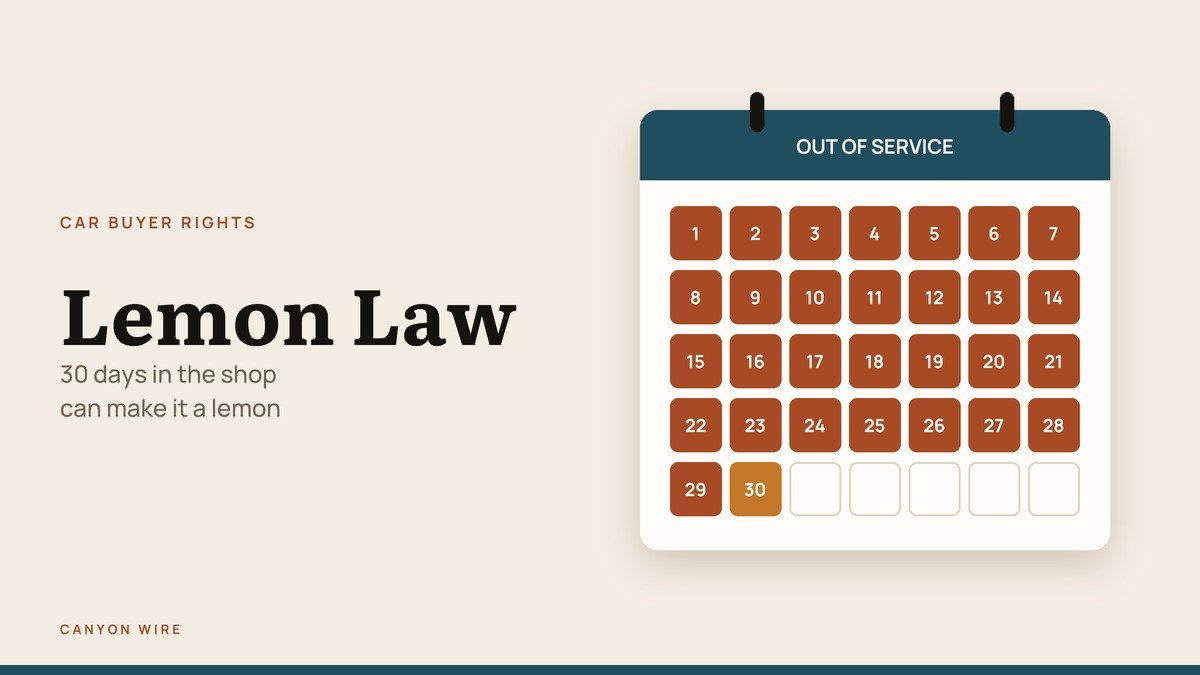
A state lemon law presumes your car is a lemon if a covered defect survives a set number of repair attempts or keeps the car in the shop too long within the first one or two years. Typical thresholds are three or four repairs of the same problem, one or two for a dangerous defect, or about 30 days out of service.
Connecticut started the movement. Its 1982 law, which the state calls pioneering, was copied across the country, and in June 1982 Connecticut became the first state to set up arbitration between consumers and carmakers. The program has since returned more than $100 million to Connecticut drivers, and its 2025 report shows how the process plays out in a single year:
- 165 applications and 141 hearings.
- 113 decisions ordering a refund or replacement.
- A record $8.1 million recovered, with the largest single refund at $204,000.
- The most arbitration-eligible complaints involved Jeep, Hyundai, Ford, Toyota and Honda.
A federal law sits above the state ones. The Magnuson-Moss Warranty Act of 1975 governs all written consumer warranties and lets a court award attorney fees to a consumer who wins. It requires a refund or replacement only under a "full" warranty, which most car warranties are not, so the state lemon law is usually the stronger tool.
Notice to the Manufacturer: The Step Most Owners Miss
Dealers do the repairs, but the lemon law claim is against the manufacturer, and most states require you to tell the manufacturer directly before it gets a final chance to fix the car.

Florida's rules show how precise this is. After three repair attempts for the same problem, or 15 total days in the shop, you must send written notice to the manufacturer, not the dealer, by registered or express mail under the statute (the attorney general's guide also lists certified mail). After the three-attempt notice, the manufacturer has 10 days to send the car to a repair shop and up to 10 more days to fix it; after a 15-day notice, it gets one more chance to inspect or repair the car. The Florida attorney general's explanation walks through each stage.
Other states use the same idea with different numbers:
- New Jersey: a "last chance" letter by certified mail after two failed repairs, 20 days out of service, or a single attempt on a serious safety defect. The manufacturer then has 10 days.
- Massachusetts: one final repair chance of up to seven business days.
- California: for the repeat-repair tests, you must have notified the manufacturer directly at least once, if the warranty or owner's manual tells you to.
- Texas: written notice to the manufacturer, ideally by certified mail, with at least one chance to cure the defect.
The notice only works if your records back it up. The Florida attorney general advises getting a written repair order from the dealer for every examination or repair, noting the date the car went in and the date you were told it was ready, recording the odometer reading at drop-off and pickup, and keeping every receipt tied to the purchase, lease or repairs. Those orders are what prove the repair count and the days out of service.
A clear, dated letter is the core of the claim. Our guide to email etiquette covers how to keep written messages short and on record, but where a state names certified mail, use it.
Lemon Law Deadlines That End Claims
Every state sets a cutoff, and missing it usually ends the arbitration route for good:
- Florida: arbitration within 60 days after the 24-month rights period ends; a lawsuit within one year after that period or the final arbitration action.
- Texas: a complaint within six months after the earliest of warranty expiration, 24 months or 24,000 miles, with a $35 fee.
- Washington: an arbitration request within 30 months of the original delivery.
- Massachusetts used cars: arbitration within six months of the sale.
- New York: 90 days to challenge an arbitration award in court.
Lawsuits run on a separate clock from these arbitration cutoffs, and the deadline depends on your state and the type of claim. Small disputes over repair bills can go to small claims court, where California even allows its lemon law presumption to be raised.
Lemon Law Arbitration Programs and How They Compare
Arbitration is cheaper and faster than court, and in several states it costs nothing. There are three main routes:
- State-run programs: Washington's attorney general runs arbitration at no charge, Texas uses TxDMV hearing examiners for a $35 fee, and New York's program, which charges a refundable filing fee, holds a hearing within 35 days of filing.
- State-certified manufacturer programs: California certifies programs that are free to the consumer, with decisions usually within 40 days.
- BBB AUTO LINE: a national program run by the nonprofit BBB National Programs, free to owners of participating manufacturers, which fund it.
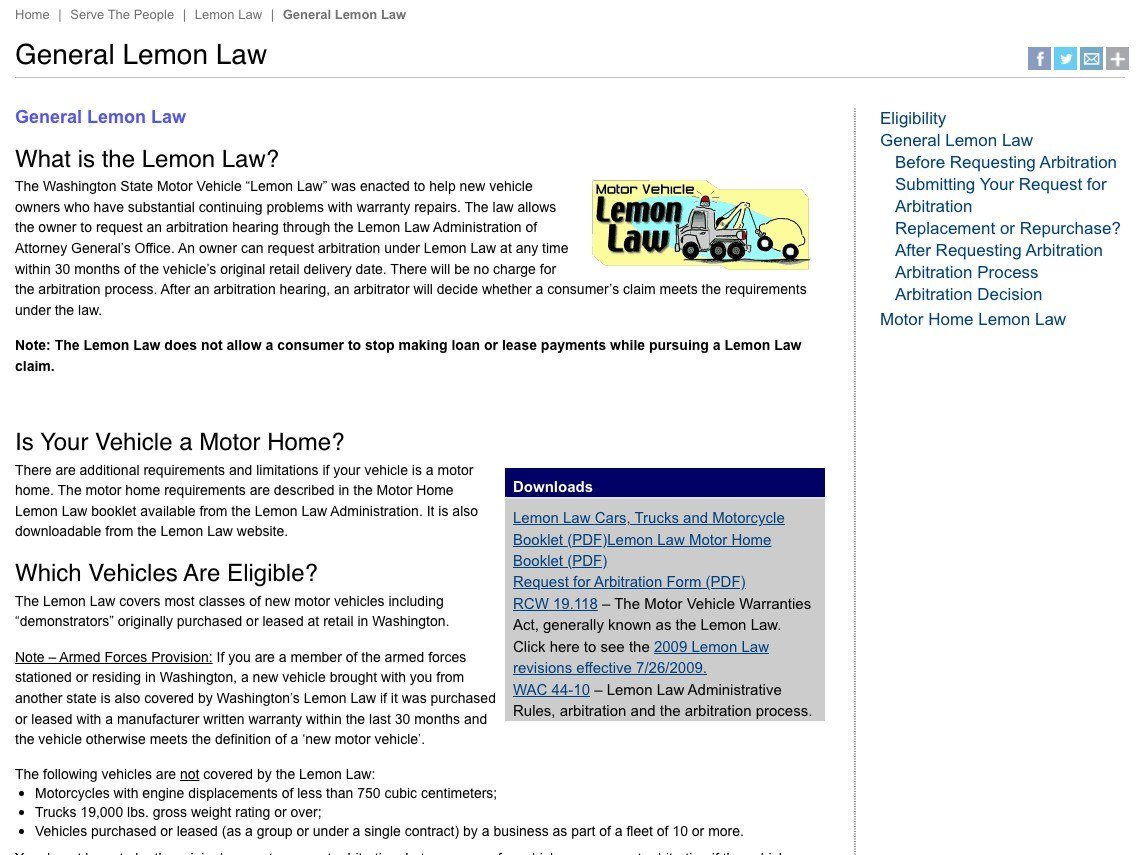
Results bind the manufacturer more than you. In Pennsylvania, a manufacturer program decision binds the carmaker but not the consumer, and California's certified programs bind the manufacturer only if you accept the decision. New York gives the manufacturer 30 days to comply with an award you accept and charges it $25 a business day, up to $500, for missing that deadline. The New York attorney general's guide sets out the full process.
Used Car Lemon Laws in New York, New Jersey and Massachusetts
Most lemon laws stop at new cars, but three states write warranty rules for used cars sold by dealers. Each sets a minimum warranty that shrinks as the mileage rises:
| State | Which cars qualify | Longest warranty | Refund trigger |
|---|---|---|---|
| New York | At least $1,500, more than 18,000 and under 100,000 miles, from a dealer | 90 days or 4,000 miles (18,001 to 36,000 miles) | 3 failed repairs or 15 days out of service |
| New Jersey | At least $3,000, 7 model years old or newer, 100,000 miles or less | 90 days or 3,000 miles (24,000 miles or less) | 3 failed repairs or 20 days out of service |
| Massachusetts | Under 125,000 miles, from a dealer | 90 days or 3,750 miles (under 40,000 miles) | 3 failed repairs or 11 business days out of service |
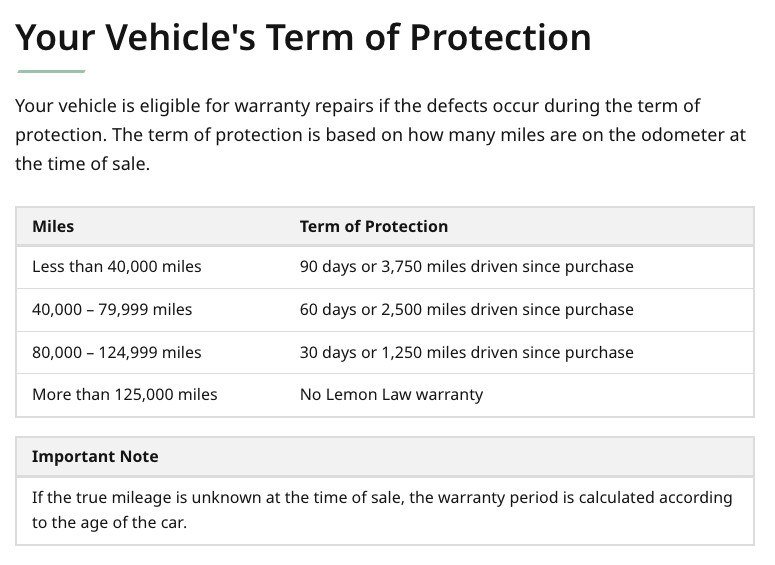
The fine print differs. New York's used-car warranty covers listed parts such as the engine, transmission, brakes and steering, but not the battery, body or tires. Massachusetts caps what the dealer can charge you for warranty repairs at $100 in total and uses a 15-cent-per-mile charge for your use of the car. Private sales are not covered in any of the three.
In most other states, the federal Used Car Rule is the baseline; Maine and Wisconsin use their own buyers guide rules instead. Dealers who sell more than five used cars a year must post a Buyers Guide on the car stating whether it is sold "as is" or with a warranty, and the guide overrides the sales contract. If you are shopping new instead, our comparison of the best cars under $50k covers warranty terms alongside price.
Vehicles the Lemon Law Does Not Always Cover
Cars and light trucks are covered almost everywhere, but other vehicles are not:
- Motorcycles: excluded in California and Florida, covered in New York since September 1, 2004, covered in New Jersey and Texas, and excluded in Washington under 750cc.
- Motor homes: the driving parts are usually covered, but the living quarters are not in California, Florida or New York.
- Heavy trucks: Florida excludes trucks over 10,000 pounds, and Washington excludes trucks of 19,000 pounds or more.
- Business vehicles: California covers them only if the vehicle is under 10,000 pounds gross weight and the business has no more than five vehicles registered in the state.
Service members get extra help. California covers active-duty members stationed or living in the state when they bought the car, even if it was bought elsewhere, and Washington covers armed forces members stationed or living there who bring a car bought or leased in another state within the previous 30 months.
Frequently Asked Questions
Is there a federal lemon law?
The Magnuson-Moss Warranty Act is the closest thing. It covers written warranties on all consumer products and lets a court award attorney fees to a winning consumer, but it forces a refund or replacement only under a full warranty.
Can I stop paying my car loan during a lemon law claim?
No. Washington's attorney general says the law does not let you stop loan or lease payments, and New York's warns that the car can be repossessed if you fall behind.
What happens to a lemon after the buyback?
It is branded. California dealers must label a resold buyback as a lemon law buyback with a door sticker, New Jersey brands the title "Lemon," and in Pennsylvania the branded title is never removed.
Does the lemon law cover a car bought in another state?
Usually the state where you bought, leased or registered the car applies. New York covers cars bought, leased or registered there, and New Jersey covers cars bought, leased or registered in New Jersey.