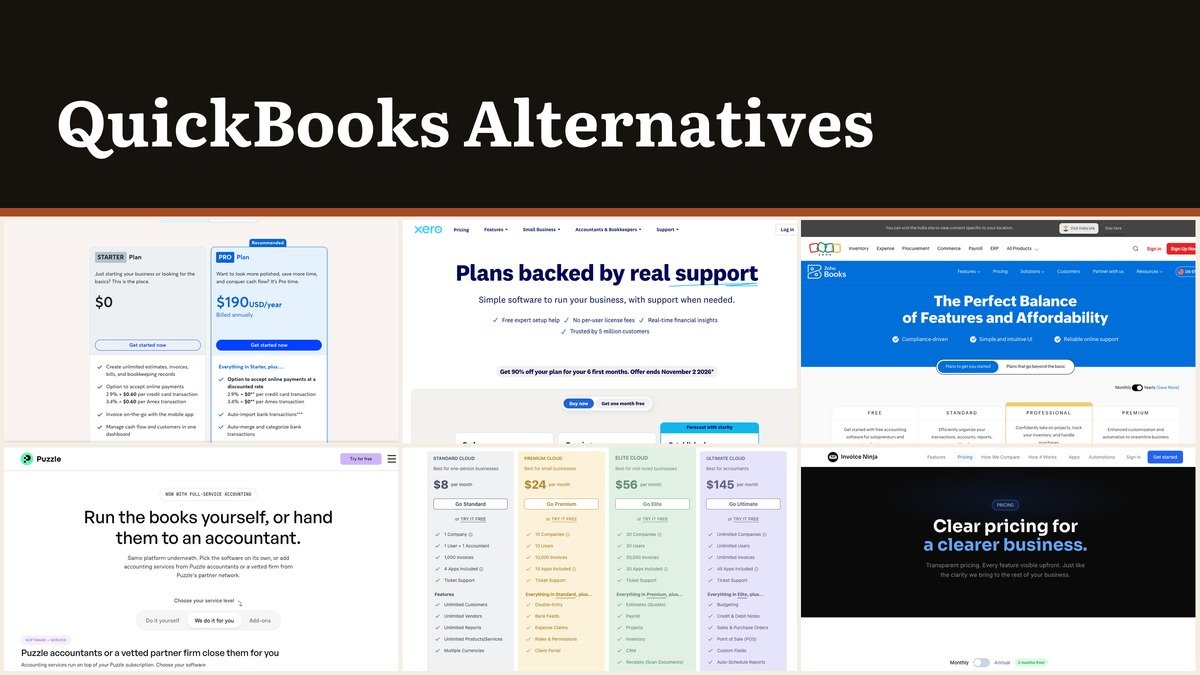
QuickBooks alternatives are worth costing out properly, because QuickBooks Online now lists at $38 a month for Simple Start and $85 for Essentials, and Simple Start includes exactly one user. Four of the ten platforms below cost nothing to start.
They are ranked cheapest first and quoted at list, not at the promotional rate most of them are advertising this month. Where a free plan carries a condition rather than a feature wall, the condition is named rather than buried.
Why the Per-User Line Decides Most of This
Accounting software is sold on three different pricing shapes and they diverge sharply once a second person needs access. QuickBooks meters users by plan, Xero and Zoho Books do not meter them at all, and Bonsai charges for every seat.
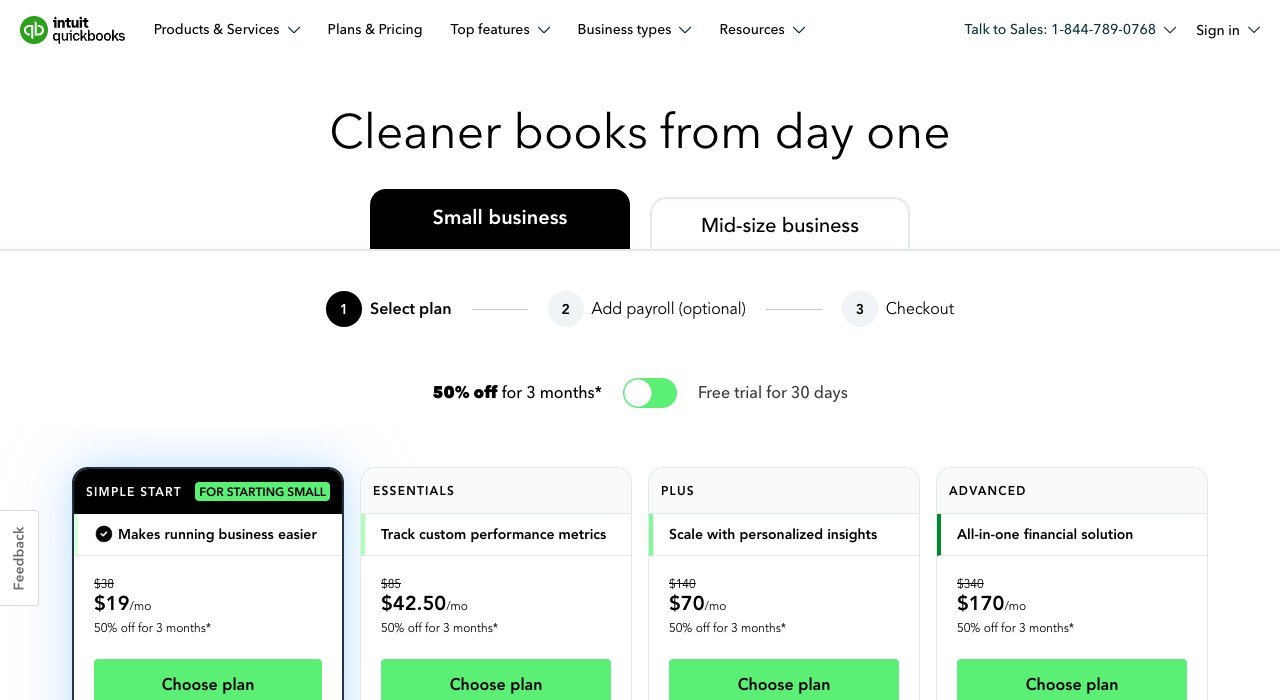
On QuickBooks, going from one user to three means Simple Start at $38 becomes Essentials at $85. That is 124 percent more to add two people, and it is the single most common reason a growing business starts reading comparisons like this one.
Intuit also quietly introduced a free tier, listed at $0 a month with no card required. It is a thin product, but it means the absence of a free plan is no longer a reason to leave on its own.
QuickBooks Alternatives Compared on Price, Free Plan and Seats
All ten platforms, cheapest first, with the lowest paid tier each publishes and the exact shape of its free plan.
| # | Platform | Entry price | Free plan | Users | Built for |
|---|---|---|---|---|---|
| 1 | Wave | $0 (Starter) | Yes, no expiry | 1 | A complete ledger at no cost |
| 2 | Zoho Books | $0 under $50K revenue | Yes, revenue-capped | 1 plus an accountant | Free below a revenue line, cheap above it |
| 3 | Invoice Ninja | $0 (Free) | Yes, 5 clients | 1 on Free | Five clients, unlimited invoices, no clock |
| 4 | GnuCash | $0, free software | Yes, permanently | Unlimited, local | Free software rather than a free tier |
| 5 | TrulySmall | $89.99 a year (Invoices) | First 5 invoices | 1 to 5 by plan | Under $7.50 a month for a solo trader |
| 6 | Akaunting | $8 a month billed yearly | Self-hosted core | 1 plus an accountant | Open source, and yours to host |
| 7 | Bonsai | $15 per user a month | No | Per seat | Project billing with the books attached |
| 8 | FreshBooks | $23 a month (Lite) | No, 30-day trial | 1, extra seats billed | Built around chasing the invoice |
| 9 | Xero | $27 a month (Early) | No, 30-day trial | Unlimited on every plan | Unlimited seats on every plan |
| 10 | Puzzle | $30 a month (Starter) | No | Varies by plan | Books an investor will accept |
The Ten Platforms in Detail
1. Wave: A complete ledger at no cost
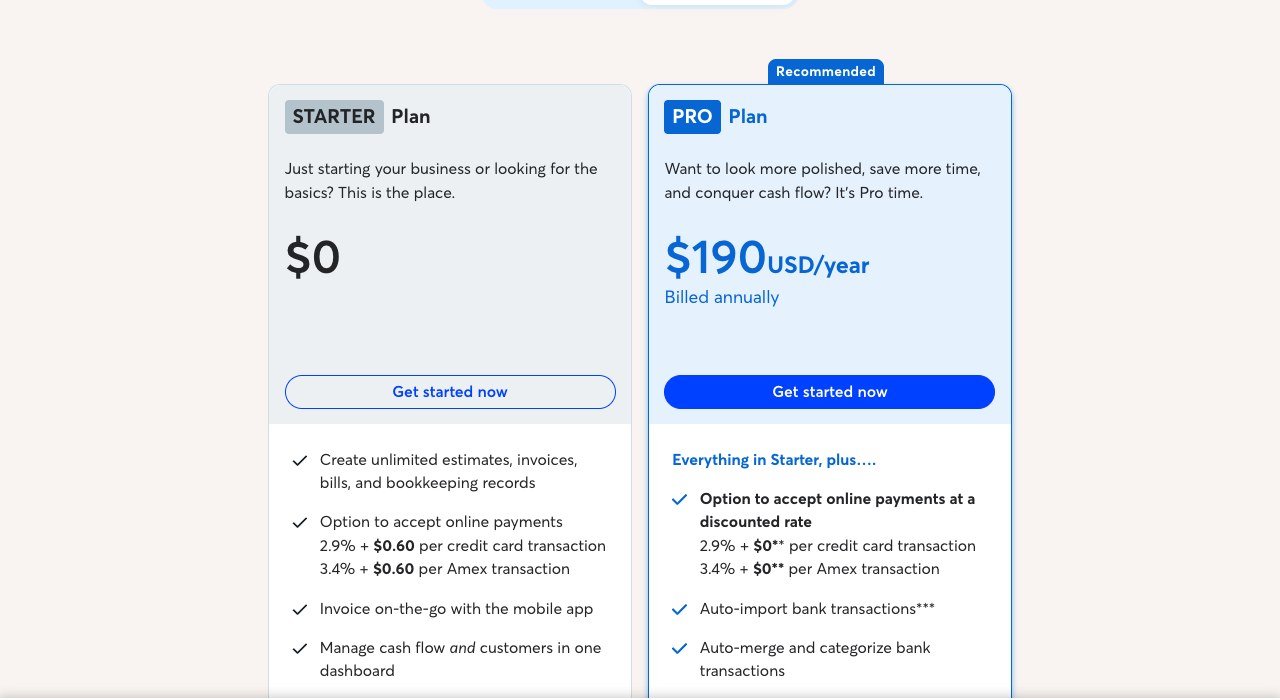
Seats: 1. Cheapest paid plan: $0 (Starter). Free plan: Yes, no expiry.
Wave sits at the top of a cheapest-first list because its free plan is a working ledger rather than a trial. Starter costs nothing indefinitely and handles unlimited invoices, estimates, bills and bookkeeping records for a single user.
The money comes from card processing at 2.9 percent plus 60 cents, rising to 3.4 percent on Amex. Pro at $19 a month removes that 60 cents on the first ten transactions and adds automatic bank imports. Receipt scanning is $11 a month and payroll starts at $25.
2. Zoho Books: Free below a revenue line, cheap above it
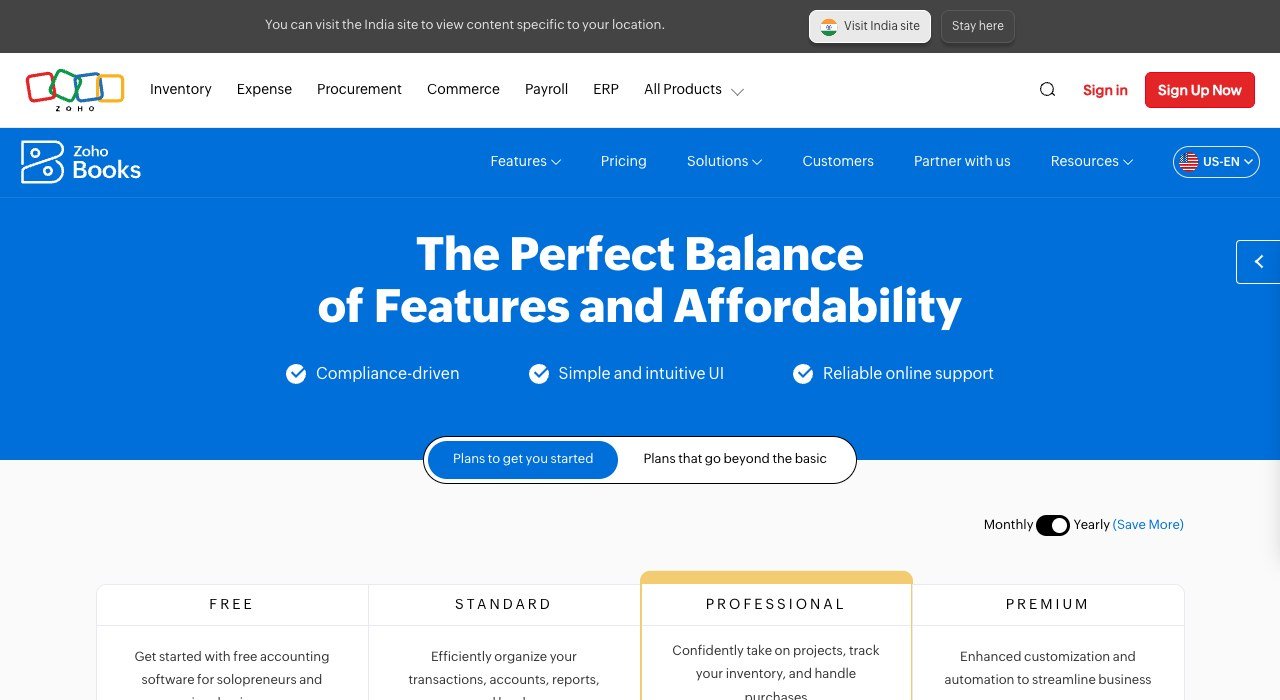
Seats: 1 plus an accountant. Cheapest paid plan: $0 under $50K revenue. Free plan: Yes, revenue-capped.
Zoho Books limits its free plan by the size of the business rather than the length of the feature list. Below $50,000 of annual revenue you get 1,000 invoices a year, one user and an accountant seat at no charge, which is a complete product rather than a sampler.
Paid plans are priced per organisation, not per person. Standard is $20 a month with additional seats at $3, so a three-person business pays $26. The free tier accepts no add-ons at all, which is the limit most people hit first when they want receipt capture.
3. Invoice Ninja: Five clients, unlimited invoices, no clock
Seats: 1 on Free. Cheapest paid plan: $0 (Free). Free plan: Yes, 5 clients.
Invoice Ninja gives away unlimited invoices to five clients with no trial clock and no card. For a contractor with a short roster that is the billing problem solved permanently, and the free documents are fully functional rather than watermarked into uselessness.
Pro at $14 a month lifts the client ceiling and removes the Invoice Ninja mark. Enterprise is $18 for one or two users. The application can also be self-hosted, which is why it turns up on developer shortlists where Wave does not.
4. GnuCash: Free software rather than a free tier
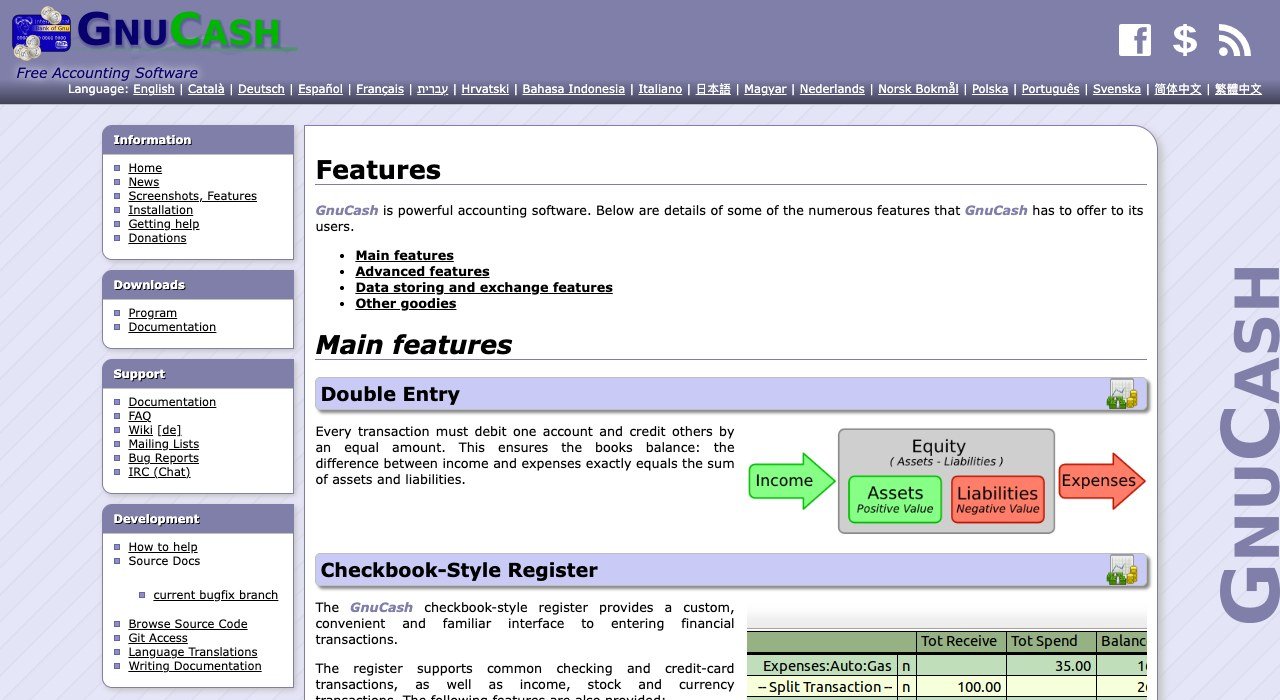
Seats: Unlimited, local. Cheapest paid plan: $0, free software. Free plan: Yes, permanently.
GnuCash costs nothing and always will, because it is free software rather than a free tier. Double-entry bookkeeping, a proper register, balance sheets and reports, all running on your own machine with no account and no cloud copy.
The absences are real and worth naming: no usable bank feed, no mobile app, no client portal and an interface that has aged. For a bookkeeper who wants ledgers rather than dashboards that is a reasonable trade, and for anyone else it will feel like a step backwards from QuickBooks.
5. TrulySmall: Under $7.50 a month for a solo trader
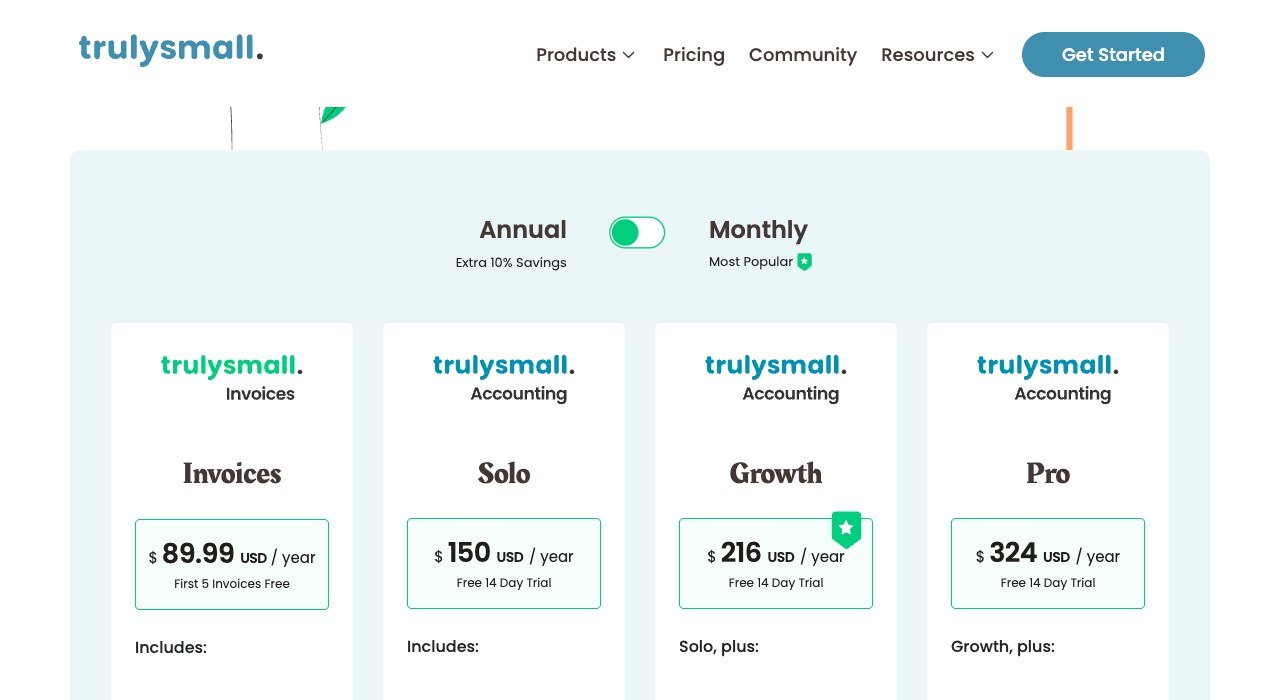
Seats: 1 to 5 by plan. Cheapest paid plan: $89.99 a year (Invoices). Free plan: First 5 invoices.
TrulySmall is priced for a business that is one person and plans to stay one. The Invoices plan is $89.99 a year with the first five invoices free, which works out below $7.50 a month against QuickBooks Simple Start at $38.
Solo at $150 a year adds double-entry accounting, receipt scanning and profit and loss reporting. Growth at $216 carries up to five users with bank sync and automatic reconciliation, and Pro is $324. Every figure on the page is quoted in US dollars rather than Canadian.
6. Akaunting: Open source, and yours to host
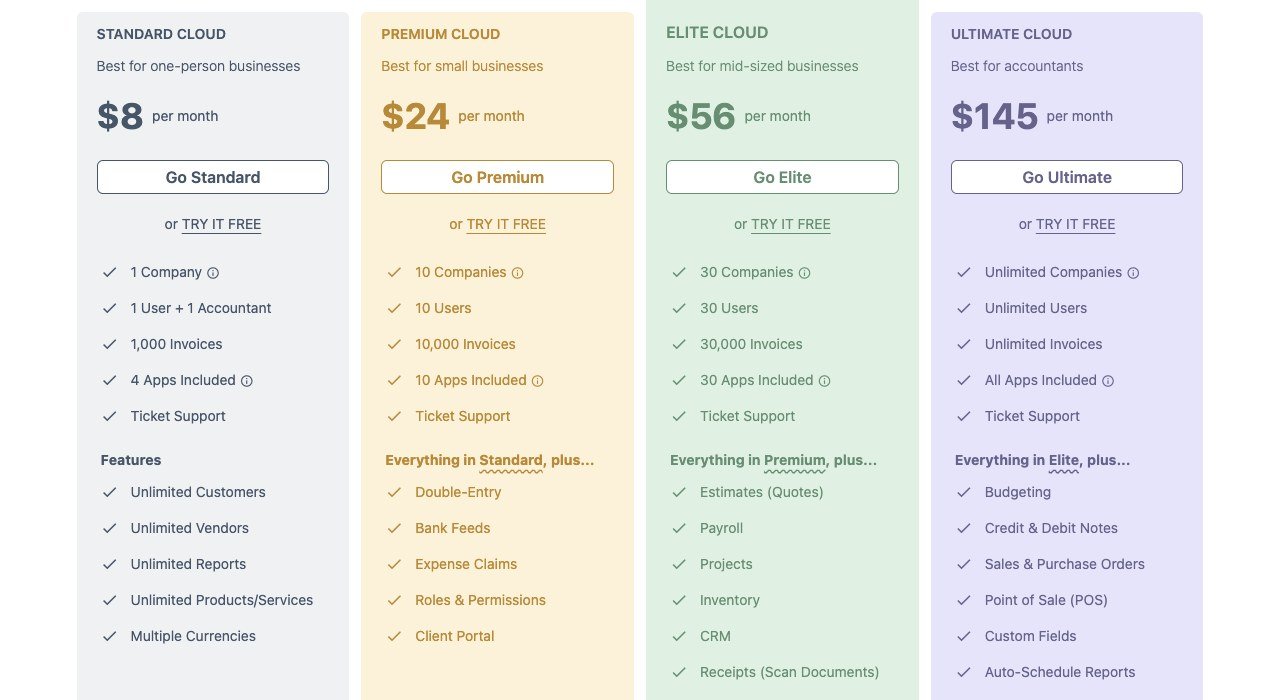
Seats: 1 plus an accountant. Cheapest paid plan: $8 a month billed yearly. Free plan: Self-hosted core.
Akaunting answers the objection that the subscription itself is the problem. The core application is open source, so it can run on hardware you control at the cost of hosting alone, with the ledger never leaving your own infrastructure.
On their cloud, Standard is $8 a month billed yearly and covers one company, one user plus an accountant, 1,000 invoices and four apps. Premium is $24, Elite $56 and Ultimate $145. Paying month to month costs half as much again, $12 for that same Standard tier.
7. Bonsai: Project billing with the books attached
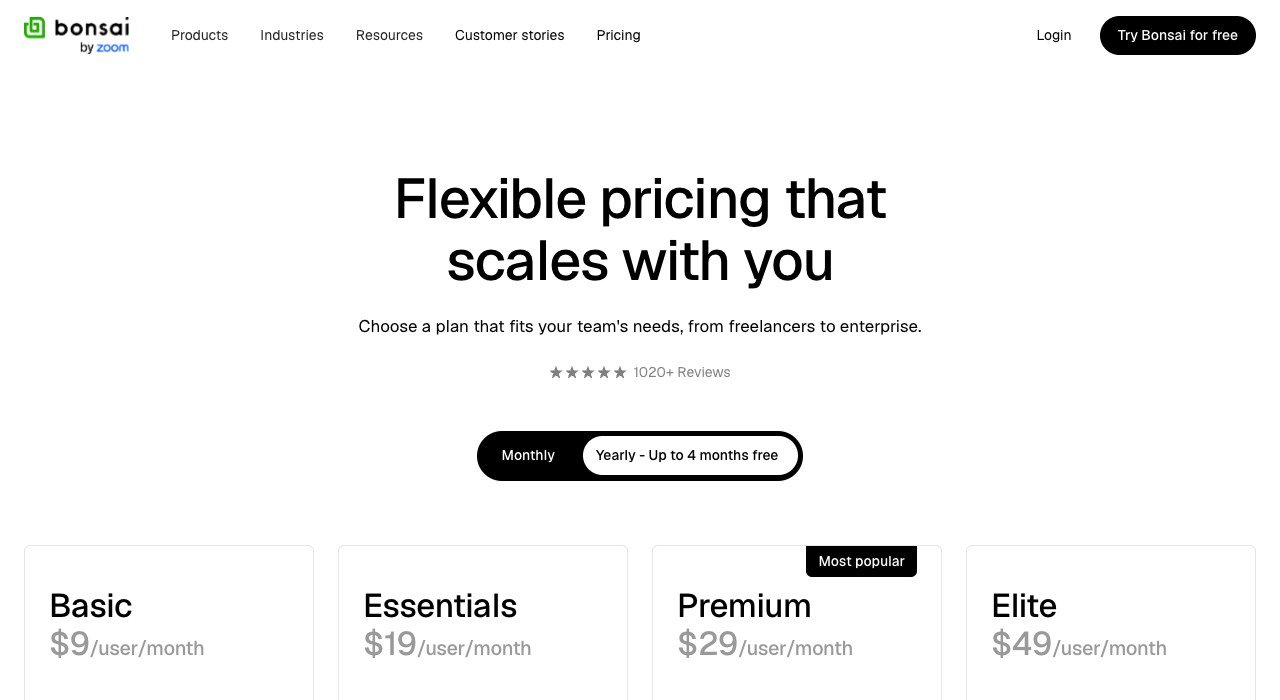
Seats: Per seat. Cheapest paid plan: $15 per user a month. Free plan: No.
Bonsai is built for client delivery rather than bookkeeping, with contracts, proposals, scheduling and time tracking around the invoicing. A studio that sells projects will recognise its own workflow; a shop counting stock will not.
The pricing is per seat and that changes everything. Basic is $15 a month a user, Essentials $25, Premium $39 and Elite $59 with a three-seat minimum. Five people on Premium costs $195 a month, where QuickBooks Plus covers five users for $140.
8. FreshBooks: Built around chasing the invoice
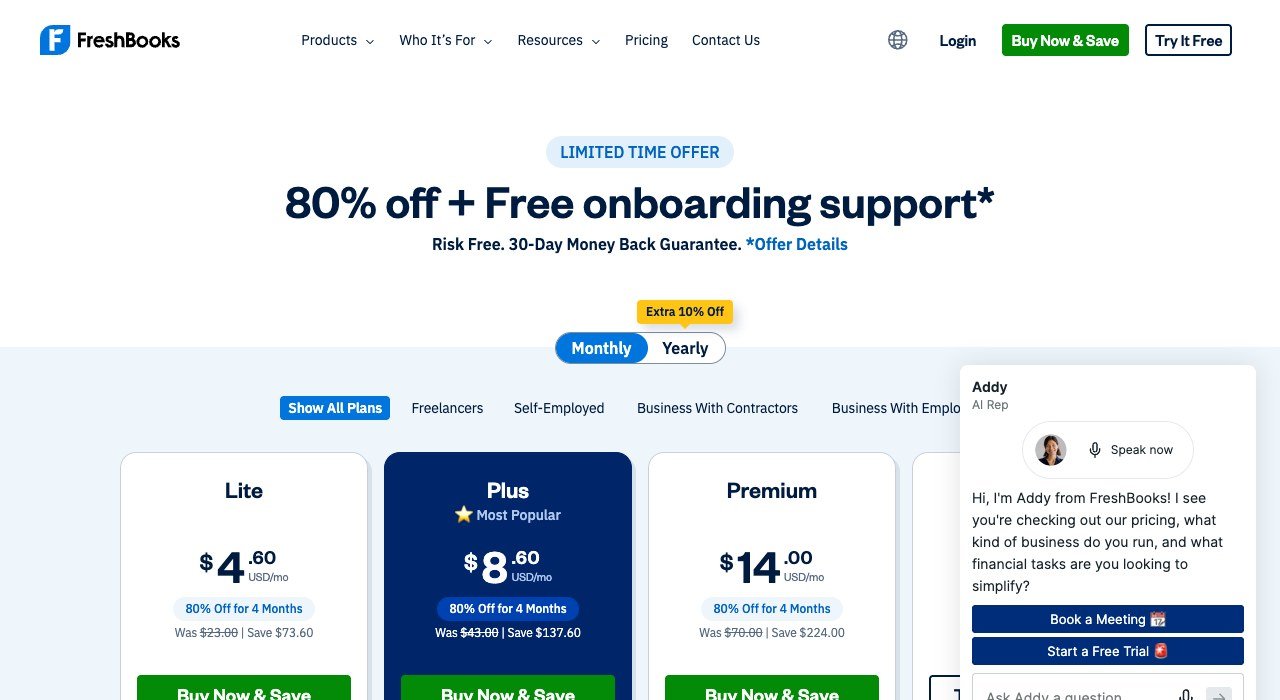
Seats: 1, extra seats billed. Cheapest paid plan: $23 a month (Lite). Free plan: No, 30-day trial.
FreshBooks leads with invoices, estimates, proposals and retainers, and keeps the double-entry books behind them. Lite is $23 a month, which undercuts QuickBooks Simple Start, and the time tracking is better than anything Intuit includes at that level.
The constraint is clients rather than features. Lite stops at five billable clients, Plus at $43 allows 50 and Premium at $70 removes the limit. Payroll adds $40 a month plus $6 a user and Advanced Payments another $20, so a complete setup lands well above $23.
9. Xero: Unlimited seats on every plan
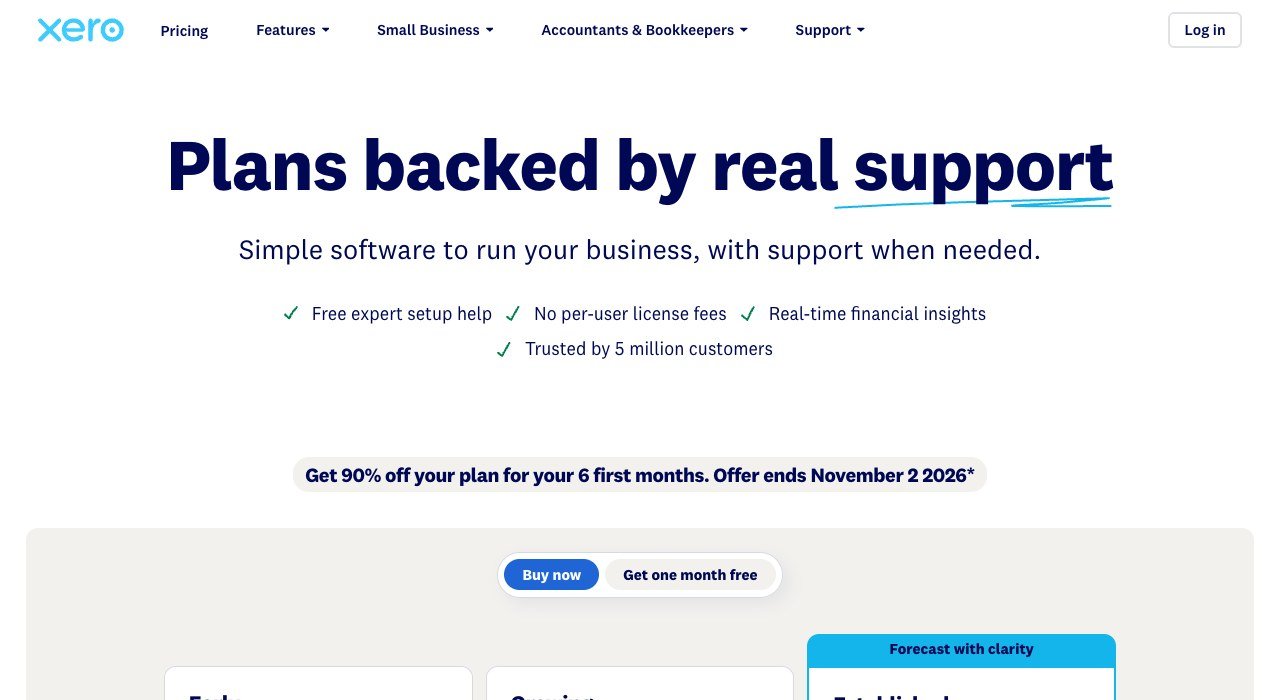
Seats: Unlimited on every plan. Cheapest paid plan: $27 a month (Early). Free plan: No, 30-day trial.
Xero is the closest thing here to a straight swap. Bank feed, reconcile, invoice, report: the daily sequence matches, and crucially no plan charges by the user. Early is $27 a month and takes as many people as you want to add.
Invoices are what is metered instead. Early allows 20 a month, so the honest comparison for a working business is Growing at $59 against QuickBooks Essentials at $85. Payroll arrives as a Gusto add-on rather than a module Xero builds itself.
10. Puzzle: Books an investor will accept
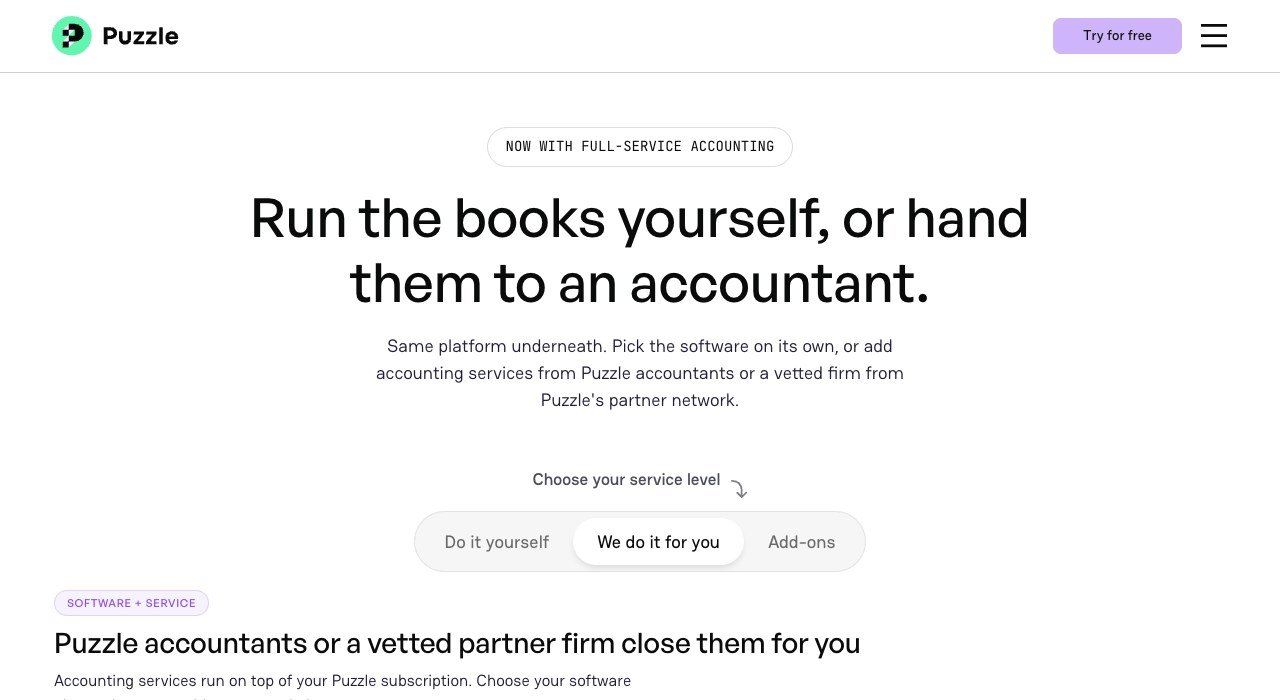
Seats: Varies by plan. Cheapest paid plan: $30 a month (Starter). Free plan: No.
Puzzle is the most expensive entry here and the most specific. Its own pricing page calls the $72 Core plan a QuickBooks replacement, and the product is aimed at venture-backed startups that need books an investor or an auditor will accept.
Starter is $30 a month, Complete $120 and Scale $360, with Core capped at $10,000 of monthly expenses. The ladder tracks spending rather than headcount, which is the right shape for a company whose burn moves faster than its payroll.
What a Five-Person Team Pays on Each Platform
Headline prices are written for one user. Put five people on the same software and the ranking rearranges itself, because three different pricing shapes are competing in the same table.
- Xero Growing: $59 a month total. Seats are not metered, so the fifth person costs nothing.
- Zoho Books Standard: $20 plus four extra seats at $3, so $32 a month.
- QuickBooks Plus: $140 a month, which is the first Intuit tier that includes five users.
- TrulySmall Growth: $216 a year, around $18 a month, for up to five users.
- Bonsai Premium: $39 a seat, so $195 a month, the most expensive route of the five.
The spread runs from $32 to $195 for the same headcount. A per-organisation price rewards teams and a per-seat price punishes them, which is why the cheapest single-user option is rarely the cheapest option at five. Businesses weighing up their wider software bill often find the same pattern in payment management software.
The Four Jobs People Mean by Accounting Software
Half the frustration in this category comes from buying for the wrong job. The phrase covers four products that barely compete with each other.
- Invoicing: issue a bill, chase it, record the payment. Invoice Ninja and TrulySmall Invoices do only this, and do it for almost nothing.
- Bookkeeping: a double-entry ledger, reconciliation and statements. Wave, GnuCash and Zoho Books all qualify.
- Client delivery: contracts, proposals and time against projects, with billing attached. This is Bonsai, and partly FreshBooks.
- Financial reporting for outsiders: books an investor, lender or auditor will accept without rework. Puzzle and Xero are built for this.
Buying a bookkeeping ledger when the real problem is unpaid invoices is the most expensive mistake in the list, because the subscription runs for a year before anyone admits the tool was never the issue. Independent workers in particular tend to need the first job rather than the second, a point worth reading alongside these practical freelancing tips.
Three Things That Move the Number on the Pricing Page
A headline price in this category is a starting position rather than a figure. Three mechanics shift it, and all three are visible on the vendor pages above once you know to look.
The first is the promotional clock. Xero is running 90 percent off for six months and FreshBooks 80 percent off for four. Both revert to list inside the first year, so the discounted figure describes a few months rather than the cost of the software.
The second is the billing period. Akaunting Standard is $8 a month on annual billing and $12 month to month. Zoho Books Standard moves between $15 and $20 on the same toggle. Pricing pages tend to open on the annual column, which is the cheaper of the two and the one fewer businesses actually choose.
The third is currency. FreeAgent quotes £33 a month for UK limited companies, and Odoo returns a different currency depending on where the visitor sits. Reading a sterling figure as a dollar one lands about a third below the real cost, a habit that catches people out well beyond accounting software, as anyone selling across borders learns, which is why the rules around dropshipping trip up so many new sellers.
Choosing Between Them
The right shortlist falls out of the reason you are looking, not out of a feature matrix. Four reasons cover almost everyone.
- The bill is too high: Wave or Zoho Books at $0, then Akaunting at $8.
- Too many people need access: Xero or Zoho Books, where seats are free or nearly free.
- Only the invoicing matters: Invoice Ninja free, or TrulySmall Invoices at $89.99 a year.
- An accountant keeps rebuilding the books: Puzzle, which is priced and built for exactly that complaint.
Whatever you pick, export your records before cancelling anything. The IRS guidance on small business recordkeeping puts the burden of producing records on the taxpayer, not on whichever vendor holds the data, and Publication 583 lists the books a business is expected to keep. Save a trial balance, balance sheet and profit and loss as PDFs on the cut-over date, and reconcile the first full month in the new system before you trust a single report it produces.
Frequently Asked Questions
Which QuickBooks alternative is completely free?
Wave and GnuCash. Wave’s Starter plan runs unlimited invoices and bookkeeping with no time limit, earning instead on card processing. GnuCash is free software with no paid tier above it, though it has no real bank feed and no mobile app.
Is there a QuickBooks alternative that does not charge per user?
Xero and Zoho Books. Xero includes unlimited users on every plan, so five people on Growing still costs $59 a month. Zoho Books prices per organisation at $20 and adds seats at $3 each, which puts a five-person team at $32.
How much does QuickBooks Online cost now?
Simple Start lists at $38 a month for one user, Essentials $85 for three, Plus $140 for five and Advanced $340 for twenty-five. Intuit also lists a free tier at $0 with no card required, alongside a 30-day trial on the paid plans.
Will I lose my reconciled bank history if I switch?
Usually yes. Customers, vendors, the chart of accounts and opening balances migrate reliably, but reconciled history and attachments rarely survive. Export the reports as PDFs first and keep the old subscription live for a month so the original file stays readable.