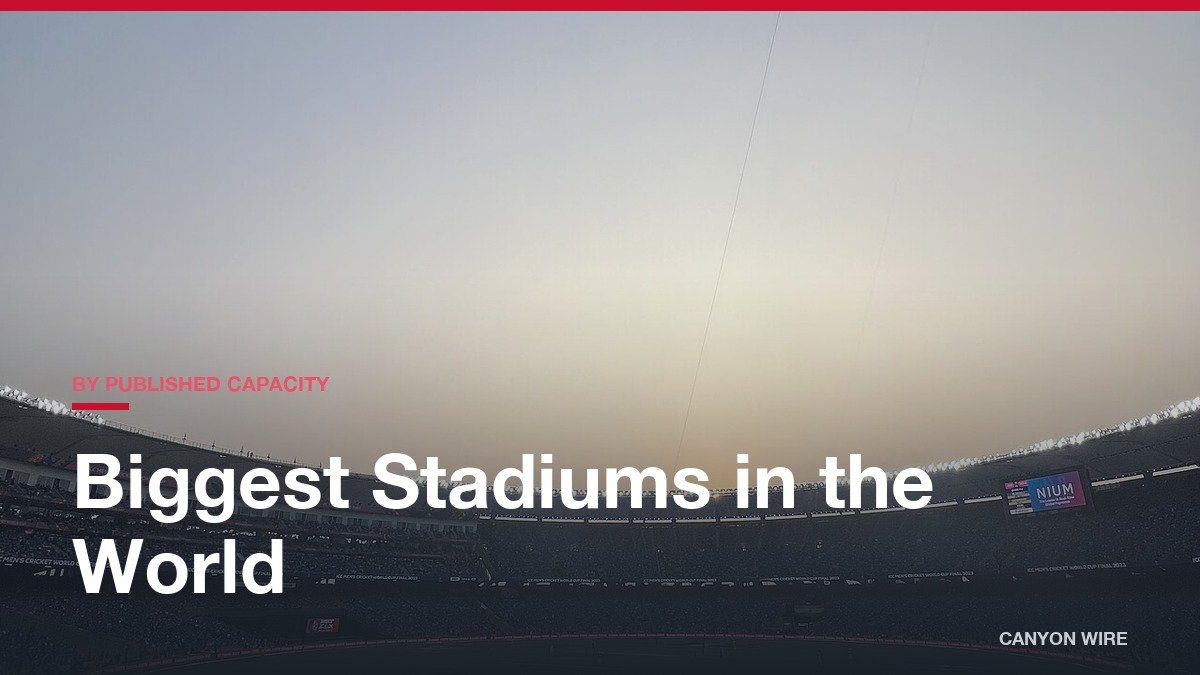
Narendra Modi Stadium in Ahmedabad is the biggest stadium in the world in 2026, with a published capacity of more than 130,000 for cricket. The biggest stadiums in the world run down from there through Pyongyang and a long line of American college grounds to Wembley in London, which is listed at up to 90,000.
Each capacity below is the number the venue or its home team published in November 2026, so rebuilds that added or removed seats are already counted. Ten of the 15 grounds are in the United States, and two entries need a note: Rungrado publishes no figure at all, and Beaver Stadium is in the middle of a rebuild.
The 15 Biggest Stadiums in the World by Published Capacity
| # | Stadium | City and country | Capacity | Main use |
|---|---|---|---|---|
| 1 | Narendra Modi Stadium | Ahmedabad, India | 130,000+ | Cricket |
| 2 | Rungrado 1st of May Stadium | Pyongyang, North Korea | about 114,000 (commonly cited) | Football, athletics, mass games |
| 3 | Michigan Stadium | Ann Arbor, United States | 107,601 | American football |
| 4 | Beaver Stadium | University Park, United States | 107,000+ | American football |
| 5 | Kyle Field | College Station, United States | 102,733 | American football |
| 6 | Tiger Stadium | Baton Rouge, United States | 102,321 | American football |
| 7 | Ohio Stadium | Columbus, United States | 102,041 | American football |
| 8 | Neyland Stadium | Knoxville, United States | 101,915 | American football |
| 9 | Darrell K Royal-Texas Memorial Stadium | Austin, United States | 100,119 | American football |
| 10 | Bryant-Denny Stadium | Tuscaloosa, United States | 100,077 | American football |
| 11 | Melbourne Cricket Ground | Melbourne, Australia | 100,024 | Australian rules, cricket |
| 12 | Spotify Camp Nou | Barcelona, Spain | 99,354 (nearly 105,000 planned) | Football |
| 13 | Sanford Stadium | Athens, United States | 92,746 | American football |
| 14 | Rose Bowl | Pasadena, United States | 91,136 | American football |
| 15 | Wembley Stadium | London, United Kingdom | up to 90,000 | Football, rugby league, NFL games |
Spotify Camp Nou takes 12th place on the 99,354 its club prints. The Espai Barca rebuild restructures the first and second tiers, demolishes and rebuilds the third and puts a roof over the whole bowl, and Barcelona says the finished ground will hold nearly 105,000. That is a plan, so the table keeps the printed figure. Just below the table sit Ben Hill Griffin Stadium in Gainesville at 88,548 and Jordan-Hare Stadium in Auburn at 88,043.
The Top 10 Biggest Stadiums in the World, One by One
1. Narendra Modi Stadium: A 49,000-Seat Ground Rebuilt to 130,000+
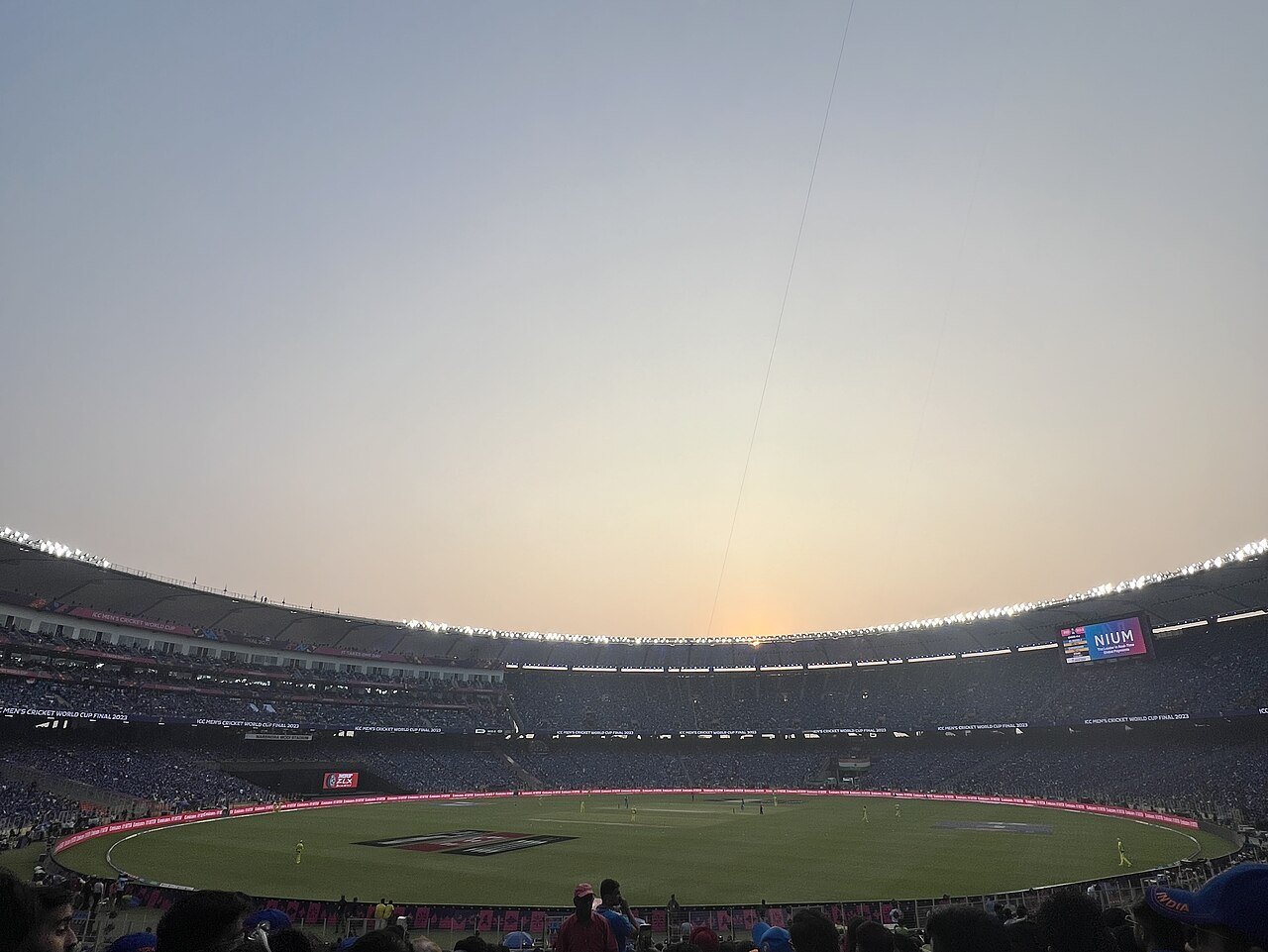
Capacity: 130,000+ · Location: Ahmedabad, India · Opened: 1982, rebuilt 2020 · Operator: Gujarat Cricket Association
The ground at Motera opened in 1982 with 49,000 seats. The Gujarat Cricket Association began redevelopment in October 2015 and finished in February 2020, and its stadium page now says the bowl takes more than 1.3 lakh, or 130,000 cricket fans.
The association’s pages show both 130,000 and 110,000 for the same ground: the stadium page gives the larger number, while the About page and the FAQ give 110,000. This ranking follows the stadium page, which also lists 76 corporate boxes of 25 seats each, 1,900 seats in all. At 110,000 the stadium would still sit ahead of Michigan Stadium.
2. Rungrado 1st of May Stadium: Second Place With No Official Count
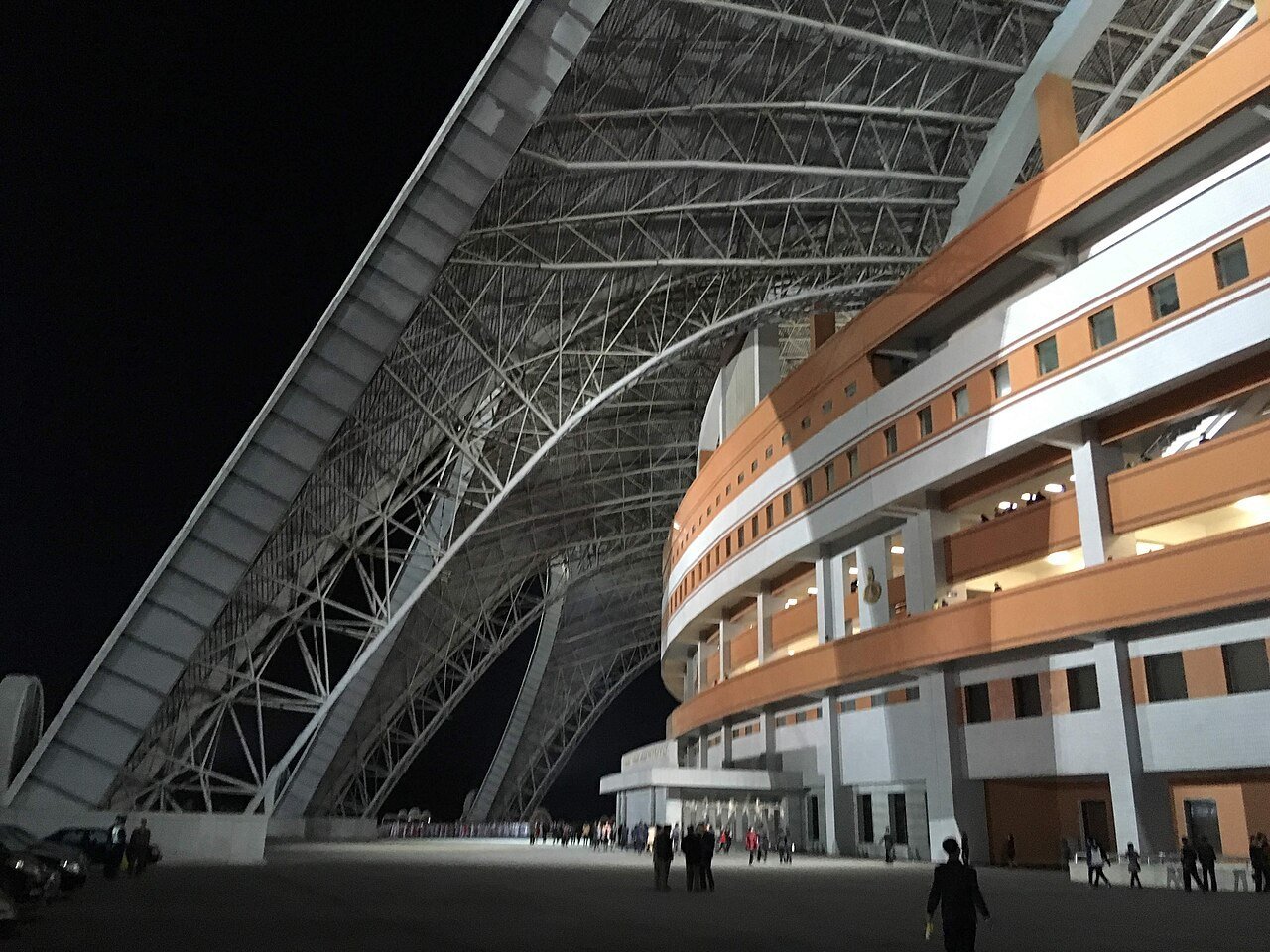
Capacity: about 114,000 (commonly cited) · Location: Pyongyang, North Korea · Opened: 1 May 1989 · Home side: North Korea national teams
North Korea publishes no official capacity for the stadium on Rungrado island, so the figure used here is the commonly cited one of about 114,000. It dates from after a 2014 remodel that swapped some bench seating for individual seats.
The stadium opened on 1 May 1989 with a claimed capacity of 150,000, higher than any other ground in the table. It is the home of the North Korea national football team and the women’s team, and it also stages athletics and mass games performances.
3. Michigan Stadium: Seven Decades of Adding Seats
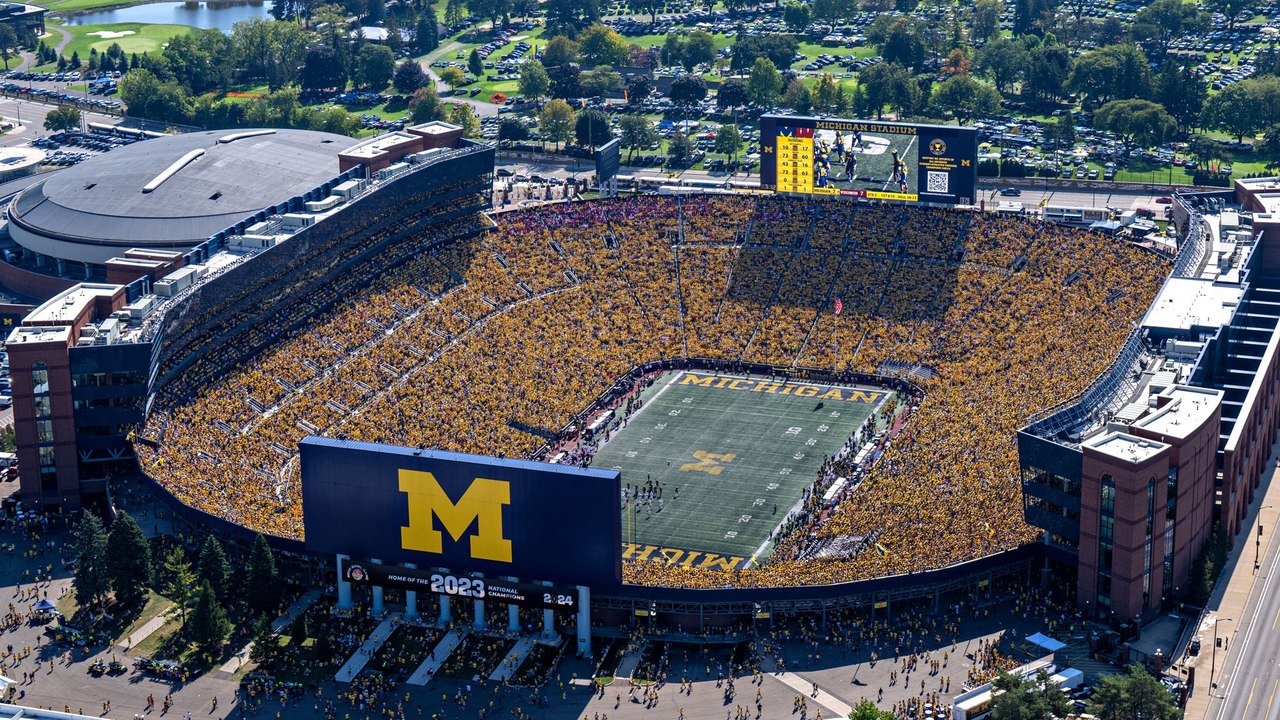
Capacity: 107,601 · Location: Ann Arbor, United States · Opened: 1927 · Tenant: Michigan Wolverines
The first game at Michigan Stadium was on 1 October 1927, a 33-0 win over Ohio Wesleyan in a bowl built for 72,000. The university lists 85,752 from 1928 to 1948, 97,239 from 1949 to 1954 and 101,001 from 1955.
The climb continued with 101,701 in 1973, 102,501 in 1992 and 107,501 in 1998. Capacity dipped to 106,201 in 2008 and 2009, peaked at 109,901 from 2010 to 2014 and has been 107,601 since 2015, which makes it the largest ground in the United States with a published seat count.
4. Beaver Stadium: 107,000-Plus Crowds in Mid-Rebuild
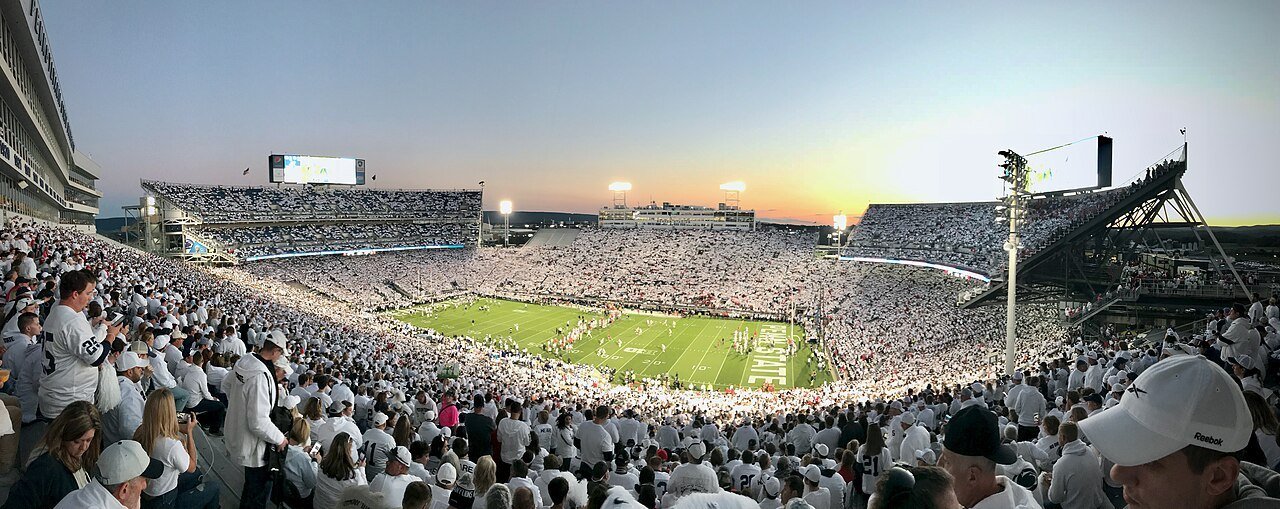
Capacity: 107,000+ (crowds) · Location: University Park, United States · Opened: 1960 · Tenant: Penn State Nittany Lions
The attendance record is 111,030, set on 2 November 2024. Penn State says the stadium routinely welcomes crowds in excess of 107,000 and publishes no seat count, though the 2001 expansion set an all-time high capacity of 107,282, then the second-largest stadium in the Western Hemisphere.
The current site opened in 1960 for $1.6 million. Penn State committed to a $700 million revitalization in May 2024, with work on the west seating bowl staged into 2027 and temporary west-side seating in phases over the 2025 and 2026 seasons. No capacity has been announced for the finished stadium.
5. Kyle Field: Fewer Seats After a $485 Million Rebuild
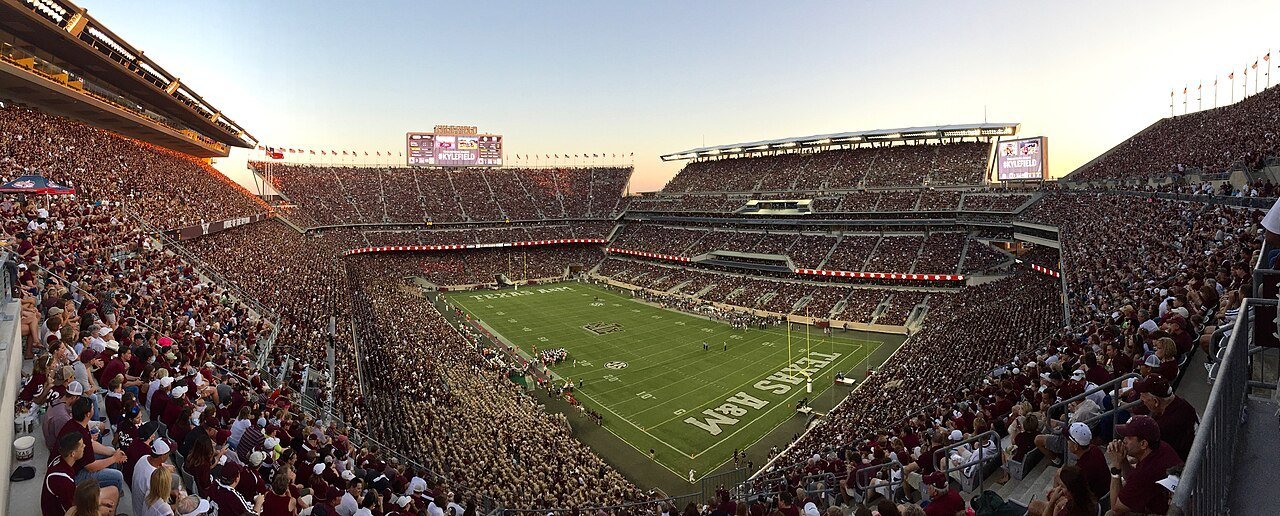
Capacity: 102,733 · Location: College Station, United States · Opened: Stands added 1927, rebuilt 2015 · Tenant: Texas A&M Aggies
Permanent seating on the east and west sides went up in 1927 and the horseshoe closed in 1929. A $485 million redevelopment in two phases debuted for the 2015 season.
The capacity for 2014 was 106,000, so the rebuild removed about 3,300 seats even as the surroundings were rebuilt from scratch. Texas A&M puts the redeveloped Kyle Field at 102,733 and calls it one of the five largest stadiums in college football.
6. Tiger Stadium: Death Valley After the 2014 Expansion
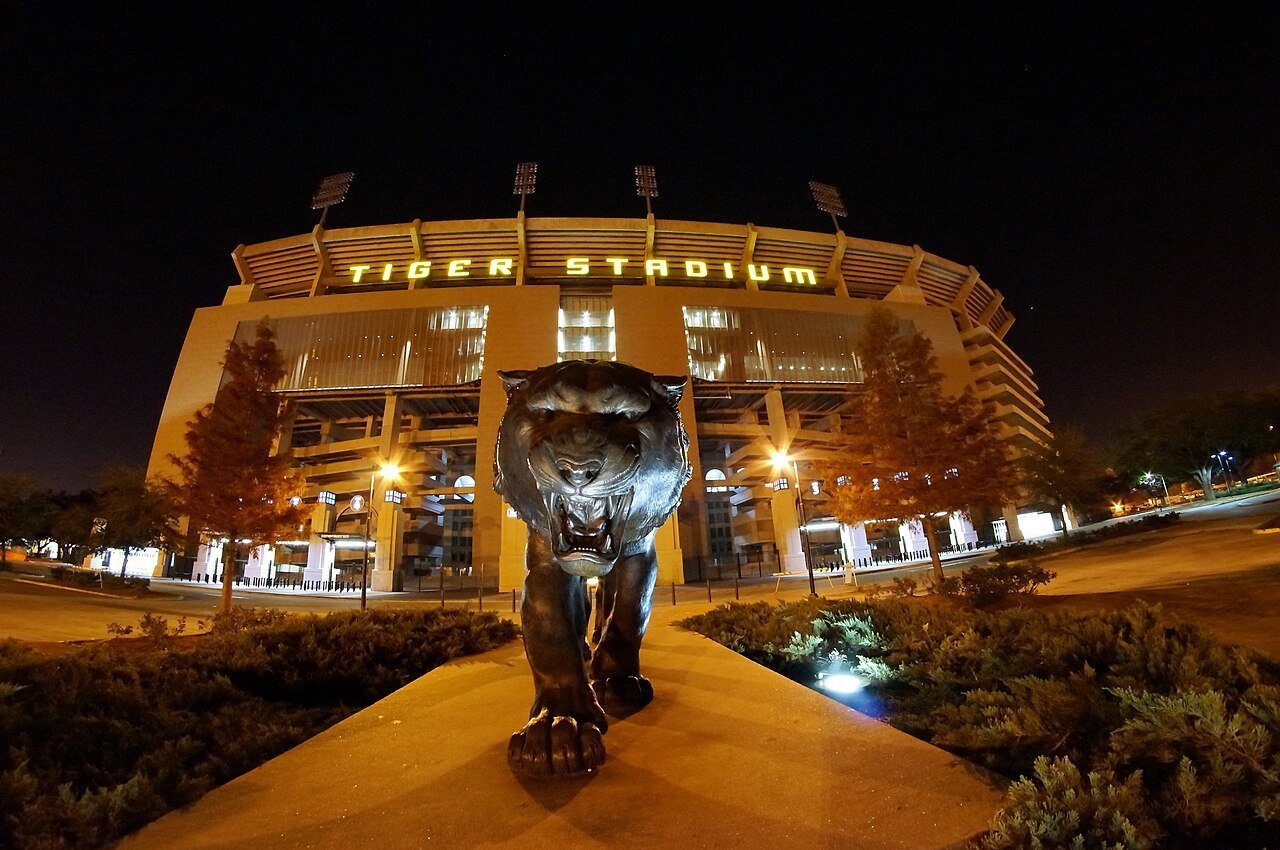
Capacity: 102,321 · Location: Baton Rouge, United States · Opened: 1924 · Tenant: LSU Tigers
Fans first filled the stadium in fall 1924, when LSU hosted Tulane on 27 November. The nickname Death Valley followed, and LSU says more than 100,000 fans pack the ground on game days.
The south end zone expansion that opened for the 2014 season raised the seating capacity to 102,321. That leaves Tiger Stadium 412 seats behind Kyle Field and ahead of Ohio Stadium in the table.
7. Ohio Stadium: The Horseshoe Built for $1.3 Million
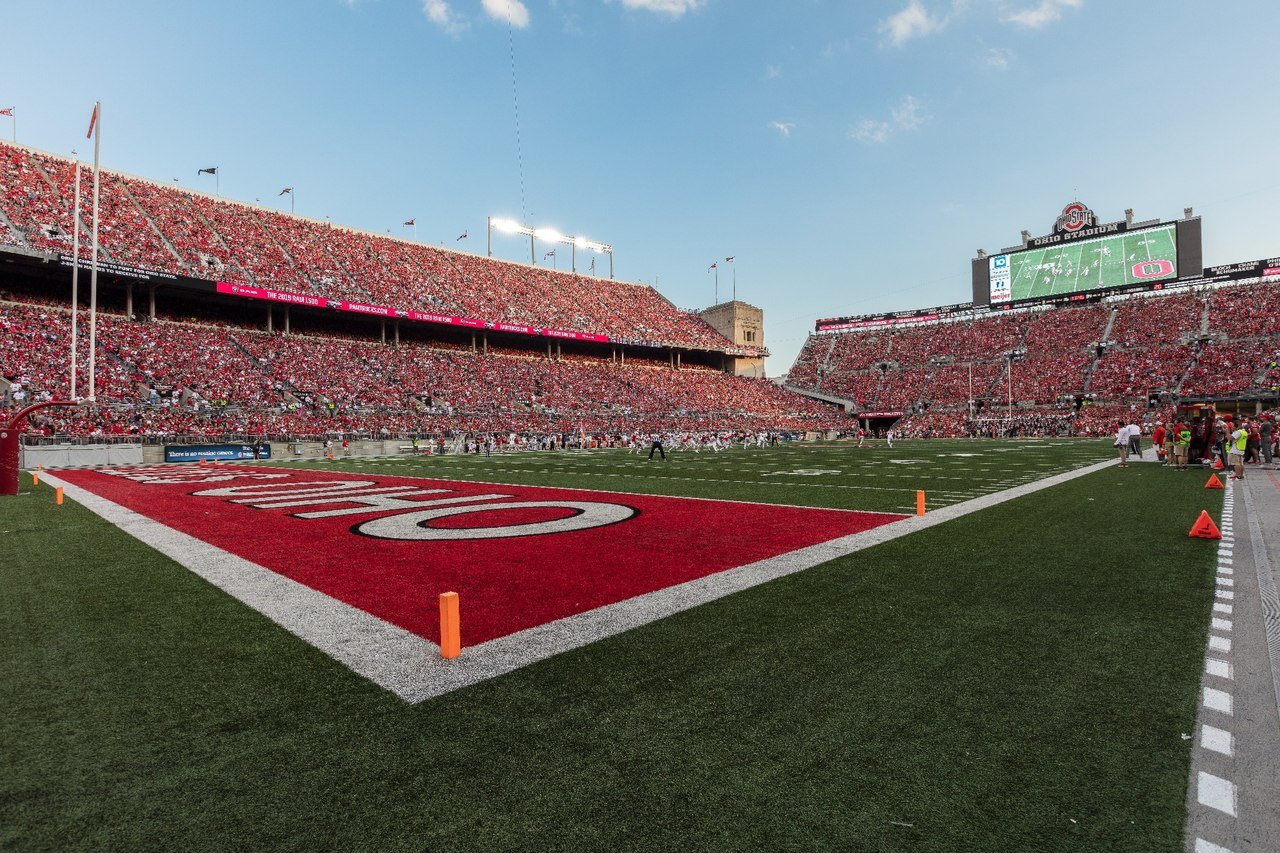
Capacity: 102,041 · Location: Columbus, United States · Opened: 1922 · Tenant: Ohio State Buckeyes
Ohio State opened the stadium on 7 October 1922 against Ohio Wesleyan, for a build cost of $1.3 million. Nearly 40 million fans have attended games there since that opener.
The 2001 refurbishment cost slightly more than $194 million, about 150 times the original bill, and turned the portable South Stands into permanent seating. Ohio State lists the present capacity as 102,041 and calls Ohio Stadium the fourth-largest on-campus facility in the nation.
8. Neyland Stadium: Shields-Watkins Field Grown to 101,915
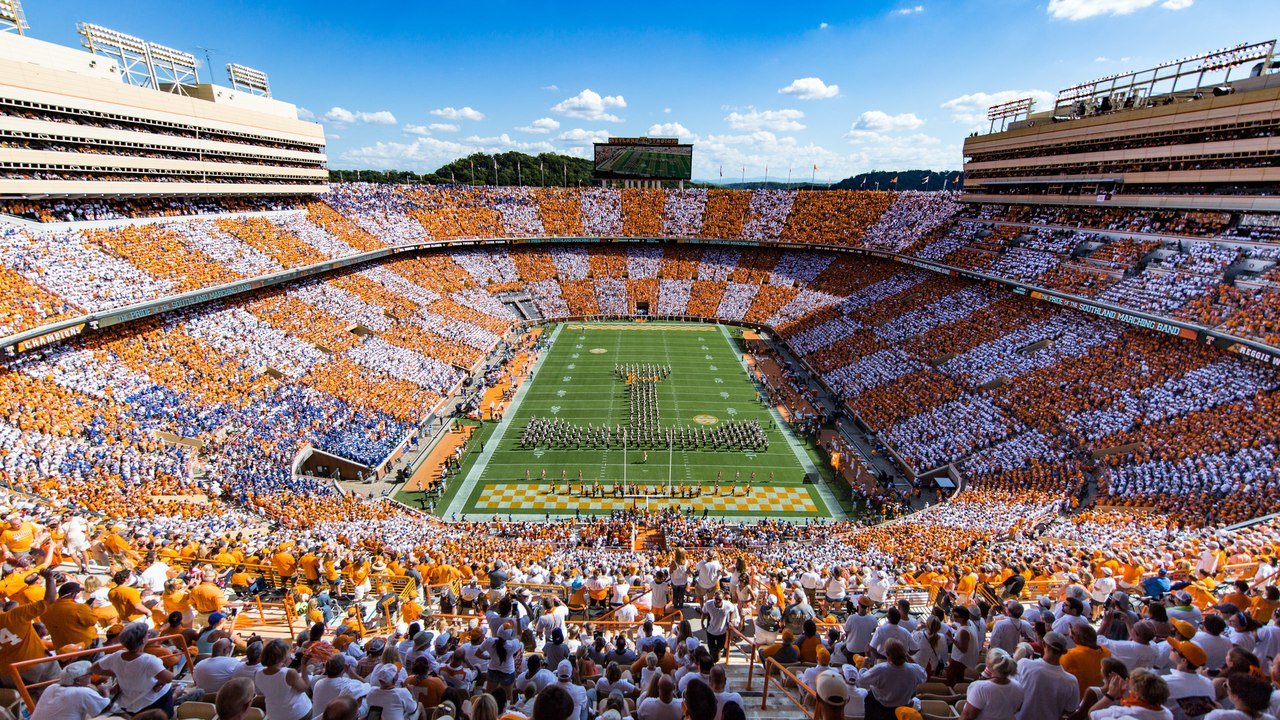
Capacity: 101,915 · Location: Knoxville, United States · Opened: 1921 · Tenant: Tennessee Volunteers
Work on the field finished in March 1921 and the first game followed on 24 September 1921. It began as Shields-Watkins Field with 3,200 seats and was dedicated as Neyland Stadium on 20 October 1962, against Alabama.
Renovation completed before the 2022 season added a lower-west club and an upper-north social deck and set the capacity at 101,915. Tennessee ranks that sixth among college football venues, which matches its place once the non-college grounds are set aside.
9. Darrell K Royal-Texas Memorial Stadium: Two End Zone Expansions in Two Years
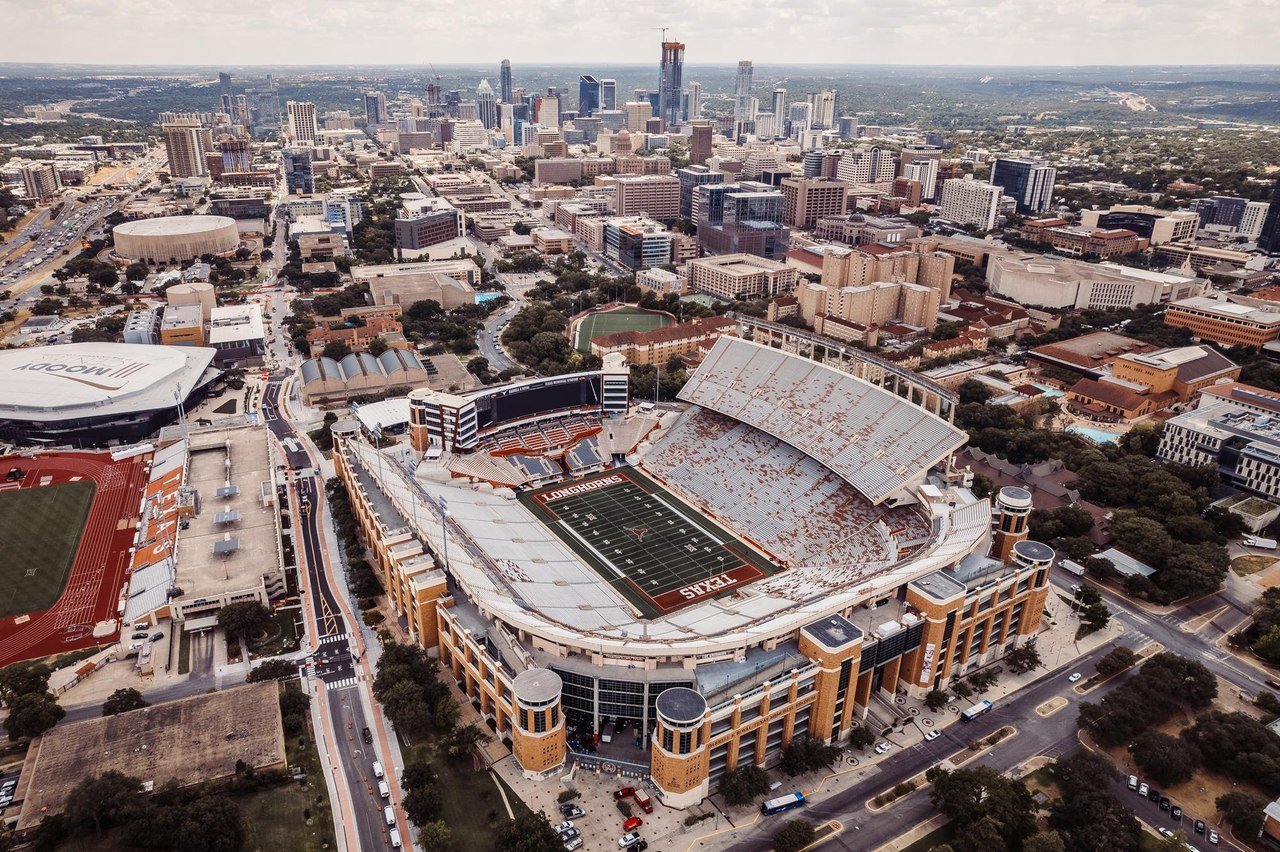
Capacity: 100,119 · Location: Austin, United States · Opened: 1924 · Tenant: Texas Longhorns
Texas dedicated the stadium on Thanksgiving Day 1924. North end zone work in 2008 added about 9,000 seats and left the capacity at 94,113 for that season.
The south end zone was upgraded and expanded in 2009, adding another 6,006 seats and reaching the current 100,119. Texas describes it as the seventh-largest collegiate stadium in the country and the largest in the Southwest.
10. Bryant-Denny Stadium: 1,744 Over Capacity, 52 Times
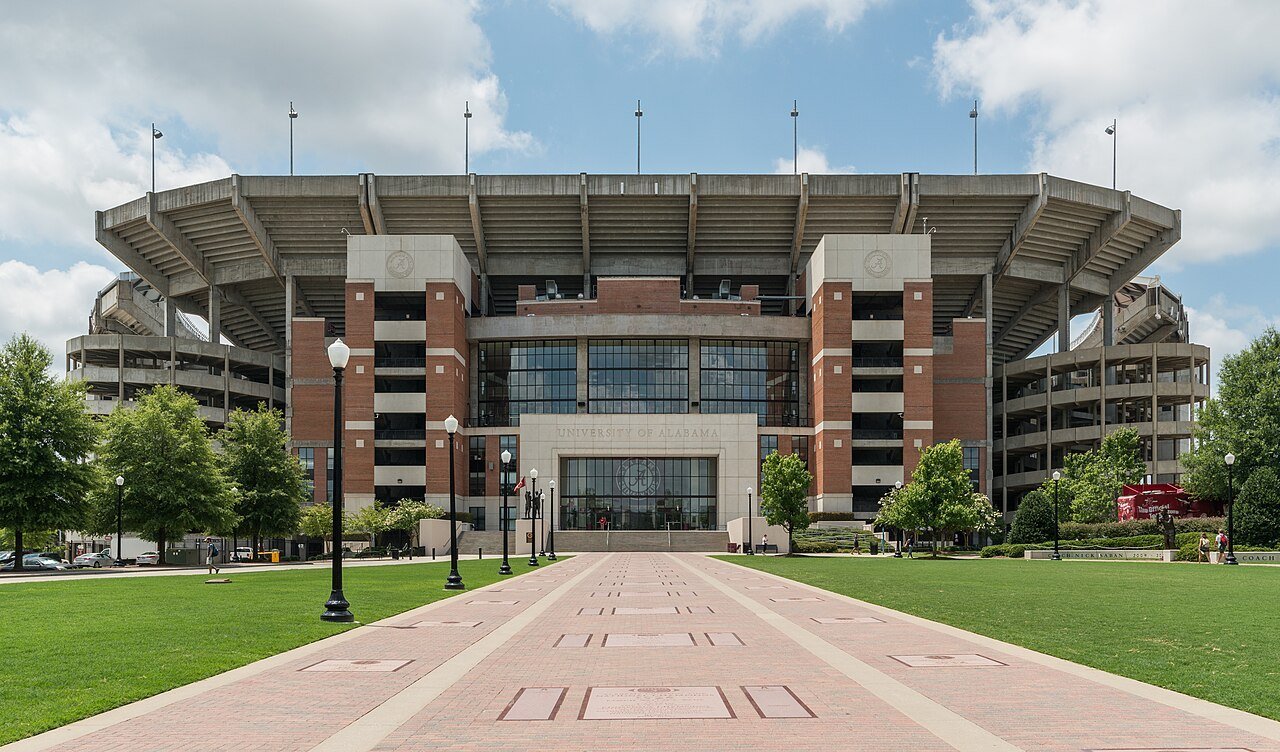
Capacity: 100,077 · Location: Tuscaloosa, United States · Opened: 1929 · Tenant: Alabama Crimson Tide
Alabama lists the official capacity at 100,077 for the field named Saban Field at Bryant-Denny Stadium. The first game was played on 5 October 1929 against Ole Miss.
The largest crowd is 101,821, a mark reached 52 times and most recently against LSU on 9 November 2019. That is 1,744 more people than the stated capacity, and a bigger crowd than the Melbourne Cricket Ground’s total of 100,024.
Asia’s Two Entries Hold the Top Two Places
Narendra Modi Stadium and Rungrado are the only grounds in the table from Asia, and together they account for roughly 244,000 places at the published and commonly cited figures. One is a cricket ground rebuilt in February 2020, the other a stadium for football, athletics and mass games that opened on 1 May 1989.
Neither number is settled. The cricket association gives 130,000-plus on one page and 110,000 on others, and North Korea gives nothing, so the commonly cited 114,000 stands in. If the 110,000 were the right reading for Ahmedabad, the order of the top two would swap.
Nine of the 15 Grounds Date From the 1920s
Apart from the Melbourne Cricket Ground, the oldest venues in the table are American college stadiums built within nine years of each other:
- 1853: Melbourne Cricket Ground, established that year and the oldest ground in the table by far.
- 1921: Neyland Stadium, as a 3,200-seat field.
- 1922: Ohio Stadium and the Rose Bowl.
- 1924: Tiger Stadium and Darrell K Royal-Texas Memorial Stadium.
- 1927: Michigan Stadium, and the permanent stands at Kyle Field.
- 1929: Sanford Stadium and Bryant-Denny Stadium.
Their seat counts have moved the most. Michigan Stadium began at 72,000 and now holds 107,601, a gain of 35,601, while the Rose Bowl has held well over 100,000 in the past and lists 91,136 today. Wembley is the exception among the classic names: the original opened in 1923, closed in 2000 and was replaced by the current stadium in 2007.
The SEC Owns Ranks 6 to 10 and Six of the 15 Places
Texas A&M, LSU, Tennessee, Texas, Alabama and Georgia are all members of the Southeastern Conference, and their stadiums are Kyle Field, Tiger Stadium, Neyland Stadium, Darrell K Royal-Texas Memorial Stadium, Bryant-Denny Stadium and Sanford Stadium. Five of them fill ranks 6 to 10 without a break, and Sanford follows at 13th with 92,746.
Added together, the six hold 599,911 at their published capacities. Florida’s Ben Hill Griffin Stadium and Auburn’s Jordan-Hare Stadium, both SEC grounds as well, fall just outside the table at 88,548 and 88,043.
What the Capacity Column Counts and Where It Stops
The capacities are the figures each venue or its tenant publishes. Ohio Stadium is 102,041 on Ohio State’s athletics page, the Rose Bowl is 91,136 on UCLA’s page and Wembley is described as hosting up to 90,000 attendees. Cotton Bowl Stadium and AT&T Stadium are left out because neither venue publishes a seat total.
The figures are not all the same kind of number. The Melbourne Cricket Ground’s 100,024 includes about 5,000 standing places alongside 95,000 seats. Beaver Stadium is placed by its 107,000-plus wording, just behind Michigan’s exact 107,601, even though a crowd of 111,030 came in 2024.
Three Checks Before You Quote a Stadium Capacity
- Check what is being counted. Seats, seats plus standing places and an events figure are different measures, and the Melbourne Cricket Ground and Wembley show two of them in the same table.
- Check the year. Kyle Field fell from 106,000 to 102,733 after its rebuild, Michigan Stadium peaked at 109,901 before settling at 107,601, and a ground under construction can show an old number beside a plan.
- Keep record crowds apart from capacity. Bryant-Denny has drawn 101,821 against 100,077, and Beaver Stadium drew 111,030 against its 107,000-plus.
A big bowl does not mean a big pitch, because the playing surface is set by the sport, as the guide to football field dimensions shows. For a club whose rebuilt stadium may soon top the European list, see how Barcelona’s fixtures fit into the Champions League format.
Frequently Asked Questions
Is Rungrado bigger than Narendra Modi Stadium?
Only on the claim made when it opened: 150,000 in 1989, against Narendra Modi Stadium’s 130,000-plus. The commonly cited figure since the 2014 remodel is about 114,000, and North Korea publishes no official number, so Rungrado is placed second.
How many stadiums hold more than 100,000 people?
Eleven in the table: Narendra Modi Stadium, Rungrado, Michigan Stadium, Beaver Stadium, Kyle Field, Tiger Stadium, Ohio Stadium, Neyland Stadium, Darrell K Royal-Texas Memorial Stadium, Bryant-Denny Stadium and the Melbourne Cricket Ground at 100,024. Spotify Camp Nou is just short at 99,354.
Which stadium is the biggest in Europe?
Spotify Camp Nou in Barcelona, at 99,354 on the club’s facilities page. Once the Espai Barca rebuild is finished the club expects nearly 105,000 spectators, all under cover. Wembley, at up to 90,000, is the largest in the United Kingdom.
Are the 100,000-plus capacities all seats?
No. The Melbourne Cricket Ground counts about 95,000 seats plus about 5,000 standing places inside its 100,024. Beaver Stadium reports crowds above 107,000 rather than a seat count, and Rungrado has no official figure.