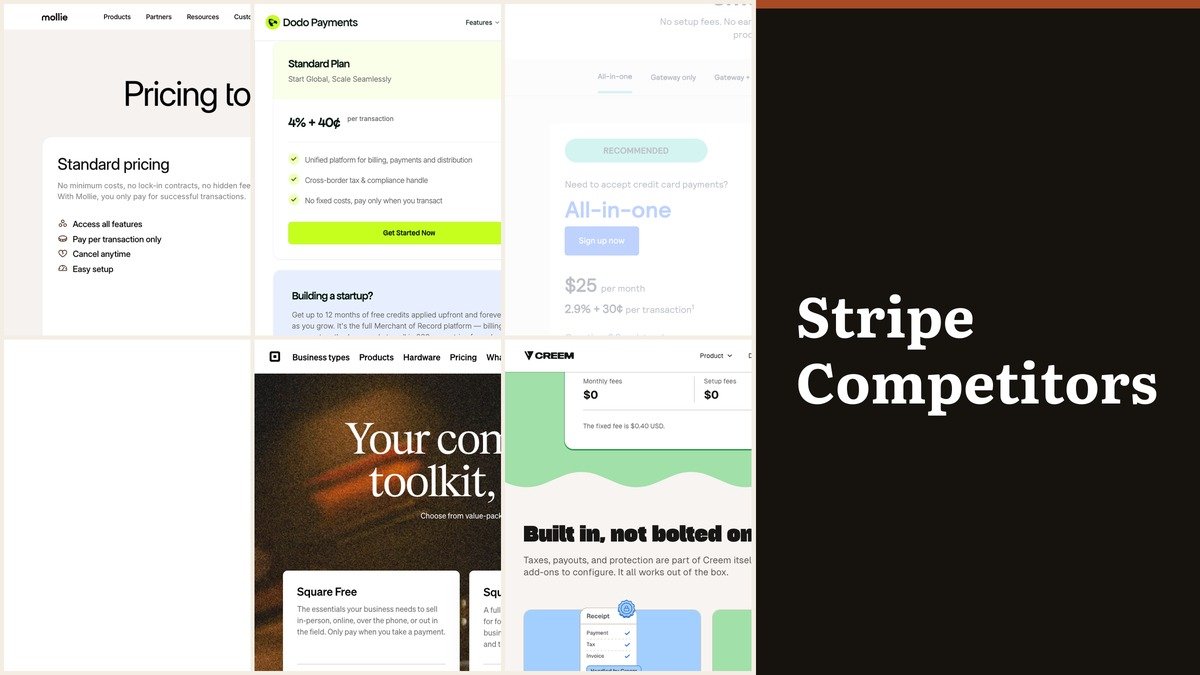
Stripe competitors are easiest to read once they are sorted by published rate, because the cheapest and the most expensive are not doing the same job. The range here runs from 1.80 percent to 5 percent plus a fixed fee.
The expensive end is not worse value. Four of these providers act as merchant of record, meaning the sales tax liability is theirs rather than yours, and that is what the extra points buy. Stripe itself has no setup or monthly fee and bills per transaction at a rate set in the country you sell from.
Why the Cheapest Rate Is Not Always the Lowest Cost
Three things sit outside the headline percentage and each can be larger than the difference between two providers. The first is cross-border acceptance.
Mollie makes this visible by pricing it openly: a European consumer card is 1.80 percent and a card from outside the EEA is 3.25 percent, nearly double, for an identical transaction. Most providers fold that into a blended rate or add it as a separate international surcharge, and either way you pay it.
The second is disputes. Chargeback fees are flat and unforgiving, so a run of them can cost more in a month than a rate difference costs in a year. The third is settlement: a lower rate that pays out weekly in a foreign currency is often worse than a higher one that settles next business day in yours.
Stripe Competitors Compared by Published Rate
Ordered from the lowest published rate upward. The merchant-of-record column explains most of the spread: the four that say yes are selling tax compliance alongside the payment.
| # | Provider | Published rate | Monthly | Merchant of record | Strength |
|---|---|---|---|---|---|
| 1 | Mollie | 1.80% + EUR 0.25 on EEA consumer cards | $0 | No | The lowest rate, if your buyers are European |
| 2 | Adyen | $0.13 + Interchange++ 0.60% | $0 | No | Interchange-plus once the volume justifies it |
| 3 | Square | 3.3% + 30c online, 2.6% + 15c in person | $0 | No | The one that also works across a counter |
| 4 | Authorize.net | 2.9% + 30c a transaction | $25 | No | A gateway with a monthly line item |
| 5 | Helcim | Interchange plus a published margin | $0 | No | A pricing page made of absent fees |
| 6 | PayPal | 3.49% + fixed fee on Checkout | $0 | No | Expensive, and buyers still ask for it |
| 7 | Creem | 3.9% + 40c a transaction | $0 | Yes | Cheapest route to someone else owning the tax |
| 8 | Dodo Payments | 4% + 40c a transaction | $0 | Yes | Four percent, tax liability included |
| 9 | Paddle | 5% + 50c a transaction | $0 | Yes | The established name in merchant of record |
| 10 | Lemon Squeezy | 5% + 50c a transaction | $0 | Yes | Storefront, licensing and tax in one |
The Ten Providers in Detail
1. Mollie: The lowest rate, if your buyers are European
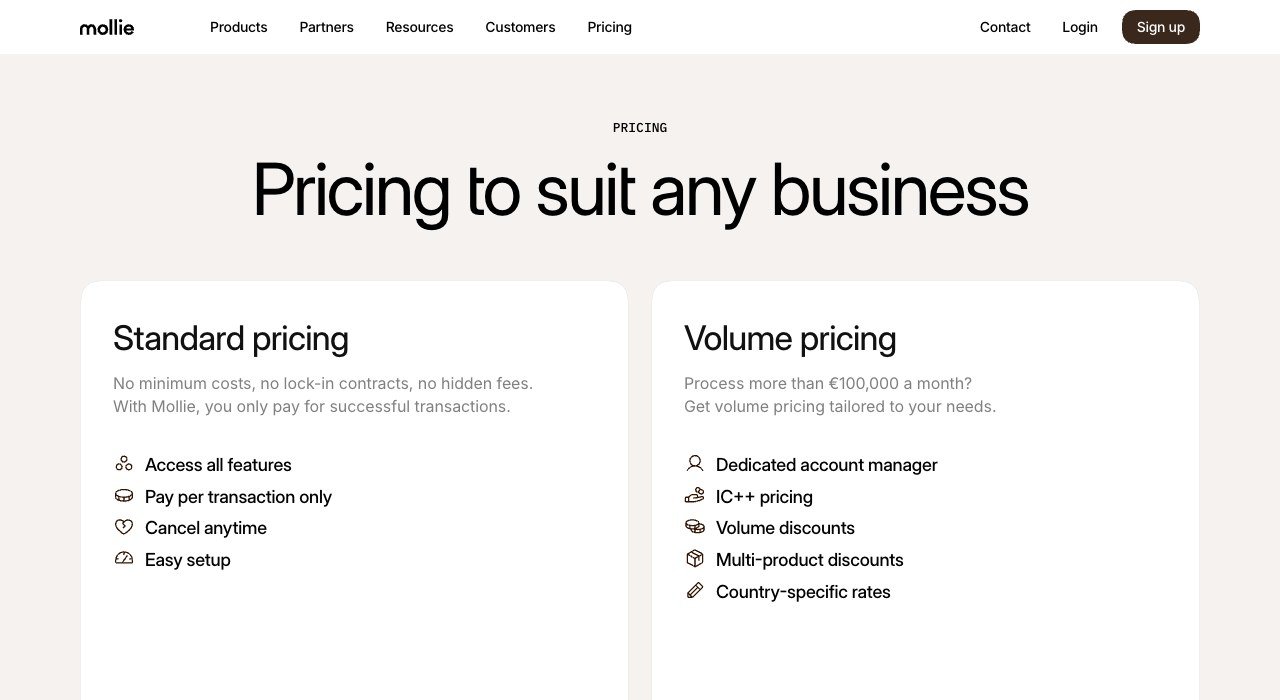
Monthly fee: $0. Rate: 1.80% + EUR 0.25 on EEA consumer cards. Takes the tax liability: No.
Mollie prices by where the card was issued instead of blending everything into one number. European consumer cards cost 1.80 percent plus 25 euro cents, commercial cards 2.90 percent plus 25 cents, and cards from outside the EEA 3.25 percent plus 25 cents.
Check the currency before you compare: those are euros. For a business whose customers are mostly inside Europe, the consumer rate is the lowest figure on this page, and the gap between it and the non-EEA rate shows exactly what cross-border acceptance costs.
2. Adyen: Interchange-plus once the volume justifies it
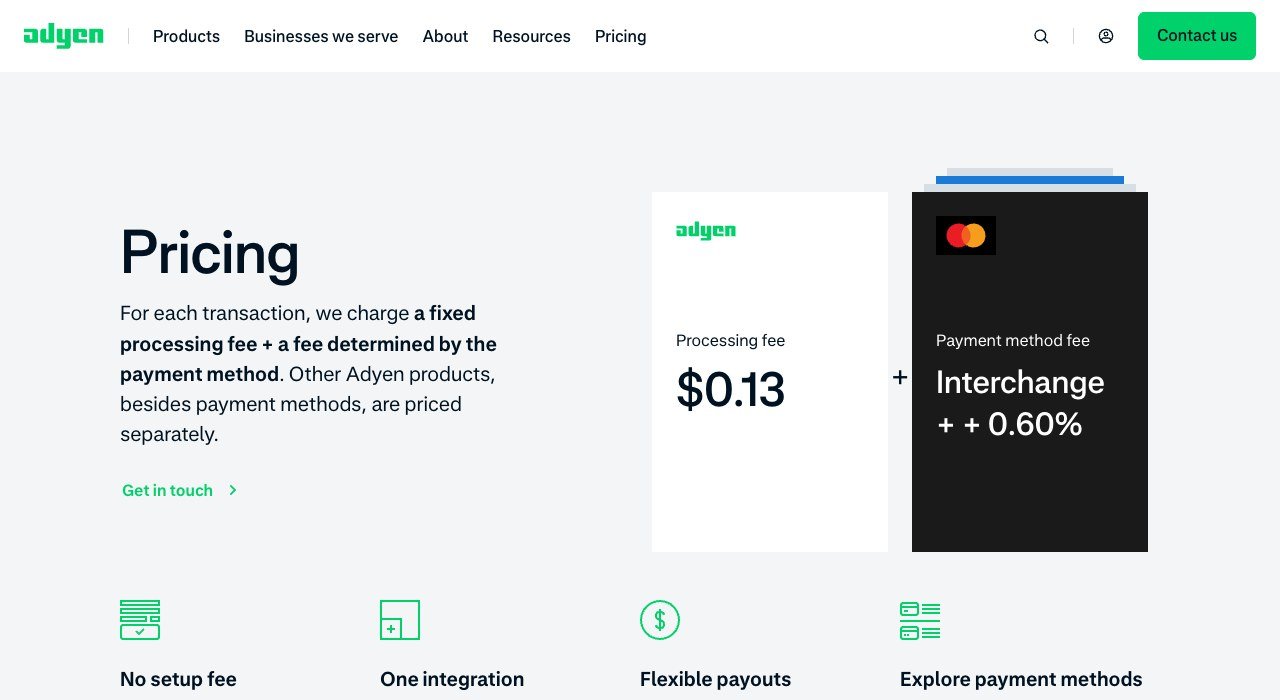
Monthly fee: $0. Rate: $0.13 + Interchange++ 0.60%. Takes the tax liability: No.
Adyen separates the two things most providers bundle. There is a fixed $0.13 processing fee, and then a payment method fee that on US cards is Interchange++ 0.60 percent. American Express is 3.95 percent.
No setup fee and no monthly fee, but interchange-plus is only cheaper than a flat rate once turnover is large enough that the margin outweighs the complexity. Below roughly $50,000 a month most businesses are better served by a single blended number.
3. Square: The one that also works across a counter
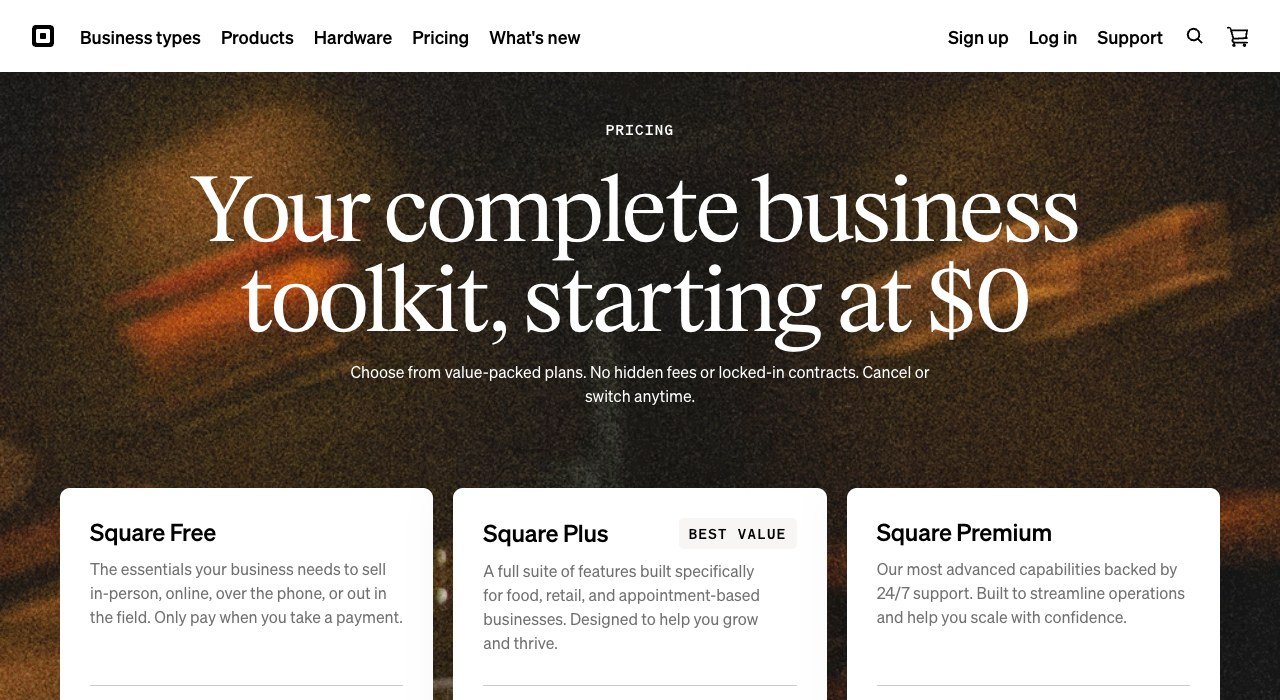
Monthly fee: $0. Rate: 3.3% + 30c online, 2.6% + 15c in person. Takes the tax liability: No.
Square charges nothing monthly on its base plan, with Plus at $49 and Premium at $149, and processes at 2.6 percent plus 15 cents for a tapped or dipped card and 3.3 percent plus 30 cents online.
The in-person rate is competitive and the online rate is not. Square is the right answer for a business that sells across a counter as well as through a website, and the wrong one for a business that only ever sells online.
4. Authorize.net: A gateway with a monthly line item
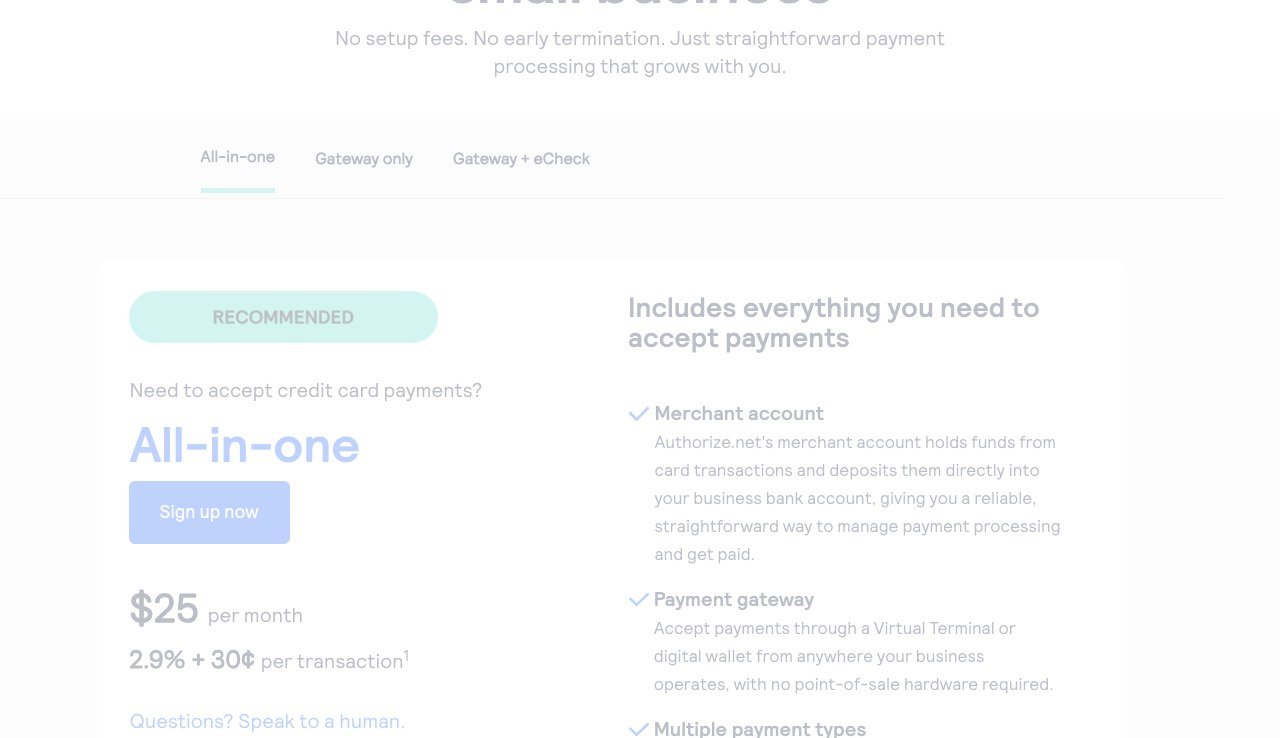
Monthly fee: $25. Rate: 2.9% + 30c a transaction. Takes the tax liability: No.
Authorize.net is the only provider here with a standing monthly charge: $25 a month plus 2.9 percent and 30 cents on its all-in-one plan. That is a deliberate design rather than an oversight.
It exists to sit in front of a merchant account you already hold, which is a structure plenty of established businesses still run and almost no new ones adopt. If you do not already have a merchant account, the monthly fee buys you nothing.
5. Helcim: A pricing page made of absent fees
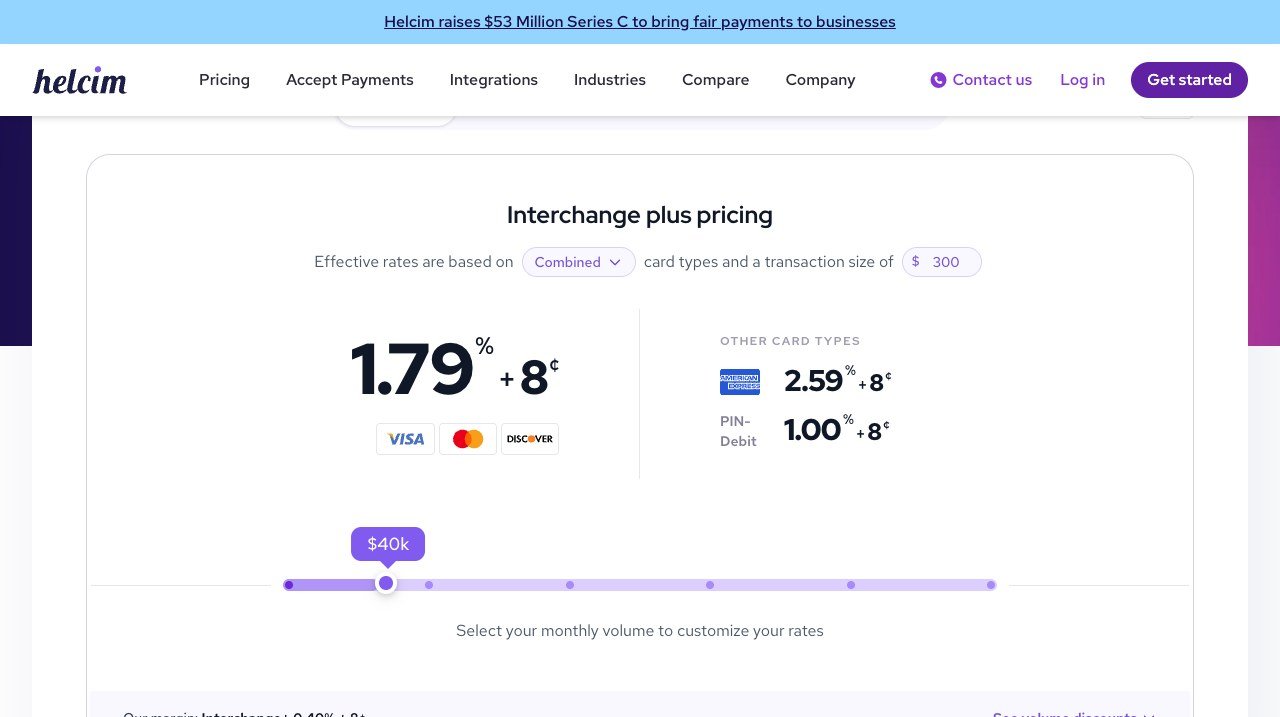
Monthly fee: $0. Rate: Interchange plus a published margin. Takes the tax liability: No.
Helcim’s pricing page is mostly a list of charges it does not make: no monthly account fee, no minimums, no software or statement fees, no setup fee, no annual PCI compliance charge and no cancellation fee.
Processing runs on interchange plus a published margin, with deposits arriving the next business morning. For anyone who has spent years being nibbled by statement and compliance fees elsewhere, the absence of them is the whole argument.
6. PayPal: Expensive, and buyers still ask for it

Monthly fee: $0. Rate: 3.49% + fixed fee on Checkout. Takes the tax liability: No.
PayPal is one of the more expensive ways to take an ordinary online payment: 3.49 percent plus a fixed fee on standard Checkout, dropping to 2.29 percent plus a fixed fee on QR code transactions.
It stays on shortlists because of the buyer, not the seller. A proportion of customers will finish a PayPal checkout and abandon a card form, and that conversion difference can exceed the rate difference. Most sellers run it alongside a cheaper default.
7. Creem: Cheapest route to someone else owning the tax
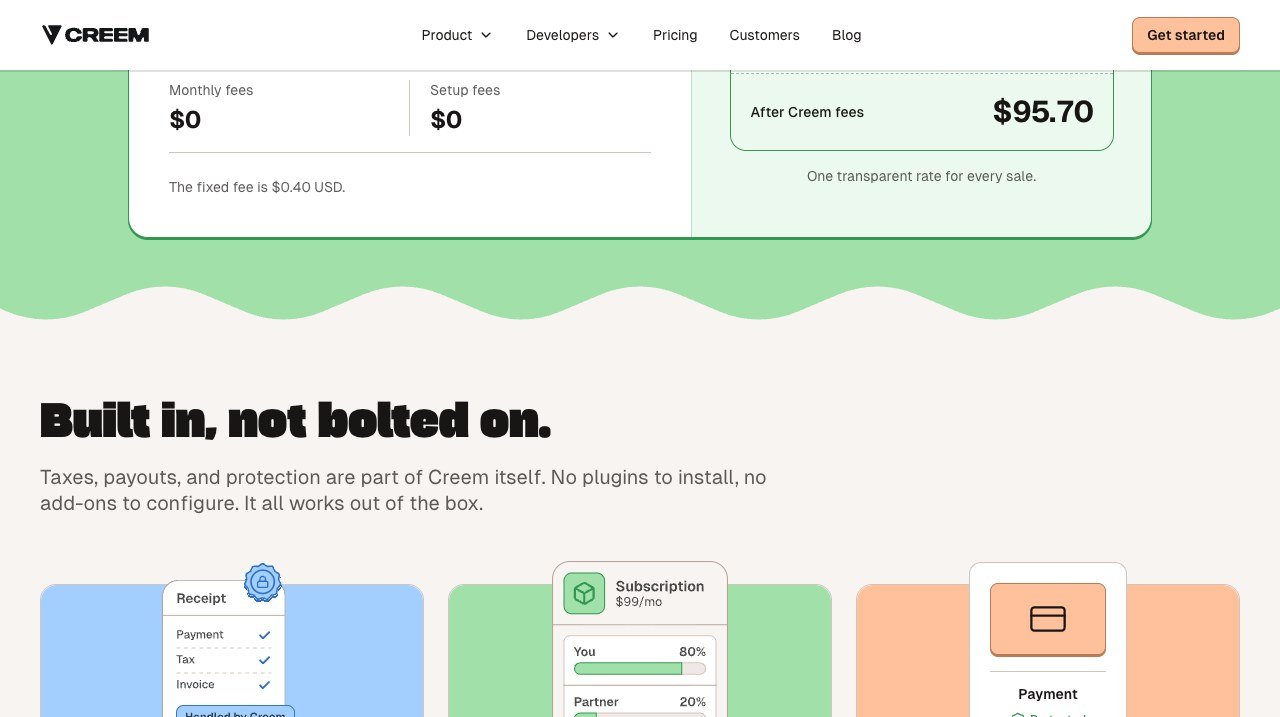
Monthly fee: $0. Rate: 3.9% + 40c a transaction. Takes the tax liability: Yes.
Creem is the cheapest merchant of record published anywhere on this page at 3.9 percent plus 40 cents, with no monthly fee and no setup fee. Its own example works through a $100 sale returning $95.70.
Becoming merchant of record means Creem is the seller on the invoice, so sales tax and VAT registration and filing sit with them. For a developer selling a small product into many countries, that is a compliance department replaced by a line on a statement.
8. Dodo Payments: Four percent, tax liability included
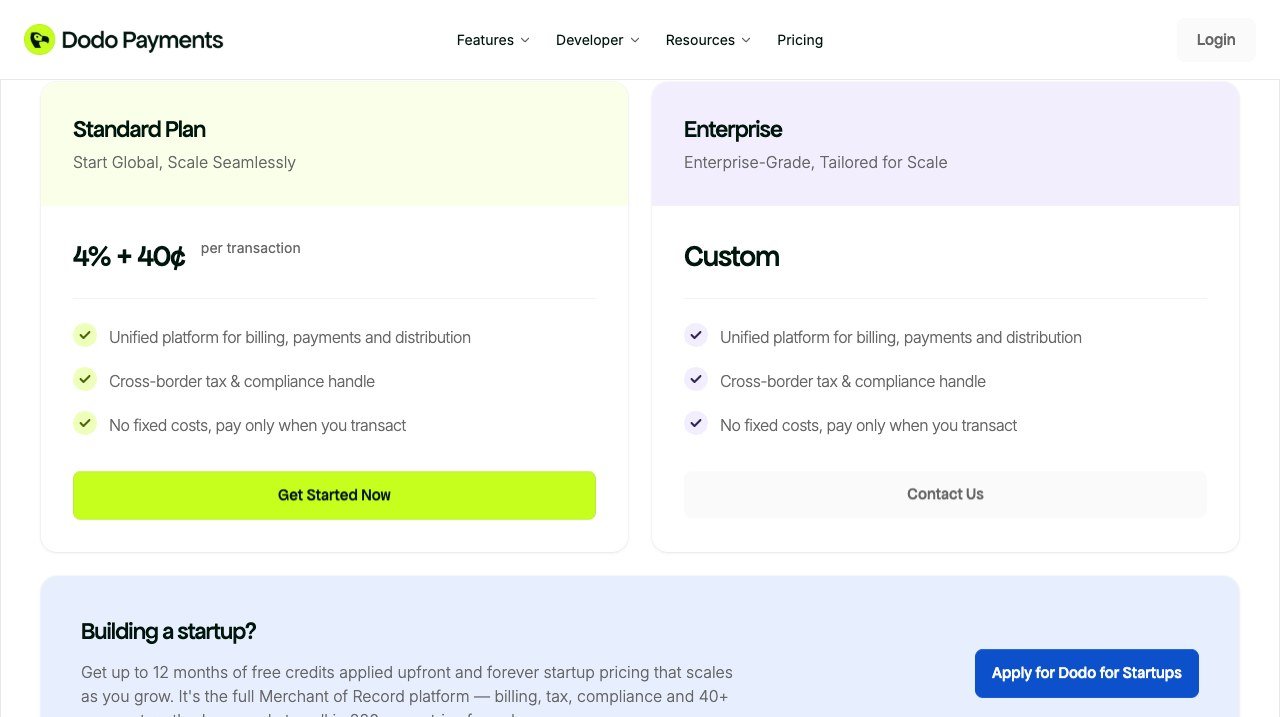
Monthly fee: $0. Rate: 4% + 40c a transaction. Takes the tax liability: Yes.
Dodo Payments charges 4 percent plus 40 cents and nothing monthly, positioning itself directly against the established 5 percent merchant-of-record rate. Buy now pay later methods add 3 percent on top.
On $10,000 of monthly turnover the single point of difference against Paddle is $100 a month. What you give up is track record, and with a provider that holds your money between payouts that is not a trivial consideration.
9. Paddle: The established name in merchant of record
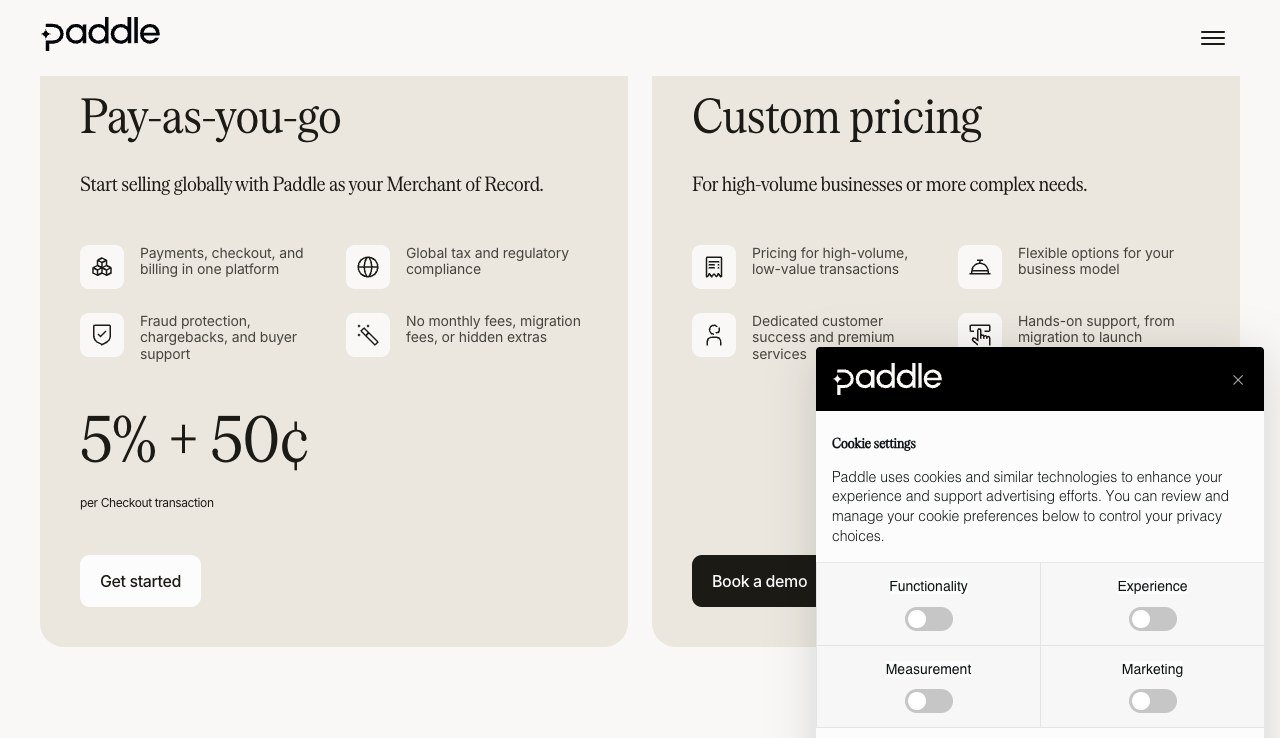
Monthly fee: $0. Rate: 5% + 50c a transaction. Takes the tax liability: Yes.
Paddle is the established merchant of record for software businesses, at 5 percent plus 50 cents with no monthly fee, no migration fee and nothing charged for the compliance work itself.
That rate is roughly double a processor’s, and the premium buys the removal of tax registration in every jurisdiction you sell into. Businesses that already employ someone to handle filings are paying twice for the same outcome.
10. Lemon Squeezy: Storefront, licensing and tax in one
Monthly fee: $0. Rate: 5% + 50c a transaction. Takes the tax liability: Yes.
Lemon Squeezy matches the 5 percent plus 50 cents rate and aims at creators and developers selling digital goods. Ecommerce carries no monthly charge; the email marketing side is billed separately.
What arrives with the rate is a storefront, licence key handling and subscription management as well as the tax position. Assembled separately those pieces cost more than the percentage for most one-person software businesses.
Who Owes the Sales Tax, and What That Is Worth
The single biggest structural difference in this list is not a feature. It is whether the provider or you appears as the seller on the customer’s invoice, because that determines who registers, collects and files.
In the United States sales tax is administered separately by each state, which is why the Streamlined Sales and Use Tax Agreement exists at all. Selling digital goods into the EU adds VAT on top, charged at the rate of the buyer’s country rather than yours. A business doing both is looking at dozens of registrations.
Reporting lands on whoever is the merchant too. The IRS explains when a Form 1099-K is issued for payment card and third-party network transactions, and the amount reported is gross rather than net of refunds and fees. With a processor that reconciliation is yours; with a merchant of record it is not.
- One country, physical goods: a processor, every time.
- Digital goods sold internationally: the 2 point premium usually costs less than doing it yourself.
- You already file in several states: the infrastructure exists, so keep the margin.
- Turnover above roughly $50,000 a month: interchange-plus starts to beat everything, provided somebody reads the statements.
Choosing Between Them
Answer the liability question before the rate question. Picking a 5 percent provider when a 3 percent one would do, or the reverse, costs far more than choosing between two providers inside the same group.
- Mostly European customers: Mollie, at 1.80 percent plus 25 euro cents on EEA consumer cards.
- High volume, finance team in place: Adyen.
- Counter sales as well as online: Square.
- Tired of fixed fees: Helcim, whose pricing page is largely a list of charges it does not levy.
- You want the tax handled: Creem at 3.9 percent, Dodo at 4, Paddle and Lemon Squeezy at 5 with more tooling attached.
If what you are really solving is paying suppliers rather than taking money from customers, that is a different category with a different shape, covered in our guide to payment management software. And if the friction is specifically international, the mechanics are set out in reducing friction in cross-border payments.
Frequently Asked Questions
Which Stripe competitor has the lowest published rate?
Mollie, at 1.80 percent plus 25 euro cents for European consumer cards, though non-European cards cost 3.25 percent plus 25 cents on the same account. Adyen is lowest for high-volume US sellers at $0.13 plus Interchange++ 0.60 percent.
What does merchant of record mean on an invoice?
It means the provider, not you, is the legal seller of the product to that customer. Sales tax and VAT registration, collection and filing become the provider’s responsibility. Paddle, Lemon Squeezy, Dodo Payments and Creem all work this way, which is why they charge 3.9 to 5 percent.
Do any of these providers charge a monthly fee?
Authorize.net charges $25 a month alongside 2.9 percent and 30 cents, because it is a gateway for an existing merchant account. Square sells optional $49 and $149 tiers above a free base plan. The rest charge nothing monthly and bill only per transaction.
Is it worth paying 5 percent instead of 3 percent?
It depends entirely on how many tax jurisdictions you sell into. On $10,000 a month the difference is $200. If that replaces registering and filing across several states and the EU, it is cheap. If you sell to one state, it is money spent on nothing.