Army ranks run in three separate tracks that share one pay-grade scale. Enlisted soldiers go from private at E-1 to sergeant major of the Army at E-9, warrant officers occupy W-1 to W-5, and commissioned officers run from second lieutenant at O-1 to general at O-10, with a fifth star above that reserved for wartime.
Each table below gives the pay grade, the abbreviation worn on a uniform and what the rank actually does, because the Army defines its ranks by responsibility rather than by seniority alone.
Army Enlisted Ranks in Order
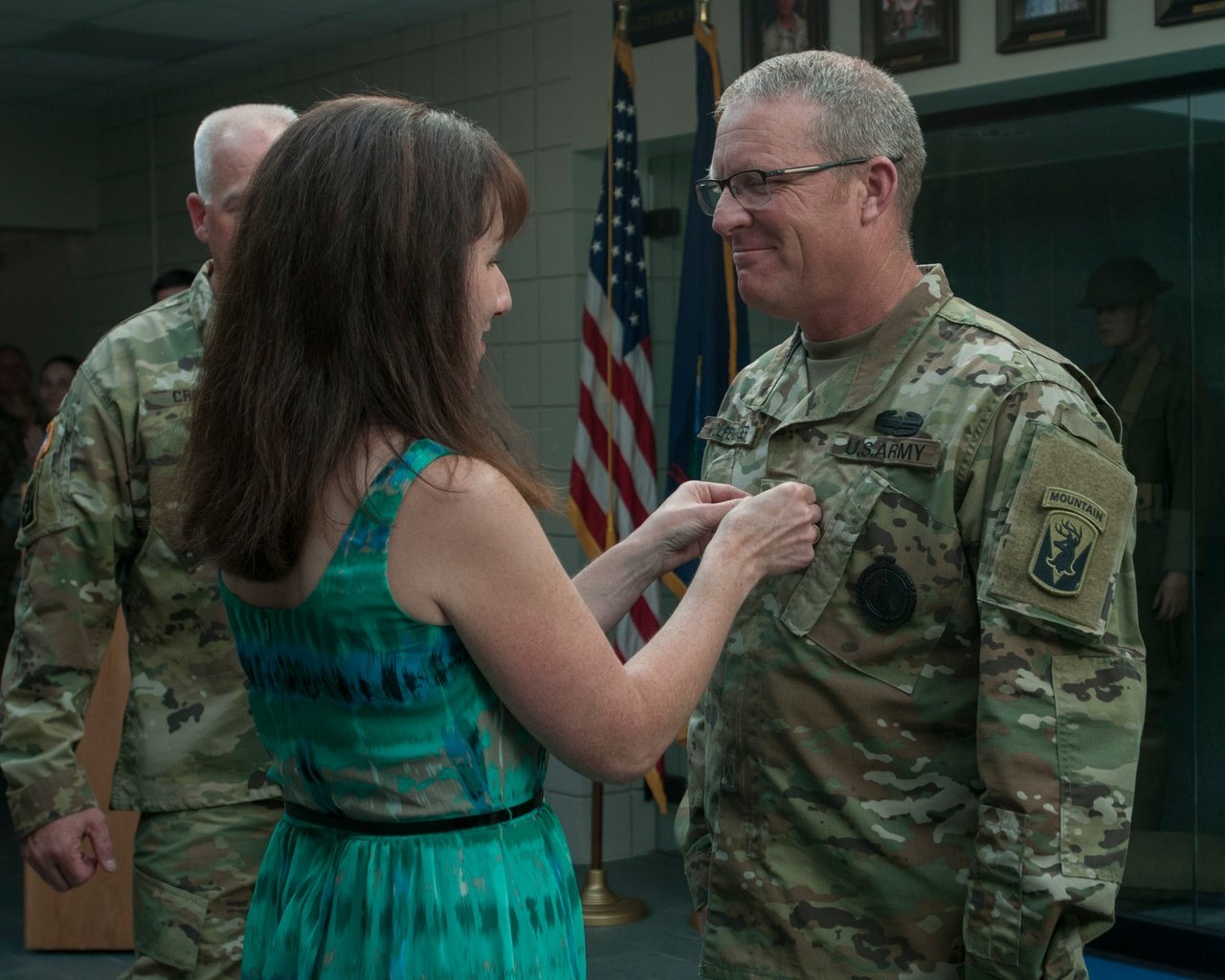
Enlisted soldiers are the majority of the Army. The first four grades are junior enlisted; from corporal upwards they are noncommissioned officers, which is a change in authority and not just in title.
| Pay grade | Rank | Abbreviation | What the rank does |
|---|---|---|---|
| E-1 | Private | PV1 | A trainee in Basic Combat Training, with no rank insignia worn |
| E-2 | Private | PV2 | The first rank at which a soldier wears insignia |
| E-3 | Private First Class | PFC | Entered with prior experience or training |
| E-4 | Specialist | SPC | Can manage lower-ranked soldiers; the usual degree-holder entry point |
| E-4 | Corporal | CPL | The base of the noncommissioned officer ranks, leading a team |
| E-5 | Sergeant | SGT | First-line leader of a team or section |
| E-6 | Staff Sergeant | SSG | Leads a squad of 8 to 16 soldiers |
| E-7 | Sergeant First Class | SFC | Platoon sergeant, with 10 to 15 years of experience |
| E-8 | Master Sergeant | MSG | Principal NCO at battalion level and above |
| E-8 | First Sergeant | 1SG | Senior NCO of a company, battery or troop |
| E-9 | Sergeant Major | SGM | Senior enlisted adviser to a primary staff officer |
| E-9 | Command Sergeant Major | CSM | Senior NCO of the command at battalion level or higher |
| E-9 | Sergeant Major of the Army | SMA | One post only, advising the Chief of Staff of the Army |
Three grades carry more than one rank. E-4 holds both specialist and corporal, E-8 holds master sergeant and first sergeant, and E-9 holds sergeant major, command sergeant major and the single post of sergeant major of the Army. In each case the pay is the same and the job is not.
The Two Ways to Be an E-4
Specialist and corporal sit at the same pay grade and are reached by different routes, which is the single most confusing point in the enlisted ladder.
- Specialist is a technical grade. A specialist can manage soldiers of lower rank, and anyone enlisting with a four-year degree can enter basic training at this grade.
- Corporal is a leadership grade. It is the base of the noncommissioned officer ranks and carries responsibility for the training, appearance and conduct of its soldiers.
- A corporal leads a team. That is the smallest unit in the Army structure, normally four soldiers.
- Both are E-4. The pay table does not distinguish them at all.
The distinction matters because the noncommissioned officer line is where authority over other soldiers formally begins. Everything below it is being led; everything from corporal up is leading.
Army Warrant Officer Ranks
Warrant officers are adaptive technical experts. They sit above every enlisted grade and below every commissioned one, and they spend a career inside one technical field rather than moving between general leadership roles.
| Pay grade | Rank | What the grade does |
|---|---|---|
| W-1 | Warrant Officer 1 | Appointed by warrant from the Secretary of the Army |
| W-2 | Chief Warrant Officer 2 | Commissioned by the President; works detachment to battalion |
| W-3 | Chief Warrant Officer 3 | Advanced expert supporting team through brigade operations |
| W-4 | Chief Warrant Officer 4 | Senior expert at battalion, brigade, division and corps |
| W-5 | Chief Warrant Officer 5 | Master-level expert at major command, mentoring other warrants |
The appointment changes at W-2. A warrant officer 1 is appointed by warrant from the Secretary of the Army, while chief warrant officers from W-2 upwards are commissioned by the President in the same way other officers are.
Their job is described by the Army as administering, managing, maintaining, operating and integrating systems and equipment. In practice that means the person who genuinely knows an aircraft, a weapon system or a signals discipline from the inside, and who advises commanders on it. Manual Morse is one such discipline, still taught long after it left commercial use, and the Morse code alphabet is where it starts.
Army Officer Ranks in Order
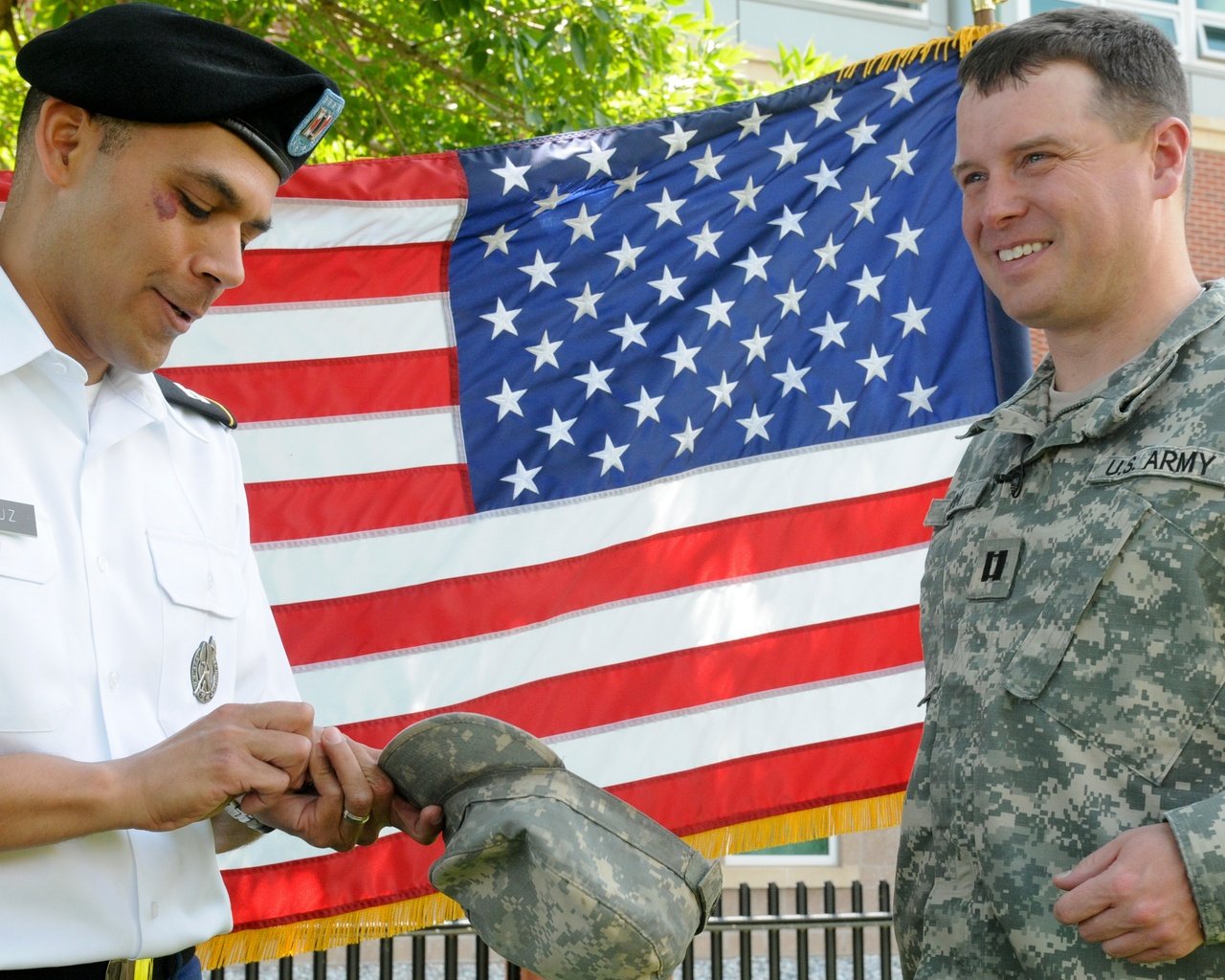
Commissioned officers are the planners and commanders. Each grade maps onto a unit size, and the mapping is close to exact in a conventional formation.
| Pay grade | Rank | What the rank commands |
|---|---|---|
| O-1 | Second Lieutenant | Leads a platoon of 16 to 44 soldiers |
| O-2 | First Lieutenant | A seasoned lieutenant with 18 to 24 months of service |
| O-3 | Captain | Commands a company of 60 to 200 soldiers |
| O-4 | Major | Primary staff officer for a brigade or task force |
| O-5 | Lieutenant Colonel | Commands a battalion of 300 to 1,000 soldiers |
| O-6 | Colonel | Commands a brigade of 1,500 to 3,200 soldiers |
| O-7 | Brigadier General | Deputy commander to a division commanding general |
| O-8 | Major General | Commands a division of 10,000 to 16,000 soldiers |
| O-9 | Lieutenant General | Commands a corps of 20,000 to 40,000 soldiers |
| O-10 | General | The senior level, typically with over 30 years of service |
The grades fall into three bands. O-1 to O-3 are company grade officers, O-4 to O-6 are field grade, and O-7 upwards are general officers, where the star count matches the grade: one star at brigadier general, four at general.
A captain is the first grade with a command of its own, running a company of 60 to 200 soldiers with a first sergeant as the principal assistant. Everything below that leads a platoon or smaller.
What Each Rank Commands
The clearest way to read the Army rank structure is through the units themselves. Every level pairs a commander with a senior enlisted adviser, and that pairing is the organising principle of the whole thing.
| Unit | Size | Led by |
|---|---|---|
| Team | 4 soldiers | Sergeant |
| Squad | 8 to 16 soldiers | Staff Sergeant |
| Platoon | 16 to 44 soldiers | Lieutenant and a Sergeant First Class |
| Company | 60 to 200 soldiers | Captain and a First Sergeant |
| Battalion | 300 to 1,000 soldiers | Lieutenant Colonel and a Command Sergeant Major |
| Brigade | 1,500 to 3,200 soldiers | Colonel and a Command Sergeant Major |
| Division | 10,000 to 16,000 soldiers | Major General and two Brigadier Generals |
| Corps | 20,000 to 40,000 soldiers | Lieutenant General and a Command Sergeant Major |
Unit names shift by branch. Cavalry units call a company a troop and a battalion a squadron, artillery units call a company a battery, armoured cavalry units of brigade size are regiments, and Special Forces units of that size are groups. The size is the same; only the word changes.
Three corps are in the active Army, all headquartered in the continental United States. A corps is the level at which combat operations are synchronised and sustained, and the framework for multinational operations is built.
How Long Promotion Takes
The junior enlisted grades have published minimum times, which is unusual: most later promotions depend on points, selection boards and available positions rather than on the clock alone.
| Promotion | Minimum time in rank | Minimum time in service |
|---|---|---|
| Private to Private E-2 | None | Six months |
| Private E-2 to Private First Class | Four months | 12 months |
| Private First Class to Specialist | Six months | 24 months |
| Specialist to Sergeant | 11 months | 47 months |
Read the last row carefully. Reaching sergeant requires just under four years of service at a minimum, which is why the step from specialist to sergeant is the longest wait in the early part of a career and the one that marks entry into the noncommissioned officer ranks.
The Rank That Only Exists in Wartime
General of the Army sits above O-10 as a five-star grade. It is not an honour or a retirement title; it exists to solve a command problem.
The Army describes it as used only in time of war, where the commanding officer has to be equal to or senior to officers commanding armies from other nations. A four-star general can find themselves nominally equal to an allied commander in a combined command, and the fifth star removes the ambiguity.
Five officers have held the 1944 version: George C. Marshall, Douglas MacArthur, Dwight D. Eisenhower, Henry H. Arnold and Omar N. Bradley. The last of them served during and immediately after the Second World War, and nobody has held the rank since.
Reading a Rank Off a Uniform
Insignia follow a logic once you know what to look for, and the abbreviation column in the tables above is what appears in writing rather than on the sleeve.
- A bare sleeve is E-1. Private at E-1 wears no rank insignia at all, which makes it the only grade identified by absence.
- Chevrons point upwards and count rank. The junior enlisted and NCO grades build from one chevron upwards.
- Rockers below the chevrons mark the senior NCO grades. They are added as the grade rises through E-7, E-8 and E-9.
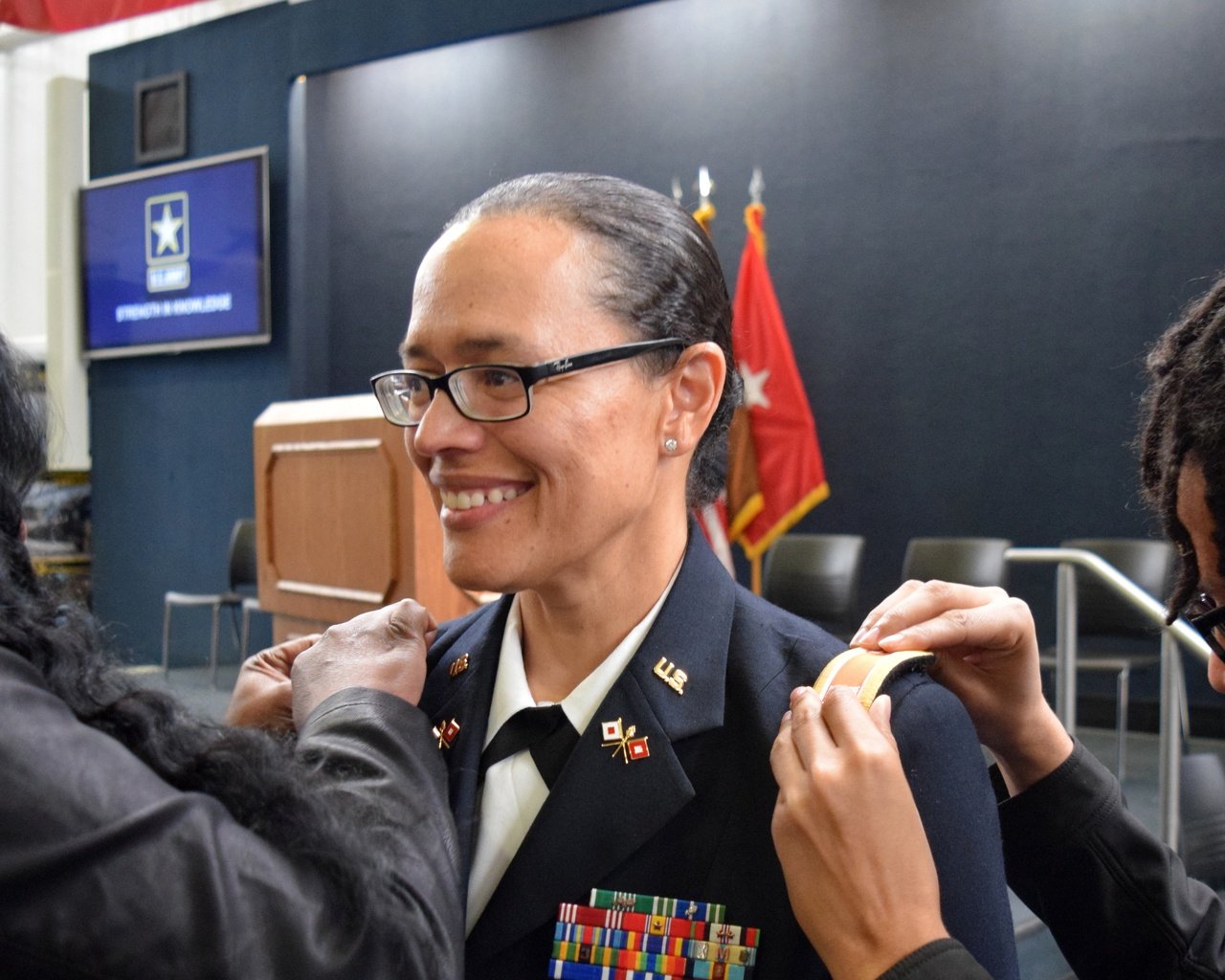
- Officer insignia use bars, leaves, an eagle and stars. Gold then silver bars at lieutenant and captain, then gold and silver leaves, then the colonel’s eagle.
- Stars count the general grades directly. One to four, matching O-7 to O-10.
Writing a rank down is its own small convention. A spoken alphabet exists for exactly this kind of letter-by-letter accuracy over a radio, and the phonetic alphabet covers the version the services use.
Frequently Asked Questions
What are the Army ranks in order?
Private, private, private first class, specialist and corporal, sergeant, staff sergeant, sergeant first class, master sergeant and first sergeant, then sergeant major, command sergeant major and sergeant major of the Army. Warrant officer 1 through chief warrant officer 5 follow, then second lieutenant up to general.
What is the highest rank in the Army?
General, at O-10, with four stars. General of the Army is a five-star grade that outranks it, but it is reserved for wartime and nobody currently holds it.
What is the difference between a specialist and a corporal?
Both are E-4 and both are paid the same. A corporal is a noncommissioned officer who leads a team; a specialist is a technical grade that can manage lower-ranked soldiers without being in the NCO line.
How long does it take to make sergeant in the Army?
At minimum, 11 months in rank as a specialist and 47 months of total service. In practice it depends on promotion points and the positions available in a soldier’s specialty.