Shopping for a galaxy s26 ultra charger means ignoring the biggest number on the box and looking for two smaller things: whether PPS is named, and whether the rated wattage belongs to one port or is shared across three. Samsung says plainly that a charger without the right support will charge the phone at ordinary speed no matter what it claims.
Samsung’s S26 against S25 comparison lists the Galaxy S26 Ultra at 60W wired, up from 45W on the S25 Ultra, with a 5,000mAh typical battery and up to 75 per cent in around 30 minutes. The adapter is sold separately. For portable power see our S26 Ultra power bank comparison, and for the shell the S26 Ultra case guide.
S26 Ultra Chargers Side by Side: Rated Output, PPS and Port Split
Where a charger lists a total wattage, the per-port figure is what the phone can actually draw. Charge times are the makers’ own claims.
| # | Charger | Rated | Per port to phone | PPS stated | Use |
|---|---|---|---|---|---|
| 1 | Cabepow 65W | 65W total | Up to 65W alone | PD 3.1, not PPS | Home |
| 2 | Anker Nano II 65W | 65W total | Shared across 3 | GaN II, not stated | Travel |
| 3 | LKBeau 45W GaN | 45W | 45W | Fast Charge 2.0 | Home |
| 4 | UGREEN 63W Car | 63W total | 45W on USB-C | Yes, PD 3.0 PPS | Car |
| 5 | MZbestplug 63W Car | 63W total | 45W on USB-C | Not stated | Car |
1. Cabepow 65W: Three Ports, PD 3.1 and Four Cable Lengths
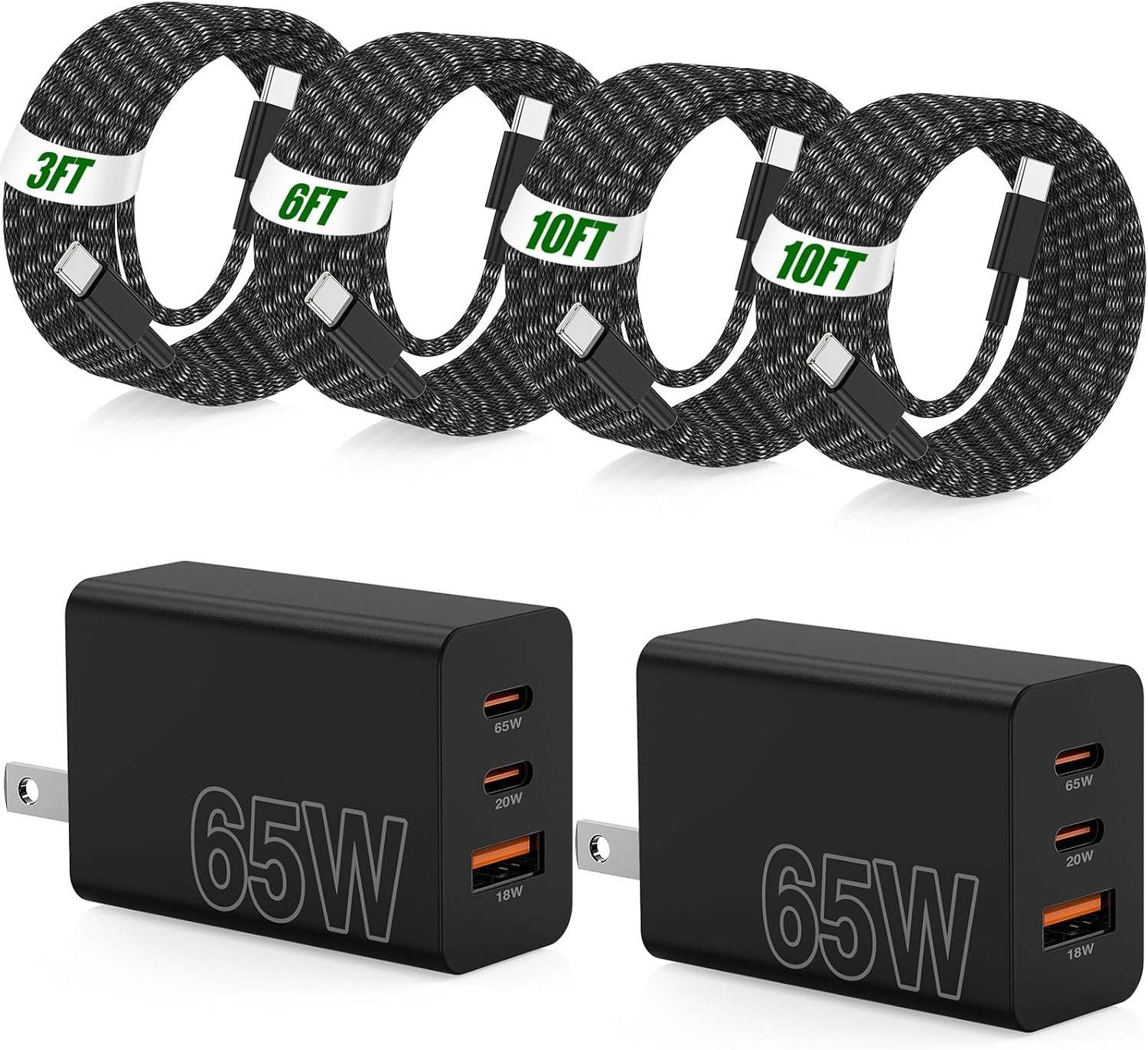
Sixty-five watts across three ports on the newer PD 3.1 protocol, which raised the ceiling that PD 3.0 placed on how much a single port could deliver. For a phone that matters less than for a laptop, but it does mean the block is not the limiting factor.
The cables are the practical selling point: Cabepow ships lengths from three to ten feet so the charger reaches wherever the phone actually sits. Compatibility runs across the current Galaxy S line and back several generations.
What it does well
- PD 3.1 rather than the older PD 3.0.
- Three ports from a single plug.
- Cables included at several lengths.
- Covers the whole current Galaxy S line.
What to know before buying
- PPS is not named in the specification.
- 65W is a total shared across the three ports.
- Cabepow publishes no independent test data.
2. Anker Nano II 65W: GaN II in Something the Size of an Earbud Case
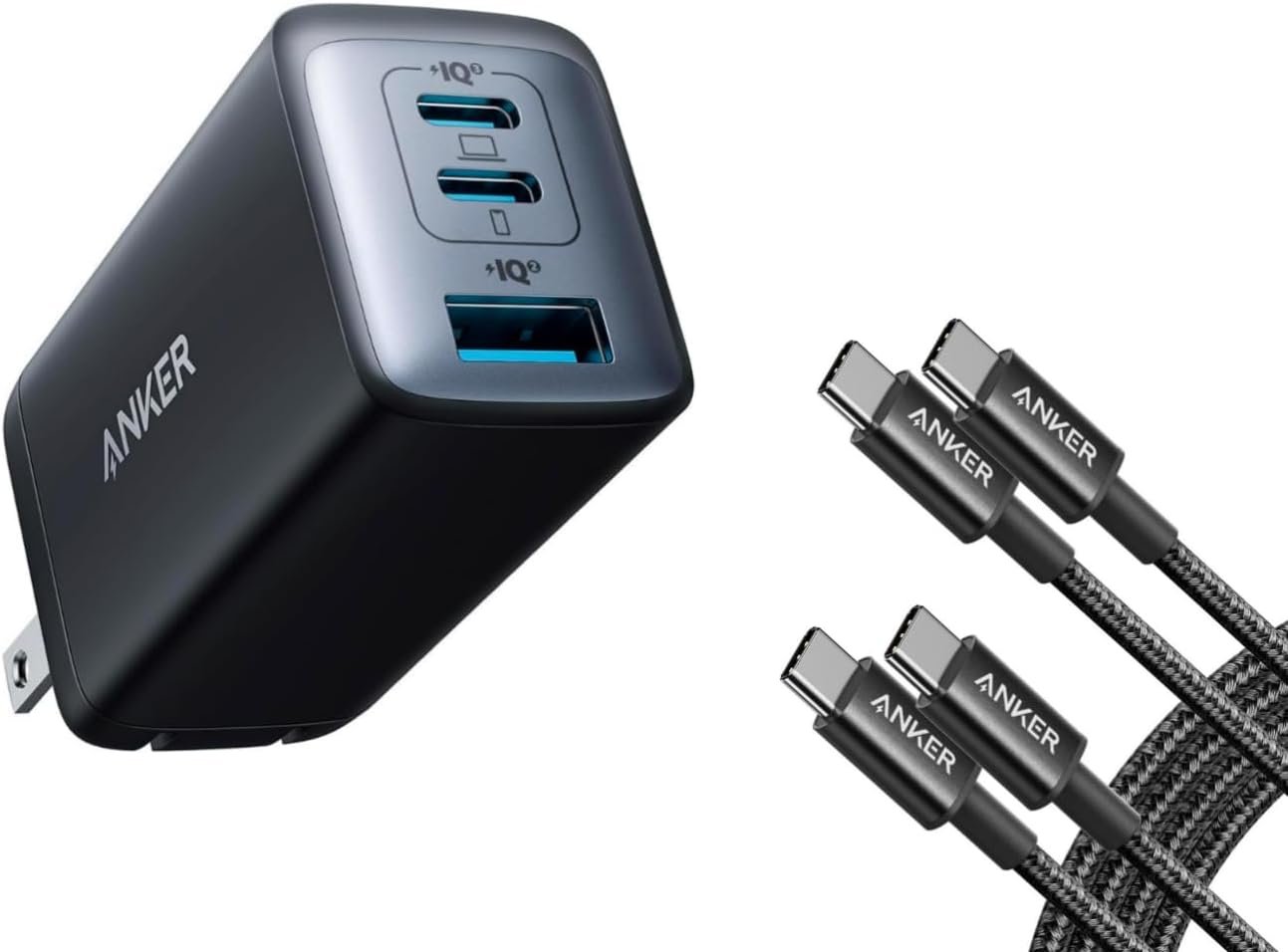
Anker’s GaN II generation raised the operating frequency and restacked the internals, and the result is a 65W three-device charger roughly the size of an AirPods Pro case. For anyone who packs a bag every week, that size difference is the entire argument.
It handles phones, tablets and laptops from the same block, and the bundled cable is rated to 12,000 bends, which is the sort of specification that only matters after a year of coiling it into a bag. Sixty-five watts is the total, so a laptop will take priority over the phone.
What it does well
- GaN II construction in a notably small body.
- Powers up to three devices from one block.
- Cable rated to 12,000 bends included.
- Anker supports its chargers properly after sale.
What to know before buying
- 65W is shared, not per port.
- PPS is not named in these bullets.
- A connected laptop will slow the phone.
3. LKBeau 45W GaN: Navitas Silicon and a Named Samsung Protocol
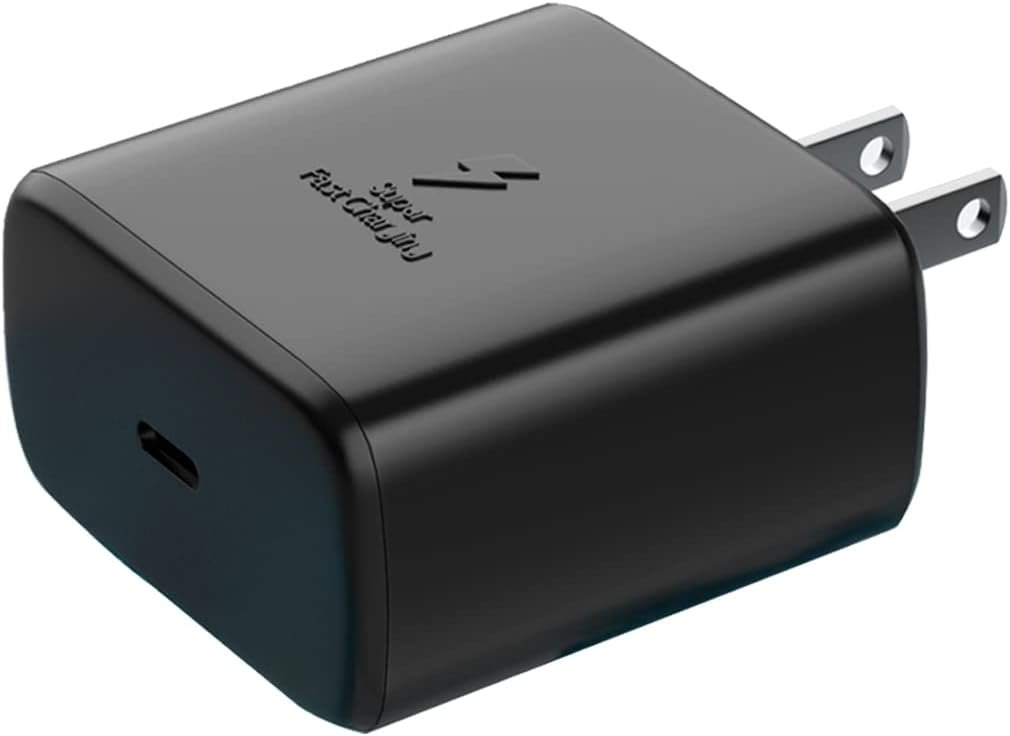
This one names the thing most listings leave out: Super Fast Charge 2.0, which is Samsung’s own 45W protocol rather than a generic PD level. That is the difference between a block that negotiates properly with a Galaxy and one that falls back to ordinary charging.
The chipset is Navitas gallium nitride, which runs cooler and more efficiently than silicon and is why a 45W block can be this small. LKBeau claims 0 to 50 per cent in about 25 minutes on the S26 Ultra, which is its own figure.
What it does well
- Names Samsung Super Fast Charge 2.0 explicitly.
- Navitas GaN chipset runs cooler than silicon.
- Compact for a 45W block.
- Covers the Galaxy S line back to the S22.
What to know before buying
- 45W rather than the phone’s 60W ceiling.
- The 25-minute claim is LKBeau’s own.
- Single port only.
4. UGREEN 63W Car: The Only One Here That Names PPS
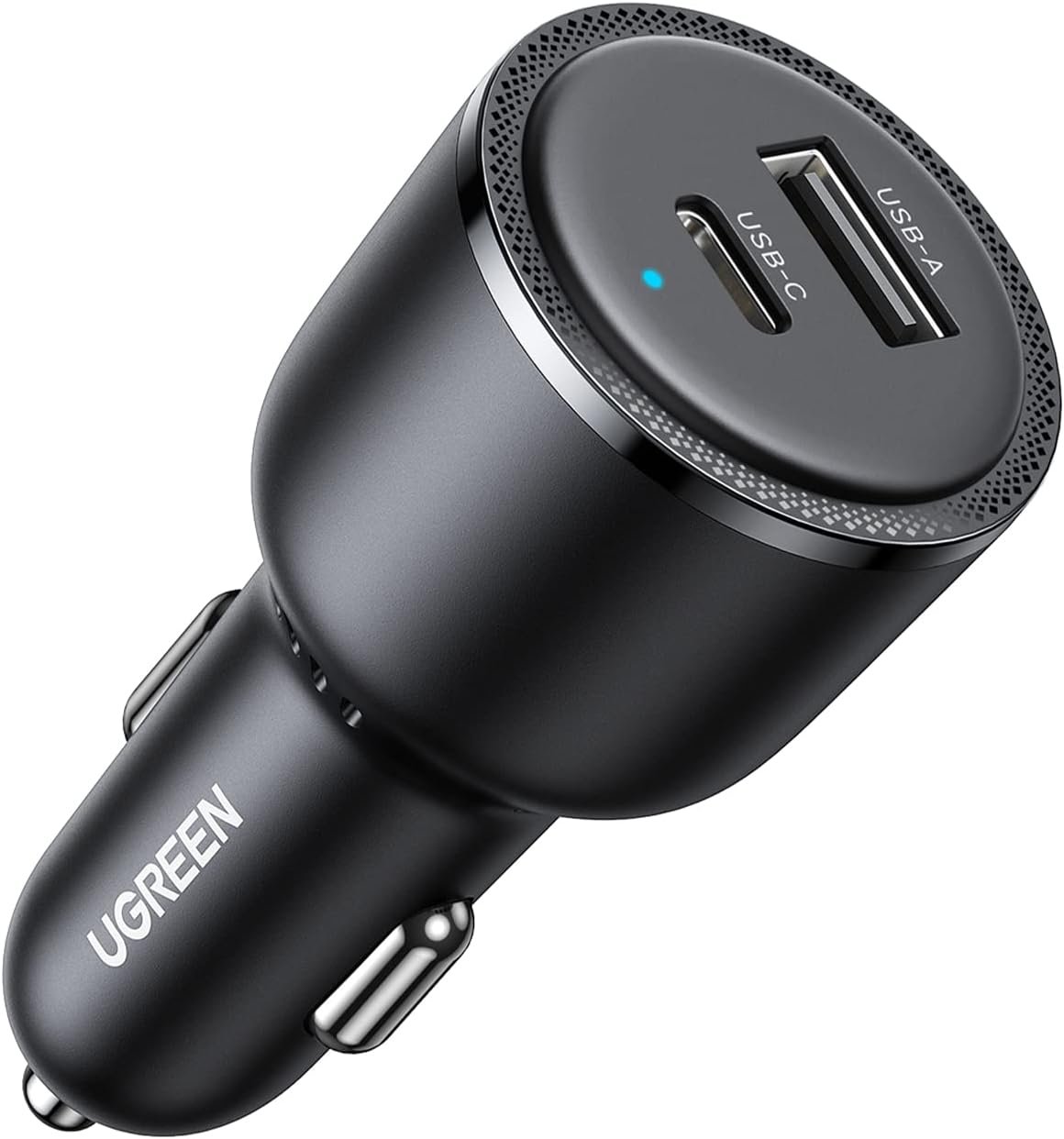
UGREEN is explicit where almost nobody else is: the USB-C port is 45W PD 3.0 with PPS, which gives full access to Samsung’s Super Fast Charging 2.0 protocol rather than a generic negotiation. On a Galaxy that single line is worth more than ten extra watts on a rival.
The second port is 18W USB-A for a passenger, making 63W the combined figure. The housing is scratch-resistant polycarbonate with thermal venting, which is a real consideration in a car interior that reaches oven temperatures in summer.
What it does well
- 45W PD 3.0 with PPS named on the USB-C port.
- Full Samsung Super Fast Charging 2.0 access stated.
- 18W USB-A port for a second device.
- Thermal venting designed for a hot cabin.
What to know before buying
- 45W rather than the phone’s 60W wired ceiling.
- 63W is the combined figure across both ports.
- No cable included.
5. MZbestplug 63W Car: Aluminium Body, Voltmeter and a Cable
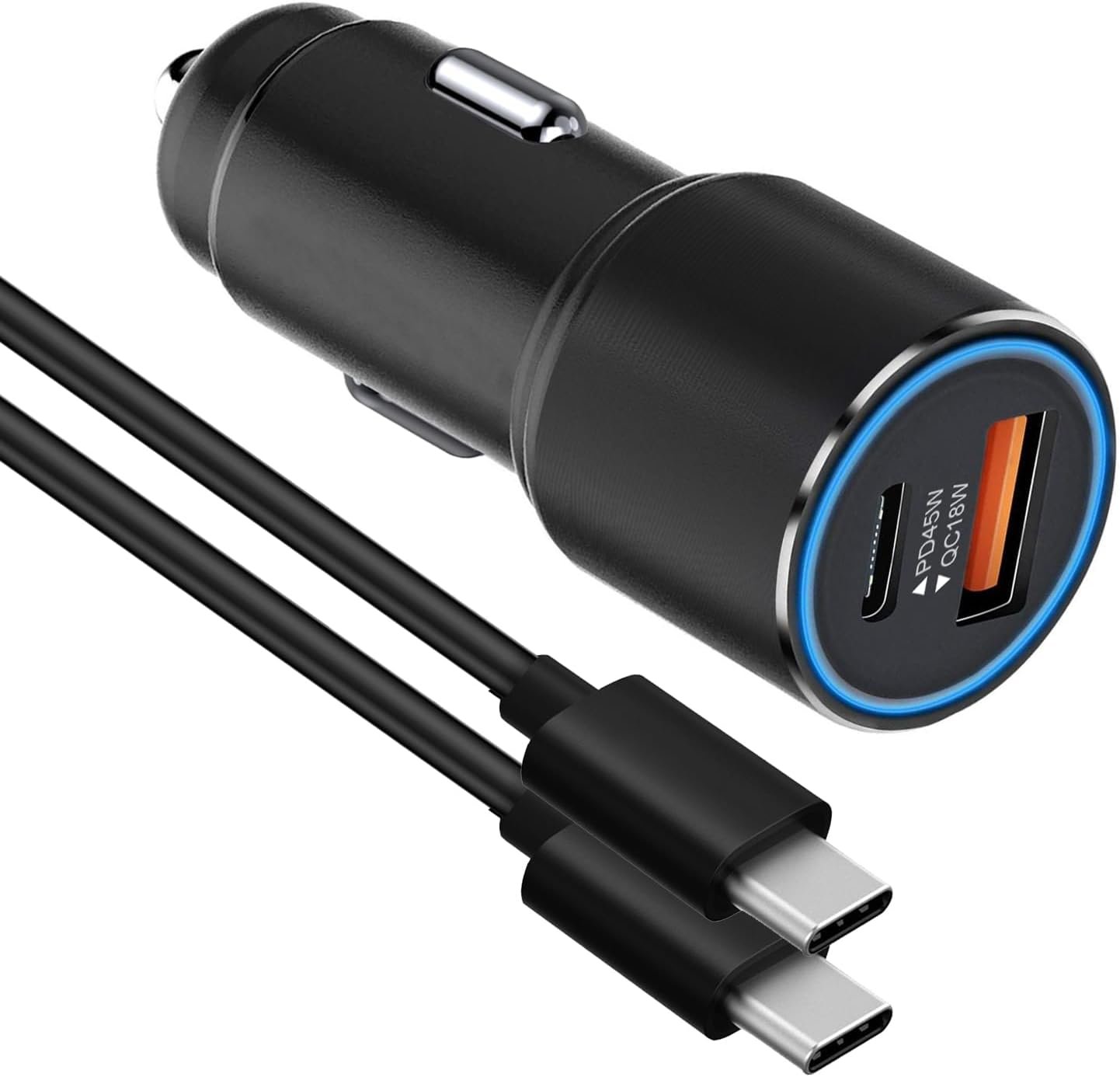
The same 45W PD plus 18W Quick Charge split as UGREEN, in a full aluminium housing with a built-in voltmeter, and with a six-foot USB-C to USB-C cable included so there is nothing else to buy.
The voltmeter is more useful than it sounds in an older car, because it shows the state of the battery every time you start the engine. MZbestplug does not name PPS, which is the specification to confirm before relying on it for fast charging a Galaxy.
What it does well
- Full aluminium body rather than plastic.
- Built-in voltmeter reads the car battery.
- Six-foot USB-C to USB-C cable included.
- 45W PD and 18W Quick Charge split across two ports.
What to know before buying
- PPS is not named in the specification.
- Metal bodies conduct heat to the touch in summer.
- 45W rather than the 60W the phone supports.
Samsung Says Wattage Alone Does Not Give You Fast Charging
The clearest statement comes from Samsung itself, on the page for its own 60W power adapter. That adapter supports USB PD 3.1 with both PDO and PPS, Super Fast Charging requires a USB PD adapter that supports it, and with a third-party or older Samsung charger, charging may proceed as normal charging even if the fast charging option is switched on.
PPS, Programmable Power Supply, is the USB Power Delivery extension that lets a phone ask for voltage in fine increments rather than choosing from a few fixed steps. Samsung’s Super Fast Charging depends on it. That is why UGREEN naming PD 3.0 with PPS on its car charger is more meaningful than a rival advertising a bigger total, and why LKBeau naming Super Fast Charge 2.0 tells you more than a wattage does.
Two practical steps follow. Read the bullets for the letters PPS or for a named Samsung protocol rather than trusting a number, and open Settings, Battery, then Charging settings and confirm fast charging is enabled. A surprising share of slow-charging complaints are that toggle.
Total Wattage and Per-Port Wattage Are Different Numbers
Every multi-port charger here advertises a total. Cabepow’s 65W, Anker’s 65W, UGREEN’s 63W and MZbestplug’s 63W are all figures for the whole unit, and the phone only ever sees what one port can deliver once everything else plugged in has taken its share. Both car chargers split as 45W on USB-C and 18W on USB-A, which is the honest way to publish it.
That matters because the Galaxy S26 Ultra tops out at 60W wired on a 5,000mAh battery, per Samsung’s own comparison, so a 45W port is already close to the practical ceiling and a shared 65W port may fall well under it with a laptop attached. If speed is the goal, a single-port block beats a bigger multi-port one every time.
In a car the calculation changes again. Sustained high-wattage charging in a hot cabin is harder on a battery than the same charge at a desk, which is why Samsung’s own car charger delivers 25W rather than chasing the phone’s maximum. Our Galaxy Z Fold 8 screen protector comparison covers the other accessory worth getting right.
Which Galaxy S26 Ultra Charger to Buy
For the house, LKBeau’s 45W GaN block is the pick that gets the important thing right, because it names Samsung Super Fast Charge 2.0 rather than relying on a wattage to imply it, and it is small enough to leave in a socket. Cabepow’s 65W is the alternative if you want three ports and a choice of cable lengths, and Anker’s Nano II 65W if the charger lives in a bag and size decides everything.
For the car, UGREEN is the clear recommendation and it is not close: it is the only charger here that names PD 3.0 with PPS and states full access to Samsung’s Super Fast Charging 2.0. MZbestplug matches the port split and adds an aluminium body, a voltmeter and a cable, which makes it the better buy only if you want those and can live without the stated PPS support.
Frequently Asked Questions
What wattage does the Galaxy S26 Ultra support?
Samsung lists it at 60W wired, up from 45W on the S25 Ultra, with up to 75 per cent charge in around 30 minutes on a 5,000mAh battery. The adapter is not in the box, so reaching that speed is a separate purchase.
Why is my fast charger charging the phone slowly?
Usually one of two things. Either the charger lacks PPS, which Samsung says can leave the phone charging at normal speed regardless of the fast charging toggle, or that toggle is off. Check Settings, Battery, then Charging settings first.
Is a 65W charger better than a 45W one for this phone?
Not necessarily. If the 65W figure is a total shared across three ports and PPS is not supported, a 45W single-port charger that names Samsung’s protocol will charge the phone faster in practice. Read the per-port figure, not the headline.
Should I fast charge in the car?
At moderate wattage, yes. Sustained high-power charging in a hot cabin stresses the battery more than the same charge indoors, which is why Samsung’s own car charger delivers 25W on its USB-C port rather than chasing the phone’s maximum.
Related Articles
- Best Samsung Galaxy S26 Cases
- Galaxy S26 Screen Protectors Compared
- Best Samsung Galaxy S26 Plus Cases
- MagSafe Accessories for Galaxy S26 Ultra
- Best Android Auto Wireless Adapter
As an Amazon Associate, CanyonWire earns from qualifying purchases.