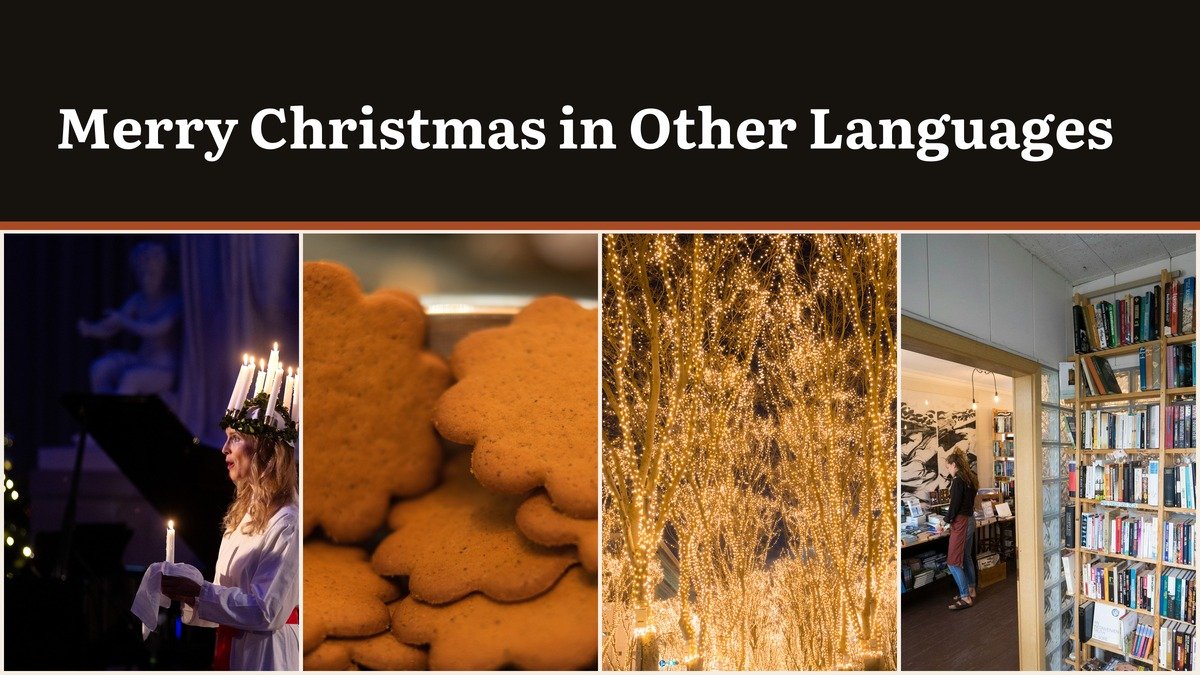
Merry Christmas in other languages is God Jul in Swedish, Hyvää joulua in Finnish, Feliz Navidad in Spanish, Joyeux Noël in French and Mele Kalikimaka in Hawaiian. Each greeting comes from a place with its own habits, and in the Nordic countries those habits start on the evening of December 24 rather than on Christmas Day itself.
Learning a greeting is easier when it comes attached to a custom: a table of julbord dishes, a pair of shoes in a window or a book handed over after dinner. The spellings marked say it like are approximate guides for English speakers, not official respellings.
How Do You Say Merry Christmas in Other Languages?
Say God Jul in Swedish, Hyvää joulua in Finnish, Glædelig jul in Danish, Feliz Navidad in Spanish, Joyeux Noël in French, Frohe Weihnachten in German, メリークリスマス in Japanese or Mele Kalikimaka in Hawaiian. Swedish and Norwegian use the same two words, and Danish and Icelandic keep jul or jól in their own spellings.
Merry Christmas in Other Languages: Greetings, Pronunciation and Where They Are Heard
| Language | Greeting | Say it like | Where it is heard |
|---|---|---|---|
| Swedish | God Jul | good YOOL | Sweden, Swedish speakers in Finland |
| Norwegian | God jul | good YOOL | Norway |
| Danish | Glædelig jul | GLETH-eh-lee YOOL | Denmark, Greenland |
| Icelandic | Gleðileg jól | GLETH-eh-lek YOH-ul | Iceland |
| Finnish | Hyvää joulua | HUE-vah YOH-loo-ah | Finland |
| Spanish | Feliz Navidad | feh-LEES nah-vee-DAHD | Spain, Mexico, most of Latin America |
| French | Joyeux Noël | zhwah-YUH no-EL | France, Belgium, Quebec, Switzerland, West and Central Africa |
| German | Frohe Weihnachten | FROH-uh VY-nakh-ten | Germany, Austria, Switzerland |
| Japanese | メリークリスマス (Merī kurisumasu) | MEH-ree koo-ree-soo-mah-soo | Japan |
| Korean | 메리 크리스마스 (Meri keuriseumaseu) | MEH-ree keu-ree-seu-mah-seu | South Korea, North Korea |
| Hawaiian | Mele Kalikimaka | MEH-leh kah-lee-kee-MAH-kah | Hawaii |
| Māori | Meri Kirihimete | MEH-ree kee-ree-HEE-meh-teh | New Zealand |
| Afrikaans | Geseënde Kersfees | kheh-SEH-nuh-duh KEHRS-fays | South Africa, Namibia |
| Xhosa | iKrisimesi emyoli | ee-kree-see-MEH-see eh-MYOH-lee | South Africa |
| Samoan | Manuia lava le Kirisimasi | mah-NOO-ee-ah LAH-vah leh kee-ree-SEE-mah-see | Samoa, American Samoa |
| Filipino | Maligayang Pasko | mah-lee-GAH-yahng PAHS-ko | Philippines |
| Indonesian | Selamat Natal | seh-LAH-maht NAH-tahl | Indonesia (Malaysian Malay: Selamat Hari Natal) |
| Cantonese | 聖誕快樂 (sing3 daan3 faai3 lok6) | sing-dahn fye-lohk | Hong Kong, Guangdong |
| Hungarian | Boldog Karácsonyt | BOL-dog KAH-rah-chonyt | Hungary |
| Ukrainian | З Різдвом Христовим (Z Rizdvom Khrystovym) | z reez-DVOM khris-TOH-vim | Ukraine |
| Albanian | Gëzuar Krishtlindjet | guh-ZOO-ar kreesht-LEEN-dyet | Albania, Kosovo |
Christmas Eve Is the Main Event in Sweden and Iceland

The greeting God Jul is the same in Swedish (God Jul) and Norwegian (God jul), and both are pronounced roughly good YOOL. Sweden celebrates Christmas on December 24, and the date comes from an old way of counting days. Sweden, like much of medieval Europe, counted sunset as the end of one day and the start of the next, so Christmas Day began at sunset on what is now December 24. Midnight became the official start of the day later, but the evening of December 24 stayed the center of the holiday.
Iceland keeps the same evening. Gifts are usually opened after dinner on Christmas Eve, and Icelanders greet each other with Gleðileg jól. Yuletide is the biggest holiday of the year there. The Swedish Institute feature on Christmas in Sweden covers the Swedish side in more detail.
Sweets, Pastries and Rice Porridge: The Christmas Table

Finnish Christmas has a sweet tooth. The greeting is Hyvää joulua, and the season comes with the following treats:
- Joulutorttu, a star-shaped puff pastry sprinkled with sugar and topped with plum jam.
- Joulupulla, a cardamom bun decorated with a gingerbread star.
- Glögi, steaming hot juice or wine with cloves, cinnamon, almonds and raisins.
- Rice porridge sprinkled with cinnamon, a common breakfast on Christmas Eve with a good luck almond hidden in the bowl.
- Gingerbread cookies, and for many Finns eating the raw dough is part of the fun.

Sweden puts the food on one long table called the julbord, the Swedish Christmas smorgasbord. Classic dishes include Christmas ham, the small pork sausage known as prinskorv, the egg and sprat spread gubbröra, herring salad, pickled herring, liver pâté, Jansson’s temptation and the fish dish lutfisk. Denmark hides an almond in its rice pudding too, and the Danish greeting Glædelig jul goes with that tradition.
Yule Lads, Nisse and Other Visitors Who Bring Gifts

Iceland has the most crowded cast. Thirteen Yule Lads, sometimes called the Icelandic Santas, visit in the weeks before Christmas, and children put shoes in their bedroom window for 13 days in the hope of getting presents. The Lads are pranksters, and each has a particular craving that shows up in the name, such as Spoon Licker, Door Slammer, Skyr Gobbler and Sausage Stealer. Their scary troll mother Grýla and the Yule Cat belong to the same family.
Denmark has the nisse, naughty elves that belong to the Danish Christmas. In Germany the Christkind or Father Christmas delivers the presents on Christmas Eve, and children recite a rhyme during Advent that counts the candles on the wreath. In Saxony, miners in traditional dress walk through the streets during Advent, and the greeting there is Frohe Weihnachten. Finland, for its part, calls itself the home of the real Father Christmas.
Books, Markets and Lights: Greetings in the Street

Books are a Christmas staple in Iceland. Every year since 1944 the Icelandic book trade has published a catalog, Bókatíðindi, that reaches every household in mid-November during the Reykjavik Book Fair, and many books are published just before Christmas when sales peak. The tradition is known as the Christmas book flood. The Visit Iceland guide to Christmas in Iceland covers the customs around it.
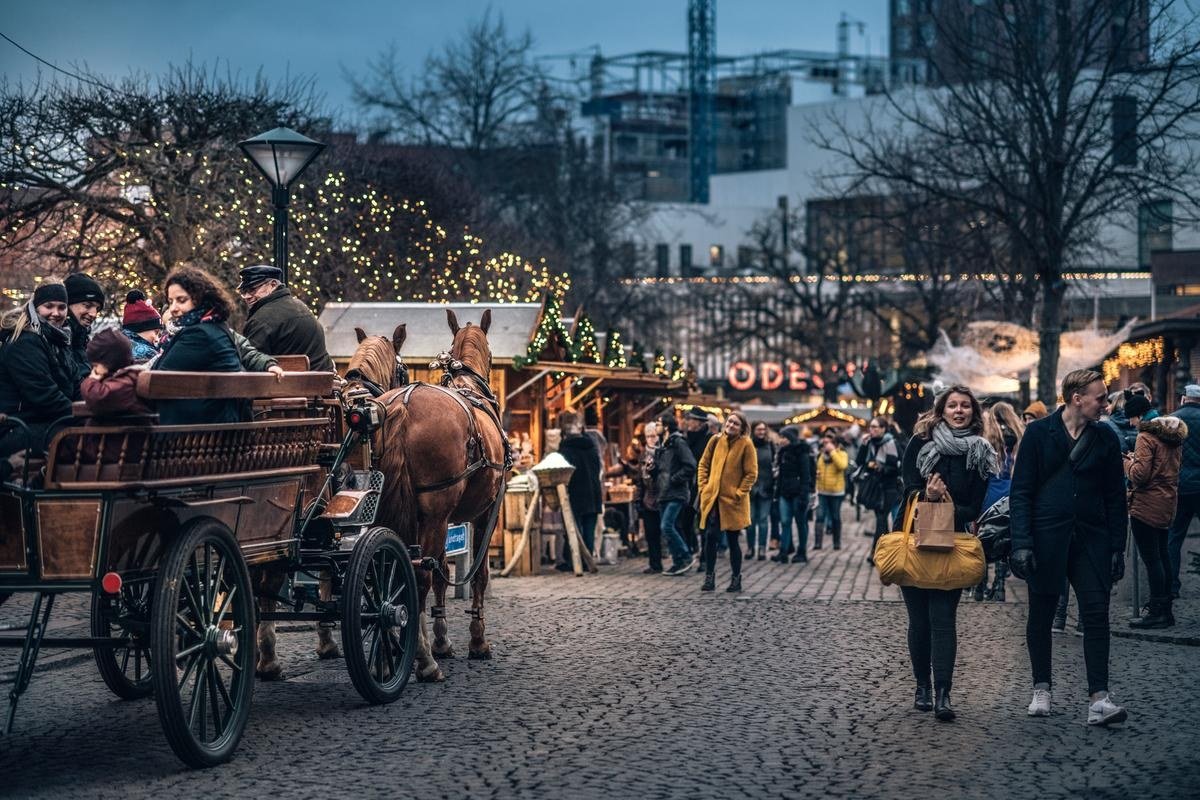
December is peak hygge season in Denmark, and dancing around the Christmas tree is part of the tradition. Denmark also has Tivoli Gardens, the original winter wonderland in the heart of Copenhagen, and Christmas markets in cities such as Odense. Japan has its own street scene: festive illumination displays are popular in Japanese cities, alongside Christmas markets with seasonal food and skating rinks.

Cards for any of these places can borrow the setting. The questions in our Christmas trivia quiz make a good follow-up to a greeting, and the colors that dress the markets have their own story in what the colors of Christmas mean.
Greetings Borrowed From English: Hawaiian, Japanese, Korean and Māori
Some greetings are the English phrase wearing local sounds. Mele Kalikimaka is how Merry Christmas was borrowed into Hawaiian, and the song of that name was made famous in 1950 by Bing Crosby and the Andrews Sisters. Two sound changes sit inside it: the r in Merry becomes l, and the s in Christmas becomes k.
The reason is that Hawaiian has only eight consonants, one of the smallest inventories in the world, with no s and no t. Borrowed words fill the gap with k, so tea becomes ki and town becomes kaona. The JSTOR Daily article on Mele Kalikimaka walks through the sounds.
Japanese (Merī kurisumasu) and Korean (Meri keuriseumaseu) borrow the phrase directly, and Japanese speakers do not distinguish r from l, so the borrowing sits comfortably. Māori borrows it too: Meri Kirihimete is classed as a loan word in the Te Aka Māori Dictionary entry.
Blessings, Joy and Good Wishes: Greetings From Africa, Asia and the Pacific
- Afrikaans: Geseënde Kersfees, literally Blessed Christmas, heard in South Africa and Namibia.
- Xhosa: iKrisimesi emyoli, a happy Christmas, which becomes a very happy Christmas with kakhulu on the end.
- Samoan: Manuia lava le Kirisimasi, heard in Samoa and American Samoa.
- Filipino: Maligayang Pasko, used across the Philippines.
- Indonesian: Selamat Natal, with Selamat Hari Natal as the Malay form in Malaysia.
- Cantonese: 聖誕快樂, written in Traditional characters in Hong Kong.
- Hungarian: Boldog Karácsonyt.
- Albanian: Gëzuar Krishtlindjet, used in Albania and Kosovo.
Ukrainian is З Різдвом Христовим. Orthodox churches that keep the Julian calendar mark Christmas later than December 25, and the Christmas Day dates and rules cover how that calendar shifts the date.
Planning a Multilingual Christmas Card Around Local Customs
- Send greetings to Sweden and Iceland before December 24, because the evening of Christmas Eve is when the celebrating happens.
- Match the form to the language, not the country. Samoan, Xhosa and Cantonese each have their own forms.
- Check which calendar a family’s church follows before timing a greeting to an Orthodox household.
- Add a custom to the card: a mention of the julbord, the Yule Lads or the almond in the rice pudding gives the greeting a place to land.
- Say it out loud first. The say-it-like spellings are approximate, and Hawaiian, Finnish and Icelandic repay a second try.
Frequently Asked Questions
What is Merry Christmas in Hawaiian?
Mele Kalikimaka, pronounced roughly MEH-leh kah-lee-kee-MAH-kah. It is the English phrase reshaped to fit Hawaiian sounds, and Hawaiian has no s or t.
Is God Jul the same in Swedish and Norwegian?
Yes, both languages use the same two words with different capitalization, God Jul in Swedish and God jul in Norwegian, and both sound like good YOOL. Danish has a separate form, Glædelig jul.
Why do the Nordic countries celebrate on December 24?
Sweden historically counted sunset as the start of the next day, so Christmas Day began at sunset on what is now December 24. The evening stayed central after midnight became the official start of the day. Iceland also opens gifts after dinner on Christmas Eve.
Which greetings come straight from the English phrase?
Hawaiian (Mele Kalikimaka), Japanese (メリークリスマス), Korean (메리 크리스마스) and Māori (Meri Kirihimete) all borrow Merry Christmas and adjust it to local sounds.