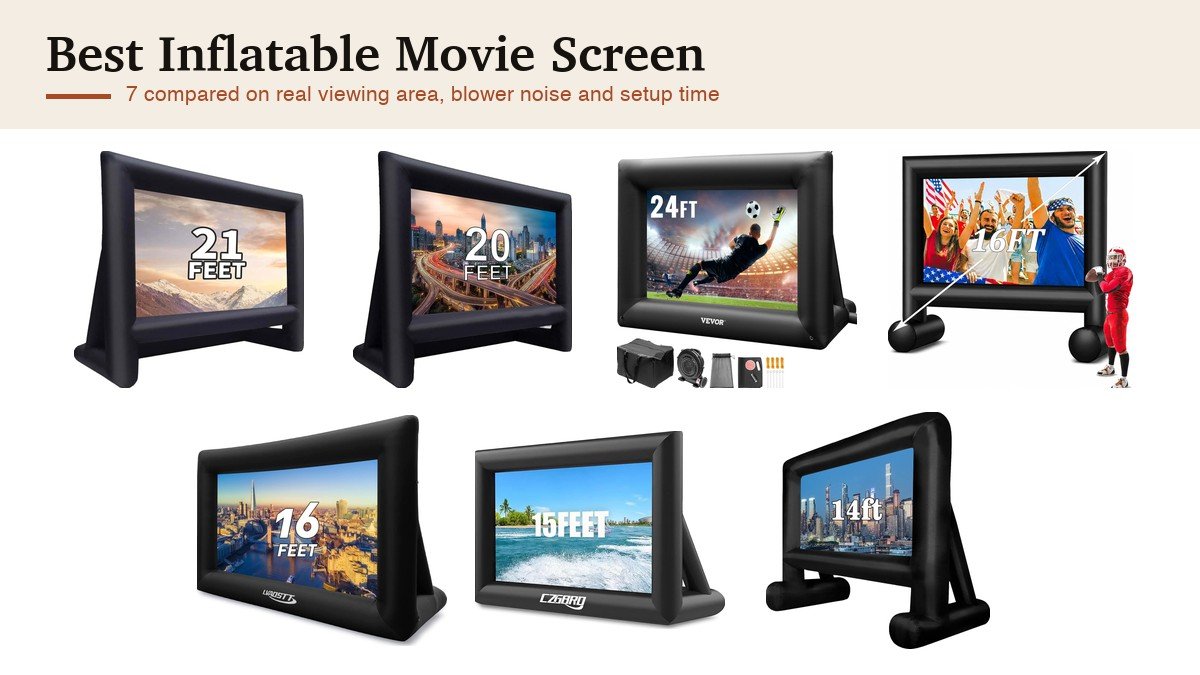
The quoted size on the best inflatable movie screen listings is not the size of the picture, and that fact explains most of the disappointment in this category. A 21 foot screen is 21 feet including the inflatable frame around the outside; the white surface inside it is considerably smaller. GYUEM is unusually honest about this, quoting a 16 by 12.2 foot overall structure with a 13 by 7.4 foot projection area, and the table below uses the viewing area wherever the listing publishes it.
The second thing that decides whether these work is the blower. It runs continuously for the entire film, so its noise is the noise of your film night, and the wattage ranges from 100W to 360W across the screens here. A powerful blower inflates faster and holds the screen steadier in wind; a quiet one lets you hear the dialogue. The better listings quote both, and the ones that quote neither are worth treating with suspicion.
Best Inflatable Movie Screen Picks Compared on Size, Blower and Setup
Read viewing area rather than headline size wherever it is published, and read blower wattage alongside inflation time: a screen that inflates in a minute is using a lot of air to do it.
| Screen | Quoted size | Viewing area | Blower | Setup |
|---|---|---|---|---|
| GYUEM 21 Feet | 21 feet, 16 by 12.2 ft structure | 13 by 7.4 feet, 16:9 | Included, not rated | Storage bag supplied |
| XHYCPY 20 Feet | 20 feet | Not published separately | Included | Carry bag, built for moving between sites |
| VEVOR Inflatable Screen | 9.84 by 16.40 feet | 16:9, front and rear | 360W low noise, included | Two minutes, triangular base and stakes |
| CZGBRO 16FT | 16 feet | 16:9, 160 degree viewing angle | High power, included | Two minutes, one person |
| LVAOSTT 16FT | 16 feet | 5.84 by 10.36 feet | Included | Larger surface than the usual 4.9 by 9 feet |
| CZGBRO 15FT | 15 feet | 16:9, supports 4K | Quiet motor, included | About three minutes |
| QILEBA 14 FT | 14 feet | 16:9, 160 degree viewing angle | 100W low noise, included | One minute inflation, ten minute full setup |
Viewing Area, Blower Noise and Why Rear Projection Matters
Every screen here is 16:9, which matches what a projector outputs, so the only real variable is how much of the quoted size is actually white. Where a listing publishes both figures the gap is substantial: GYUEM quotes 13 by 7.4 feet of projection inside a 16 by 12.2 foot structure, and LVAOSTT makes a point that its surface is 5.84 by 10.36 feet where most competitors are 4.9 by 9. Those two listings are being straightforward; the ones quoting a single number are not.
Rear projection is the feature most buyers ignore and then wish they had used. Every screen here supports it, and it means placing the projector behind the screen rather than in front, which removes the single biggest irritation of an outdoor film night: people walking through the beam and casting shadows. It also keeps the projector and its cables away from where everyone is sitting. The image is mirrored, which every projector can correct in software.
Brightness is the other half of the equation and it belongs to the projector rather than the screen. Outdoors after dark you need far fewer lumens than people assume, but you must wait for actual darkness, because an inflatable screen in twilight looks washed out no matter what you spend. Our guide to the best projectors covers the brightness figures that matter and why ANSI lumens are the only ones worth comparing.
1. VEVOR Inflatable Projector Screen: The Most Stable in Wind

Wind is what ends outdoor film nights, and this is the screen that takes it most seriously. VEVOR uses a triangular base rather than a flat one, which resists tipping backwards in a way a simple rectangular frame does not, and it ships with both ropes and yard stakes so the structure is anchored at several points rather than weighted at one.
The blower is 360W, the most powerful here, which inflates the whole screen in about two minutes and keeps it rigid rather than merely upright once the wind picks up. VEVOR describes it as low noise despite the power. The screen is 9.84 by 16.40 feet with front and rear projection, and it folds into a portable bag. If your garden is exposed, this is the one to buy.
What it does well
- Triangular base resists tipping in wind.
- Ropes and yard stakes supplied for proper anchoring.
- 360W blower, the most powerful here, inflating in two minutes.
- Front and rear projection on a 16:9 surface.
What to know before buying
- A 360W blower is more audible than a 100W one.
- Heavier to carry than the smaller screens.
- Overkill for a sheltered courtyard.
2. GYUEM 21 Feet: The Biggest, and Honest About the Viewing Area
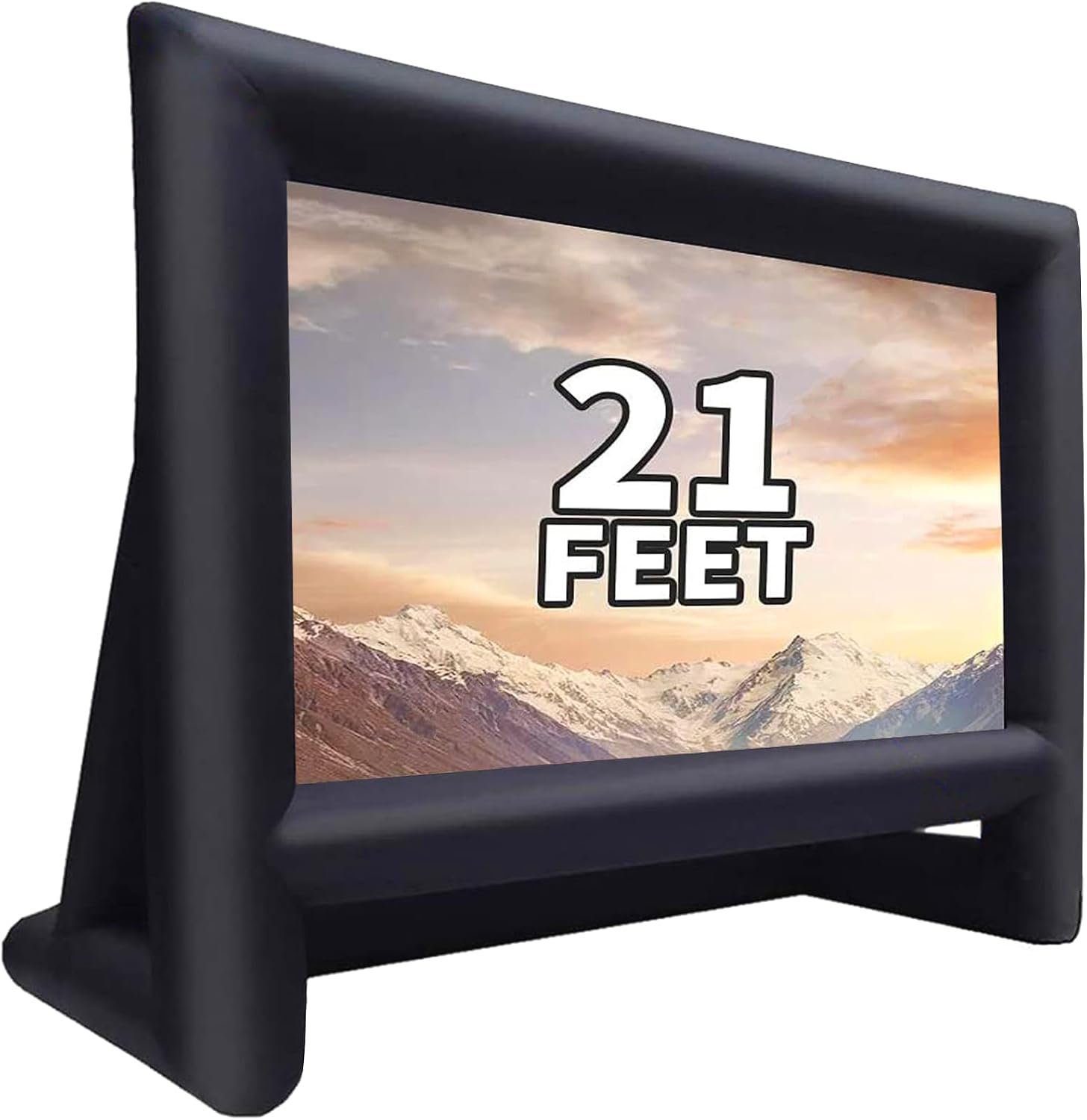
At 21 feet this is the largest screen in the guide, and GYUEM is one of only two sellers here that publishes both numbers rather than one. The structure is 16 by 12.2 feet and the actual white projection surface is 13 by 7.4 feet in 16:9, which is the figure that decides how big the picture is.
The surface is professional double-sided projection cloth, so both faces take an image and rear projection works properly rather than showing through faintly. A storage bag is included and the whole thing is light enough to move, which matters at this size. For a large garden, a community event or anywhere the audience is more than a dozen people, the extra width is the difference between everyone seeing it and the back row squinting.
What it does well
- The largest screen here at 21 feet.
- Publishes the real 13 by 7.4 foot projection area.
- Double-sided cloth, so rear projection works properly.
- Storage bag included despite the size.
What to know before buying
- Needs a large, level lawn.
- Blower is not rated in the listing.
- A big screen catches a lot of wind.
3. CZGBRO 16FT: The Fastest One-Person Setup
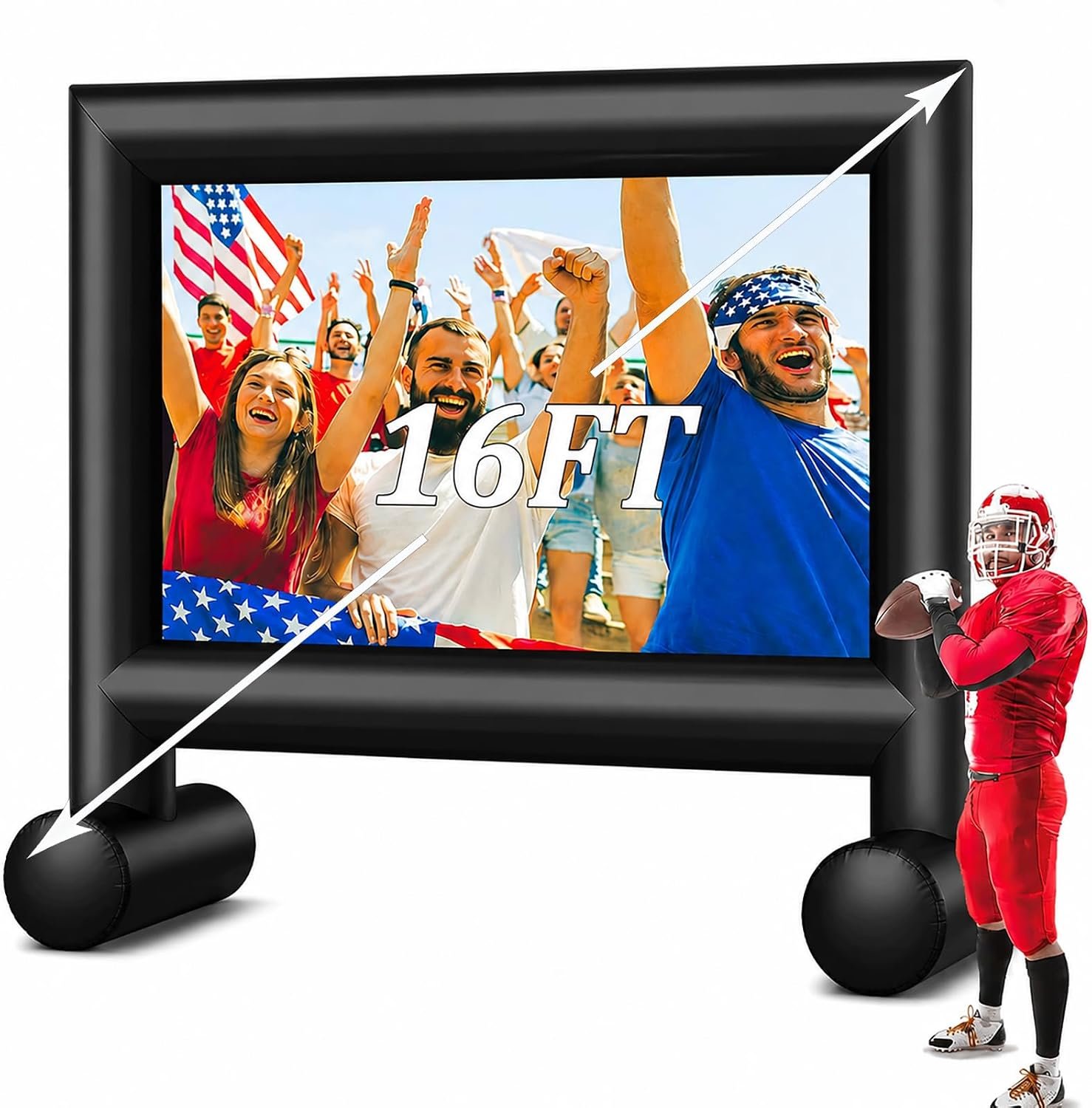
Most inflatable screens are a two-person job the first few times. CZGBRO has built this one as a single-piece white screen and black frame that one person can set up in about two minutes with the included high-power blower, which changes it from an occasion to something you do on a whim.
The black frame is doing real work rather than being decorative: a dark border around a projected image increases apparent contrast, which is why cinema screens are masked in black. The surface is 16:9 with a 160 degree viewing angle so people sitting off to the side still get a usable picture, and front and rear projection are both supported. The listing includes a useful instruction most omit: zip it up before inflating.
What it does well
- One-person setup in about two minutes.
- Black frame increases apparent contrast.
- 160 degree viewing angle for a spread-out audience.
- Single piece construction with nothing to assemble.
What to know before buying
- Blower wattage is not specified.
- Sixteen feet is mid-sized rather than large.
- Must be zipped before inflating, which is easy to forget.
4. CZGBRO 15FT: The Quietest Blower Here
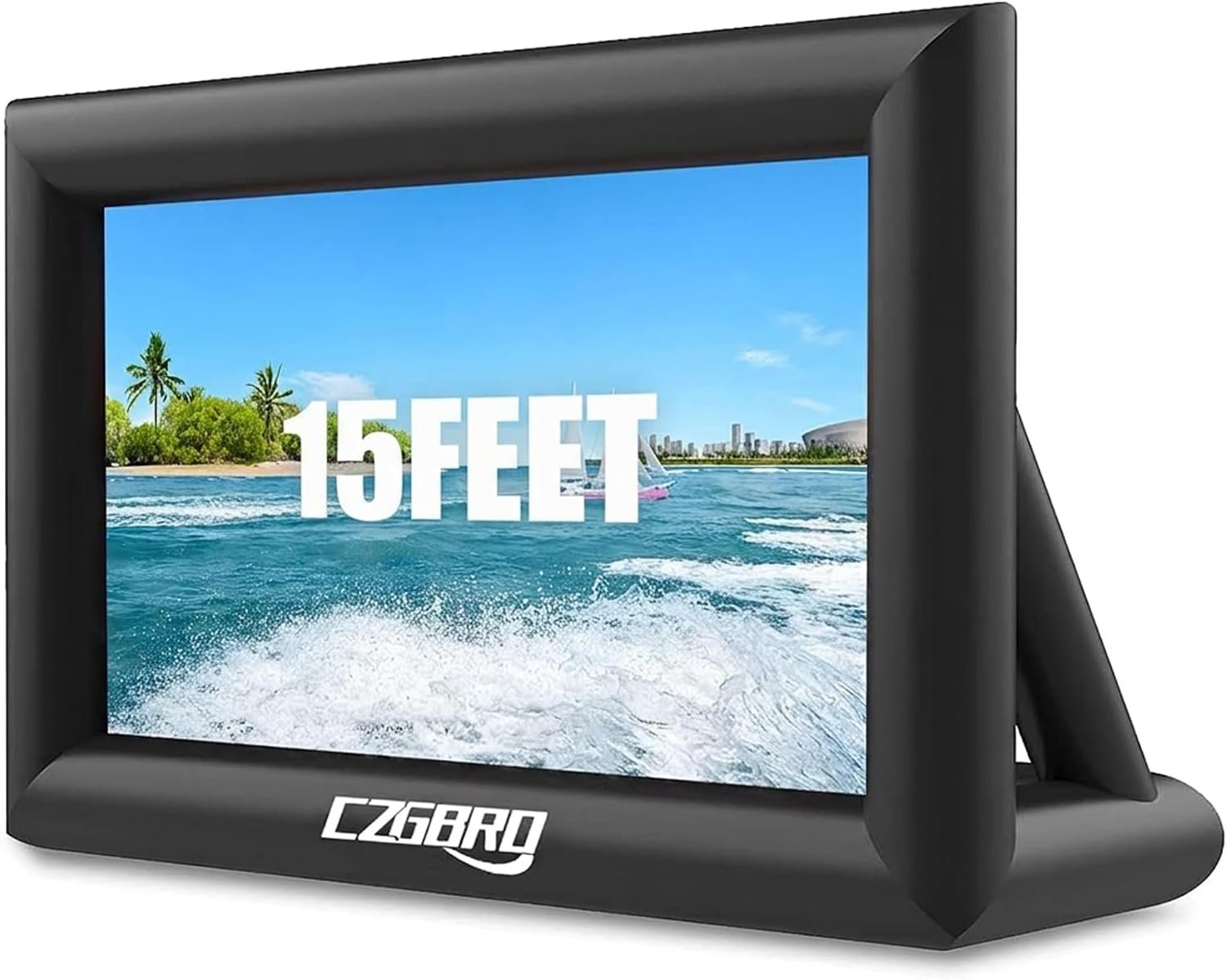
The blower runs for the whole film, so the thing you want it to be is quiet. CZGBRO states explicitly that the motor on this 15 foot screen never drowns out dialogue, which is the claim that matters and the one almost nobody else makes directly.
It inflates in about three minutes, slightly slower than the two-minute screens, which is the trade for the quieter motor. The surface is wrinkle-resistant white cloth that CZGBRO says supports up to 4K picture quality with a wide viewing angle, and it takes front or rear projection. Fifteen feet suits a normal back garden, a poolside or a driveway, which is where most of these actually get used.
What it does well
- Explicitly quiet motor that does not drown out dialogue.
- Wrinkle-resistant surface, which matters for image quality.
- Supports up to 4K picture quality.
- Right size for a normal back garden.
What to know before buying
- Three minutes to inflate rather than two.
- A quieter blower holds less rigidly in wind.
- No published viewing area figure.
5. LVAOSTT 16FT: More White Surface Than the Competition
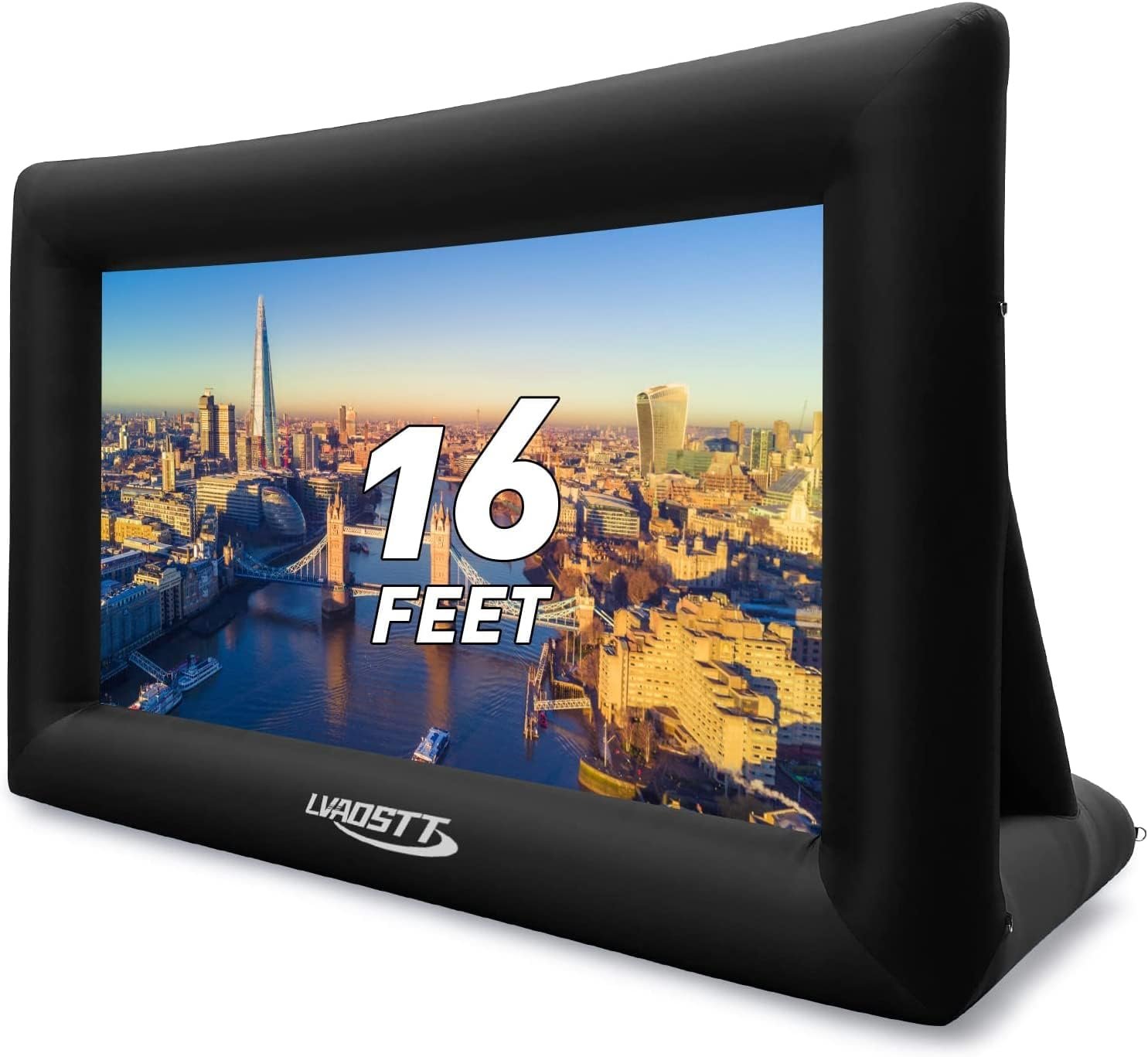
LVAOSTT makes the comparison that the rest of the category avoids. Most 16 foot screens have a projection surface of roughly 4.9 by 9 feet; this one is 5.84 by 10.36 feet, which is around a third more picture from a structure of the same quoted size.
That is the entire argument and it is a good one, because the quoted size is what you pay for and the white area is what you watch. Everything else is conventional: 16:9, front and rear projection, a blower and a bag included. If you are choosing between 16 foot screens and the listings all look identical, this is the one that has told you what you are actually getting.
What it does well
- 5.84 by 10.36 feet of surface against the usual 4.9 by 9.
- Roughly a third more picture from the same quoted size.
- Publishes the real figure rather than only the structure size.
- Front and rear projection supported.
What to know before buying
- Blower wattage and noise are not specified.
- Little published detail beyond the size comparison.
- An unfamiliar brand name.
6. QILEBA 14 FT: The Quietest Small Screen, and the Fastest to Inflate
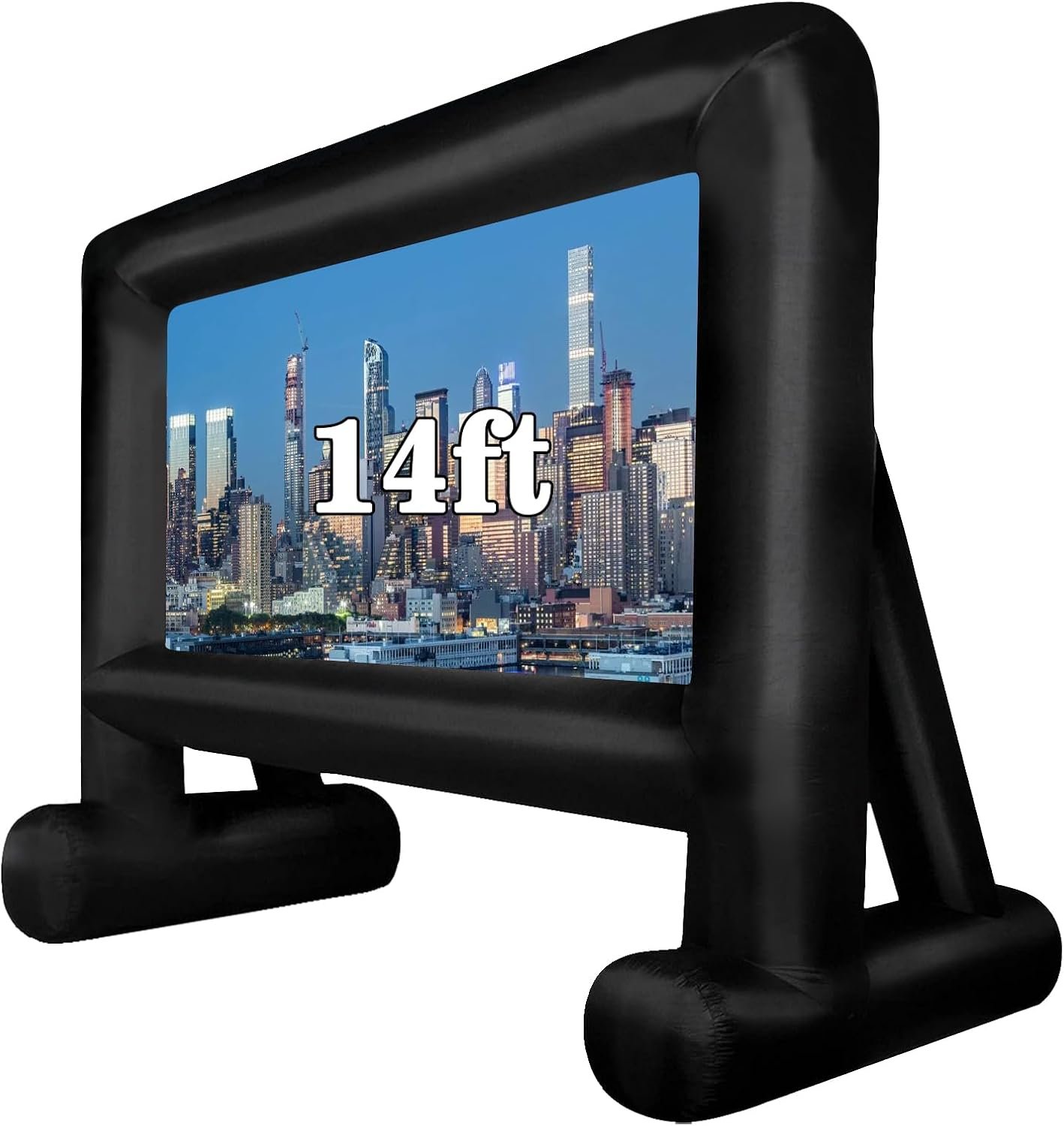
QILEBA has picked the two specifications that matter for a smaller garden and published both. The blower is 100W, the lowest here, which the company says is quieter than others of the same type while still inflating the screen in one minute, and it keeps it inflated for the whole film without becoming noticeable once the sound starts.
Fourteen feet with a 160 degree viewing angle suits a patio, a small lawn or a poolside, and rear projection is explicitly recommended for poolside and church use where people would otherwise walk through the beam. Full setup including pegging out takes about ten minutes. It is the most sensible choice for anyone whose garden is normal sized rather than large.
What it does well
- 100W blower, the quietest here, inflating in one minute.
- 160 degree viewing angle despite the smaller size.
- Rear projection recommended and properly supported.
- Carry bag supplied for storage and transport.
What to know before buying
- Fourteen feet is the smallest screen in this guide.
- Ten minutes for full setup including anchoring.
- A 100W blower holds less firmly in strong wind.
7. XHYCPY 20 Feet: The One Built to Be Moved
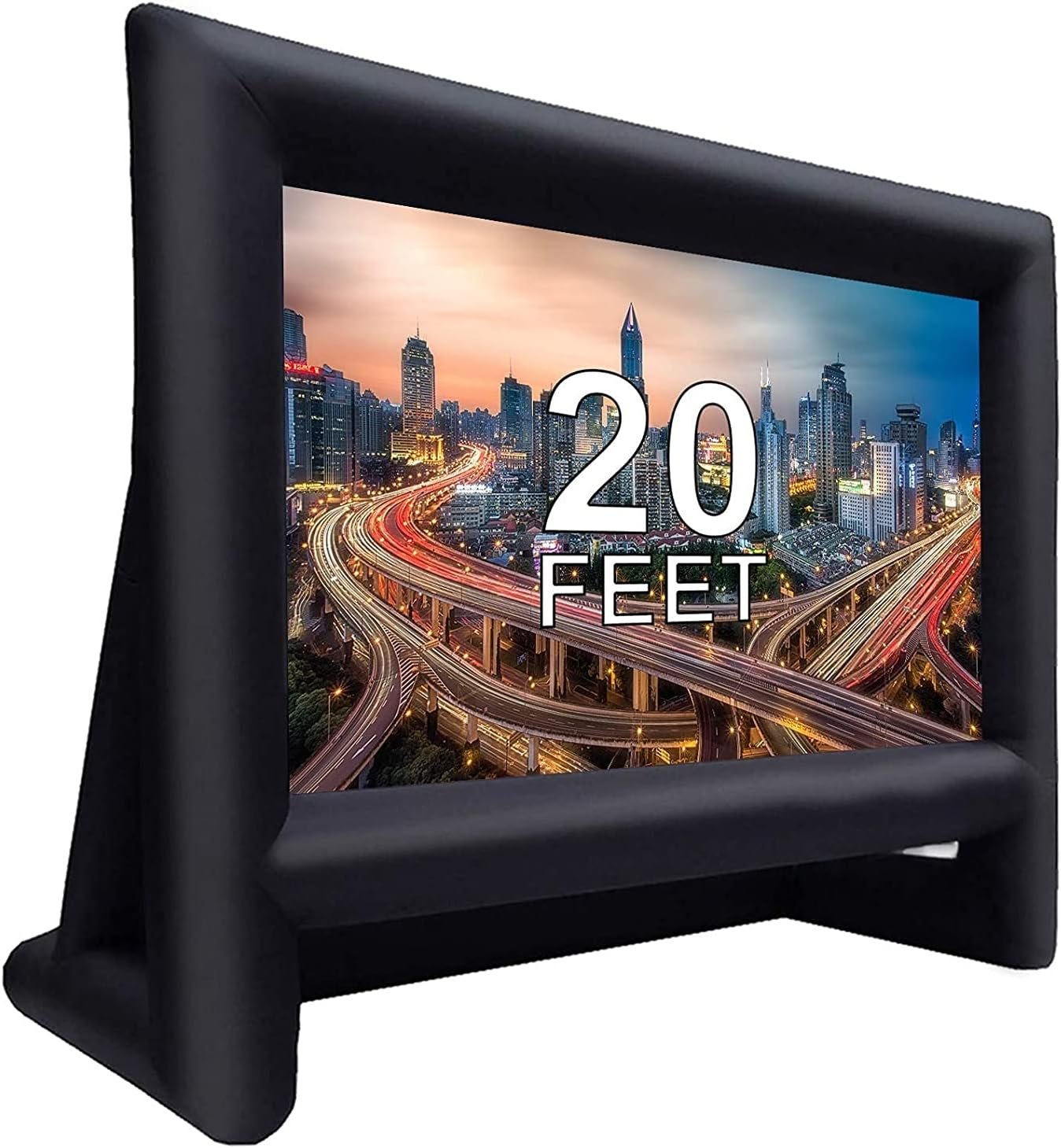
XHYCPY has aimed this at people who do not keep the screen in one garden. It is 20 feet, which is large, but the emphasis throughout the listing is portability: the blower and the screen both pack into a supplied carry bag, and the company pitches it at camping, picnics, outdoor birthdays and weddings rather than at a fixed back garden.
That makes it the choice for anyone who will take it to other people’s houses, a campsite or a venue. A 20 foot screen that lives in a bag is more useful than a 21 foot screen that is awkward to move, and at this size you are getting a genuinely large picture. The listing is thin on blower specification, which is the main thing to weigh against the VEVOR.
What it does well
- Twenty feet while still packing into a carry bag.
- Built and sold for moving between locations.
- Large enough for a real crowd.
- Blower and screen store together.
What to know before buying
- Little published detail on the blower.
- No separate viewing area figure.
- Still needs a car to move, despite the bag.
Setting Up an Outdoor Film Night That Works
The screen is the easy part. Almost everything that ruins an outdoor film night is about light, sound and wind rather than the picture surface, and all three are predictable.
- Wait for real darkness; twilight washes out any screen at any price.
- Use rear projection if people will walk between the projector and the screen.
- Anchor with everything supplied, and do not run it in strong wind at all.
- Keep the blower away from the seating, because it runs for the whole film.
- Run power safely to an earth-leakage protected outdoor socket.
- Check the viewing area rather than the quoted size before ordering.
Sound is the part people underestimate: a projector speaker is inaudible outdoors over a blower and open air, so plan for separate audio. If the film night is part of a party rather than the whole of it, a karaoke machine doubles as the PA, and for a Halloween screening our guide to the best halloween movies sorts the films by how frightening they actually are.
Which Inflatable Movie Screen to Buy
For most gardens the CZGBRO 15FT is the sensible answer, because the blower is explicitly quiet and the surface is wrinkle resistant, which are the two things that affect the experience most. If your garden is exposed, buy the VEVOR instead: the triangular base, the stakes and the 360W blower make it the steadiest screen here in wind.
For a big audience, the GYUEM 21 Feet is the largest and one of the few that publishes its real viewing area, while the XHYCPY 20 Feet is the one to buy if the screen will travel. The CZGBRO 16FT sets up fastest with one person, the LVAOSTT gives the most white surface for its quoted size, and the QILEBA 14 FT is the quietest and the right size for a patio. Whichever you choose, check the viewing area rather than the headline number, and buy a projector bright enough for the distance.
Frequently Asked Questions
Is the quoted screen size the size of the picture?
No, and this is the main thing people get wrong. The quoted figure is the whole inflatable structure including the frame around the outside. The white projection surface inside it is considerably smaller: one screen here quotes a 16 by 12.2 foot structure with a 13 by 7.4 foot picture area. Look for the second number.
Does the blower run for the whole film?
Yes. These screens hold their shape through continuous air pressure, so the blower stays plugged in and running from setup until you pack away. That makes its noise part of your film night, which is why blower wattage and stated noise matter as much as the screen size.
Should I use front or rear projection?
Rear projection if anyone will be walking about, because it removes shadows across the picture entirely and keeps the projector and its cables away from the audience. Every screen here supports both. The image is mirrored when projected from behind, which any projector can flip in its settings.
How much wind can an inflatable screen take?
Less than you would hope. These are large flat surfaces with a lot of area, and the realistic answer is a light breeze with everything anchored. Use all the ropes and stakes supplied rather than a few, choose a screen with a wide or triangular base if your garden is exposed, and take it down rather than risking it in a genuine gust.
Related Articles
- Best Gaming Handhelds: Power, Battery and Emulation Compared
- Best Portable Power Stations: Watt-Hours, Output and What They Really Run
- Best Sports Streaming Services Compared on Price and Coverage
- Best Horror Movies: 8 Compared on Dread and Age
- Best Sci Fi Movies: 8 Compared on Idea and Budget
As an Amazon Associate, CanyonWire earns from qualifying purchases.