The best sci fi movies are not the ones with the biggest effects budget. They are the ones where a single idea is load-bearing, and eight of them are compared below on award record first, then worldwide box office.
The list runs from a $5 million film with one actor on a lunar base to a $839 million heist built inside four layers of a dream. Runtimes go from 93 to 148 minutes, and the last column is the premise in one line.
| # | Film | Runtime | Record on paper | The idea it runs on |
|---|---|---|---|---|
| 1 | Inception (2010) | 2 hours 28 minutes | 4 Academy Awards | Time runs slower the deeper you dream |
| 2 | Alien (1979) | 1 hour 57 minutes | 1 Academy Award | A crew is not a military unit and nobody is coming |
| 3 | Edge of Tomorrow (2014) | 1 hour 53 minutes | $381 million worldwide | Dying resets the day and keeps the memory |
| 4 | District 9 (2009) | 1 hour 52 minutes | Saturn Award for best international film | First contact becomes a housing problem |
| 5 | Source Code (2011) | 1 hour 33 minutes | $147 million worldwide | A borrowed body, eight minutes before a bomb |
| 6 | Annihilation (2018) | 1 hour 55 minutes | $43.1 million worldwide | A zone that refracts and rewrites living things |
| 7 | Gattaca (1997) | 1 hour 41 minutes | $12.5 million worldwide | Genetic screening decides who may apply |
| 8 | Moon (2009) | 1 hour 36 minutes | Hugo Award for best dramatic presentation | A solo worker finds the shift has been repeating |
Budget Has Almost Nothing to Do With It
Inception cost a reported $160 million and Moon a reported $5 million, and both are on this list for the same reason: one idea, stated clearly, followed to the end. The gap between the two is thirty-two to one, and it does not show in the writing.
Four of these eight cost under $40 million. Three of those four are the ones most likely to be unfamiliar, and they are also the three that hold up best to a second viewing.
If a science fiction film has to keep explaining its own rules, the rules were not clear enough to start with. None of these eight does it twice.
The Eight Best Sci Fi Movies, Compared
1. Inception (2010): A Heist Film With Four Clocks Running at Once

Director: Christopher Nolan · Runtime: 2 hours 28 minutes · Starring: Leonardo DiCaprio, Joseph Gordon-Levitt, Ken Watanabe · Four Academy Awards
Christopher Nolan won four Academy Awards in 2011, for cinematography, sound, sound editing and visual effects. The last forty minutes cut between four locations running at four different speeds and remain followable, which is the real achievement.
The rules are stated once, early, and never broken. That is why an audience can track a van falling off a bridge, a corridor rotating and a snow fortress at the same time.
It grossed $839 million and took a Hugo Award for best dramatic presentation. At 148 minutes it is the longest film here.
2. Alien (1979): A Haunted House With an Airlock

Director: Ridley Scott · Runtime: 1 hour 57 minutes · Starring: Tom Skerritt, Sigourney Weaver, Veronica Cartwright · One Academy Award
Ridley Scott won the Academy Award for visual effects and made the most influential creature design in film history with H. R. Giger. The crew are contractors arguing about shares, not heroes.
The film withholds the full creature until the last minutes and shoots the rest in corridors too narrow to run in. At 117 minutes it is slower than its reputation and better for it.
It also won the Saturn Award for best science fiction film. Sigourney Weaver was not the expected survivor and the marketing deliberately hid that.
3. Edge of Tomorrow (2014): A Time Loop Played as a Training Montage

Director: Doug Liman · Runtime: 1 hour 53 minutes · Starring: Tom Cruise, Emily Blunt, Brendan Gleeson · $381 million worldwide
Doug Liman uses the loop structure to make competence the plot: Tom Cruise is useless for the first act and lethal by the third because the audience has watched him learn.
Emily Blunt plays the soldier teaching him and gets the better part. The film cuts the repetition hard, often showing the same death three times in ten seconds.
It grossed $381 million and has spent two weeks in the United States Netflix top ten. At 113 minutes it is one of the tightest blockbusters of the last decade.
4. District 9 (2009): An Alien Arrival Shot as a Documentary

Director: Neill Blomkamp · Runtime: 1 hour 52 minutes · Starring: Sharlto Copley, Jason Cope, Nathalie Boltt · $210.8 million worldwide
Neill Blomkamp made his first feature for a reported $30 million and shot the opening third as news footage and interviews. The ship arrives over Johannesburg and then simply stays.
Sharlto Copley improvised most of his dialogue as a bureaucrat running an eviction, and the film turns from satire into a chase without changing register.
It grossed $210.8 million, won the Saturn Award for best science fiction film for best international film, and earned a best picture nomination, which science fiction almost never gets.
5. Source Code (2011): Eight Minutes, Repeated Until It Works

Director: Duncan Jones · Runtime: 1 hour 33 minutes · Starring: Jake Gyllenhaal, Michelle Monaghan, Vera Farmiga · $147 million worldwide
Duncan Jones runs the same eight minutes of a commuter train again and again, and the interest is in what the passenger learns each pass rather than in the bomb.
At 93 minutes it is the shortest film on this list and the most efficient. The premise is explained in one scene and never revisited.
It grossed $147 million. Jake Gyllenhaal spends most of the film in two rooms and the tension never drops.
6. Annihilation (2018): The Strangest Film Here and the Least Explained

Director: Alex Garland · Runtime: 1 hour 55 minutes · Starring: Natalie Portman, Jennifer Jason Leigh, Gina Rodriguez · $43.1 million worldwide
Alex Garland adapts the Jeff VanderMeer novel and declines to explain the Shimmer at any point. The biology is the horror: cells copying each other until nothing is only one thing.
The lighthouse sequence in the last twenty minutes has almost no dialogue and is the most genuinely alien passage in modern science fiction.
It grossed $43.1 million after a limited release and has spent a week in the United States Netflix top ten. Expect to finish it without answers.
7. Gattaca (1997): A Thriller Where the Crime Is Having the Wrong Genome
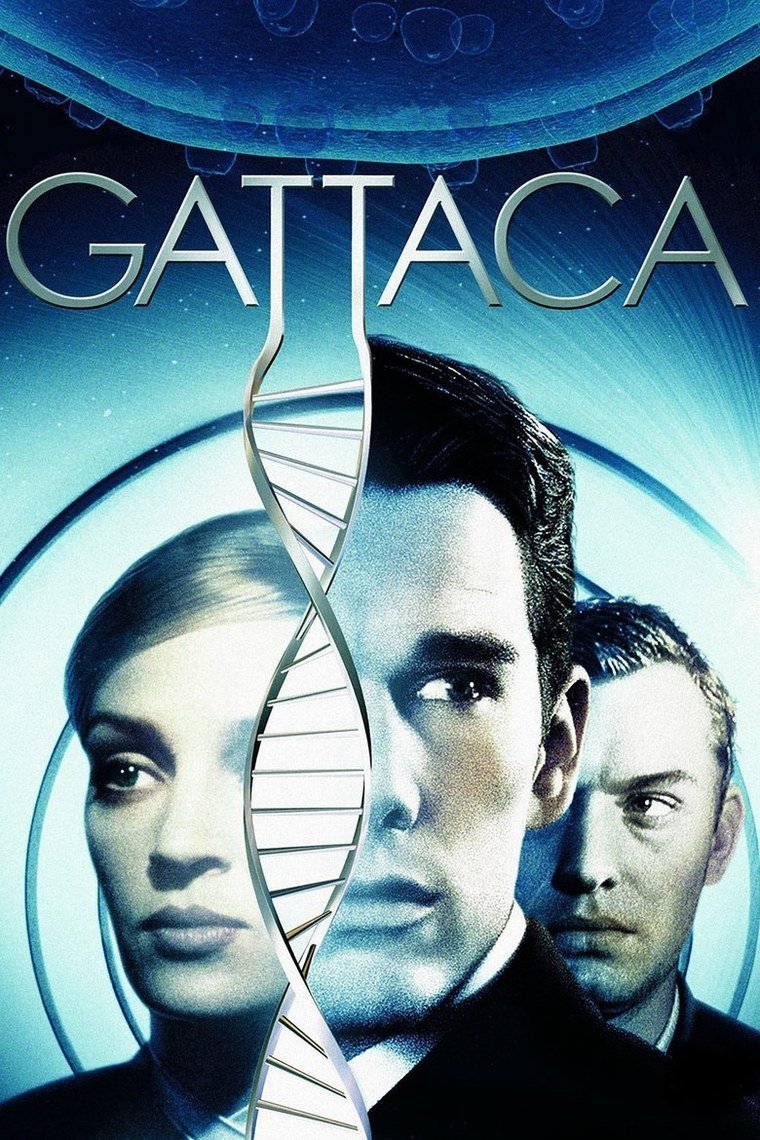
Director: Andrew Niccol · Runtime: 1 hour 41 minutes · Starring: Ethan Hawke, Uma Thurman, Jude Law · $12.5 million worldwide
Andrew Niccol built a future with almost no visible technology: the film is suits, staircases and blood tests. The tension comes entirely from a daily screening a man has to pass with someone else’s sample.
It took only $12.5 million in cinemas and is now cited in bioethics teaching more often than in film writing. At 101 minutes it is lean.
The swimming race against the brother is the whole thesis of the film in ninety seconds.
8. Moon (2009): One Actor, One Base, a Three-Year Contract
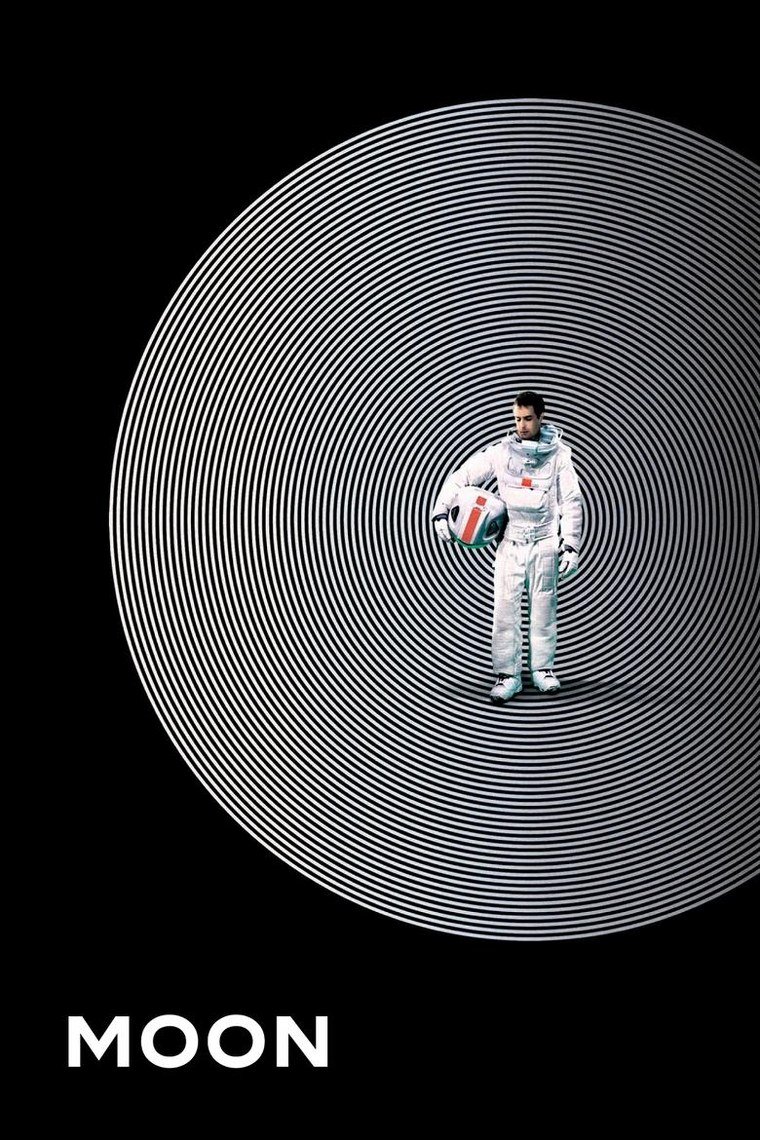
Director: Duncan Jones · Runtime: 1 hour 36 minutes · Starring: Sam Rockwell, Kevin Spacey, Dominique McElligott · Hugo Award for best dramatic presentation
Duncan Jones made his first film for a reported $5 million with Sam Rockwell playing every speaking part on screen. The model work is physical rather than digital and it shows in the right way.
It won a Hugo Award for best dramatic presentation. The twist arrives at the thirty-minute mark rather than the end, which leaves an hour to deal with the consequences.
It grossed $9.8 million, the smallest figure here, and is the clearest demonstration on this page that budget and idea are unrelated.
Small Rooms Against Big Worlds
Half of this list takes place in a confined space and half builds a society. Knowing which you want is a better filter than knowing the genre.
- One location, few people: Moon, Source Code, Alien, Gattaca
- A world and a system: District 9, Inception, Edge of Tomorrow
- Neither, deliberately: Annihilation
The confined films are also the short ones. Source Code at 93 minutes, Moon at 96 and Gattaca at 101 all finish inside a normal evening, while Inception at 148 does not.
On a large screen the difference is sharper still, and contrast rather than resolution is what makes the dark interiors of Alien and Moon readable at home.
How These Eight Were Compared
Each film needed a record outside itself: an Academy Award, a Hugo, a Saturn Award or a confirmed worldwide gross. Academy Awards rank first by count, then box office. Nothing is ordered on preference.
Each also had to keep its speculative idea load-bearing from the first act, and had to be in wide enough circulation to stream tonight.
The idea column is the summary, not a credential, and it is the one most readers will use to choose. A gross of $839 million tells you a film found an audience, not whether its premise will hold your attention on a weeknight.
How to Choose Your Next Science Fiction Thriller
If you want the one that still plays as an event, take Inception and give it the full 148 minutes. If you have never seen Alien, watch it before any of its sequels and expect a slow first hour.
If you have ninety minutes, take Source Code or Moon. If you want to be confused on purpose, take Annihilation. If you want the one that will make you argue about policy rather than physics, take Gattaca.
Moon then Source Code runs 3 hours 9 and makes a neat double bill from the same director, both about a man discovering the terms of his own employment. The action thrillers compared on scale are the louder alternative when nobody wants to think.
Frequently Asked Questions
What is the best sci fi movie of all time?
By award record, Inception, with four Academy Awards in 2011 and a Hugo. Alien won one Oscar and has been the more influential of the two, which is why award count alone is a starting point rather than an answer.
Which of these science fiction films is shortest?
Source Code at 93 minutes, then Moon at 96 and Gattaca at 101. Inception is the longest at 148 minutes, with Alien next at 117.
Is Annihilation worth watching if you want answers?
No. The film deliberately refuses to explain what the Shimmer is or what it wants, and the final act is closer to a painting than a plot. Watch Source Code or Edge of Tomorrow if you want a premise that resolves.
How many of these films won Academy Awards?
Two. Inception won four awards in 2011 and Alien won one, for visual effects, in 1980. District 9 was nominated for best picture, and Moon took a Hugo rather than an Oscar.