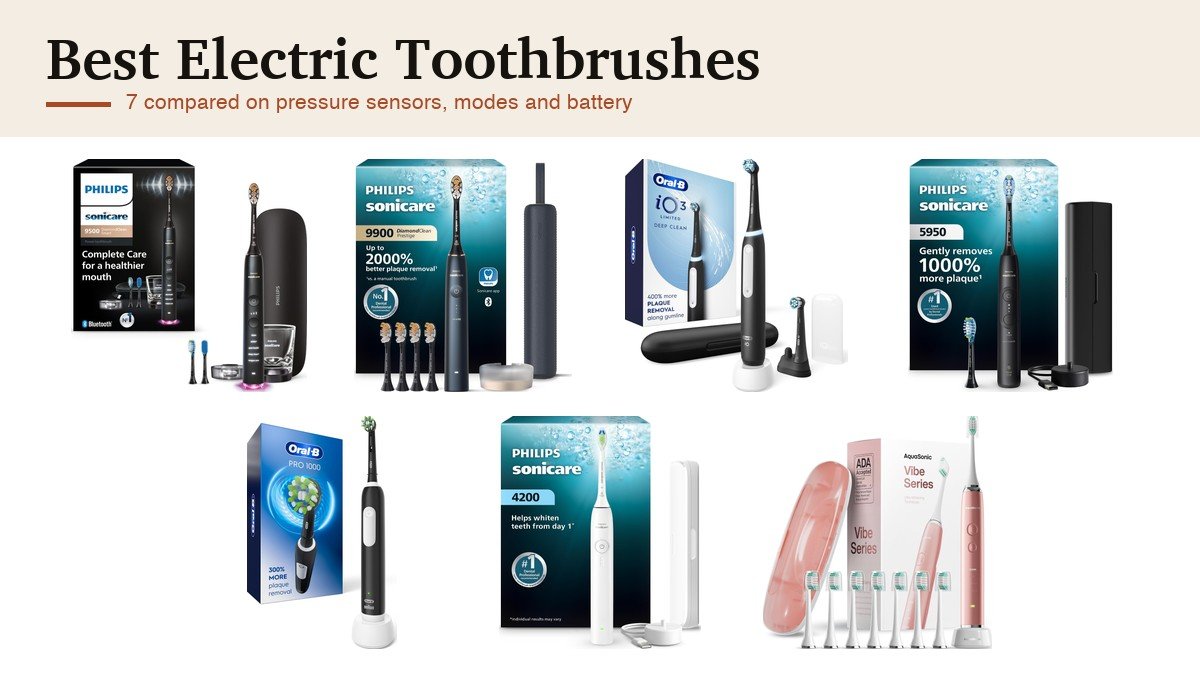
Shortlists of the best electric toothbrushes usually sort by price, which hides the only two decisions that change how your teeth feel. The first is whether the brush head oscillates in a circle or vibrates side to side. The second is whether the handle can tell you that you are pressing too hard, because pressing too hard is how people brush their gums back. Pressure control matters just as much between the teeth, which our water flosser roundup compares across countertop and cordless units.
The American Dental Association is blunt about the first question. Its guidance on toothbrushes lists side-to-side, counter oscillation, rotation oscillation, circular and ultrasonic movements as the motions powered brushes use, and declines to rank them. What it does commit to is softer: soft bristles, two minutes twice a day, and a new head every three to four months. Every brush below meets the two-minute part with a timer. They differ on the pressure sensor, the number of modes, and how long the battery lasts between charges.
Best Electric Toothbrushes Compared on Motion, Sensors and Battery
Read the motion column first, because it decides what the brush feels like in your mouth, and the sensor column second, because it decides what the brush stops you doing. Settings counts are quoted the way each maker quotes them, which means modes multiplied by intensity levels on the Sonicare side and plain modes on the Oral-B side.
| Toothbrush | Brush motion | Settings | Pressure sensor | Battery between charges |
|---|---|---|---|---|
| Philips Sonicare DiamondClean 9500 | Sonic, 62,000 bristle movements per minute | 15 (5 modes, 3 intensities) | Light ring at the base | Up to 14 days |
| Philips Sonicare 9900 Prestige | Sonic, 62,000 bristle movements per minute | 15 (5 modes, 3 intensities) | SenseIQ, adjusts power automatically | Up to 14 days |
| Oral-B iO Series 3 | Oscillating round head with micro-vibrations | 3 modes | Smart pressure sensor with light ring | Lithium-ion, not quoted in days |
| Philips Sonicare 5950 | Sonic with Fluid Action | 6 (2 modes, 3 intensities) | Haptic pulse when you press hard | Up to 21 days |
| Oral-B Pro 1000 | Oscillating round head | 3 modes | Stops pulsations when you press hard | Not quoted in days |
| Philips Sonicare 4200 | Sonic, 31,000 bristle movements per minute | 3 intensities, one mode | Optic sensor, vibrates to warn you | Up to 14 days |
| Aquasonic Vibe Series | Sonic, 40,000 vibrations per minute | 4 modes | None | Wireless charging, weeks per charge |
A Pressure Sensor Is the Feature Worth Paying For
Gum recession does not grow back. That single fact is why the pressure sensor, and not the mode count, is the feature that separates a brush worth keeping for five years from one you will replace out of irritation. The ADA recommends soft bristles specifically because they reduce the risk of abrading the gums, and a sensor is the only part of an electric toothbrush that enforces the same idea on the person holding it.
The implementations differ more than the marketing suggests. Oral-B uses a visible ring that turns red, and on the Pro 1000 the handle simply stops pulsing. Philips splits into three approaches: a light ring on the DiamondClean 9500, a haptic pulse you feel through the handle on the 5950, and on the 9900 Prestige a system that reads pressure, motion and coverage up to 100 times a second and quietly turns the power down instead of telling you off. The last one is the only sensor here that corrects the brushing rather than reporting it.
One brush below has no sensor at all. That is the trade you make at the bottom of the range, and it is worth knowing before you buy rather than after. The NIH guidance on oral hygiene is a reasonable place to start if you are switching from a manual brush and are not sure what you are doing wrong.
1. Philips Sonicare DiamondClean 9500: The Most Complete Sonicare
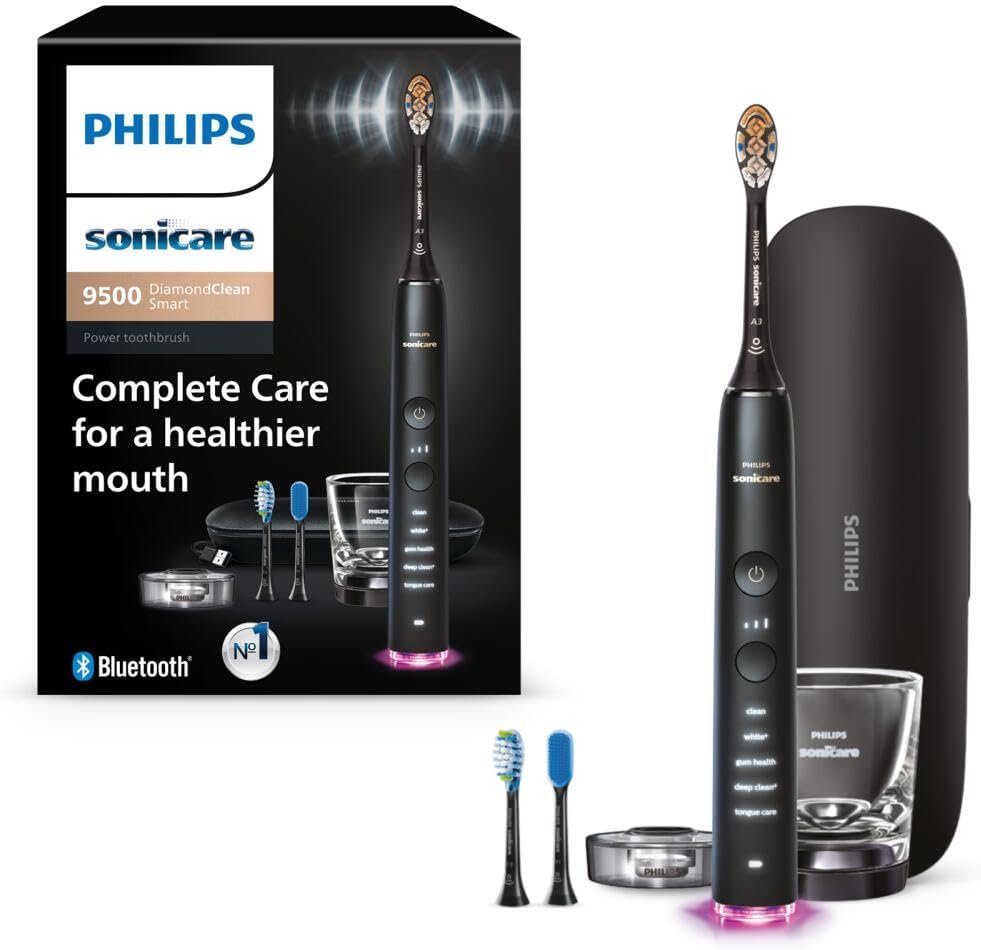
The DiamondClean 9500 is the Sonicare that stops you wanting the next one up. Five modes, three intensity levels each, and a pressure light ring at the base of the handle that is visible in a bathroom mirror rather than hidden under your thumb. Philips rates the motor at 62,000 bristle movements per minute and pairs it with Fluid Action, which is the company’s name for driving water between the teeth rather than relying on bristle contact alone.
The modes are the part people actually use. Clean is the default, White+ exists for coffee drinkers, Gum Health is the one to switch to after a cleaning or a procedure, Deep Clean+ is a longer cycle before a dental appointment, and Tongue Care is a separate 20 second routine. The box includes two different heads, an A3 Premium All-in-One and a C3 Premium Plaque Control, so you can find out which bristle pattern suits you without buying a second pack.
What it does well
- Pressure light ring sits at the base of the handle where you can see it.
- Five modes and three intensities cover sensitivity, staining and post-procedure care.
- Up to 14 days of brushing per charge, and the travel case charges over USB.
- Two different brush head types in the box rather than two of the same.
What to know before buying
- The app is optional, and skipping it costs you nothing the brush does not already do.
- Replacement Sonicare heads are among the more expensive on the shelf.
- Fifteen settings is more than most people will ever cycle through.
2. Philips Sonicare 9900 Prestige: The Sensor That Corrects You
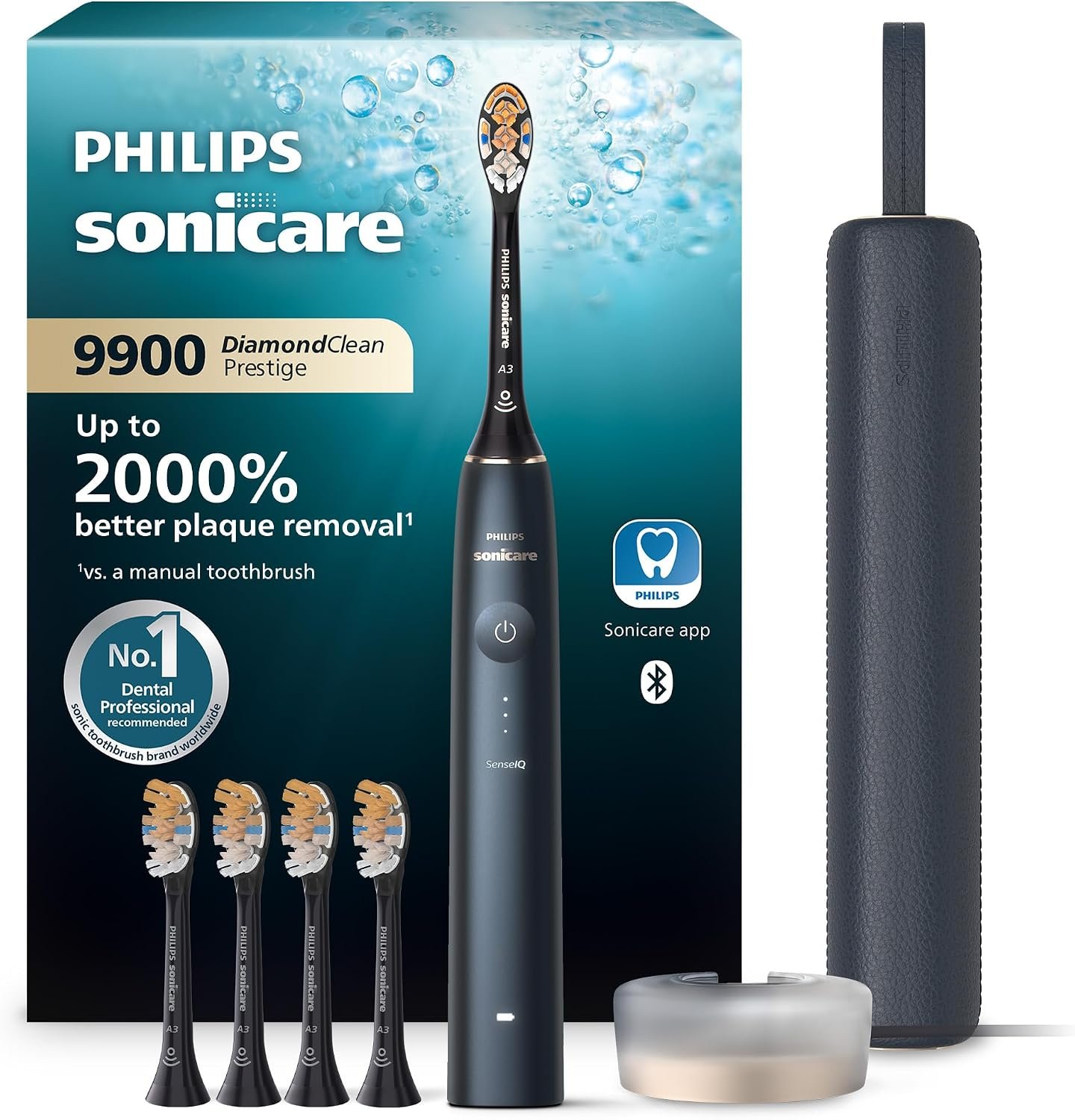
The 9900 Prestige runs the same 62,000 bristle movements per minute as the DiamondClean 9500 and offers the same 15 settings, so on a spec sheet the two look like the same brush at different prices. The difference is SenseIQ, which reads pressure, motion and coverage up to 100 times a second and lowers the intensity itself when you lean on it.
That changes who the brush is for. A light ring tells you that you pressed too hard a moment after you did it, and relies on you to respond. SenseIQ simply reduces the power while you carry on. If you are buying for someone with receding gums, sensitivity, or a habit of scrubbing that has survived years of being told to stop, this is the one feature on this page that works whether or not the person pays attention. Five brush heads ship in the box, which is more than any other brush here.
What it does well
- SenseIQ adjusts power automatically instead of waiting for you to react.
- Five brush heads in the box, the largest bundle in this guide.
- Sensitive and Deep Clean+ modes cover both post-procedure care and a pre-appointment clean.
- Up to 14 days per charge with a charging travel case included.
What to know before buying
- The most expensive brush in this guide by a clear margin.
- Shares its motor and mode count with the cheaper DiamondClean 9500.
- Automatic intensity control can feel like the brush is fading mid-stroke.
3. Oral-B iO Series 3: The Cheapest Way Into the iO Range
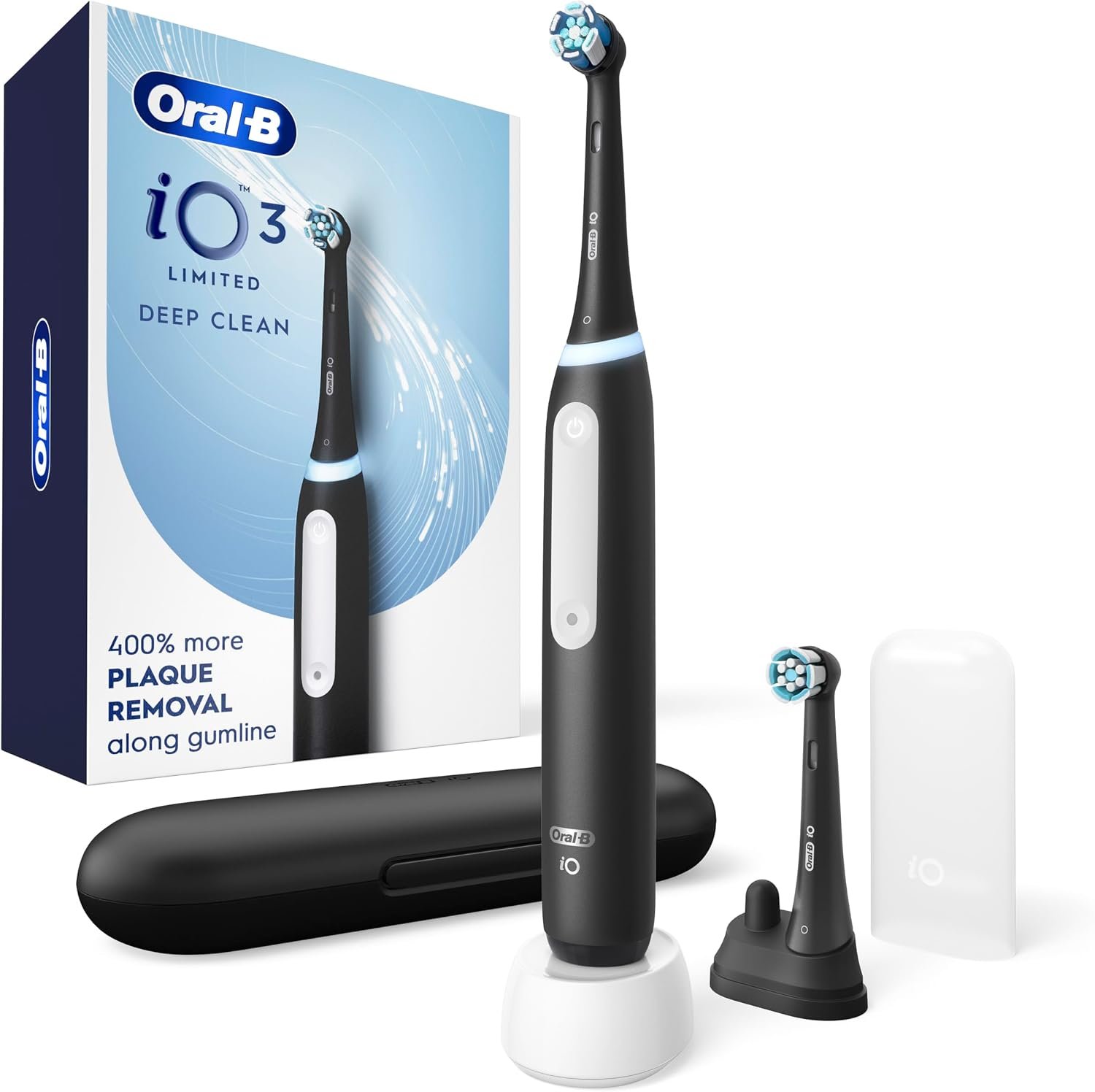
Oral-B’s iO line replaced the loud, buzzy feel that put people off the brand with a round head that spins smoothly and adds micro-vibrations. The iO Series 3 is the entry point, and it keeps the two things that make the range worth having: the quieter drive, and a smart pressure sensor with a light ring above the handle.
You get three modes, Daily Clean, Sensitive and Whitening, which is the right number for a brush at this level. The round head is the real argument here. It wraps a single tooth at a time, which suits anyone who brushes methodically, and it reaches behind the back molars in a way a larger rectangular sonic head does not. Two replacement heads and a travel case come in the box.
What it does well
- Round oscillating head wraps individual teeth and reaches the back molars.
- Smart pressure sensor with a visible light ring, not just a stall in the motor.
- Much quieter than Oral-B’s older non-iO handles.
- Two replacement heads and a travel case included.
What to know before buying
- Three modes, where the higher iO handles offer five or seven.
- Oral-B does not quote battery life in days for this model.
- iO replacement heads do not fit older Oral-B handles.
4. Philips Sonicare 5950: Twenty-One Days Between Charges
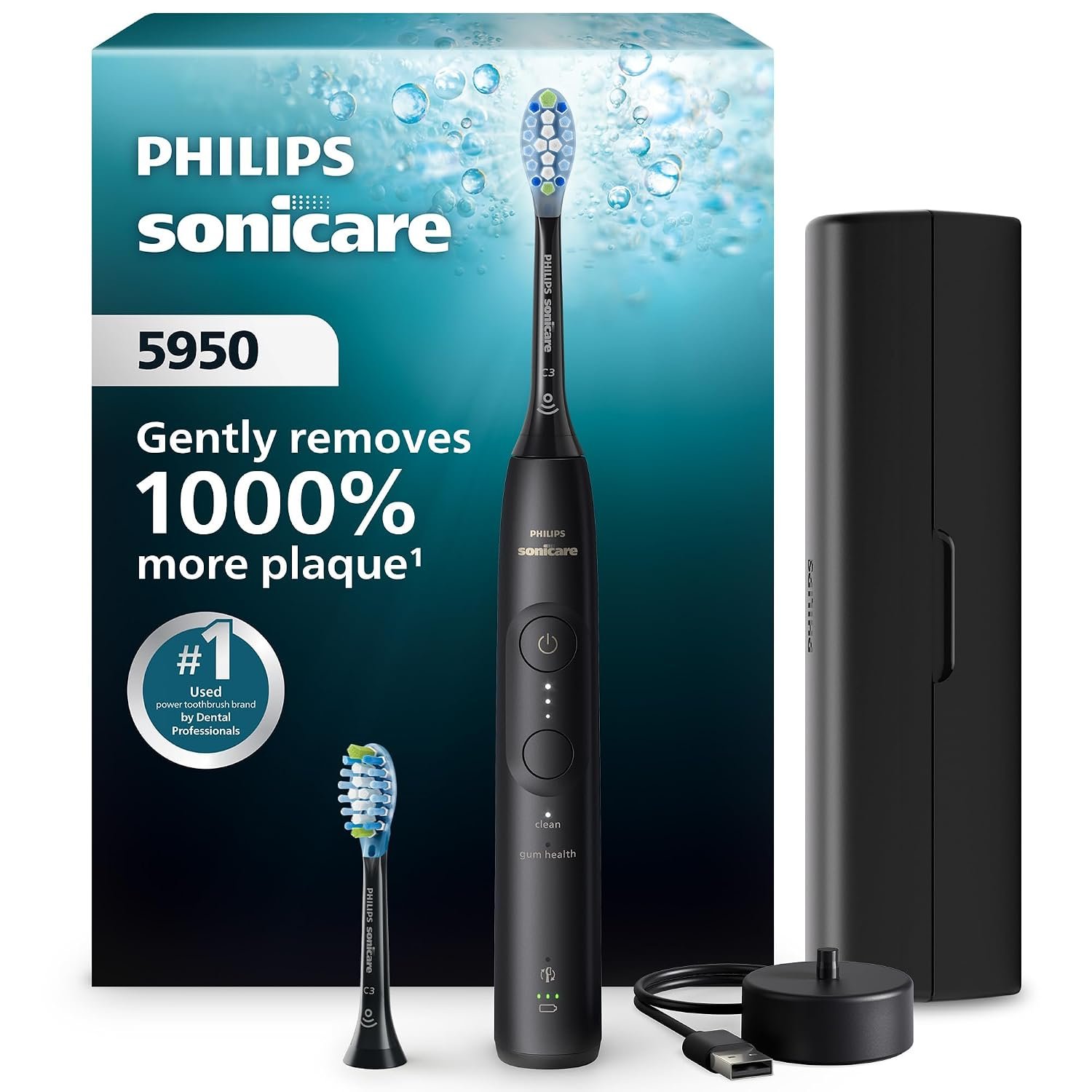
The 5950 is the brush to buy if the charger annoys you. Philips rates it at up to 21 days of regular brushing on one charge, which is a week longer than the two flagships above and long enough that a fortnight away does not need the charging base in the bag.
The pressure sensor here is haptic rather than visual. Press too hard and the handle pulses against your palm, which works when your eyes are shut or the bathroom light is off. Settings are kept to six, two modes at three intensities, with Gum Health as the gentler option. The C3 brush head in the box combines gumline bristles with a stiffer, denser centre, so it does the job of two heads at once.
What it does well
- Up to 21 days per charge, the longest in this guide.
- Haptic pressure feedback works without looking at the handle.
- BrushPacer prompts a new quadrant every 20 seconds rather than every 30.
- Two-in-one C3 head covers the gumline and the tooth surface.
What to know before buying
- Two modes only, so no dedicated whitening cycle.
- No light ring, which some people prefer to a vibration.
- A soft case rather than a hard shell on some colours.
5. Oral-B Pro 1000: The Plainest Brush Worth Owning
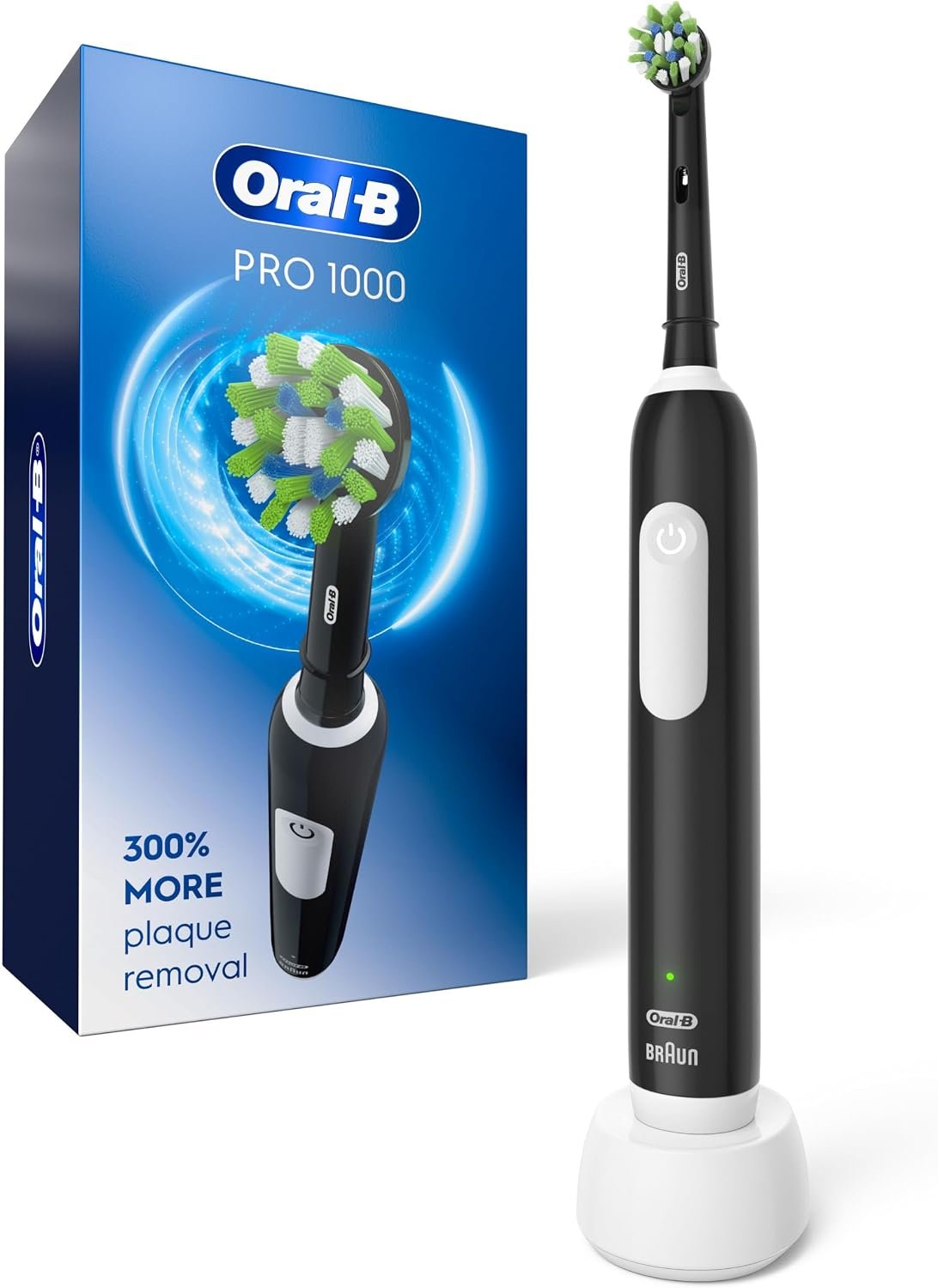
The Pro 1000 has outlasted several generations of more interesting toothbrushes by doing the basics and nothing else. A round oscillating head, three cleaning modes including a sensitive setting, a quadrant timer that signals every 30 seconds, and gum pressure control that stops the pulsations when you lean in.
What you give up is the iO line’s smoother drive and its light ring. What you keep is the thing that matters: the brush will physically stop pulsing rather than let you scrub. It is also the easiest handle here to replace heads for, because standard Oral-B heads have been sold in every supermarket for two decades and cost a fraction of what the iO and Sonicare equivalents do.
What it does well
- Gum pressure control stops the pulsations instead of just warning you.
- Standard Oral-B heads are cheap and sold almost everywhere.
- Quadrant timer every 30 seconds keeps the two minutes honest.
- LED charge indicator tells you when it needs the base.
What to know before buying
- Noticeably louder and buzzier than the iO handles.
- No light ring, no app, no display of any kind.
- Oral-B does not quote a battery figure in days.
6. Philips Sonicare 4200: One Mode, and a Gentle Way Off a Manual Brush
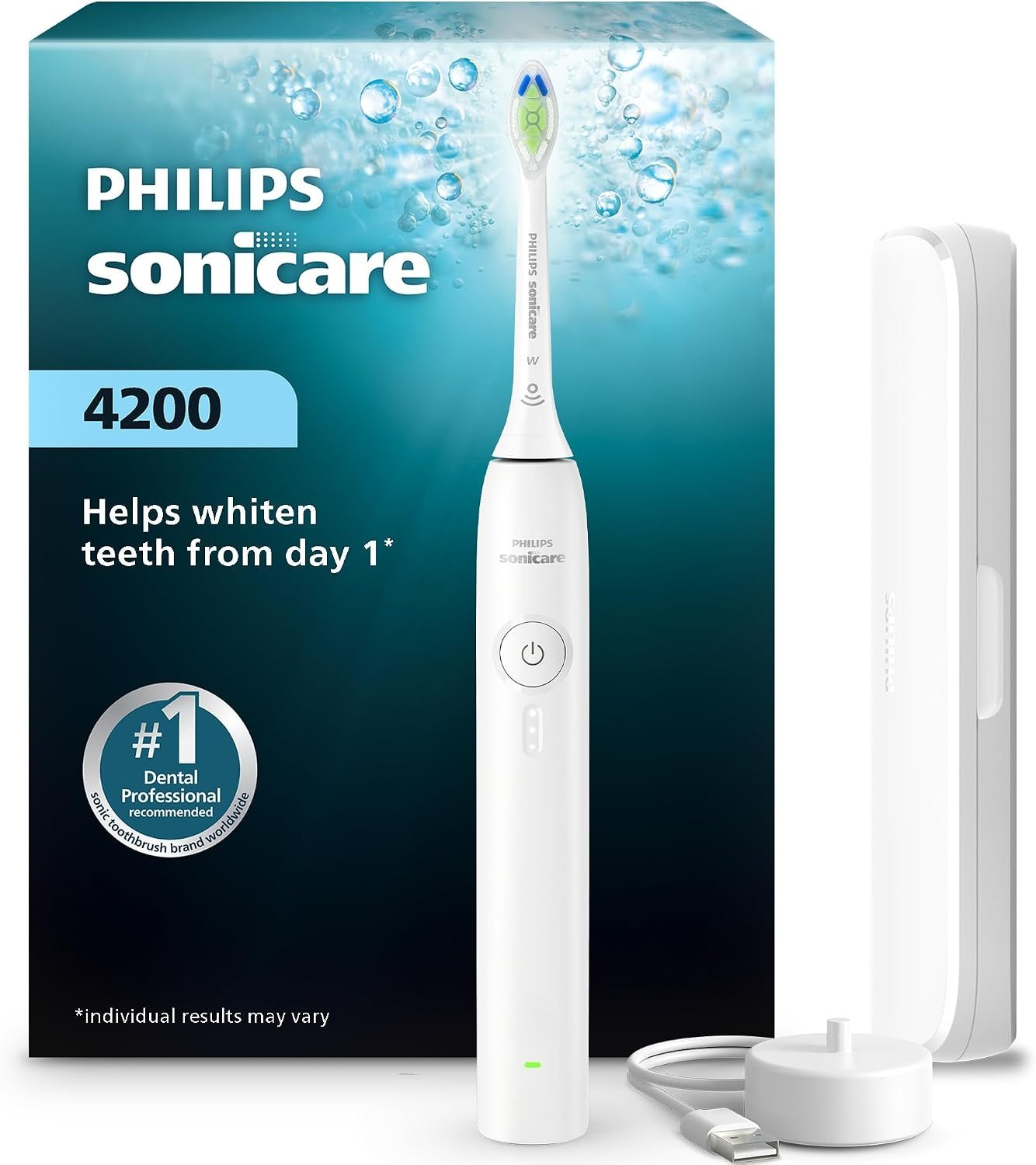
The 4200 runs at 31,000 bristle movements per minute, roughly half the flagship figure, and offers one cleaning mode at three intensities. For a first electric toothbrush that is the right shape of product. There is nothing to configure and nothing to get wrong.
The feature that earns it a place is EasyStart, which raises the brushing power gradually over your first 14 cleans instead of putting a full-strength sonic brush against gums that have only ever met nylon and hand pressure. An optic pressure sensor vibrates to warn you, a QuadPacer prompts a new area every 30 seconds, and the SmartTimer closes the session at two minutes. Check the box contents before you buy, because Philips ships this one with a charging stand but no mains adaptor.
What it does well
- EasyStart ramps the power up over the first 14 brushing sessions.
- Pressure sensor at a price where most brushes have none.
- One mode and three intensities, so nothing to learn.
- Up to 14 days per charge with a travel case included.
What to know before buying
- The mains power adaptor is not in the box.
- Half the bristle movements of the DiamondClean 9500 and 9900 Prestige.
- No whitening or gum care cycle to switch to later.
7. Aquasonic Vibe Series: Eight Heads and a Wireless Charger
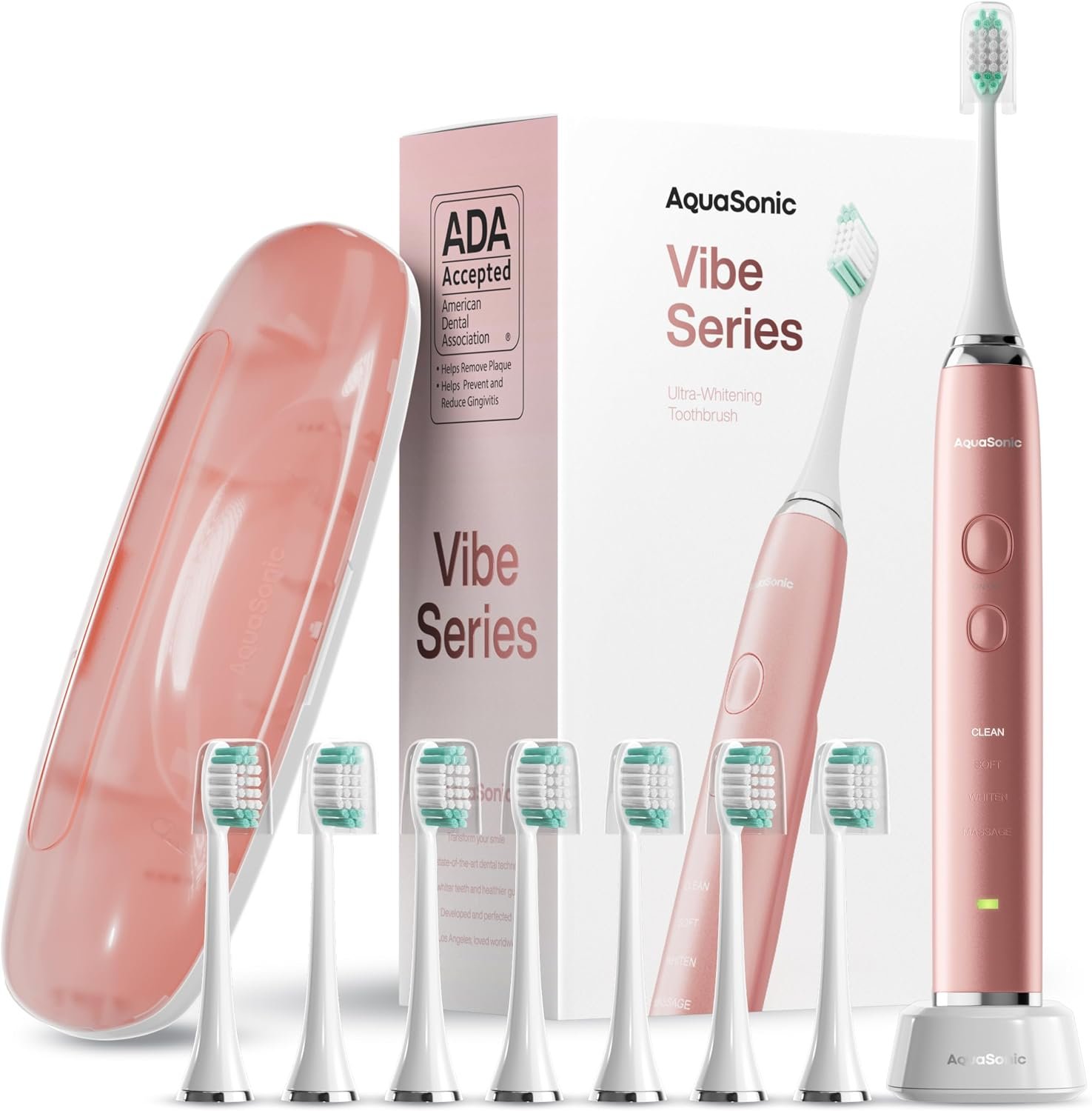
The Vibe Series is the budget pick, and it competes on what is in the box rather than on the handle. Eight DuPont brush heads, a hard travel case and a wireless charging base, at a point in the range where the big two brands give you one head and a plug. Aquasonic sells it as ADA Accepted and prints the seal on the packaging; the ADA Seal of Acceptance is awarded for evidence of safety and effectiveness rather than for a particular motor.
The motor runs at 40,000 vibrations per minute across four modes, with a timer that prompts every 30 seconds and shuts off at two minutes. The omission to be clear about is the pressure sensor: there is not one. If you are buying for a heavy-handed brusher, buy the 4200 instead. If you are buying a second handle for a guest bathroom, a travel brush, or a teenager who loses things, eight heads for the price of one Sonicare pack is a straightforward argument.
What it does well
- Eight brush heads in the box, enough for roughly two years of replacements.
- Wireless charging base rather than a pronged stand.
- Four modes and a 30 second quadrant timer.
- Hard travel case included at the bottom of the price range.
What to know before buying
- No pressure sensor, which is the one feature worth paying up for.
- Brush heads are proprietary to Aquasonic.
- Vibrations per minute and bristle movements per minute are not the same measure, so the 40,000 figure does not line up against the Sonicare numbers.
Oscillating or Sonic: Which Motion to Pick
Oral-B’s round heads oscillate, rotating back and forth around a single tooth. Philips and Aquasonic heads are larger and vibrate side to side at high frequency, moving fluid as much as bristles. The ADA does not say one beats the other, so the honest way to choose is by how you already brush.
- Pick an oscillating round head if you brush tooth by tooth, have crowded teeth, or struggle to reach behind the back molars.
- Pick a sonic head if you sweep along the gumline, wear braces or a retainer, or dislike the sensation of a spinning head.
- Pick either with a pressure sensor if anyone has ever told you that you brush too hard.
- Replace the head every three to four months whichever you choose, or sooner once the bristles splay.
Travel matters more than people expect, because a brush that cannot be charged on a trip gets left behind and the habit breaks with it. Every model here except the Pro 1000 ships with a case, and if you are packing one into a carry-on it is worth checking the carry-on size limits your airline applies. A toothbrush with a lithium-ion battery travels in the cabin, not the hold, which is the same rule that governs a portable power bank.
Which of These Electric Toothbrushes to Buy
If you want one recommendation and no further reading, the Sonicare DiamondClean 9500 is the brush that covers the most situations: a visible pressure ring, modes for staining and for sensitive gums, and two weeks of battery. The 9900 Prestige is worth the step up only for a specific reason, which is a brusher who will not respond to a warning light and needs the handle to back off on its own.
For a first electric brush, the Sonicare 4200 and its EasyStart ramp is the gentlest way across, and the Oral-B iO Series 3 is the pick if you prefer a round head and want the pressure sensor that comes with it. The Pro 1000 remains the sensible plain choice when cheap replacement heads matter more than a quiet motor. The 5950 wins on battery alone at 21 days. The Aquasonic Vibe is the one to buy as a spare rather than as your only brush, because of the missing sensor. Whichever you pick, the two minutes twice a day does more work than the handle does, which is an argument for building it into a fixed morning routine rather than relying on willpower. The same argument covers the other appliance used every morning, which our guide to the best electric kettles works through.
Frequently Asked Questions
Are electric toothbrushes better than manual ones?
The ADA says both manual and powered toothbrushes remove plaque effectively, and does not declare a winner. It notes that powered brushes can help people with limited dexterity or with dental appliances. The practical advantage is the built-in timer and the pressure sensor, which make it harder to brush badly.
How often should I replace the brush head?
Every three to four months, or sooner if the bristles become matted or frayed. Several brushes here track how long and how hard you have been brushing and prompt you when a head is due, but the visual check is the reliable one.
Does a pressure sensor really matter?
It is the feature most worth paying for. Brushing too hard abrades the gums, and gum recession does not reverse. A sensor is the only part of the brush that intervenes at the moment it happens, which is why the one model here without one is the one to treat as a spare.
Do more cleaning modes make a difference?
Only two of them see regular use for most people: a standard clean and a gentler setting for sensitive gums or the days after dental work. Fifteen settings is a reason to buy a brush if you want a whitening or deep clean cycle, and no reason at all if you do not.
Related Articles
- TSA Liquid Rules: What the 3-1-1 Limit Covers and What It Does Not
- How to Clean AirPods the Way Apple Actually Says To
- How to Clean a Computer Screen Without Damaging the Coating
As an Amazon Associate, CanyonWire earns from qualifying purchases.