Microfiber cleaning cloths all look the same in a photograph and behave very differently in a kitchen. The variables that matter are the weave, the weight and how many you get, and almost no listing explains any of them.
Seven packs are compared below, from a twelve-pack of general-purpose cloths to a set made specifically for glass. Pack sizes and dimensions come from the current listings, and the section on weave explains why two cloths that feel identical leave very different results on a window. A tablet screen wants the glass cloth, and our guide to the best iPad Air cases covers what goes round the rest of it.
| # | Pack | Count | Size | Best for |
|---|---|---|---|---|
| 1 | MR.SIGA Streak Free | 12 | General purpose | An all-round first pack |
| 2 | AIDEA 50-Pack | 50 | 12 x 12 in | Stocking a whole house |
| 3 | HOMEXCEL 12-Pack | 12 | 11.5 x 11.5 in | A small, cheap starter set |
| 4 | Orighty 24-Pack | 24 | 12 x 11 in | Bulk without going to fifty |
| 5 | AIDEA Black 12-Pack | 12 | 12 x 12 in | Dark cloths that hide stains |
| 6 | MR.SIGA Ultra Fine for Glass | 6 | Glass and mirrors | Windows and mirrors only |
| 7 | TEAWOO 10 Colours | 10 | Assorted colours | Colour-coding by room |
Buy more than you think you need. Microfiber only works while it is clean and dry, so a realistic kitchen gets through three or four cloths in a single session. A twelve-pack is a starting point, not a year’s supply. Bedding is the other thing worth considering, which our guide to the best personal lubricants covers under non-staining formulas.
1. MR.SIGA Streak Free: Best All-Round First Pack
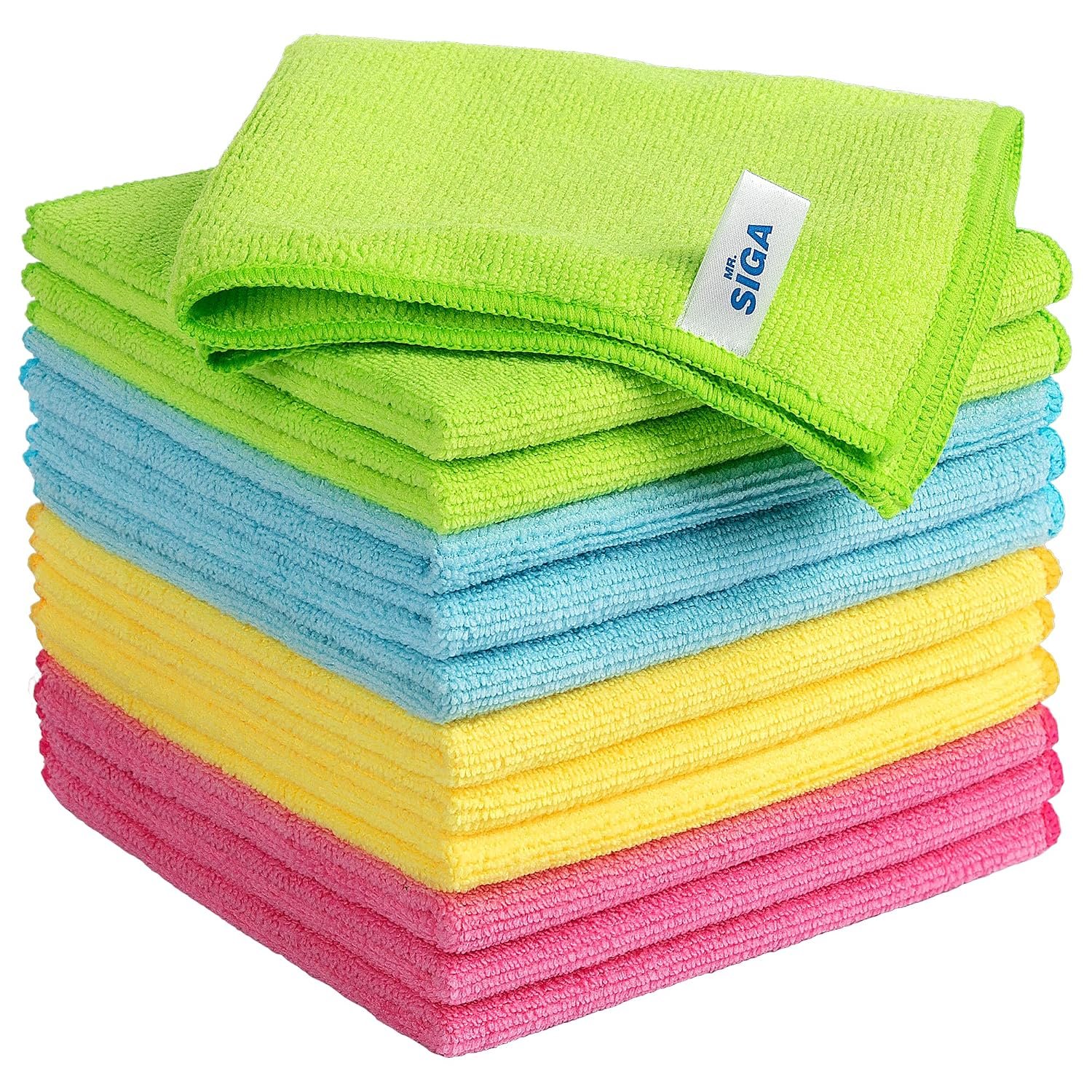
If you are buying one pack and want to stop thinking about it, this is the one. Twelve general-purpose cloths described as ultra soft and scratch free, which is the combination that matters on glass hobs, stainless steel and painted surfaces.
Streak-free is a claim worth testing on a mirror rather than taking on faith, and it depends as much on technique as on the cloth: a damp cloth followed by a dry one beats a single wet cloth every time.
- Good for: a first pack that handles most surfaces in a house.
- Watch: general-purpose cloths are a compromise; dedicated glass cloths do windows better.
2. AIDEA 50-Pack: Best for Stocking a Whole House
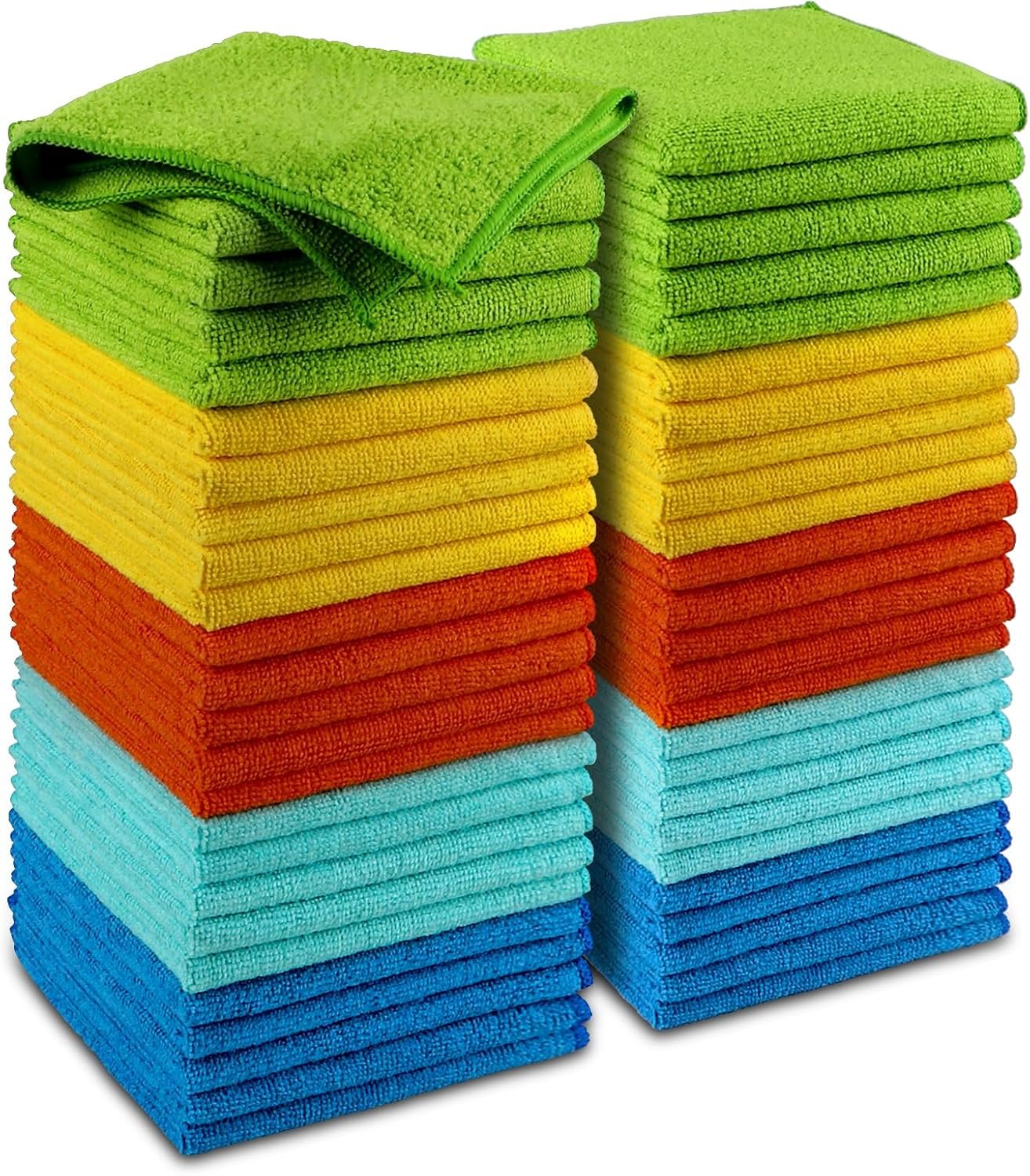
Fifty 12 by 12 inch cloths is enough to keep a clean supply in the kitchen, the bathroom, the car and the garage without ever washing them mid-job. That is the real argument for buying in bulk.
AIDEA describes them as washable and reusable hundreds of times and effective with plain water, which is the property that makes microfiber worth using at all: the fibres lift dirt mechanically rather than needing a chemical to dissolve it.
- Good for: never running out, and keeping separate cloths for separate rooms.
- Watch: fifty cloths is a lot of laundry if you do not sort them by task.
3. HOMEXCEL 12-Pack: Best Cheap Starter Set

At 11.5 by 11.5 inches these are slightly smaller than the 12-inch standard, which is barely noticeable in the hand and does reduce the price. For a first pack to find out whether you will actually use microfiber, that is a sensible trade.
Smaller cloths fold into quarters that are a little tighter, which some people prefer for detail work around taps and handles.
- Good for: trying microfiber without committing to a fifty-pack.
- Watch: the smaller size covers slightly less surface per fold.
4. Orighty 24-Pack: Best Middle-Sized Bulk Buy
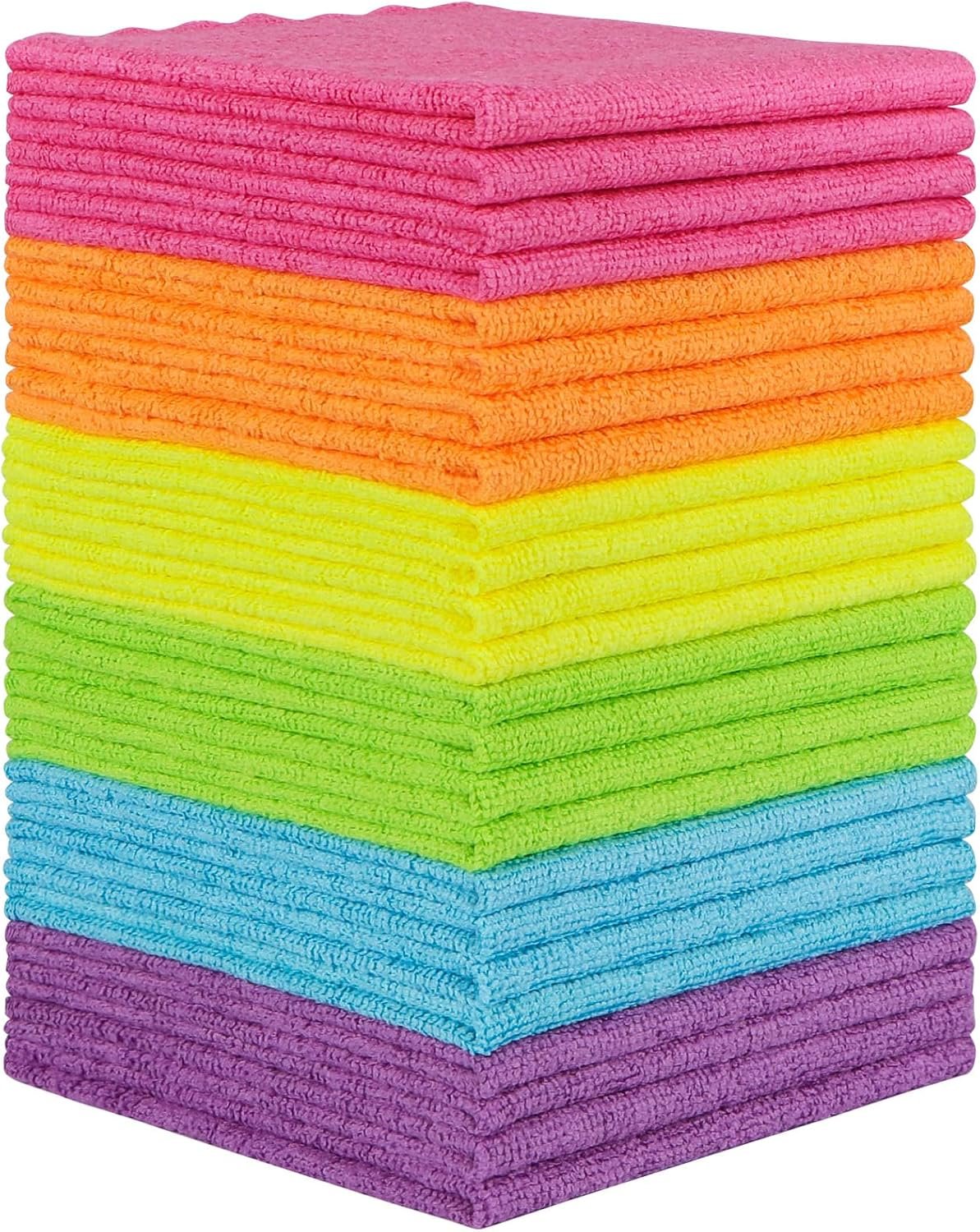
Twenty-four cloths at 12 by 11 inches is the sensible middle ground between a starter twelve-pack and a fifty-pack that fills a drawer. Enough to keep clean cloths in two or three rooms at once.
The practical benefit of this quantity is that you stop rationing them. Using a fresh cloth rather than wringing out a dirty one is the difference between cleaning a surface and redistributing what was on it.
- Good for: a realistic household quantity without excess.
- Watch: the listing gives little detail beyond the material, so treat claims cautiously.
5. AIDEA Black 12-Pack: Best for Hiding Stains
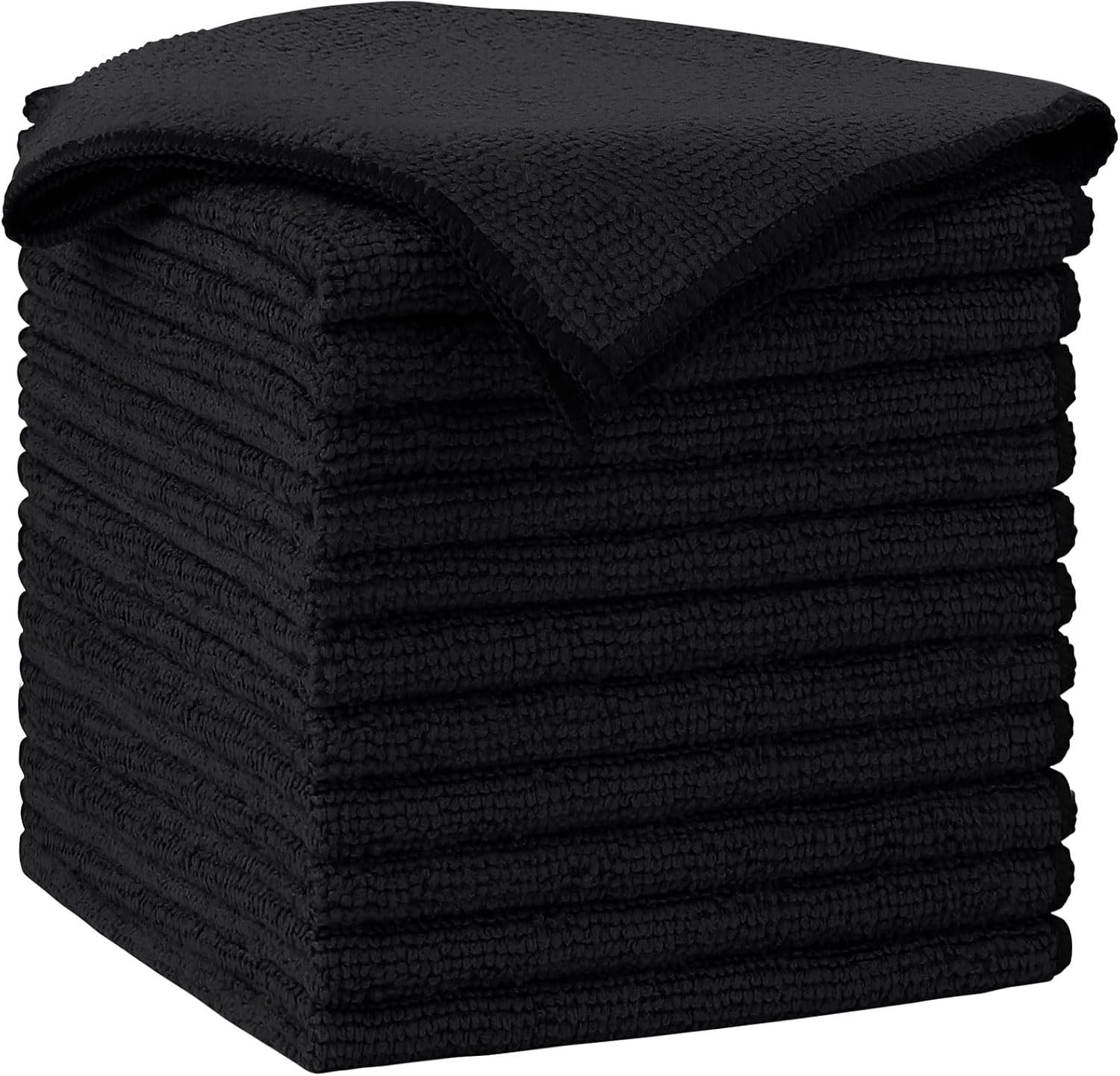
Black cloths at 12 by 12 inches, which solves a specific irritation: white and pastel microfiber looks permanently filthy after a few months even when perfectly clean, and people throw away cloths that still work.
Black is also the sensible colour for anything involving grease, shoe polish, engine bays or hair dye, where staining is guaranteed and cosmetic. Car glass is the other job worth a dedicated cloth, because the cameras in our guide to the best dash cam only see what the windscreen lets through.
- Good for: greasy jobs and anyone who bins cloths for looking dirty.
- Watch: dark cloths make it harder to see how much dirt you have actually lifted.
6. MR.SIGA Ultra Fine for Glass: Best for Windows and Mirrors
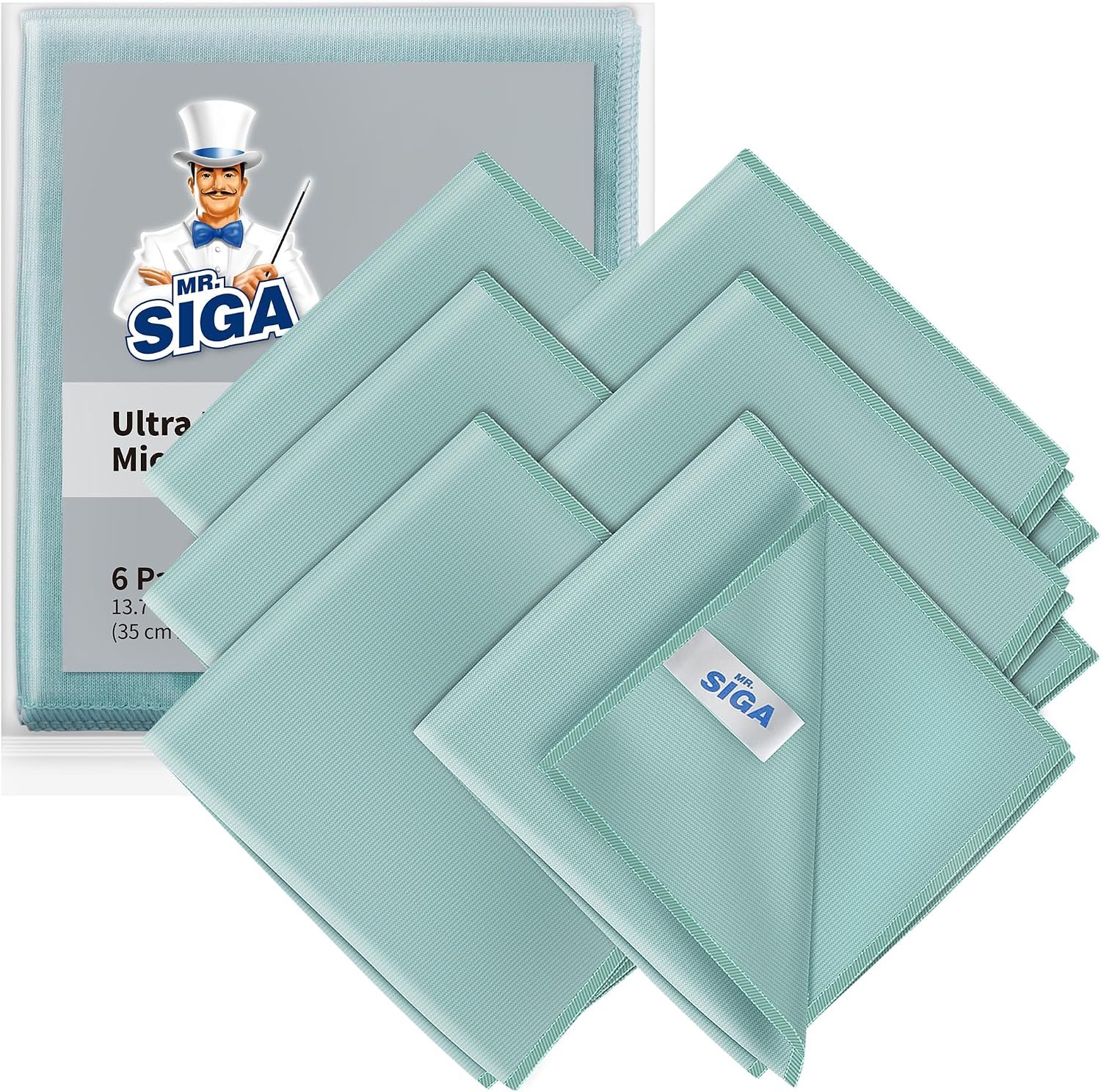
Glass is the one surface where a general-purpose cloth genuinely underperforms. This six-pack is made specifically for glass, windows and mirrors, and the listing describes it as lint free, non-abrasive and soft enough not to scratch.
The reason a dedicated glass cloth works better is contact area. Low-pile, tightly woven cloths glide instead of dragging and leave less behind, which is the whole streak problem in one sentence.
- Good for: mirrors, windows and glass hobs, with far fewer streaks.
- Watch: only six cloths, and they are too smooth to be good general scrubbing cloths.
7. TEAWOO 10 Colours: Best for Colour-Coding
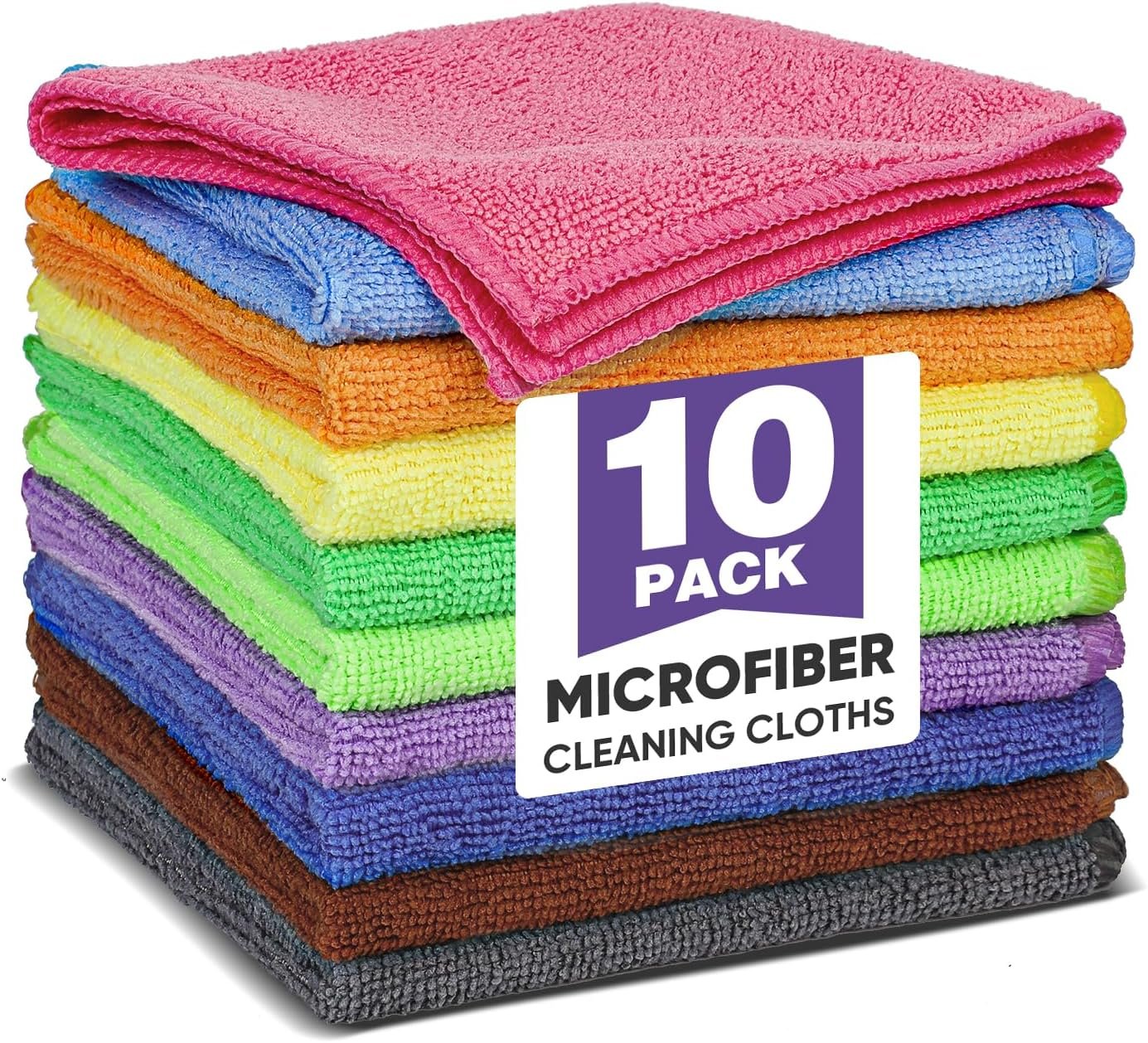
Ten cloths in ten colours, which sounds like a gimmick and is actually the most useful organising trick in domestic cleaning. Assign a colour per room and the bathroom cloth never touches a kitchen worktop.
Commercial cleaners have used colour-coded cloths for decades for exactly this reason. It costs nothing extra and removes the one genuine hygiene risk of reusable cloths.
- Good for: keeping bathroom, kitchen and glass cloths permanently separate.
- Watch: ten cloths is a small pack, so plan on a second one.
Weave Decides What a Cloth Is Good At
Two microfiber cloths of the same size and weight can behave completely differently, and the reason is the weave. Autofiber, which manufactures microfiber, sets out how the pile changes what a cloth does, and the distinctions carry straight over from car detailing to kitchens.
- Terry: the common all-purpose weave, medium to low pile, typically 200 to 400 gsm.
- Plush: high pile on both sides, gentle on delicate surfaces, 350 gsm and upwards.
- Low pile and tight weave: less drag, which is why these are the glass cloths.
- Suede: extremely low pile and lint free, which is what makes it right for lenses and screens.
Autofiber’s guide notes that weave and pile are separate from weight and blend, which is why a thick, heavy cloth is not automatically the better one. For a window you want less contact with the surface, not more.
How to Stop Ruining Microfiber in the Wash
Microfiber cleans by dragging dirt into millions of split fibres. Anything that coats those fibres destroys the cloth permanently, and most cloths are killed by laundry rather than by use.
- No fabric softener: it coats the fibres and stops them absorbing anything.
- No high heat: hot drying melts the polyester and flattens the pile.
- Wash separately: cotton sheds lint, which microfiber grabs and holds onto.
- Sort by job: keep greasy garage cloths away from glass cloths permanently.
Autofiber also publishes a guide to choosing a drying towel, which is worth reading if you clean a car as well as a kitchen.
Air drying is the safest option and costs nothing. A cloth treated this way lasts for hundreds of washes, which is what makes microfiber cheaper than paper towels over any reasonable timeframe. The same maths applies to portable power stations and most reusable kit: the upfront cost is not the real cost.
Which Microfiber Cloths to Buy
For most households, start with the MR.SIGA twelve-pack for general cleaning and add the ultra fine glass six-pack for windows and mirrors. Those two cover almost everything, and keeping them separate is what prevents streaks.
If you clean a whole house regularly, the AIDEA fifty-pack removes the temptation to reuse a dirty cloth. Add the TEAWOO colour set if more than one person cleans and cross-contamination is a real risk, and the black pack for anything greasy. Anyone cleaning a car as well should look at the heavier plush and waffle weave towels made for paintwork, which is a different category again, much as cars under 50k vary more by use than by badge.
Frequently Asked Questions
How many microfiber cloths do you need?
More than most people buy. A single kitchen clean uses three or four, because a cloth stops working once it is saturated or dirty. Twelve is a workable minimum for one room, twenty-four to fifty if you are cleaning a whole house and want clean cloths in each room.
Can you wash microfiber cloths with normal laundry?
Wash them separately. Cotton towels and clothes shed lint that microfiber traps and holds, which ruins the cloth for glass work. Skip fabric softener entirely, since it coats the fibres, and avoid high heat in the dryer. Air drying is the safest option.
Why do my microfiber cloths leave streaks on glass?
Usually the cloth is too thick, too wet or contaminated. High-pile general-purpose cloths drag on glass; a low-pile, tightly woven glass cloth glides. Use one damp cloth then a dry one, and never use a cloth that has been washed with fabric softener.
Do microfiber cloths work without cleaning products?
For most everyday dirt, yes. The fibres lift and hold dirt mechanically rather than dissolving it, and AIDEA states its cloths are effective with just plain water. Grease, burnt-on food and sanitising still need a product.
Related Articles
- Best Inventory Management Software: 8 Compared
- Best Team Communication Tools: 7 Chat Apps Compared
- Best Note Taking Apps: 7 Compared on App Store Ratings
- How to Clean a Computer Screen Without Wrecking the Coating
- TSA Liquid Rules: What 3-1-1 Actually Allows and What It Does Not
As an Amazon Associate, CanyonWire earns from qualifying purchases.