The right indoor plants for your home depend first on light, not looks. A snake plant will sulk in a sunny window far less than a jade plant will in a dark hallway, so the 15 easy houseplants below are grouped by the light they need: seven for low light, six for medium light and two for a bright, sunny window.
Each entry gives the watering rhythm, temperature range and size from Clemson Extension and other university growing guides, plus whether the ASPCA lists it as toxic to pets. Start by working out which kind of light you have.
How to Tell Whether a Room Has Low, Medium or Bright Light
Clemson Extension notes that even a well-lit room is often under 100 foot-candles, against more than 10,000 outdoors on a clear day. Window direction is the quickest guide:
- South windows: the brightest light, with several hours of direct sun. Jade and aloe belong here.
- West windows: medium light with strong late-day sun.
- East windows: low to medium light with gentle morning sun, ideal for a rubber plant.
- North windows: the lowest light and no direct sun, fine for cast iron plant and parlor palm.
- Interior rooms and hallways: low light; more than 8 feet from a window counts as low.
Clemson’s rule of thumb is that about 100 foot-candles for 12 hours a day only maintains a plant, and it needs at least 200 before fertilizer makes a difference. A free light-meter app on a phone gives a useful reading.
Indoor Plants Care Chart: Light, Water, Temperature and Pets
| # | Plant | Light | Water | Temperature | Pets |
|---|---|---|---|---|---|
| 1 | Snake plant | Low | Every 2-4 weeks | Down to about 50 F | Toxic |
| 2 | ZZ plant | Low | 1-2 times a month | Above 60 F | Toxic |
| 3 | Cast iron plant | Low | When 2-3 in dry | Minimum 50 F | Non-toxic |
| 4 | Chinese evergreen | Low | Top 1-2 in dry | 68-80 F | Toxic |
| 5 | Heartleaf philodendron | Low | Slightly moist | 65-85 F | Toxic |
| 6 | Pothos | Low | Top 1.5-2 in dry | 60-85 F | Toxic |
| 7 | Parlor palm | Low | Dry slightly | Minimum 60 F | Non-toxic |
| 8 | Spider plant | Medium | Top 1-2 in dry | 50-75 F | Non-toxic |
| 9 | Peace lily | Medium | Moist, not soggy | 60-85 F | Toxic |
| 10 | Rubber plant | Medium | Dry slightly | 60-80 F | Toxic |
| 11 | Monstera | Medium | Top quarter dry | 60-85 F | Toxic |
| 12 | Boston fern | Medium | Barely moist always | 50-72 F | Non-toxic |
| 13 | Prayer plant | Medium | Evenly moist | Above 60 F | Non-toxic |
| 14 | Aloe vera | Bright | Dry completely | Minimum 40 F | Toxic |
| 15 | Jade plant | Bright | Dry between in winter | 50-75 F | Toxic |
Low-Light Indoor Plants for Dim Rooms
Most houseplants come from the shaded floor of tropical forests, and these seven cope best with the least light. In a dim room they grow slowly, so they also need less water.
1. Snake Plant: Water It Once a Month
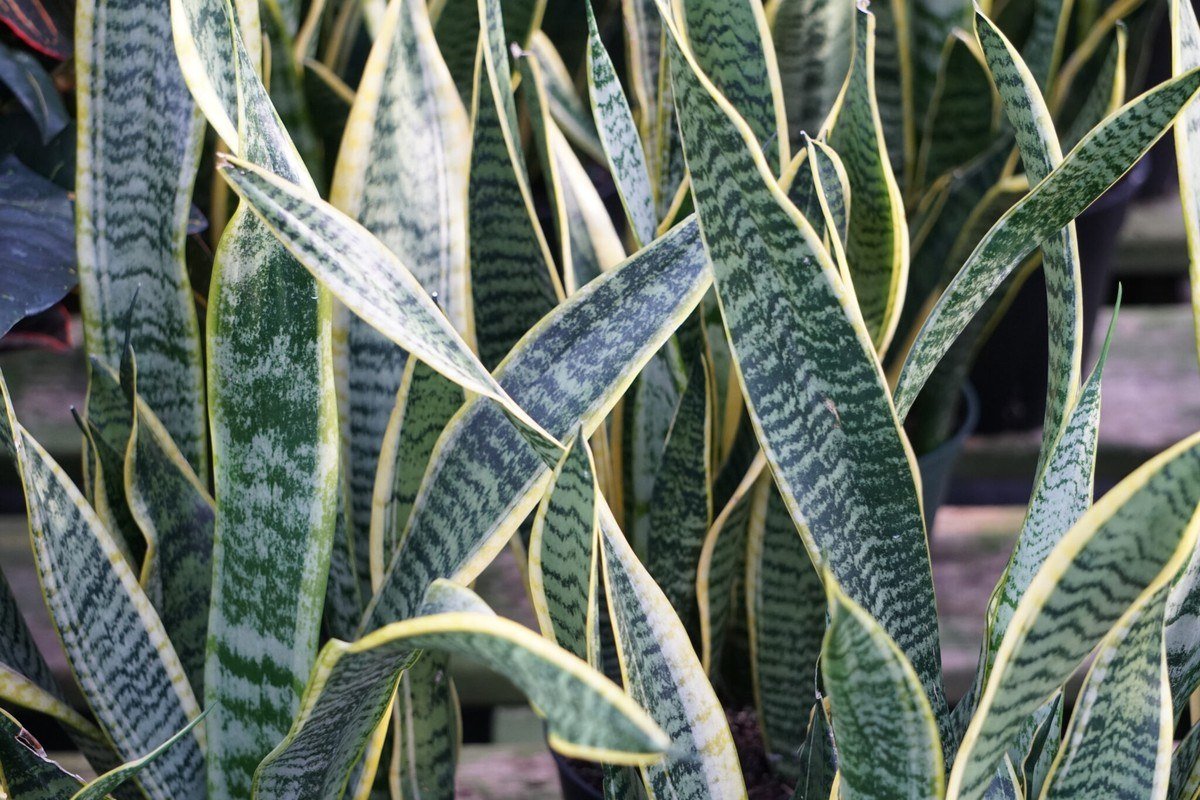
Water every 2-4 weeks in summer, 4-6 in winter | Size: often 2 ft indoors | Pets: toxic (ASPCA)
Snake plant handles low light, low humidity and temperatures down to about 50 degrees Fahrenheit, which is why NC State calls it difficult to kill. Its sword-shaped leaves come in cultivars such as ‘Laurentii’ with yellow edges and ‘Hahnii’, a dwarf rosette.
The one way to kill it is with kindness. Clemson singles it out as prone to rotting when overwatered, and the more light it gets, the more water it uses. Plant it in a clay pot that is wider than it is tall so the heavy leaves do not tip it over.
2. ZZ Plant: Happy Under Office Lights

Water 1-2 times a month once fully dry | Keep above 60 F | Size: 2-4 ft | Pets: keep away
Native to eastern Africa, the ZZ plant stores water in thick rhizomes under the soil. NC State notes it grows even in spaces lit only by fluorescent fixtures, though it does best in bright indirect light and scalds in direct sun.
Clemson suggests a fast-draining mix of half peat or coir potting soil, a quarter perlite and a quarter sand. Look for ‘Raven’, which matures nearly black, or the 10 to 12 inch ‘Zenzi’ for a shelf. Its sap contains calcium oxalate, so keep it out of reach of pets.
3. Cast Iron Plant: For the Darkest Corner

Water when dry 2-3 in down | Minimum 50 F in winter | Size: 2-3 ft | Pets: non-toxic (ASPCA)
The cast iron plant grows slowly in a north window or a dim corner where little else survives, and it does not need humid air. Variegated forms like this one carry thin cream stripes.
Keep it away from south windows, since direct sun bleaches and scorches its leaves. Water only when the soil is dry 2 to 3 inches down, and tip out any water left in the saucer. It is one of the few low-light plants that is safe around cats and dogs.
4. Chinese Evergreen: Pink and Silver Leaves in Shade

Water when the top 1-2 in are dry | 68-80 F | Size: 1-3 ft | Pets: toxic (ASPCA)
Clemson lists Chinese evergreen as tolerant of poor light, dry air, air conditioning and drought. Solid green types take the lowest light, while colorful cultivars like this pink one need low to moderate light to keep their color.
It dislikes cold more than dark: temperatures below 55 degrees damage it, and chilling below 50 can be serious. Use room-temperature water and keep it away from drafty doors and vents, which brown the leaf edges.
5. Heartleaf Philodendron: A Vine for Artificial Light

Keep slightly moist | 70-85 F day, 65-75 F night | Size: about 4 ft trailing | Pets: toxic (ASPCA)
Heartleaf philodendron grows under artificial or room light and near north, east or west windows, according to Clemson. Its glossy leaves are 2 to 4 inches long on young plants, and it trails happily from a shelf.
Long bare stems mean it wants more light. Yellow lower leaves and dying tips point to too little light or too much water, so check the soil before adding more. Water less in winter, when growth slows.
6. Pothos: The Vine That Roots in Water
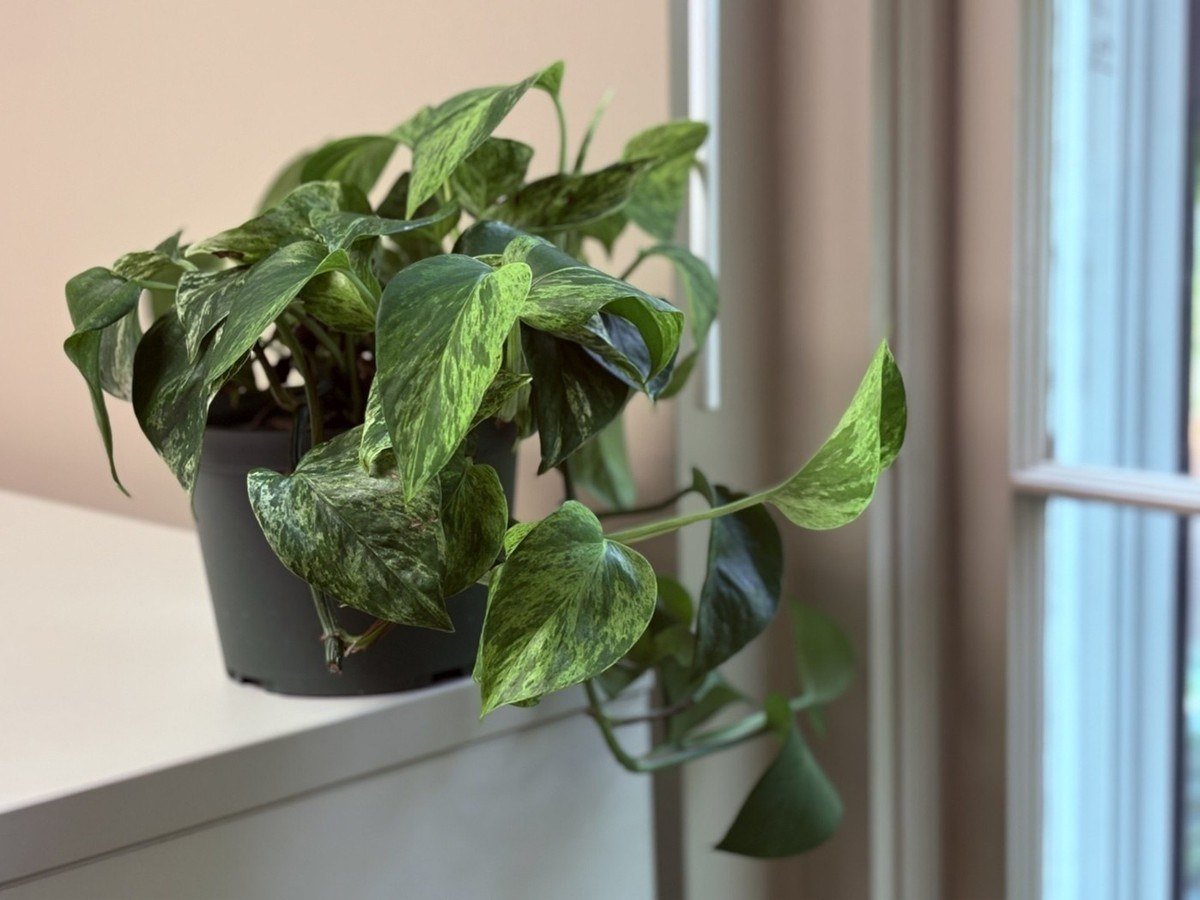
Water when the top 1.5-2 in are dry | 70-85 F day | Size: 6-8 ft vines | Pets: toxic (ASPCA)
Pothos tolerates low light, but in dim rooms new leaves come in smaller and variegated types such as Marble Queen lose some of their white. In the wild its vines can run 40 feet; in a pot it keeps its small juvenile leaves.
To make more plants, cut a stem with at least one node and set it in water or moist soil. Water thoroughly only when the top 1.5 to 2 inches of soil are dry. Pothos was one of the plants in NASA’s 1989 chamber tests.
7. Parlor Palm: The Victorian Favorite

Let soil dry slightly | Minimum 60 F in winter | Size: about 4 ft | Pets: non-toxic (ASPCA)
Parlor palms decorated Victorian parlors because they cope with lower light than most palms. NC State suggests a north- or east-facing window, and as a houseplant it usually reaches about 4 feet.
Palms do best root-bound, so repot only every two or three years. Avoid leaf-shine sprays, which Clemson says can badly injure palm fronds. It is safe for cats and dogs, which makes it a good choice for a pet household.
Indoor Plants for Medium Light
These six do best a few feet from a bright window or right in front of a north one. Several of them, including Boston fern and prayer plant, also need more humidity than a heated home gives them.
8. Spider Plant: Babies on Every Stem

Water when the top 1-2 in are dry | 65-75 F day | Size: 2-2.5 ft wide | Pets: non-toxic (ASPCA)
In a hanging basket a spider plant quickly spreads 2 to 2.5 feet wide, with stems of baby plantlets trailing 2 to 3 feet. Keep it out of hot midday sun, which scorches the leaves.
Its fleshy roots store water and can crack a plastic pot, so divide and repot before that happens. The ASPCA lists it as non-toxic, although Clemson notes some cats react to it the way they do to catnip.
9. Peace Lily: Blooms Without Bright Sun

Moist, not soggy | 68-85 F, nothing below 60 F | Size: 1-4 ft | Pets: toxic (ASPCA)
Clemson notes peace lilies are one of the few foliage plants that flower in low light, and they do best in bright indirect light out of direct sun. The white flowers are spathes, which NC State says turn pale green after about 10 days.
Feed at quarter strength every six to eight weeks in spring and summer. Cultivars range from the 12 to 15 inch ‘Wallisii’ shown here to ‘Sensation’, which reaches 6 feet. Root and stem rot, usually from overwatering, are its most common problems.
10. Rubber Plant: Grows Into an Indoor Tree
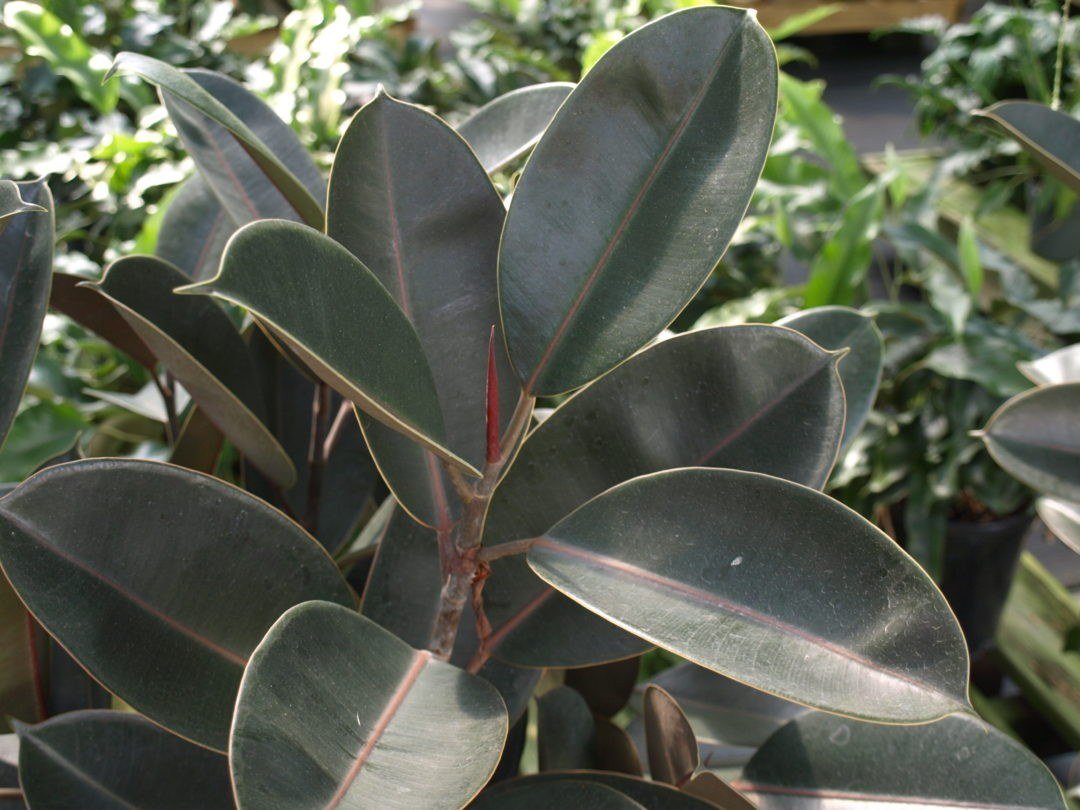
Let soil dry slightly | 75-80 F day, 60-65 F night | Size: 6-10 ft | Pets: keep away
Clemson calls rubber plants excellent for beginners. The leaves reach 8 to 12 inches, and an east window with morning light gives the best growth, though the plant adapts to lower light.
It drops leaves when it gets too little light, dry air, cold drafts or a sudden temperature change, and its leaves yellow when the soil stays wet. Repot in late winter or early spring. The milky sap can irritate skin and stomachs.
11. Monstera: Holes Only Come With Light

Water when the top quarter is dry | 60-85 F | Size: 6-8 ft | Pets: toxic (ASPCA)
Monstera’s split, perforated leaves are the reason people buy it, and they only form on mature leaves with enough light. Clemson warns that a monstera kept too dark will not develop perforations at all.
Give it moderate indirect light, high humidity and something to climb, or it grows sideways. In its native Mexico and Central America the plant produces edible fruit said to taste of banana and pineapple, though it rarely fruits indoors.
12. Boston Fern: Made for Humid Rooms

Keep barely moist at all times | 68-72 F day, 50-55 F night | Size: 2-3 ft | Pets: non-toxic (ASPCA)
Boston fern needs high humidity and soil that never dries out, which makes a bright bathroom ideal. In a hanging basket its fronds cascade up to 3 feet.
Do not feed a new or freshly repotted fern for six months, Clemson advises. The rows of brown dots under the fronds are spores, a normal part of the plant, not an insect problem.
13. Prayer Plant: Folds Its Leaves at Night

Evenly moist, drier in winter | Above 60 F | Size: 12-15 in | Pets: non-toxic (ASPCA)
Prayer plants raise and fold their leaves at night, a habit that gave them their name. The red-veined form shown here is one of several patterns. The genus is named after the Italian botanist Bartolomeo Maranti.
It is the fussiest plant on this list: it wants high humidity and dislikes direct sun, cold drafts, low humidity and fluoride in water. A pebble tray raises the humidity around it.
Indoor Plants for a Sunny Window
Succulents reverse the usual rules: they want direct sun and a pot that dries out completely.
14. Aloe Vera: A Sun Lover for the Desk

Let soil dry completely | Minimum 40 F in winter | Size: 1-2 ft | Pets: toxic (ASPCA)
Aloe sits in Clemson’s high-light group and needs a bright window to grow well and to flower. A terracotta pot with drainage holes, as in the photo, helps the soil dry out between waterings.
Water only when the soil is completely dry, and less in winter. Mature plants make offsets around the base that can be potted up. The ASPCA lists aloe as toxic to cats and dogs.
15. Jade Plant: Four Hours of Sun or More
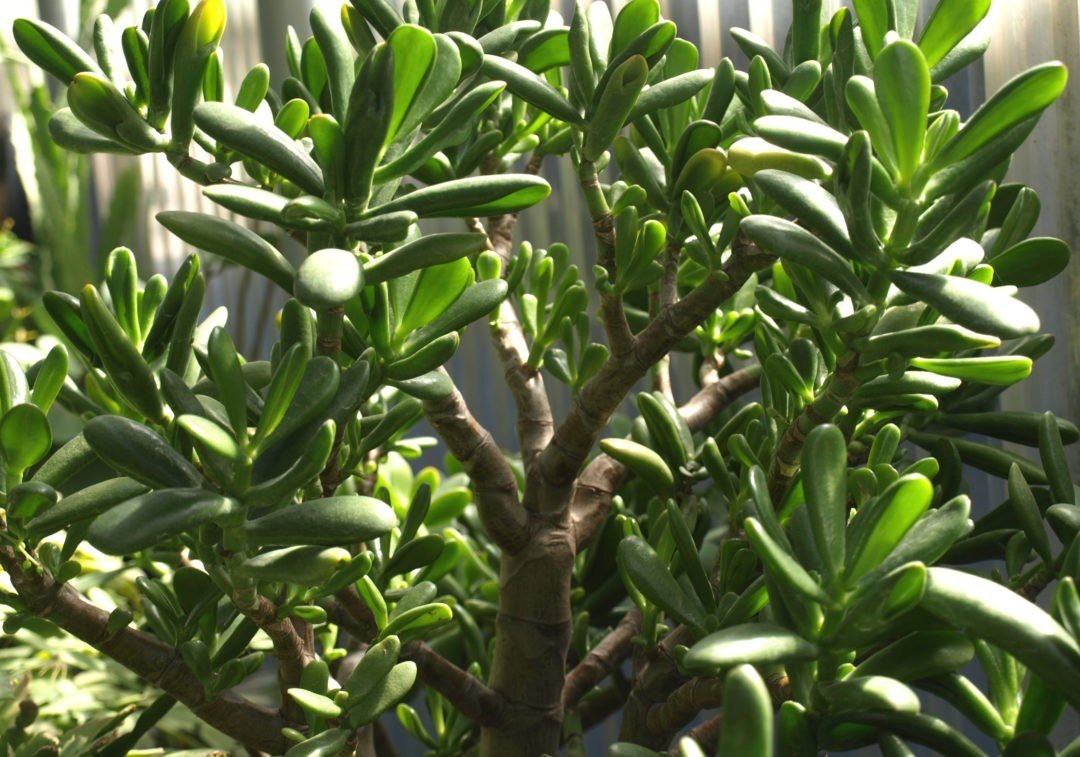
Moist in summer, dry between waterings in winter | 65-75 F day | Size: 18-30 in, up to 5 ft | Pets: toxic
Jade needs at least four hours of direct sun, so a south window is its best spot. Given that, it can live for decades and grow into a small tree with a thick trunk.
Clemson warns that jade needs more water than its fleshy leaves suggest: drought causes spotting, leaf drop and death. Treat mealybugs with rubbing alcohol on a cotton swab rather than insecticidal soap, and fertilize every three to four months.
Signs You Are Overwatering Your Indoor Plants
Clemson Extension names overwatering as the main cause of death of potted plants, and South Dakota State University Extension says the same. Roots need oxygen as well as water, and constantly wet soil drowns them. Watch for these signs:
- Old and new leaves dropping at the same time.
- Yellowing across the whole plant rather than just the oldest leaves.
- Wilting even though the soil is damp.
- Roots that are brown, mushy and smell, instead of firm and pliable.
The fix is a habit, not a schedule. Push a finger into the soil to the first joint and water only if it is dry at the tip, water until it drains, then empty the saucer. Clay pots dry faster than plastic or glazed ones, so plants in them need water more often.
Can Indoor Plants Really Purify the Air?
Not enough to notice. NASA’s 1989 study sealed single plants in small chambers and tracked chemicals such as benzene and formaldehyde, but a home is far larger and constantly exchanges air with outdoors. A 2019 Drexel University review, which translated 196 results from 12 studies, found you would need 10 to 1,000 plants per square meter of floor to equal normal ventilation.
The Drexel authors point future research toward the effect of plants on well-being and productivity rather than air cleaning. For cleaner air, open windows or run an air purifier.
Repotting and Humidity: Two Things to Check Each Spring
NC State Extension recommends repotting in early spring, into a pot one size larger, or two for fast growers. Signs a plant needs it include stunted growth, roots growing out of the drainage holes and wilting that returns soon after watering. Peace lilies, palms and jade are happier slightly root-bound, so leave them longer.
Humidity is the other gap. Homes average only 10 to 15 percent relative humidity because of heating and air conditioning, while many houseplants grow well at 40 to 60 percent. Grouping plants and setting them on pebble trays helps more than misting, which raises humidity only briefly. If damp soil starts drawing small flies, our guide on how to get rid of fruit flies explains how to clear them.
Frequently Asked Questions
Which indoor plants are safe for cats and dogs?
From this list, the ASPCA names spider plant, cast iron plant, parlor palm, Boston fern and prayer plant as non-toxic. Pothos, philodendron, monstera, peace lily and Chinese evergreen contain calcium oxalate crystals that irritate the mouth and stomach.
Can indoor plants survive without a window?
A few can. NC State notes the ZZ plant grows in spaces lit only by fluorescent light, and Clemson says heartleaf philodendron grows under room lighting. Clemson’s guide puts the floor at about 100 foot-candles for 12 hours a day just to maintain a plant, so a light on a timer is the practical answer in a windowless room.
How often should I water a snake plant?
Clemson suggests every 2 to 4 weeks during spring and summer and every 4 to 6 weeks in fall and winter. Water more often when it gets more light, and always let the soil dry out first.
When is the best time to repot houseplants?
Early spring, as plants start their main growing season. Move up only one pot size, because a pot that is much too large holds wet soil around the roots for too long.