The coverage figure is the reason most people buy the wrong machine. Guides to the best air purifiers quote square footage as though it were a fixed property of the unit, but it depends entirely on how many times per hour the air is cleaned. A purifier sold as covering 1,500 square feet usually means one air change per hour at that size, which is barely useful. The same machine might manage five changes per hour in a 320 square foot room, and that is the number that actually clears pollen or cooking smoke. Specification figures deserve the same scepticism elsewhere, and our water flosser roundup separates the useful numbers from the marketing ones.
AHAM Verifide is the independent programme that tests this, publishing a clean air delivery rate and a verified room size rather than a marketing one. Where a machine below carries that verification, it is stated. The second number nobody checks is the five-year filter cost, which on some units exceeds the price of the purifier itself, and the third is whether it generates ozone. Everything here is filtration based rather than ionising for that reason.
Best Air Purifiers Compared on Coverage, Filtration and Running Cost
Treat the coverage column as a ceiling rather than a recommendation, and halve it if you want the air genuinely turned over several times an hour. The filter column is the one that decides what the machine costs you after the first year.
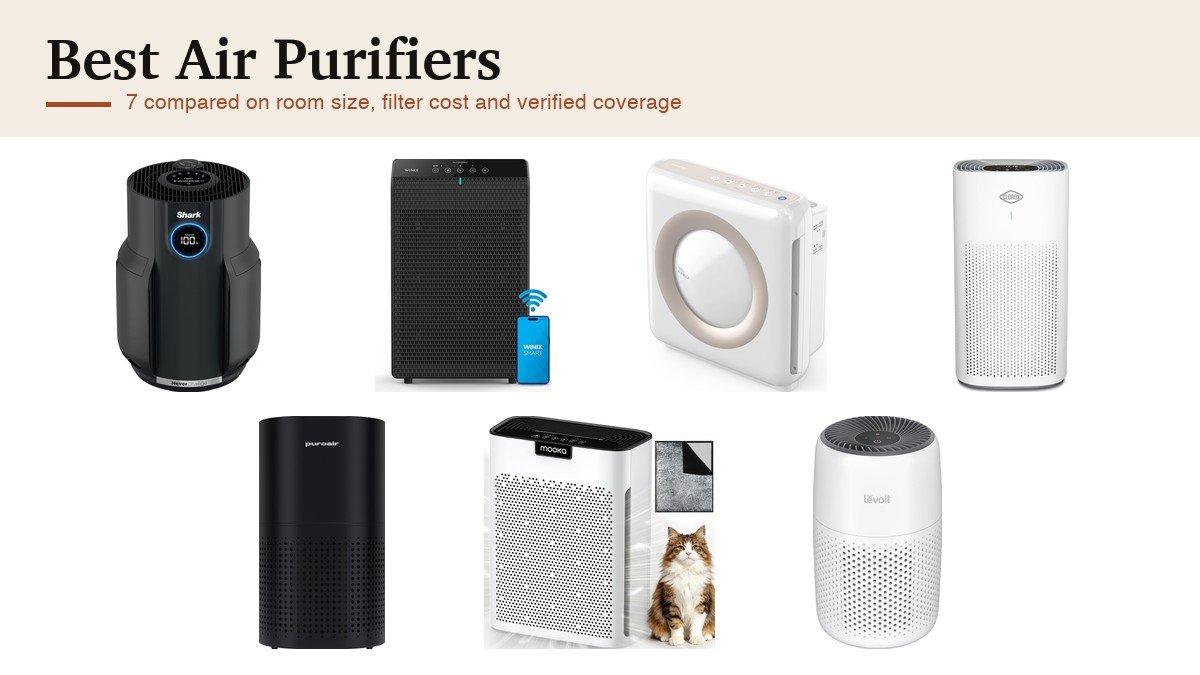
| Air purifier | Quoted coverage | Filtration | Filter replacement | Notable feature |
|---|---|---|---|---|
| Shark NeverChange HP152 | 650 sq ft in one hour | Anti-Allergen NanoSeal, 99.98% of particles | None for five years | Washable debris screens protect the HEPA |
| Winix 5520 | 1,882 sq ft in one hour, AHAM verified at 392 sq ft | True HEPA to 0.01 microns, carbon | HEPA plus carbon, washable pre-filter | Air quality indicator and auto mode |
| Coway AP-1512HH | 1,748 sq ft in 60 minutes | Four stage with washable pre-filter and HEPA | Filter change indicator by air processed | Pollution sensor with a colour-coded light |
| Clorox Large Room | 1,500 sq ft once an hour, 320 sq ft five times | True HEPA to 0.1 microns, three stages | Every 6 to 12 months | 360 degree intake pulls from all directions |
| PuroAir 240 | 1,000 sq ft | HEPA with a particle sensor | Standard replacement cycle | CARB, ETL, ISO and UL certified |
| MOOKA 2200 | 2,200 sq ft | HEPA, no UV and no ozone | Standard replacement cycle | Quoted at 20dB in sleep mode |
| Levoit Core Mini-P | Desk and small bedroom scale | Pre-filter plus main filter | Standard replacement cycle | Aromatherapy pad and auto-off display |
Read the Coverage Figure as Air Changes, Not Square Feet
An air purifier does not clean a room once and stop. It clears particles continuously while new ones arrive from cooking, pets, open windows and people moving about, so what matters is how often it turns the whole volume over. Two changes per hour is the usual minimum for a noticeable difference; four or five is what you want in a bedroom for allergies.
The Clorox listing is unusually honest about this and states both numbers: five times per hour in a 320 square foot room, or once per hour in a space up to 1,500. Those describe the same machine. The Winix 5520 does the same thing from the other direction, quoting 1,882 square feet in an hour alongside an AHAM verified figure of 392 square feet, which is the number to trust. The practical rule is to take the headline area, divide it by four, and buy for that.
The EPA guide to air cleaners in the home makes the point that filtration helps with particles but does not address the source, and that ventilation and removing the cause matter at least as much. It is also the reason to avoid anything that cleans by generating ozone: California maintains a list of certified air cleaners precisely because ozone generators are a respiratory irritant rather than a solution. Every machine here works by pulling air through a filter.
1. Winix 5520: The Best Air Purifier for a Living Room
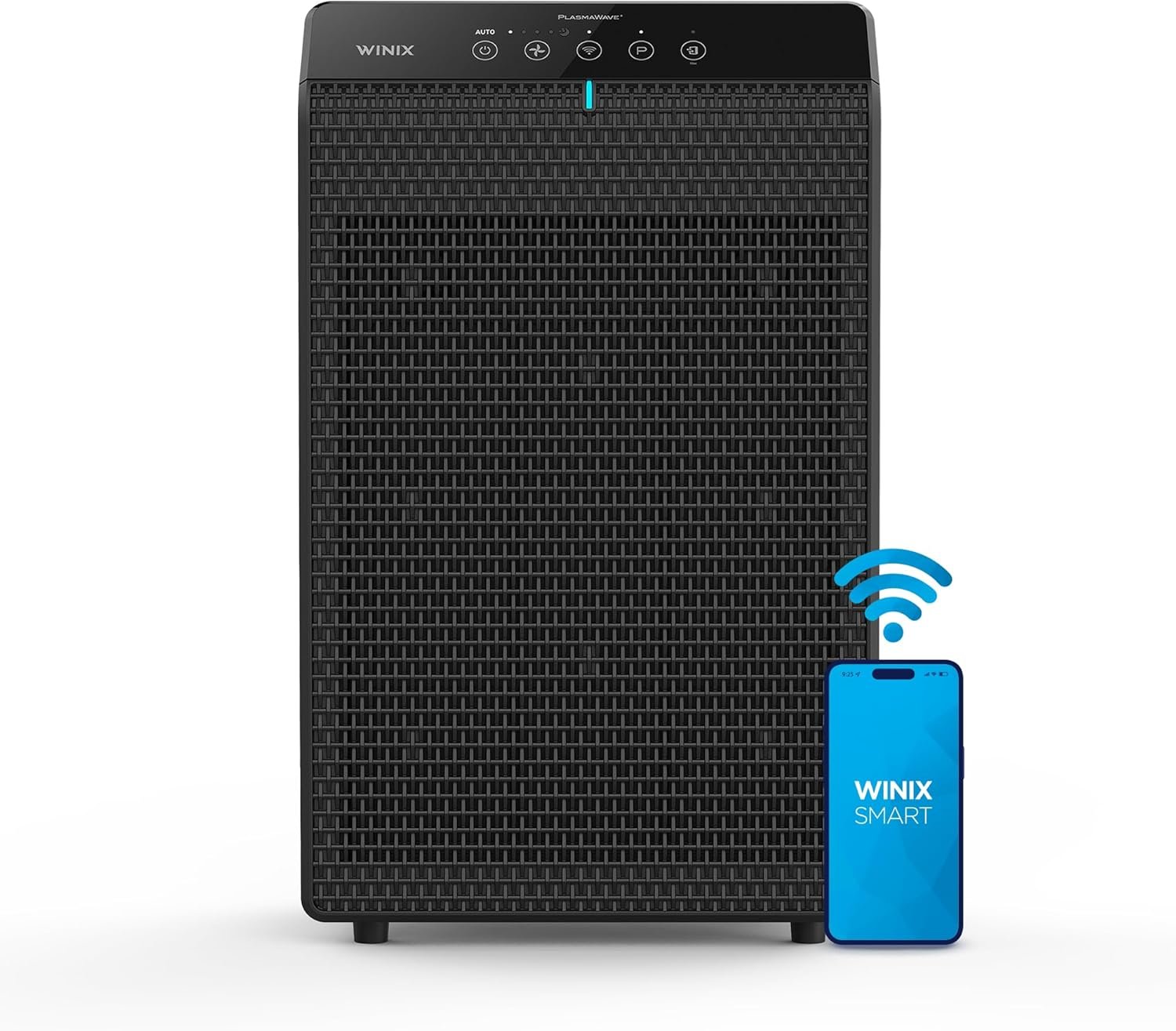
The 5520 is the machine to buy if you want a real specification rather than a large number. Winix publishes both an AHAM verified figure of 392 square feet and the fuller picture: 1,882 square feet in an hour, 941 in 30 minutes, 627 in 20 and 470 in 15. That set of numbers tells you exactly what you are getting at any room size, which almost nobody else in this category does.
Filtration runs through a washable fine mesh pre-filter, an advanced odour control carbon filter for cooking smells and VOCs, and a true HEPA stage that Winix rates at 99.99 percent of particles down to 0.01 microns. A built-in air quality sensor drives auto mode and an LED indicator shows the current state of the room, which is the feature that makes people actually leave a purifier running.
What it does well
- AHAM verified coverage published alongside the marketing figure.
- Coverage quoted at four different room sizes and timings.
- Washable pre-filter extends the life of the HEPA stage.
- Air quality sensor with a visible indicator and auto mode.
What to know before buying
- Replacement HEPA and carbon filters are an ongoing cost.
- A large black box that is hard to hide in a living room.
- App support is useful but not essential to the machine.
2. Shark NeverChange HP152: No Filters to Buy for Five Years
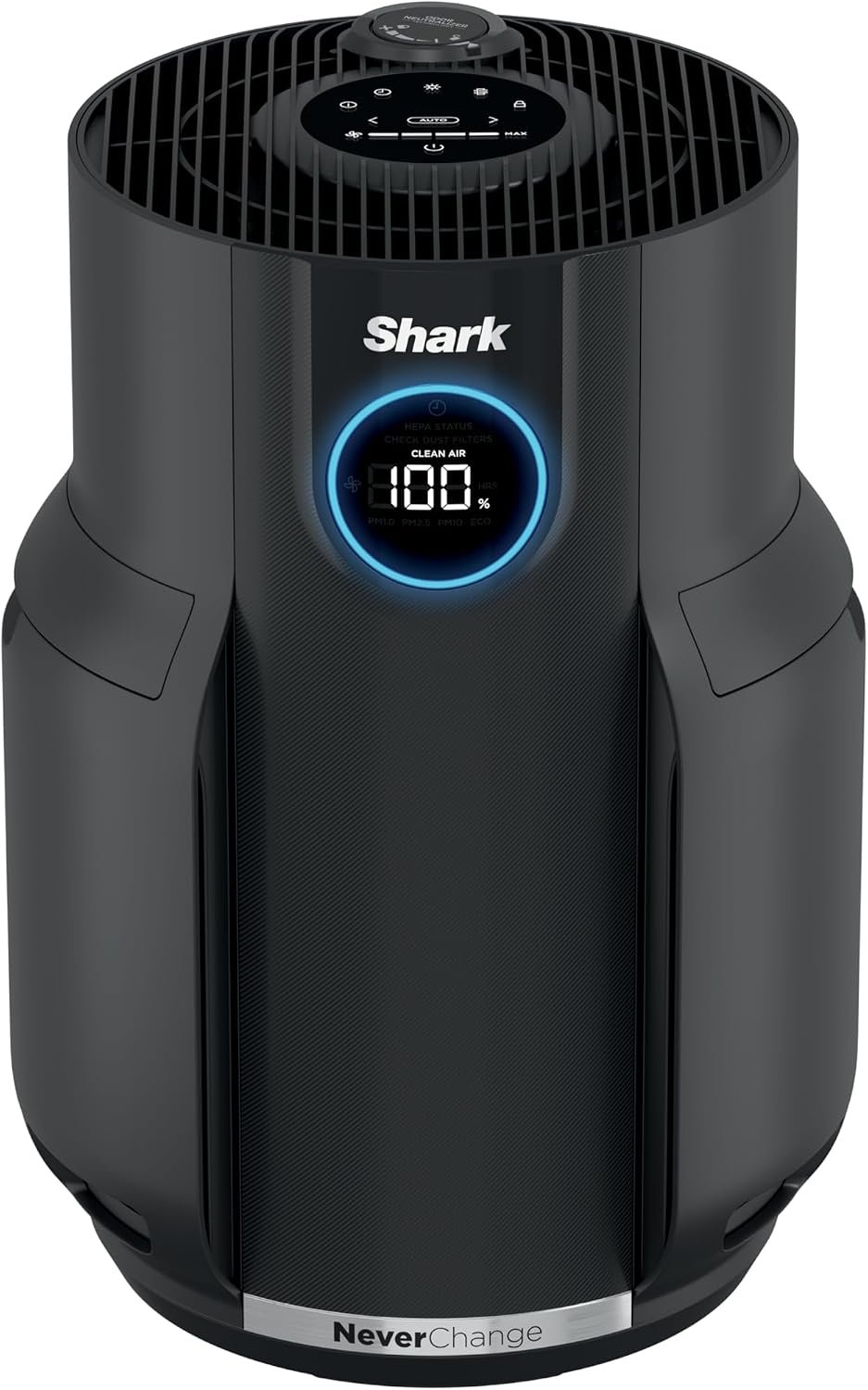
Filter replacement is the hidden cost of this category, and the NeverChange is built around removing it. Shark states that the filtration lasts five years with no replacements, and puts a figure on what that saves against competing units in the same price bracket. Over the life of a purifier that is a genuine difference rather than a marketing one.
The way it achieves that is Debris Defense: removable screens catch hair, dust and dander before they reach the HEPA stage, and you vacuum, wipe or rinse the screens rather than replacing anything. Filtration is rated above the HEPA standard, at 99.98 percent of large, small and micro particles. Coverage is 650 square feet in an hour, so this is a bedroom, nursery or home office machine rather than an open-plan one, and the lights dim for sleeping.
What it does well
- No replacement filters for five years, only screens to clean.
- Filtration rated above the HEPA standard at 99.98 percent.
- Washable debris screens protect the main filter.
- Dimmable lights and quiet operation for a bedroom.
What to know before buying
- 650 square feet is modest for the price.
- The odour cartridge adds a scent, which not everyone wants.
- Cleaning screens is a task you have to remember.
3. Coway AP-1512HH: The Long-Running Default
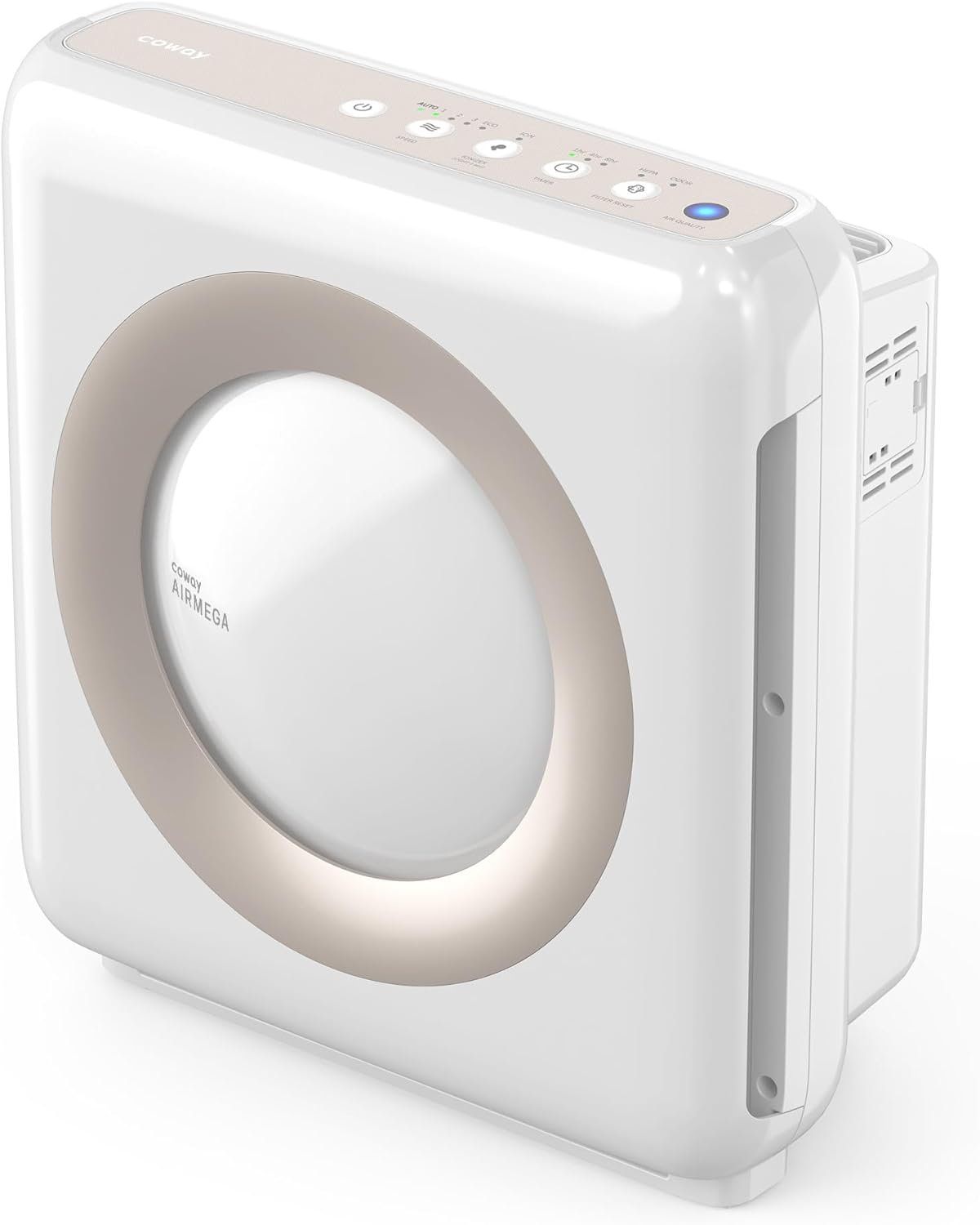
This Coway has been the default recommendation in the category for years and the specification explains why. Four stages run from a washable pre-filter through a deodorisation filter and a bipolar device to a HEPA filter rated at 99.97 percent of particles at 0.3 microns, covering pollen, allergens, VOCs and odours.
Two behaviours matter day to day. A pollution sensor drives a brightly coloured LED that reports air quality in real time, and the light can be switched off for sleeping, which is the detail cheaper machines get wrong. The filter indicator is based on how much air has actually been processed rather than on a timer, so it tells you when the filter is used up rather than when the calendar says so. Coverage is quoted at 1,748 square feet in 60 minutes.
What it does well
- Four stage filtration including a washable pre-filter.
- Filter alerts based on air processed, not on a timer.
- Air quality light that can be turned off at night.
- A long-established model with easily available filters.
What to know before buying
- The bipolar stage can be switched off and some buyers prefer that.
- Styling has not changed in years.
- Coverage is quoted at one air change per hour.
4. Clorox Large Room: The Clearest Coverage Numbers Here
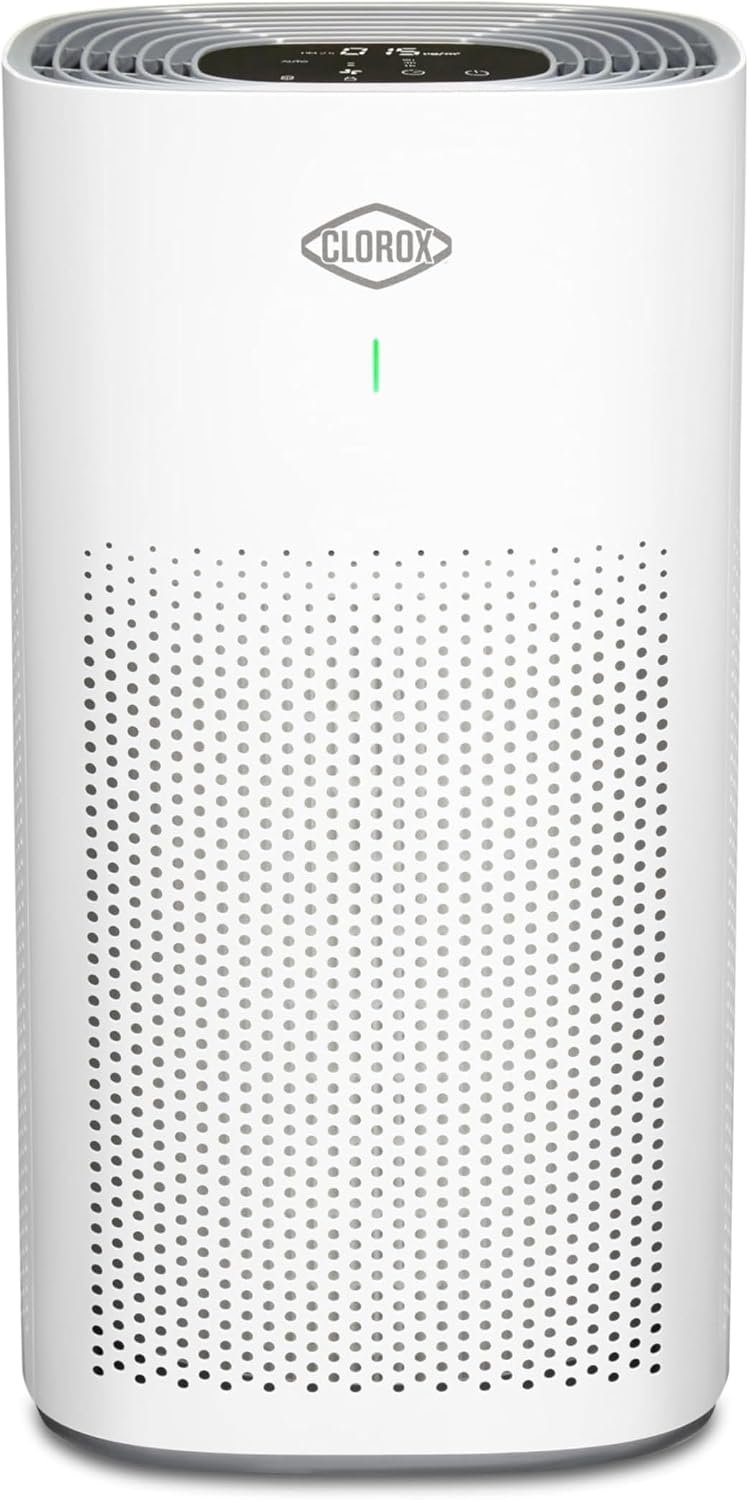
Clorox quotes the thing everyone else hides. This machine cleans a 320 square foot room five times an hour, or a 1,500 square foot space once an hour, and the listing says both. If you only read one specification in this guide, read that pair, because it is the honest shape of every coverage claim in the category.
The construction supports it. A 360 degree intake pulls air from all directions rather than through one face, which suits a machine placed in the middle of a room rather than against a wall. True HEPA filtration is rated at 99.97 percent of particles as small as 0.1 microns, with two further stages for larger particles and odours. A red light comes on after 4,380 hours of use to prompt a filter change, which works out at roughly six to twelve months.
What it does well
- Publishes both the five-changes and one-change coverage figures.
- 360 degree intake suits placement away from a wall.
- True HEPA rated down to 0.1 microns.
- Filter light based on 4,380 hours of actual running.
What to know before buying
- Six to twelve month filter cycle is an ongoing cost.
- Genuine filter replacements are the only recommended option.
- A tall cylinder that needs clear space around it to work as designed.
5. PuroAir 240: Certified, Sensible and Quiet
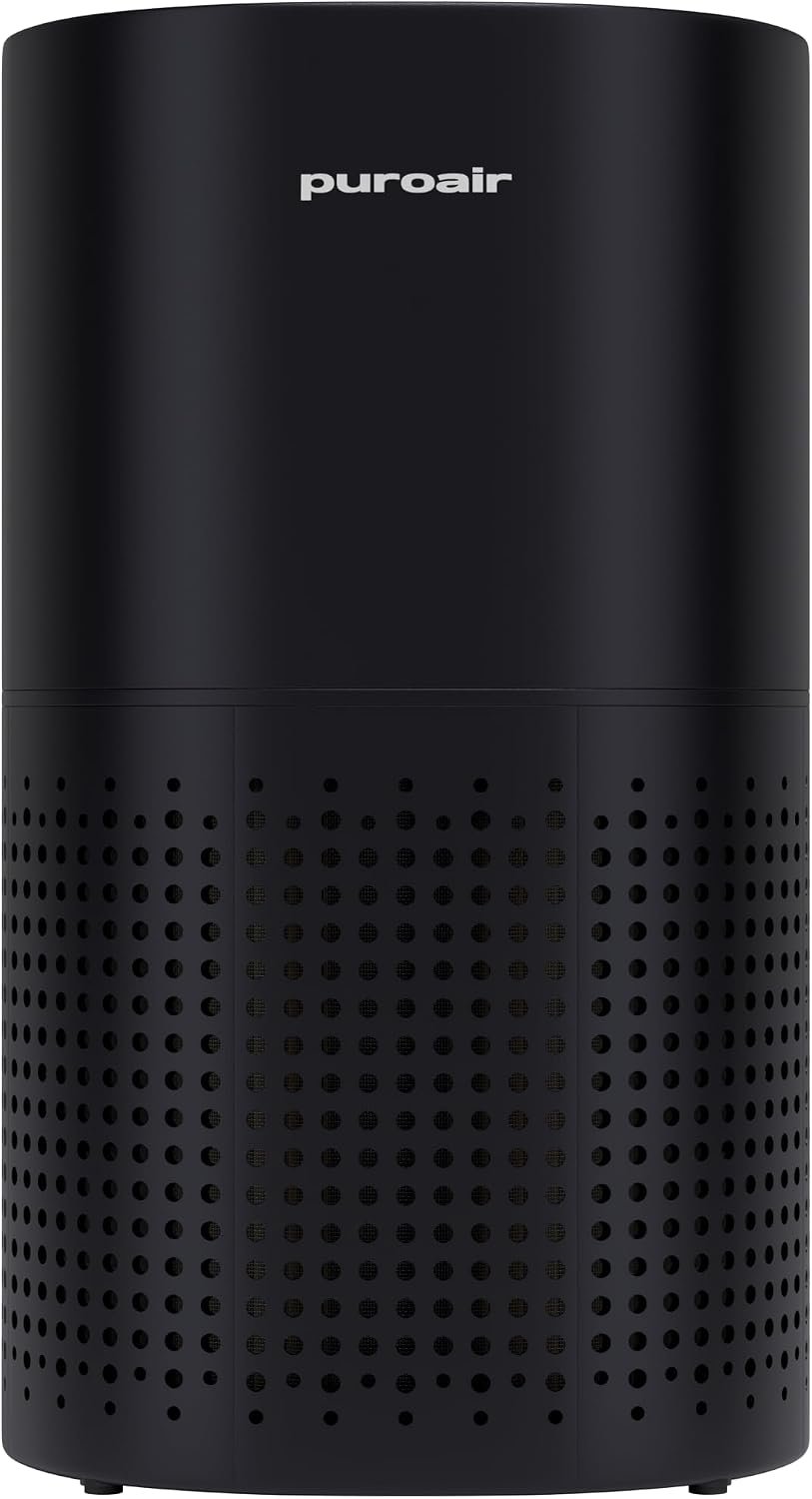
The PuroAir 240 covers 1,000 square feet and is aimed squarely at bedrooms. What distinguishes it from the crowd of similar-looking cylinders is certification: CARB, ETL, ISO and UL, which between them confirm it does not emit ozone and meets electrical safety standards. In a category full of unverified claims that is worth more than another thousand square feet on the box.
A smart particle sensor raises the fan when it detects polluted air, so it runs quietly most of the time and works harder when cooking or pollen pushes the count up. There is a dedicated sleep mode for overnight use and a two-year warranty. PuroAir states a partnership with the American Lung Association, which is a reasonable signal in a market where most brands are a few months old.
What it does well
- CARB, ETL, ISO and UL certified, so no ozone emission.
- Particle sensor raises fan speed only when needed.
- Dedicated quiet sleep mode for overnight running.
- Two-year warranty on a category where many offer one.
What to know before buying
- 1,000 square feet is a one-air-change figure like the rest.
- Fewer published filtration micron figures than Winix or Coway.
- No washable pre-filter stage.
6. MOOKA 2200: The Quietest Figure in This Guide
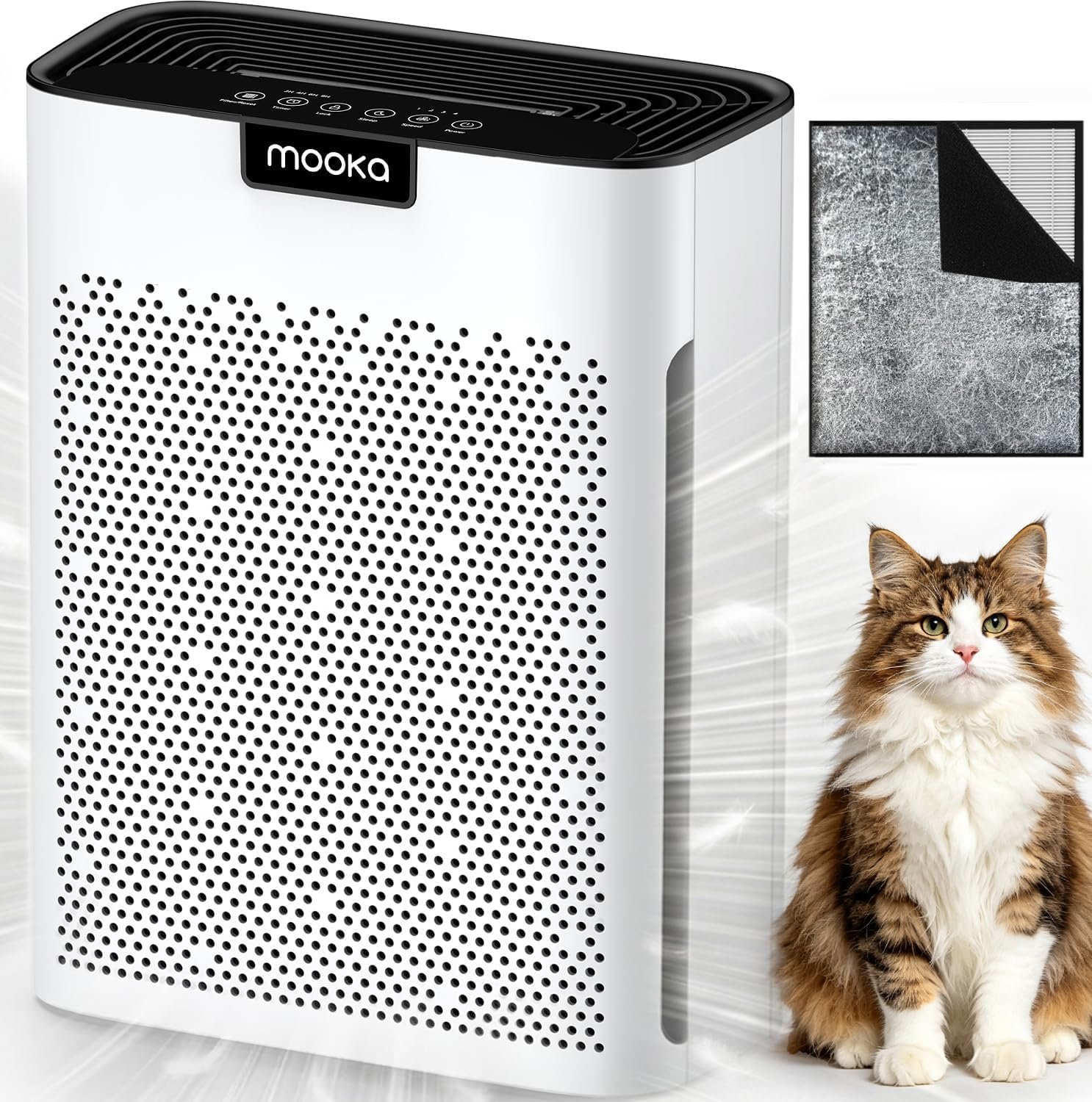
Noise is the specification that decides whether a bedroom purifier gets left on or switched off at 11pm, and MOOKA quotes 20 decibels in sleep mode, which is the lowest figure here. At that level the lights go off and the fan runs slowly, which is the correct trade overnight.
The headline coverage of 2,200 square feet is the largest in this guide and should be read with the usual caution. More useful is what it does not do: CARB, ETL and DOE certified, no ozone release and no UV lamp, which keeps it in the filtration-only category where it belongs. Note the instruction that the protective plastic bag has to come off the filter before first use, which is the single most common reason a new purifier appears not to work.
What it does well
- Quoted at 20 decibels in sleep mode, the quietest here.
- CARB, ETL and DOE certified with no ozone and no UV.
- The largest headline coverage figure in this guide.
- 60 day returns and a two-year exchange.
What to know before buying
- 2,200 square feet is a one-air-change marketing figure.
- Less published detail on filtration efficiency than the big brands.
- The filter arrives in a plastic bag that must be removed first.
7. Levoit Core Mini-P: For a Desk, Not a Living Room
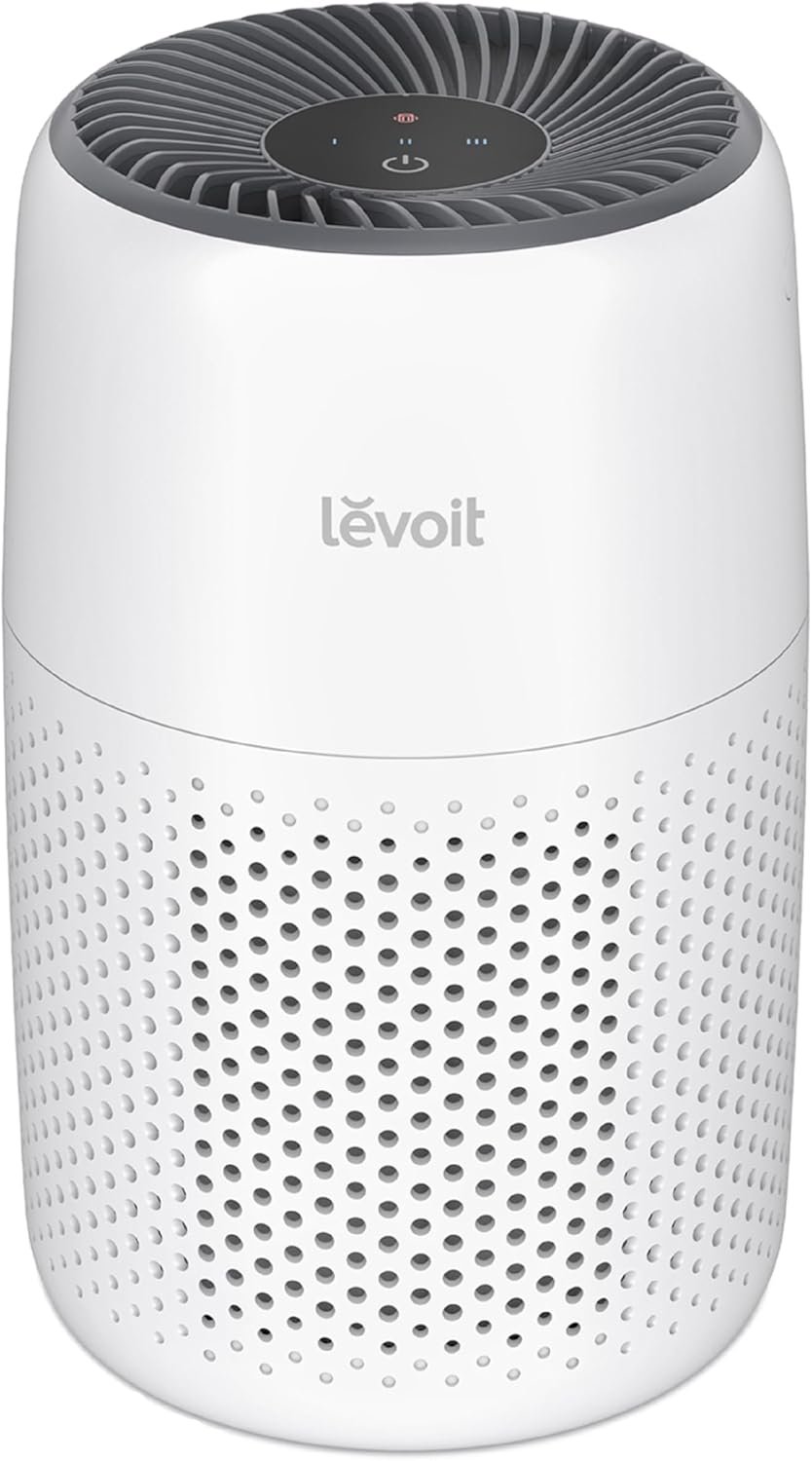
Not every purifier needs to clear a living room. The Core Mini-P is a small cylinder for a desk, a nursery corner or a dorm room, using a pre-filter and a main filter to catch lint, hair, pet dander, fine particles and smoke, with an odour stage for fumes.
Levoit sets it up for sleeping rather than for specifications: an auto-off display so the room goes dark, a sleep mode, and operation the company describes as quieter than a whisper. There is an aromatherapy pad for adding a scent, which is either a feature or a reason to look elsewhere depending on your view. Buy it to clean the air immediately around you rather than the air in the room, which is a legitimate thing to want and the only thing a machine this size can do.
What it does well
- Small enough for a desk, a bedside table or a dorm room.
- Auto-off display so nothing glows overnight.
- Very quiet in sleep mode.
- Cheapest way into filtration from an established brand.
What to know before buying
- Far too small for a living room or an open-plan space.
- No air quality sensor or auto mode.
- The aromatherapy pad is not to everyone’s taste.
Sizing One Properly, and What It Will Not Fix
Start from the room rather than the product page. Measure the floor area, decide how many air changes per hour you want, and take the headline coverage figure accordingly. Then be realistic about what filtration can and cannot do, because a purifier handles airborne particles and not the source of them.
- Divide the headline coverage by four for a bedroom where allergies are the issue.
- Look for an AHAM verified figure, and prefer it over the marketing one.
- Check the five-year filter cost before the purchase price.
- Avoid anything that cleans by generating ozone, whatever it is called on the box.
- Give a 360 degree intake clear space; give a front-facing one a wall.
- A purifier does not remove humidity, mould on a wall, or a gas leak.
Dust is the other half of the job, and most of it comes off floors and surfaces rather than arriving through a window. Keeping it down reduces what the filter has to catch, which is part of the case for the better robot vacuums running daily rather than weekly. Cooking is the other major indoor source, and the carbon stages here exist mostly to deal with it, which is worth bearing in mind if your kitchen runs one of the larger air fryers several times a week.
Which of These Air Purifiers to Buy
For a living room, the Winix 5520 is the strongest pick because it publishes an AHAM verified figure alongside its marketing one and gives you coverage at four different timings. For a bedroom where you would rather never think about filters again, the Shark NeverChange HP152 is the one, and the five-year claim is the most substantial running-cost difference in this guide.
The Coway AP-1512HH remains the safe default, with four stages and filter alerts based on air actually processed. The Clorox is worth considering purely because its listing tells the truth about coverage, and the 360 degree intake suits a room where it can stand away from the walls. PuroAir is the certified, quiet middle option, MOOKA is the one to pick if noise is your deciding factor, and the Levoit Core Mini-P is for a desk rather than a room. Whatever you buy, place it where air can reach it from all sides and keep the surfaces around it clean, in the same spirit as cleaning a screen properly rather than aggressively.
Frequently Asked Questions
What size air purifier do I need?
Take the room area and the number of air changes per hour you want. Most headline coverage figures assume one change per hour, which is too slow to be noticeable, so dividing the quoted area by four gets you close to a machine that clears the room four or five times an hour. An AHAM verified figure is a better starting point than a marketing one.
Do air purifiers help with allergies?
A true HEPA filter captures pollen, dust and pet dander effectively, and running one in a bedroom at a high enough air change rate is where people notice the most difference. It does not address the source, so washing bedding, vacuuming and ventilation still do a share of the work.
Are ozone-generating air purifiers safe?
No, and that is why California certifies air cleaners against ozone emission. Ozone is a respiratory irritant, and devices sold as ionisers or activated oxygen cleaners can produce it. Every machine in this guide works by pulling air through a filter instead, and several publish CARB certification specifically to make that clear.
How often do air purifier filters need replacing?
Typically every six to twelve months, though it depends on how dirty the air is rather than on the calendar. The better machines here measure it: Coway bases its alert on how much air has been processed and Clorox on 4,380 hours of running. The Shark NeverChange is the exception and is designed to run five years with cleaning rather than replacement.
Related Articles
- Best Electric Toothbrushes: 7 Compared on Pressure Sensors and Modes
- Best Home Espresso Machines: 7 Compared on Grinders and Milk
- Best Electric Kettles: 7 Compared on Temperature Control and Materials
- Best Lamps for Home
- Best Mattress
As an Amazon Associate, CanyonWire earns from qualifying purchases.