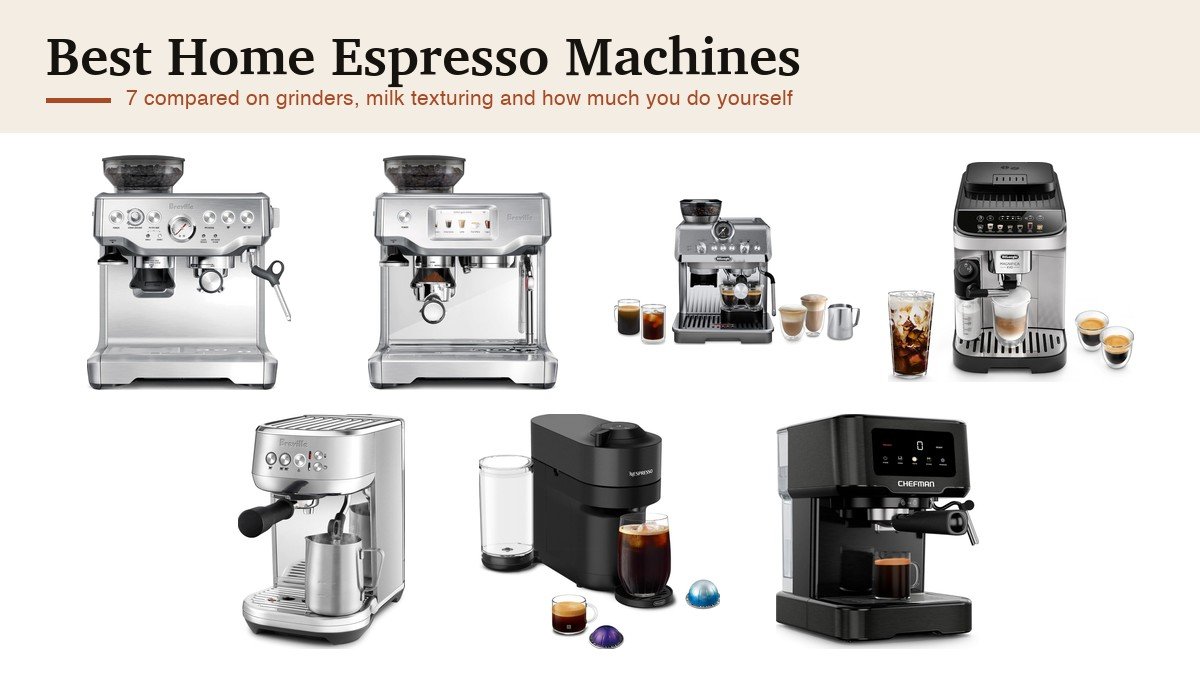
Choosing between the best home espresso machines is really one decision repeated three times: how much of the work do you want to do yourself. Grinding, dosing and tamping is the first. Texturing the milk is the second. Deciding when the shot is finished is the third. Every machine below hands you a different number of those jobs, and the price mostly tracks how many it takes off your hands rather than how good the coffee is. For something that asks no questions at all, see our guide to the best single serve coffee maker.
The underlying physics does not vary much. Espresso is brewed at around nine bars of pressure, and the pumps in these machines are rated at 15 or 20 bar precisely so they can hold nine at the puck once the resistance is accounted for. A bigger number on the box is a marketing figure, not a better shot. What does vary is whether there is a grinder in the body, whether the steam wand textures the milk for you, and how long you wait before the first cup. Preheat time is the equivalent question next door, which our toaster oven roundup answers through wattage and convection design.
Best Home Espresso Machines Compared on Grinder, Milk and Effort
The effort column is the one to read first. A manual machine makes better coffee in the hands of someone who wants to learn and worse coffee in the hands of someone who does not. An automatic machine makes the same cup every day whoever presses the button.
| Machine | Built-in grinder | Milk | Effort level | Standout feature |
|---|---|---|---|---|
| Breville Barista Express | Conical burr, dose on demand | Manual steam wand | You grind, tamp and texture | Grind size dial and PID temperature control |
| Breville Barista Touch | Conical burr, single touch | Automatic texturing | Guided by touchscreen | ThermoJet reaches temperature in 3 seconds |
| De’Longhi La Specialista Arte Evo | Conical burr, 15 grind settings | Commercial-style manual wand | You grind and texture | Cold extraction brews cold brew in under 5 minutes |
| De’Longhi Magnifica Evo | Yes, fully automatic | Automatic milk frother | Press a button | My Latte saves your own recipes |
| Breville Bambino Plus | None, you supply ground coffee | Automatic texturing | You dose and tamp only | 54mm portafilter with a 19 gram dose |
| Nespresso Vertuo Pop+ | None, sealed capsules | None, no wand | One touch | Five drink sizes and a 30 second heat-up |
| Chefman CraftBrew | None, you supply ground coffee | Manual steam wand | You dose, tamp and texture | 1.5 litre tank and a descale alert |
A Built-In Grinder Changes the Coffee More Than the Machine Does
Coffee stales fast once it is ground, which is why a machine with a grinder in the body beats a better brew head fed with week-old pre-ground. The grinders in these use conical burrs rather than blades, crushing the bean to a consistent particle size instead of chopping it into a mix of dust and chunks. That consistency is what lets water pass evenly through the puck rather than channelling through the loose parts and over-extracting the rest.
Three machines here grind. The Barista Express gives you a grind size dial and expects you to use it. The Barista Touch grinds at a single touch as part of a guided sequence. La Specialista Arte Evo offers 15 grind settings and a dose aimed at single or double shots. The others expect ground coffee, which is fine if you already own a grinder and a false economy if you do not, because a separate burr grinder costs as much as the gap between a Bambino Plus and a Barista Express.
Water matters nearly as much and gets ignored. Espresso is more than 90 percent water, and scale from hard supplies ruins boilers and blocks solenoid valves. Every machine here has a descaling routine, and the Chefman prompts after 500 brewing cycles. The same reasoning applies across a worktop: our guide to the best electric kettles makes the case for a wide opening on anything that boils water daily.
1. Breville Barista Express: The Machine That Teaches You Espresso
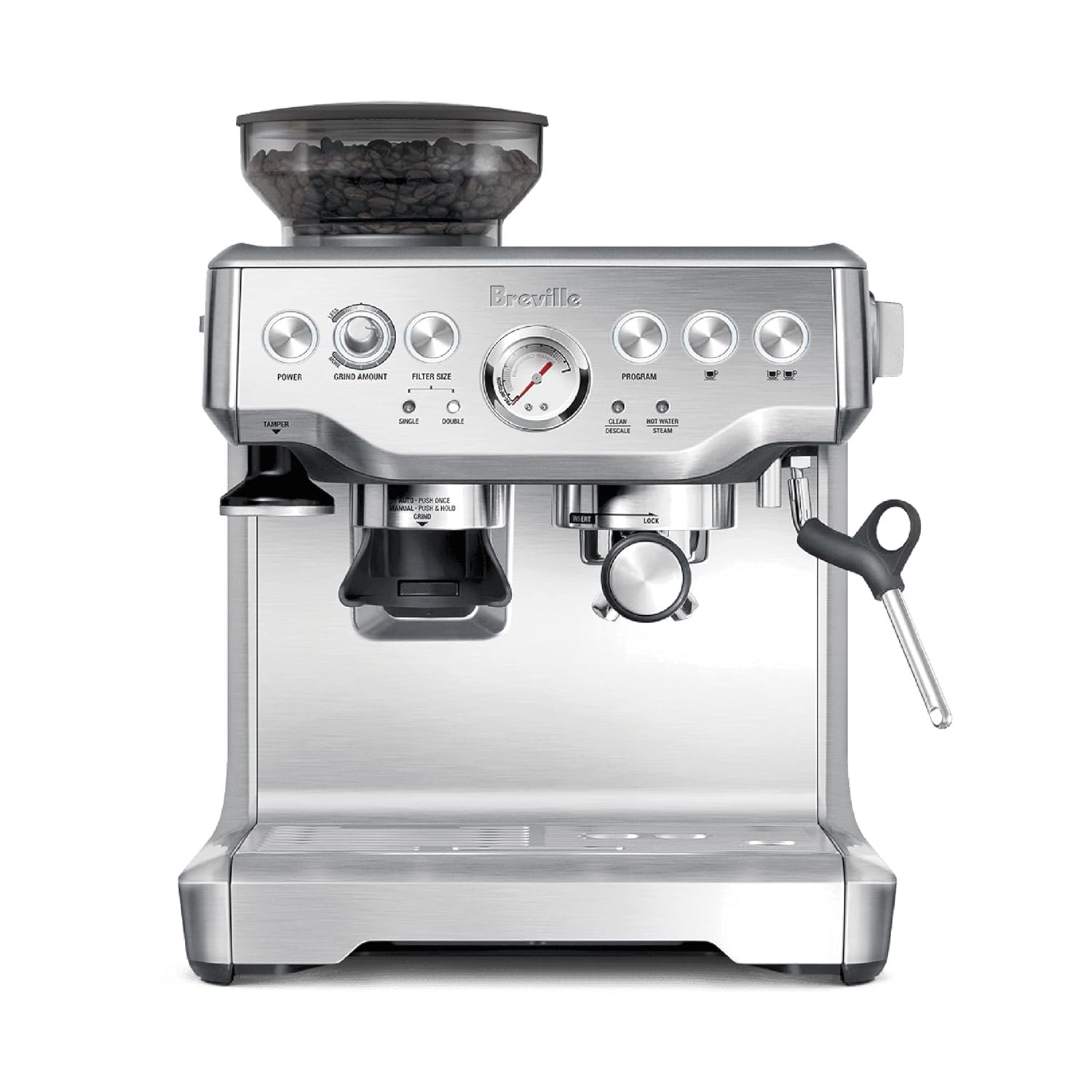
The Barista Express has been the default first real espresso machine for over a decade, and the reason is that it includes everything needed to pull a shot and then gets out of the way. A conical burr grinder doses straight into the portafilter, a grind size dial lets you chase a better extraction, and digital temperature regulation holds the water where it should be instead of letting a thermoblock swing.
Low pressure pre-infusion is the detail that makes the coffee forgiving. It wets the puck gently before ramping to full pressure, which settles the grounds and reduces channelling, so a slightly imperfect tamp still produces a drinkable shot. The steam wand is fully manual, which means you learn to texture milk and the first dozen attempts will be foam rather than microfoam. That is the trade: this machine rewards practice in a way the automatic ones cannot.
What it does well
- Grinder, dial, portafilter and tamper all in one body.
- PID temperature control rather than an unregulated thermoblock.
- Pre-infusion makes an imperfect tamp more forgiving.
- Parts and accessories are available everywhere after a decade on sale.
What to know before buying
- The manual wand has a real learning curve.
- It takes longer to reach temperature than the ThermoJet machines here.
- A large footprint that needs permanent worktop space.
2. Breville Barista Touch: The Same Coffee With the Decisions Removed
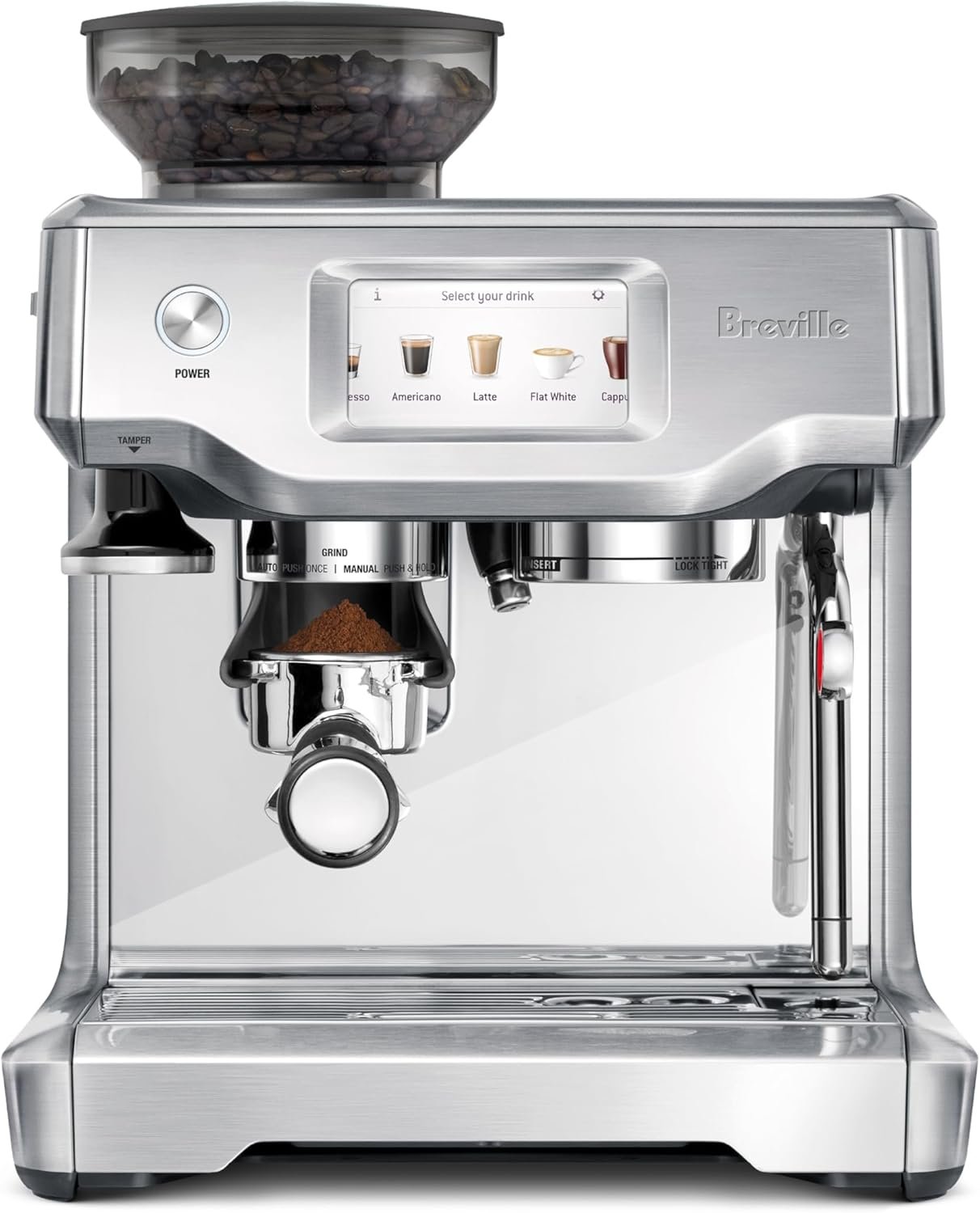
The Barista Touch is the Barista Express with a colour screen and two jobs taken away. The grinder runs at a single touch rather than a dial you interpret, and the steam wand textures the milk automatically to a temperature and texture you select instead of one you learn by ear.
ThermoJet heating is the other difference and it is bigger than it sounds. Three seconds to extraction temperature changes espresso from something you plan around into something you do on the way out of the door. The screen walks through each drink step by step, which makes this the machine to buy for a household where several people make coffee and only one of them is interested in how.
What it does well
- Automatic milk texturing to a chosen temperature and texture.
- ThermoJet reaches extraction temperature in about three seconds.
- Touchscreen guides each drink step by step.
- Keeps the conical burr grinder and pre-infusion of the Express.
What to know before buying
- Considerably more expensive than the Barista Express.
- A touchscreen is one more component that can fail.
- Automatic texturing removes the skill some buyers want to learn.
3. De’Longhi La Specialista Arte Evo: Cold Brew in Under Five Minutes

La Specialista Arte Evo is the closest competitor to the Barista Express and it differs in two useful ways. The grinder offers 15 settings aimed at single or double shots, and the steam wand is a commercial-style one that gets to pressure quickly, which makes manual texturing less frustrating than on cheaper machines.
The feature that sets it apart is cold extraction. It brews cold brew in under five minutes rather than over 12 to 24 hours, using a process De’Longhi developed with the Specialty Coffee Association. If cold coffee is a significant part of what the household drinks through summer, that is the difference between a machine that handles it and a jug living in the fridge. Three temperature settings and a 15 bar pump held at nine bars during extraction cover the hot side.
What it does well
- Cold extraction produces cold brew in under five minutes.
- 15 grind settings and a dose matched to single or double shots.
- Commercial-style steam wand reaches pressure quickly.
- Three selectable brew temperatures.
What to know before buying
- Still a manual wand, so milk texturing is on you.
- Cold brew is a feature you will either use constantly or never.
- More moving parts to clean than the Bambino Plus.
4. De’Longhi Magnifica Evo: The One That Does Everything Itself
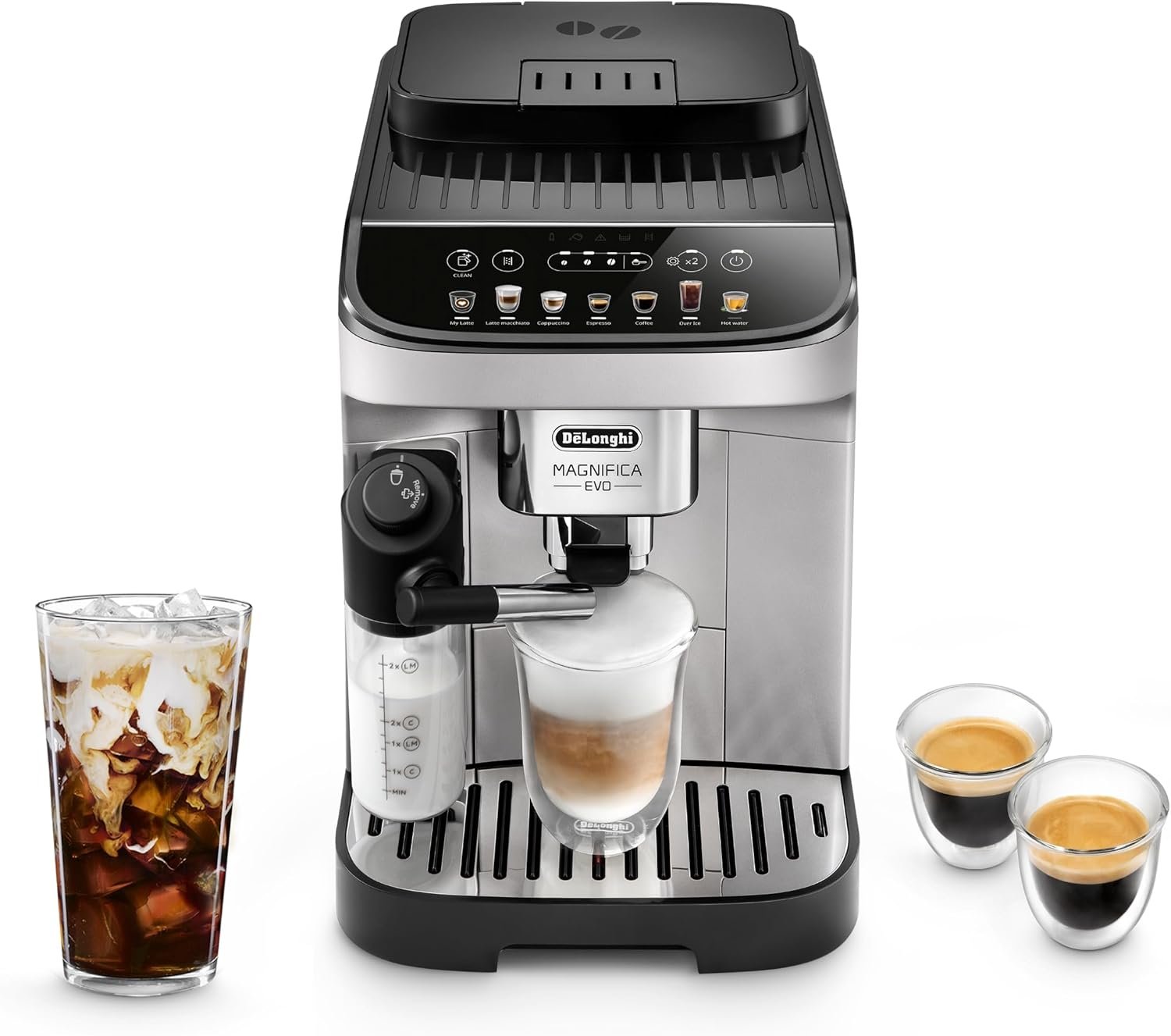
The Magnifica Evo is a bean to cup machine, which is a different category wearing the same name. Beans go in the top, the machine grinds, doses, tamps, extracts and froths, and a drink comes out. There is no portafilter to fill and no wand to point at a jug.
My Latte lets you save your own recipes, so each person in the house can store the strength and milk volume they want and press one button. The components that need cleaning are removable and dishwasher safe, which is the practical reason bean to cup machines survive in busy households and manual machines quietly stop being used. What you give up is control: you cannot chase a better extraction, because the machine is not asking your opinion.
What it does well
- Grinds, doses, extracts and froths without any input.
- Saved recipes per person through My Latte.
- Removable, dishwasher-safe parts.
- Produces the same drink every time regardless of who makes it.
What to know before buying
- No manual control over grind, dose or extraction.
- Bean to cup machines have more internal mechanism to go wrong.
- Serious coffee drinkers will find the ceiling low.
5. Breville Bambino Plus: Automatic Milk in the Smallest Body Here

The Bambino Plus is what happens when Breville takes the Barista Express, removes the grinder and keeps everything that affects the shot. The same ThermoJet three second heat-up, the same pre-infusion, a 54mm portafilter dosed at 19 grams, and an automatic steam wand that textures milk to a set temperature.
That combination makes it the right machine for two specific people. The first already owns a grinder and does not want to pay for a second one. The second has very little worktop and will not tolerate a machine the size of the Barista Touch. What you are giving up is the convenience of grinding into the portafilter, which means a second appliance and a second thing to clean.
What it does well
- Automatic milk texturing in the smallest footprint here.
- ThermoJet heating reaches temperature in about three seconds.
- 19 gram dose in a 54mm portafilter, which is a proper double.
- Pre-infusion carried over from the larger Breville machines.
What to know before buying
- No grinder, so budget for one separately.
- The small water tank needs refilling often.
- Fewer controls than the Barista Express for anyone who wants to tinker.
6. Nespresso Vertuo Pop+: Not Really Espresso, and Sometimes That Is Right
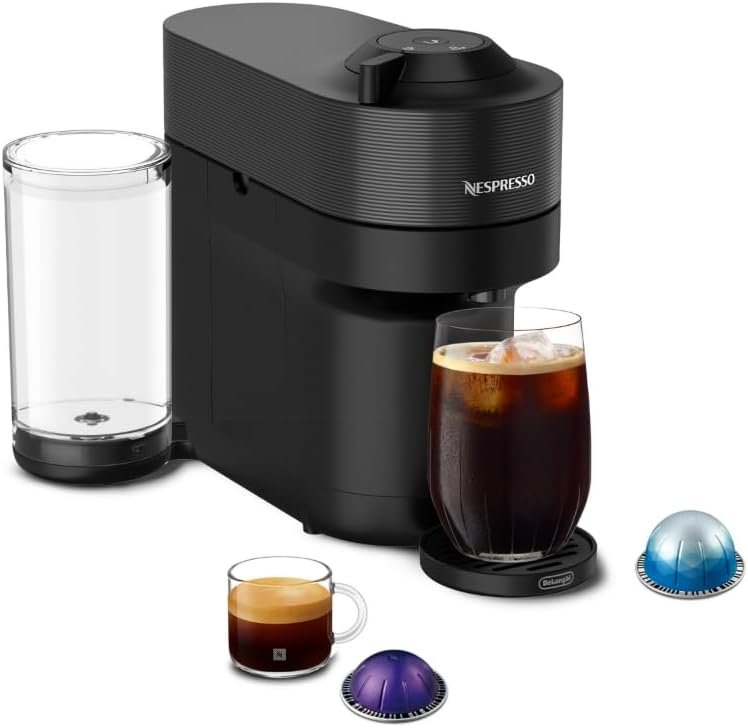
The Vertuo Pop+ is the honest outlier here. It takes sealed capsules, reads a barcode on the rim to set the brew for that specific coffee, and produces five sizes from a single espresso up to a 12 ounce cup, hot or over ice. There is no grinder, no portafilter and no steam wand.
It belongs in this guide because the alternative to a capsule machine is often not a better machine but no coffee at all. Thirty seconds from cold to a drink, a side-mounted 25 ounce tank, a descaling alert and an adjustable drip tray make it the one to put in an office, a guest room or a small flat. The real cost is ongoing: you buy Nespresso capsules rather than any coffee you like, though the aluminium ones are recyclable through the company scheme.
What it does well
- Thirty second heat-up and one-touch operation.
- Five drink sizes including espresso, served hot or over ice.
- Compact body with the water tank mounted on the side.
- Capsules are aluminium and recyclable through the maker.
What to know before buying
- You are locked into one brand of capsule.
- No steam wand, so milk drinks need a separate frother.
- Running cost per cup is the highest in this guide.
7. Chefman CraftBrew: The Cheapest Pump Machine Worth Considering
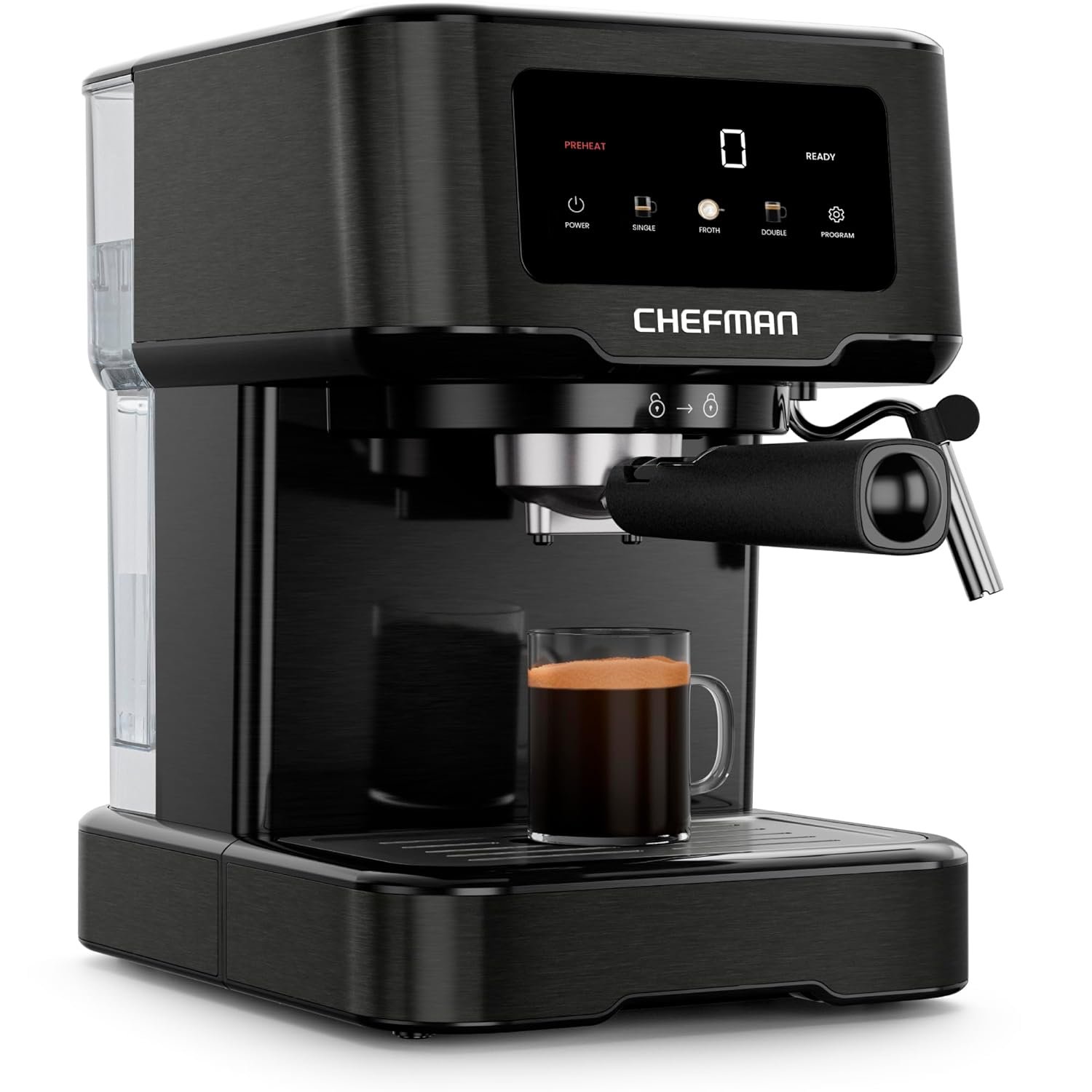
At the bottom of the range the distinction that matters is between a pump machine and a steam machine. A steam machine builds pressure by boiling water and produces something closer to strong coffee. A pump machine, like this one, drives water through the puck at genuine espresso pressure. The CraftBrew uses a 15 bar pump, which puts it in the right category.
You get two shot baskets for single and double shots, a built-in steam wand for cappuccinos and lattes, and a 1.5 litre removable tank that is larger than several machines costing considerably more. A descale alert fires after 500 brewing cycles, which removes the guesswork from the one maintenance job that kills cheap espresso machines. There is no grinder and no automation: this is the manual end of the category at the manual price.
What it does well
- A real 15 bar pump rather than a steam-pressure machine.
- Single and double shot baskets included.
- 1.5 litre removable tank, larger than several pricier machines.
- Descale alert after 500 cycles.
What to know before buying
- No grinder, so ground coffee or a separate burr grinder is required.
- Build quality is plastic where the Brevilles are steel.
- Manual wand with less steam power than the dedicated machines above.
How Much of the Work Do You Actually Want to Do
The failure mode in this category is buying a machine for the person you intend to become. A manual machine bought by someone with no interest in dialling in a grind becomes an expensive kettle within a month. An automatic machine bought by someone who wanted to learn becomes a source of mild resentment. Be honest about which you are.
- Buy a grinder-equipped manual machine if the process is part of the appeal and you will practise.
- Buy a guided machine with automatic milk if several people make coffee and only one cares how.
- Buy bean to cup if nobody wants to learn and everybody wants a latte.
- Buy a machine without a grinder only if you already own one.
- Buy capsules if the realistic alternative is instant coffee or no coffee.
Whichever you choose, the first week decides whether it sticks. Machines that need a five minute warm-up get used at weekends only, which is the strongest practical argument for the three second ThermoJet models. Building it into something already fixed helps more than enthusiasm does, which is the same point our guide to building a morning routine makes about habits generally.
Which of These Home Espresso Machines to Buy
For most people buying their first real machine, the Breville Barista Express remains the right answer. It includes the grinder, it teaches you something, and it has been supported long enough that parts are easy to find. If the household contains people who will not learn to steam milk, the Barista Touch is the same coffee with that job removed, and the Magnifica Evo removes every job at the cost of every decision.
La Specialista Arte Evo is the pick if cold brew matters, because nothing else here makes it in five minutes. The Bambino Plus is for a small worktop or an existing grinder. The Chefman is the sensible cheap pump machine, and the Vertuo Pop+ is the one to buy when the honest alternative is no espresso at all. Budget for descaling supplies whichever you pick, because scale is what actually kills these machines, the same slow neglect that ruins a cast iron skillet left wet. The other countertop machine that decides how a kitchen runs is covered in our guide to the best air fryers. If the appeal is simply hot coffee without the ceremony, our guide to the best coffee makers covers the cheaper category properly. At the other end of the effort scale, our guide to the best pour over coffee maker covers brewing by hand.
Frequently Asked Questions
Is a 20 bar pump better than a 15 bar pump?
No. Espresso extracts at around nine bars at the coffee puck, and the higher numbers describe what the pump can produce before the machine regulates it down. A 20 bar rating is a marketing figure rather than a quality one, and several of the best machines here quote 15.
Do I need a machine with a built-in grinder?
You need freshly ground coffee, which is not quite the same thing. If you already own a burr grinder, a machine without one is better value and takes less space. If you do not, a built-in grinder is cheaper than buying a decent separate one, and it grinds straight into the portafilter.
What is the difference between a pump and a steam espresso machine?
A steam machine builds pressure by boiling water in a sealed vessel and reaches far less than espresso pressure, producing strong coffee rather than espresso. A pump machine drives water through at genuine pressure. Every machine in this guide is a pump or capsule machine for that reason.
How often should an espresso machine be descaled?
It depends on water hardness and how much you brew. Most of these prompt you: the Chefman alerts after 500 brewing cycles and the bean to cup machines track it internally. Ignoring the prompt is the single most common reason a working machine stops working.
Related Articles
- Best Electric Toothbrushes: 7 Compared on Pressure Sensors and Modes
- Best Portable Power Stations: Watt-Hours, Output and What They Really Run
- How to Clean a Computer Screen Without Damaging the Coating
As an Amazon Associate, CanyonWire earns from qualifying purchases.