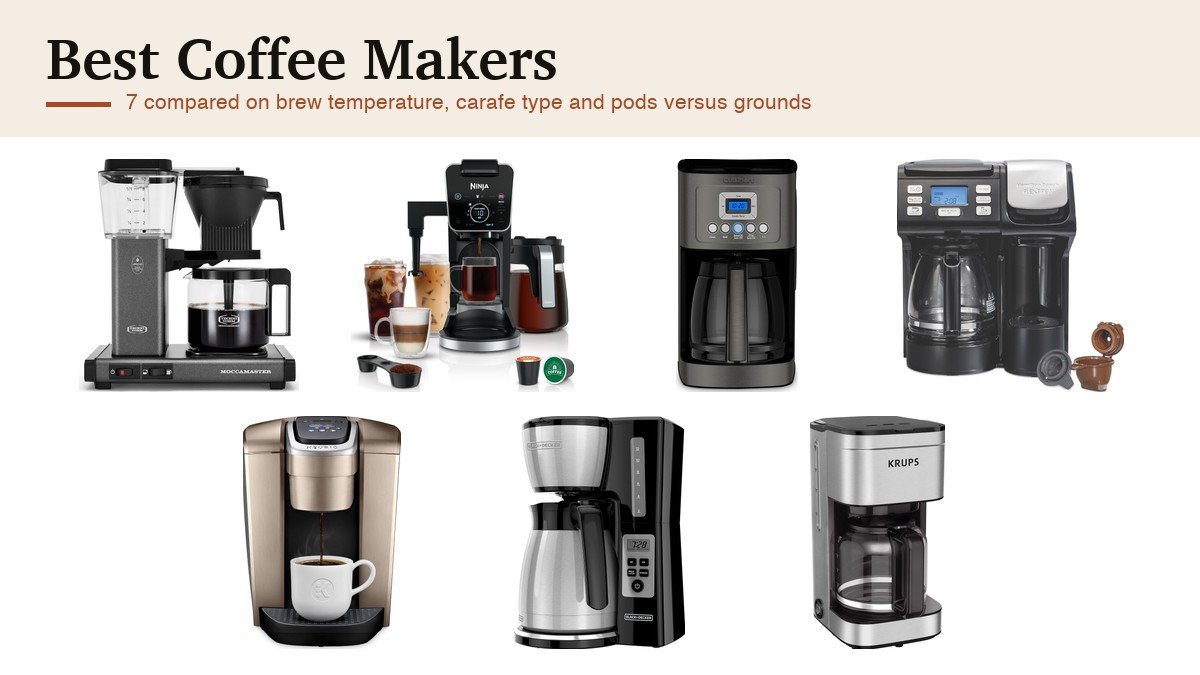
Cup count tells you how much coffee a machine can produce at once, not whether any of it is good. The specification that decides that is brew temperature, and it is the one almost no listing states. Water that reaches the grounds too cool extracts sour, thin coffee no matter how expensive the beans were, and the cheapest drip machines are cool because a small heating element is the easiest place to save money. If you only ever brew one cup at a time, our guide to the best single serve coffee maker covers the pod machines instead.
The Specialty Coffee Association certifies brewers that hold the correct extraction temperature and contact time, and exactly one machine in this guide is built around that standard. The rest trade temperature control for things people also want: pods, a second brew head, a thermal carafe, or a low price. The second decision is the carafe, because a hotplate slowly cooks coffee into bitterness while a vacuum flask does not, and the third is whether you need pods at all. The oven sharing that counter raises similar questions, and our toaster oven roundup compares French door, flip-away and smart designs.
Best Coffee Makers Compared on Capacity, Carafe and Brew Type
Read the carafe column alongside the capacity one. A 14 cup glass carafe on a hotplate is a different product from a 12 cup thermal one, even though the numbers look similar, because only one of them still tastes right an hour later.
| Coffee maker | Capacity | Carafe | Brews from | Standout feature |
|---|---|---|---|---|
| Technivorm Moccamaster KBGV Select | 10 cups, 40 oz | Glass on a hotplate | Grounds only | Pump-free heating to the correct extraction temperature |
| Ninja DualBrew Pro CFP301 | 12 cup carafe plus single serve | Glass | Grounds and K-Cup pods | 13 brew sizes across carafe, cup and travel mug |
| Cuisinart PerfecTemp 14-Cup | 14 cups | Glass on a hotplate | Grounds only | Brew strength control and a gold tone permanent filter |
| Hamilton Beach FlexBrew Trio | 12 cup carafe plus single serve | Glass | Grounds and pods | Single cup in about 90 seconds from a 56 oz reservoir |
| Keurig K-Elite | Single serve, 4 to 12 oz | None | K-Cup pods | Strength and temperature control plus hot water on demand |
| BLACK+DECKER 12 Cup Thermal | 12 cups | Four-layer vacuum thermal | Grounds only | Keeps coffee hot two hours with no hotplate |
| KRUPS Simply Brew 10 Cup | 10 cups, 1.5 L | Glass with keep warm | Grounds only | Pause and brew with a reusable filter included |
Brew Temperature and the Carafe Decide How the Coffee Tastes
Drip brewing is a simple process done badly by most machines. Water has to reach the bed of grounds hot enough to extract properly and stay in contact long enough to finish, and a weak heating element fails the first condition while a fast drip fails the second. The Moccamaster is the only machine here built explicitly around getting that right, using a pump-free heating element rather than the thermoblock and pump arrangement everything else uses.
The carafe does the damage afterwards. A glass carafe sitting on a hotplate keeps cooking the coffee, driving off aromatics and concentrating bitterness, which is why a pot that was good at eight is unpleasant by nine. A vacuum-insulated thermal carafe simply holds the heat, and the BLACK+DECKER here quotes two hours without any hotplate at all. If you brew a full pot and drink it over a morning rather than in one go, that single feature matters more than anything else on the specification sheet.
Water is the third variable and the one people never change. Coffee is almost entirely water, and in a hard supply, which covers most of the United States, scale builds inside the machine and slows the brew while minerals change the taste in the cup. Every machine here needs descaling, and the ones with reusable filters also need those rinsed properly rather than knocked out. For the rest of the brewing methods that do not involve a machine at all, grind size and water temperature matter in exactly the same way, which is the argument for a temperature-controlled kettle alongside any of these.
1. Technivorm Moccamaster KBGV Select: The One Built Around Temperature
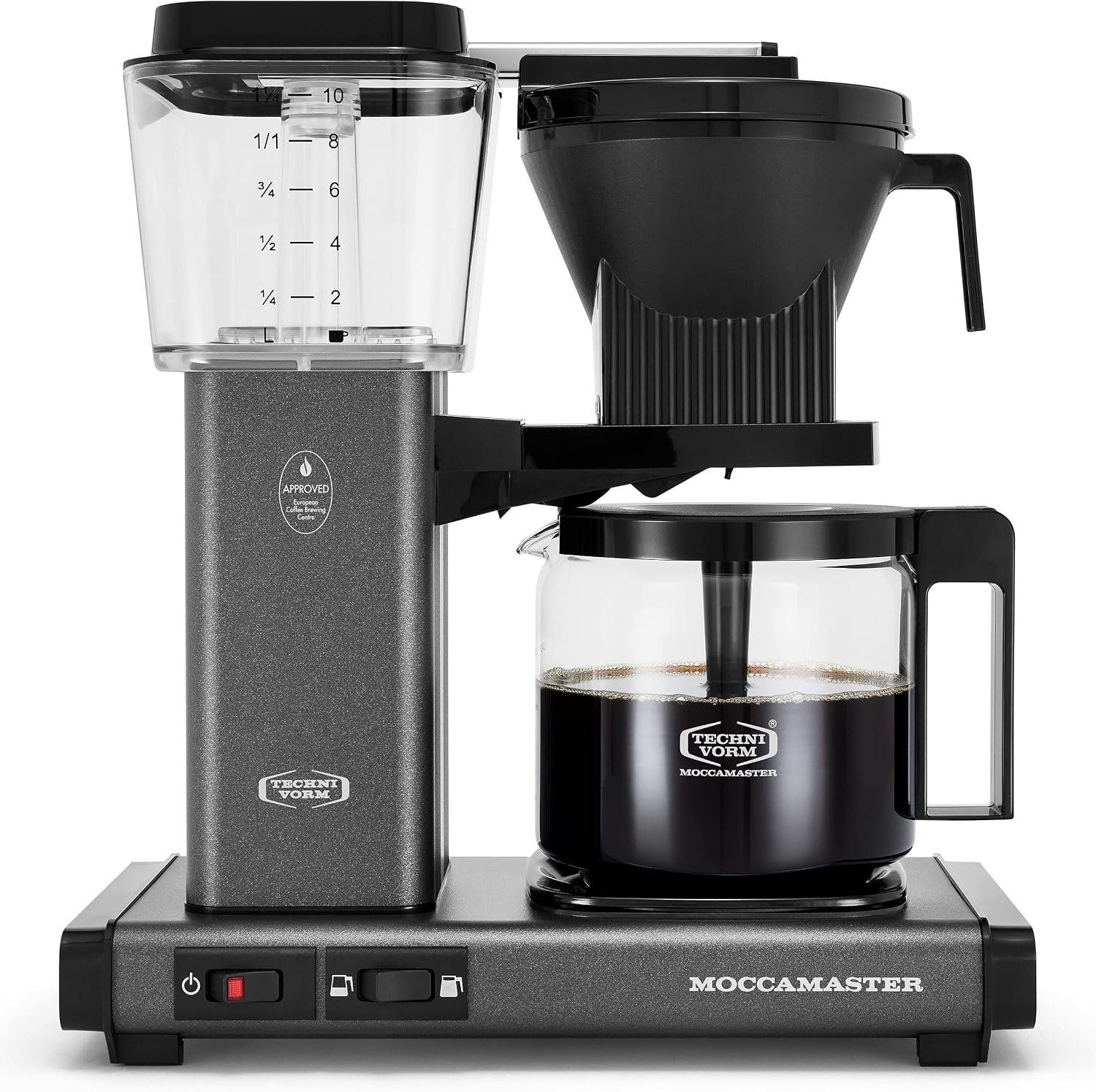
The Moccamaster is the machine people buy when they have decided the coffee matters more than the features, and it has almost no features. One switch, a brew-volume selector for a half or full carafe, and a copper heating element that brings water to the correct extraction temperature without a pump.
A full 40 ounce pot takes four to six minutes, which is fast enough to keep the grounds in the right contact window rather than dribbling through for a quarter of an hour. It runs quietly, shuts off automatically after 100 minutes, and carries a five-year warranty, which is the longest here by a wide margin and tells you something about how it is built. Every part is replaceable. This is a machine bought once rather than repeatedly, and that is the honest case for the price.
What it does well
- Pump-free heating holds the correct extraction temperature.
- A full 40 oz carafe in four to six minutes.
- Five-year warranty with replaceable parts throughout.
- One switch and a half-carafe selector, nothing else to learn.
What to know before buying
- By far the most expensive machine in this guide.
- No programmable timer, so no waking up to coffee.
- A glass carafe on a hotplate rather than a thermal one.
2. Ninja DualBrew Pro: Pods and Grounds Without Choosing
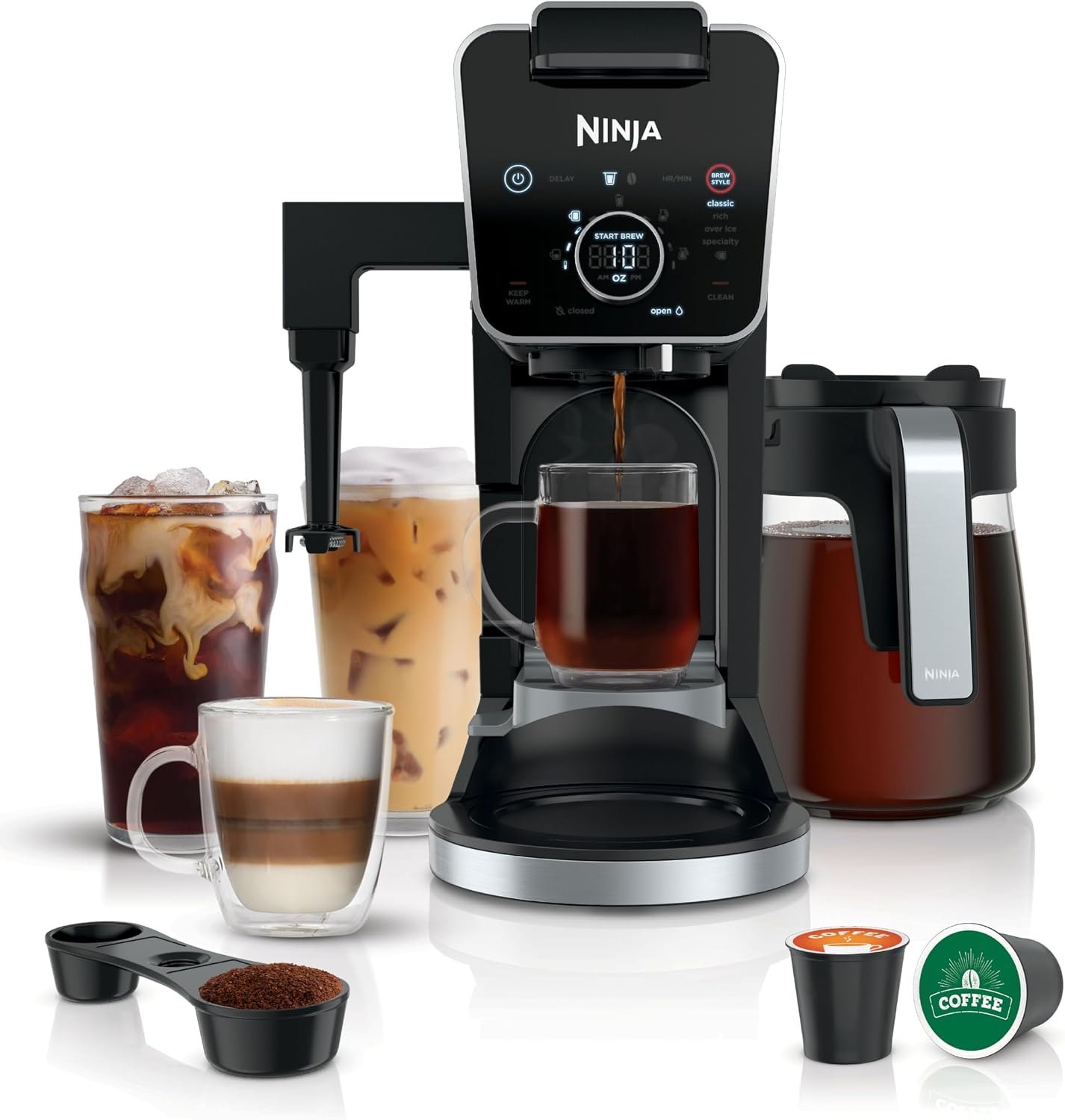
The DualBrew Pro exists because households rarely agree. One side takes ground coffee for a carafe up to 12 cups, the other takes K-Cup pods, and both run through the same body on one plug and one footprint. Ninja counts 13 brew sizes across the two: five from grounds including travel mug sizes, four carafe fractions and four pod sizes.
Four brew styles cover Classic, Rich, Over Ice and Specialty, the last producing a concentrate for lattes and cappuccinos, and a water setting handles tea. Thermal Flavor Extraction is Ninja’s name for saturating the bed evenly at a controlled temperature, which is the part most dual machines skip. The honest caveat is complexity: this is the machine with the most buttons here, and some of the modes will never get used.
What it does well
- Grounds and pods in one body with a single footprint.
- 13 brew sizes including travel mug and carafe fractions.
- Specialty setting makes concentrate for milk drinks.
- Over Ice setting brews properly rather than just brewing hot.
What to know before buying
- The most complicated machine here to learn.
- A glass carafe on a hotplate.
- Takes up considerably more worktop than a single-purpose brewer.
3. Cuisinart PerfecTemp 14-Cup: The Big Programmable Workhorse
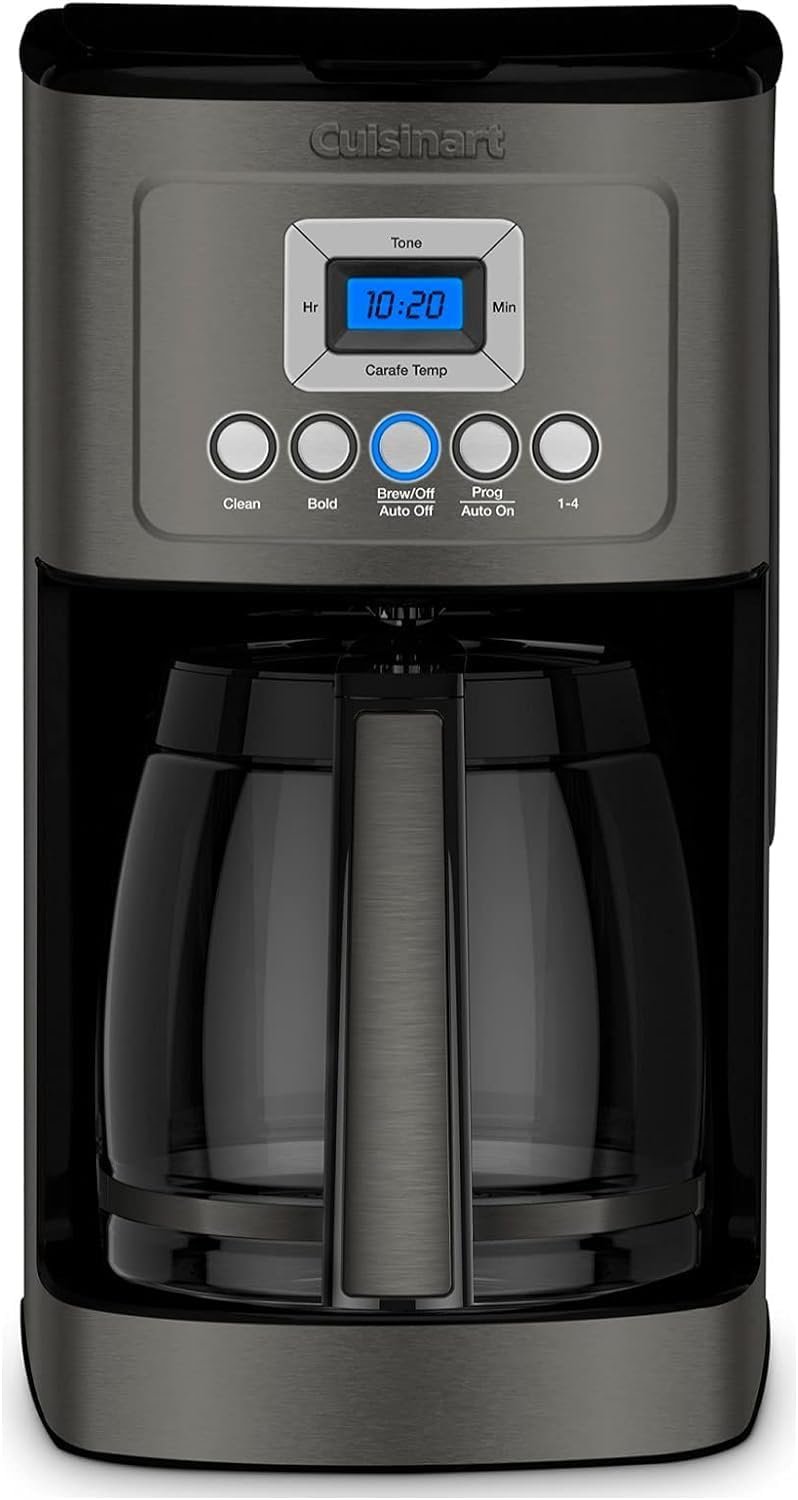
Fourteen cups is the largest capacity in this guide and it exists for households and offices where the pot is refilled rather than savoured. Cuisinart builds this one around hotter brewing without scorching, with a brew strength control that switches between regular and bold by changing how the water passes through the bed.
The gold tone commercial-style permanent filter is the quietly useful part. It removes paper filters from the running cost entirely and lets more of the coffee oils through, which produces a heavier cup that some people prefer and others do not. A 1 to 4 cup setting adjusts the brew for small batches, which is the feature large machines usually get wrong by running the same programme regardless of volume.
What it does well
- Fourteen cups, the largest capacity in this guide.
- Brew strength control for regular or bold.
- Permanent gold tone filter removes paper from the running cost.
- A 1 to 4 cup setting for small batches.
What to know before buying
- Glass carafe on a hotplate, so the pot degrades as it sits.
- A permanent filter lets more sediment through than paper.
- Large and tall, so check the clearance under cabinets.
4. Hamilton Beach FlexBrew Trio: Three Ways to Brew, Fast
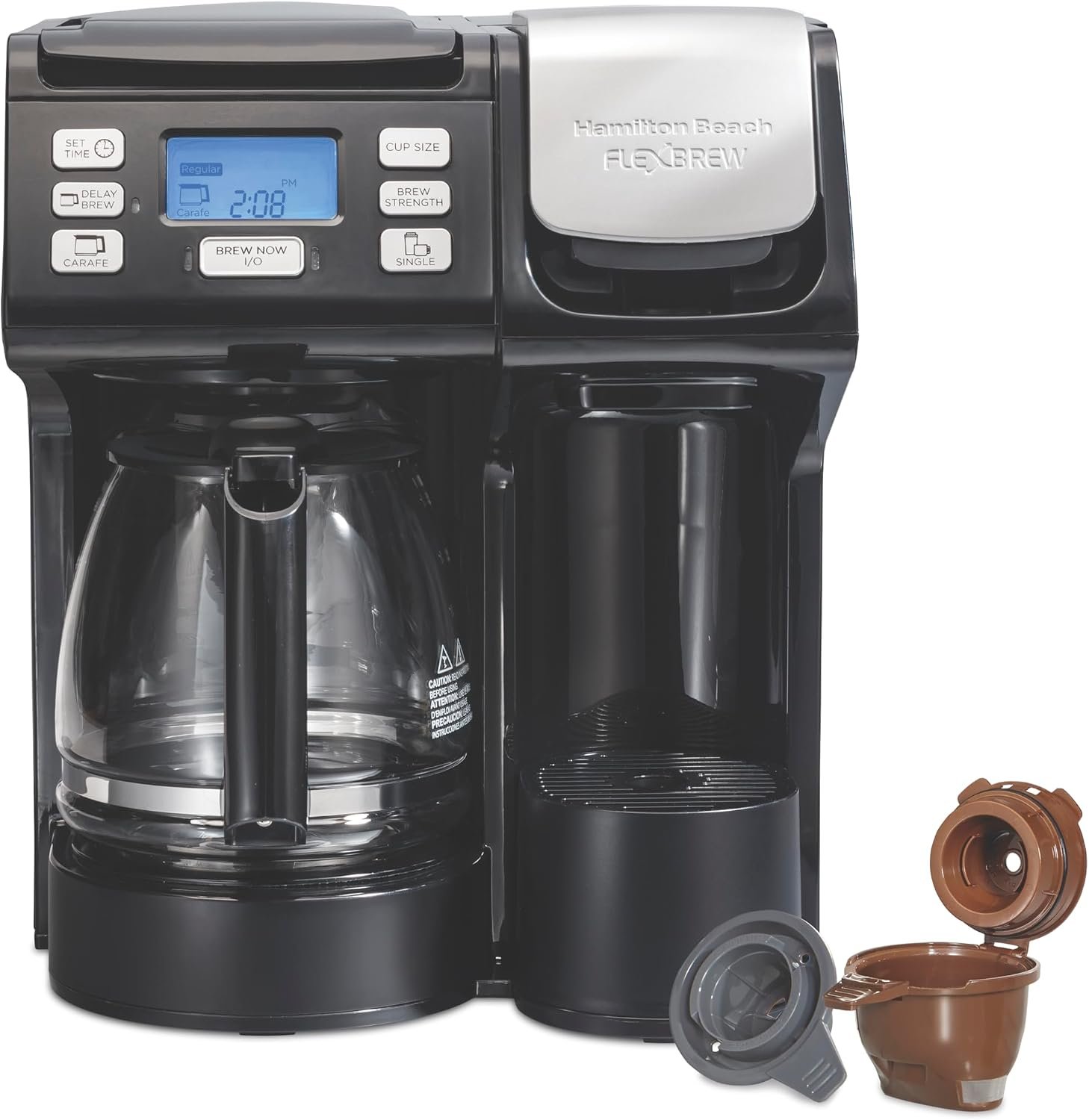
The FlexBrew Trio does what the Ninja does and emphasises speed instead of modes. A single cup brews in about 90 seconds, which is the number that decides whether a machine gets used on a weekday morning, and the 56 ounce removable reservoir holds about seven single servings before it needs refilling.
Three brewing routes are genuinely distinct: a pod for up to 10 ounces, ground coffee for a single cup up to 14 ounces in a seven inch travel mug, or ground coffee for a full 12 cup carafe. Five single-serve sizes let you match the cup rather than overfilling it. Easy-Touch programming sets the carafe side the night before, which the pod-only machines in this category cannot do at all.
What it does well
- A single cup in about 90 seconds.
- 56 oz reservoir covers about seven servings between refills.
- Brews single cups from grounds as well as pods.
- Programmable the night before for the carafe side.
What to know before buying
- A glass carafe rather than thermal.
- A wide body to accommodate two brew heads.
- The pod side tops out at 10 ounces.
5. Keurig K-Elite: The Pod Machine With Actual Controls
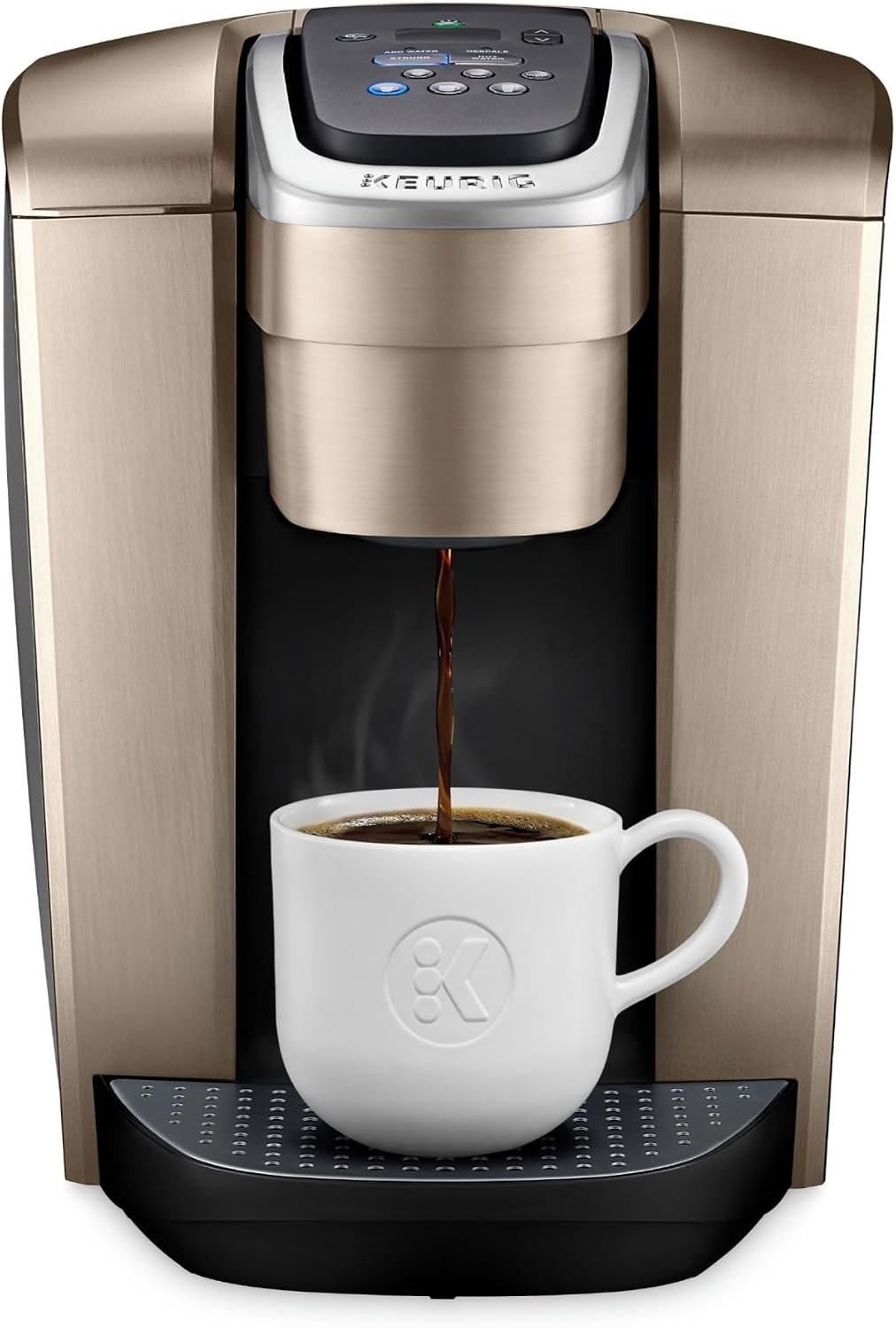
Most pod machines give you a size button and nothing else. The K-Elite adds the two controls that address the usual complaints: a strong brew setting that slows the water for a more intense cup, and temperature control so you are not stuck with whatever the factory decided.
Five cup sizes run from 4 to 12 ounces, an iced setting brews hot over ice properly rather than producing warm diluted coffee, and a hot water on demand button covers soup and oatmeal without a kettle. A water filter handle and filter are in the box, which matters more on a pod machine than anywhere else because there is no paper filter catching anything. This is the pod machine to buy if you are buying one, and the running cost per cup remains the highest of anything here.
What it does well
- Strength control produces a genuinely more intense cup.
- Adjustable brew temperature, rare on pod machines.
- Iced setting and hot water on demand.
- Water filter included in the box.
What to know before buying
- Highest cost per cup in this guide.
- Locked to pods, with the waste that implies.
- No carafe, so it cannot serve a table.
6. BLACK+DECKER 12 Cup Thermal: The Carafe That Keeps Coffee Drinkable
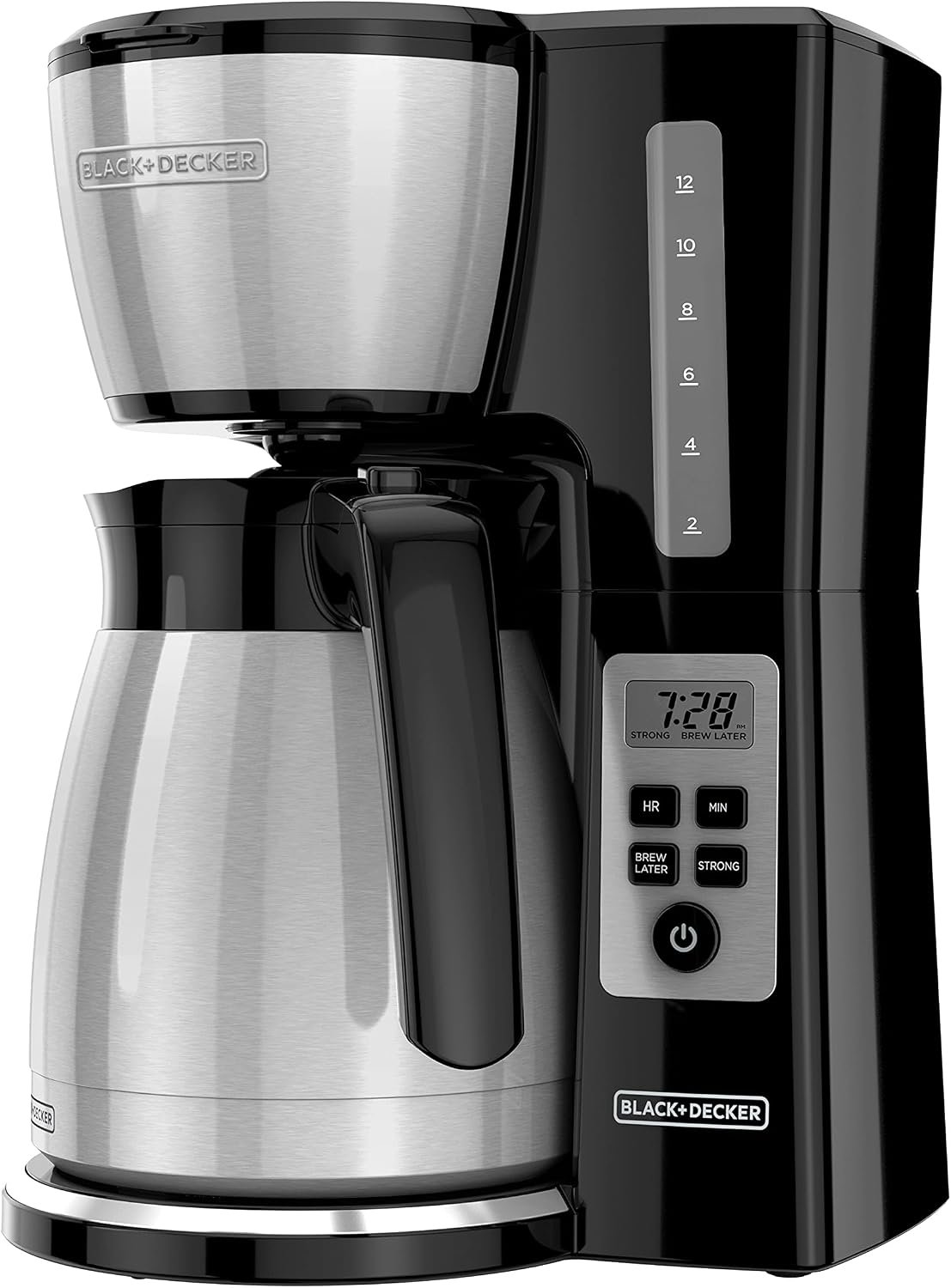
This is the machine to buy if you brew a pot and drink it across a morning. The four-layer vacuum-sealed thermal carafe keeps coffee hot for up to two hours with no warming plate at all, which means the coffee at the end of the pot tastes like the coffee at the start rather than like something that has been stewing.
Vortex is BLACK+DECKER’s showerhead design, intended to saturate the bed evenly instead of drilling a hole through the middle of it, and a strong button slows the brew for a richer cup. The 24-hour programmable timer wakes up to fresh coffee, and heating stops automatically once brewing finishes while the display stays lit to show how long ago it brewed. One instruction worth following: preheat the carafe with hot water first, because a cold flask takes the first cup down with it.
What it does well
- Four-layer vacuum carafe holds heat for two hours with no hotplate.
- Showerhead design saturates the bed rather than channelling.
- Strong button for a slower, richer brew.
- 24-hour programmable with automatic shutoff.
What to know before buying
- Thermal carafes need preheating for the best result.
- You cannot see the coffee level through a steel flask.
- Harder to clean inside than a glass carafe.
7. KRUPS Simply Brew 10 Cup: The Straightforward Cheap One
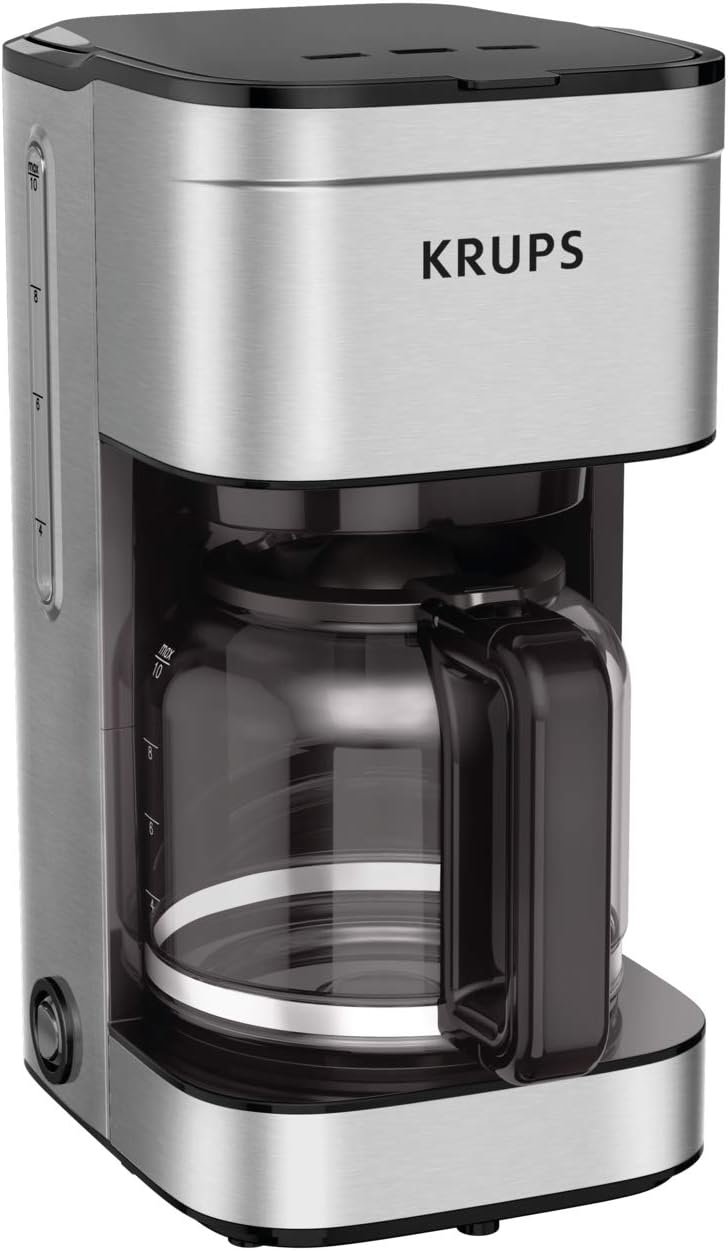
Not every kitchen needs modes. The Simply Brew is a 900 watt, 1.5 litre drip machine with an on and off button, a keep warm function you control manually, and a reusable filter and measuring spoon in the box so there is nothing further to buy.
Pause and Brew lets you pull the carafe out mid-cycle for a cup without flooding the basket, which is the one feature every cheap machine should have and many do not. The stainless body wipes clean, the carafe is dishwasher safe and the spout is designed not to drip down the side. Ten cups is enough for a household, and the absence of a programmable timer is the main thing separating it from the machines above.
What it does well
- Reusable filter and measuring spoon included.
- Pause and brew for a cup mid-cycle.
- Keep warm you switch off yourself rather than on a timer.
- Dishwasher-safe carafe and a wipe-clean stainless body.
What to know before buying
- No programmable timer, so no coffee waiting for you.
- Glass carafe on a warming plate.
- No brew strength control of any kind.
Choosing Between Pods, Grounds and a Thermal Carafe
Three questions settle this category, and none of them is about cup count. How many people drink coffee at the same time, how long the pot sits before it is finished, and whether anyone will tolerate measuring grounds on a weekday morning.
- One person, in a hurry, every morning: a pod machine, and accept the cost per cup.
- A household where one wants a pot and another wants a cup: a dual machine with both heads.
- A full pot drunk slowly across a morning: a thermal carafe, not a hotplate.
- Coffee quality above everything: a machine built around brew temperature.
- A tight budget: a simple drip machine with pause and brew and a reusable filter.
- Any of them: descale on schedule, because scale changes the taste before it stops the machine.
Espresso is a separate category rather than a better version of this one, and buying a drip machine hoping it will make espresso ends badly. The pressure, grind and dose are different problems, which our guide to the best home espresso machines goes through. If the appeal is simply hot coffee without ceremony, the machines here do it better and for less. Manual brewing is the third category, and our guide to the best pour over coffee maker covers drippers and the machines that automate them.
Which of These Coffee Makers to Buy
If the coffee itself is the point, the Technivorm Moccamaster KBGV Select is the only machine here built around hitting the right extraction temperature, and the five-year warranty with replaceable parts makes the price a different calculation from the rest. For a household that cannot agree, the Ninja DualBrew Pro and the Hamilton Beach FlexBrew Trio both brew from pods and grounds, with Ninja offering more modes and Hamilton Beach offering more speed.
The BLACK+DECKER thermal is the pick if a pot gets finished slowly, because the carafe solves the problem every glass machine here has. The Cuisinart PerfecTemp is the large programmable workhorse for a busy kitchen or a small office. The Keurig K-Elite is the pod machine worth owning, with real strength and temperature controls, and the KRUPS Simply Brew is the honest cheap option for anyone who just wants coffee. Pair any of them with water you have thought about and a descaling routine you actually follow, the same maintenance logic our guide to the best air fryers applies to coatings.
Frequently Asked Questions
Does brew temperature really change the taste?
Yes, and it is the main reason cheap drip machines produce sour, thin coffee from good beans. Water that arrives below the correct extraction range pulls out the acids without the sugars that balance them. It is also the specification almost no listing publishes, which is why certification programmes exist.
Is a thermal carafe better than a glass one?
If the pot is not finished immediately, yes. A hotplate keeps cooking the coffee and drives off aromatics, so a pot that was good when brewed turns bitter within the hour. A vacuum carafe holds the heat without applying any, and the trade is that you cannot see the level and it wants preheating first.
Are pod machines worth it?
For one person in a hurry, often yes, provided you accept the highest running cost per cup in this guide and the packaging that comes with it. For more than one person drinking at the same time, a carafe machine or a dual machine makes more sense, because a pod brewer serves one cup at a time by design.
How often should a coffee maker be descaled?
It depends entirely on water hardness rather than on a schedule. In a hard water area the brew slows noticeably within a few months as the element and tubing fur up, and the taste changes before the machine does. Descale when the brew time lengthens, and rinse reusable filters properly rather than just emptying them.
Related Articles
- Best Electric Toothbrushes: 7 Compared on Pressure Sensors and Modes
- Best Robot Vacuums: 7 Compared on Suction, Mopping and Docks
- How to Season a Cast Iron Skillet the Way Lodge Actually Says To
As an Amazon Associate, CanyonWire earns from qualifying purchases.