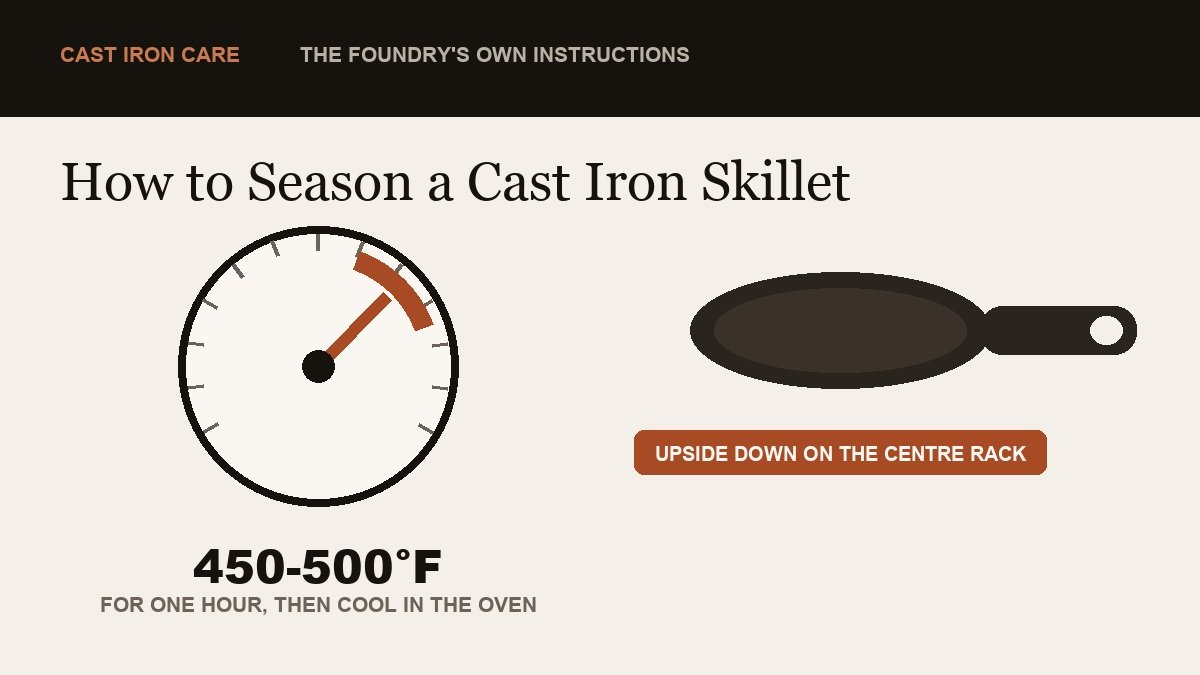
Lodge, the largest maker of cast iron, publishes its own seasoning method, and it is far shorter than the ritual these pans have acquired. Soap is fine. A new pan usually needs no seasoning at all. And the oven step, when you do need it, runs hot and brief.
What follows is Lodge’s own method, from the company that has been casting iron in South Pittsburg, Tennessee for over a century. The temperatures, the timings and the oil choices are theirs rather than kitchen folklore.
What Seasoning Actually Is
Seasoning is not a coating you apply and it is not a flavour. Lodge defines it as oil baked onto the pan through polymerization: heat oils or fats in cast iron hot enough and they change from a wet liquid into a slick, hardened surface that is molecularly bonded to the iron.
- It is a chemical bond, not a layer sitting on top of the metal.
- It builds with use, because every time you cook with oil you add another layer.
- Early layers look patchy, which Lodge describes as normal.
- Those patches interlock over time, Lodge’s phrase is like puzzle pieces, into a continuous non-stick surface.
It also explains why a well-used pan beats a carefully prepared one. Layers built during cooking are laid down thin and often, at the temperatures food is actually cooked at, which is exactly the condition that polymerises oil cleanly. A single heavy oven session cannot reproduce that, which is why the oven method is a repair rather than a routine.
That last point reframes the whole task. The goal is not one perfect oven session, it is a pan that gets used. Lodge says the best and easiest way to maintain seasoning is simply to cook in it regularly, and that uneven early layers do not need correcting.
Does a New Skillet Need Seasoning?
Usually not, and this is the step most people waste an afternoon on. Every piece of Lodge cast iron is seasoned in the foundry and is ready to use straight from the box, with no seasoning required at home.
A new pan sometimes carries a small spot or mark that looks unfinished or rusty. Lodge explains it: the cookware is seasoned on a hanging conveyor, which can leave a bubble or spot where the pan hung. If it chips away and shows brown underneath, that is oil which has not fully carbonised rather than rust, and it is safe. Regular use makes it disappear.
How to Season a Cast Iron Skillet in the Oven
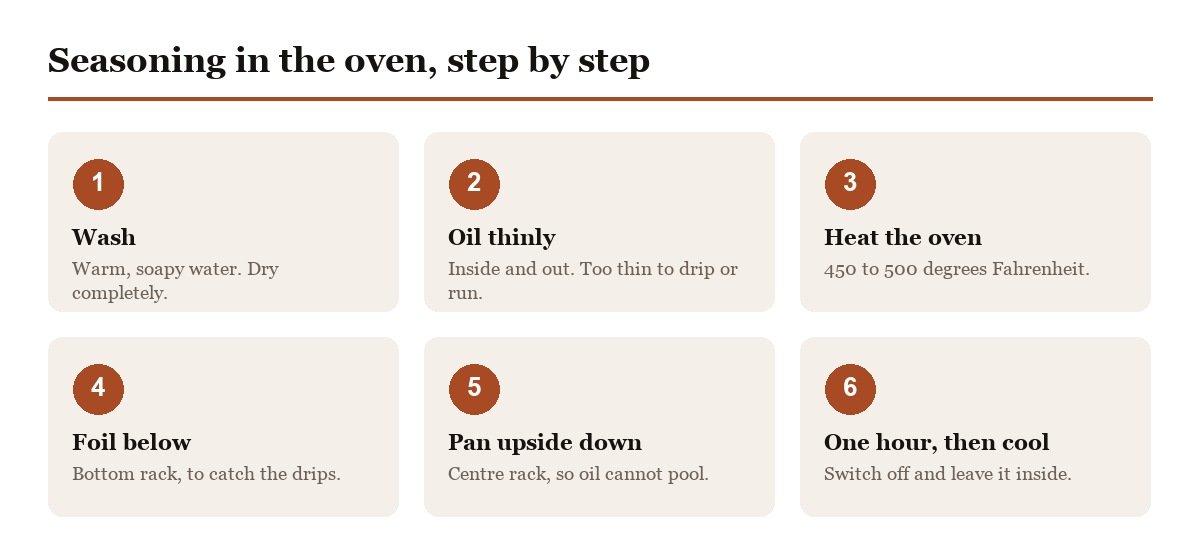
Re-seasoning is for a pan that has been stripped, scoured back or recovered from rust. Three steps, about an hour and a quarter in total, most of it unattended.
- Wash the pan in warm, soapy water and dry it completely with a paper towel or lint-free cloth.
- Apply a very thin layer of cooking oil inside and out with a cloth or lint-free paper towel. Lodge is specific: not enough to drip or run when you tilt it.
- Preheat the oven to 450 to 500 degrees Fahrenheit.
- Lay aluminium foil on the bottom rack to catch excess oil.
- Put the cookware upside down on the centre rack, which stops oil pooling on the cooking surface.
- Bake for one hour, then turn the heat off and let the pan cool in the oven so the seasoning adheres further.
Two details do the heavy lifting. Upside down is what prevents the sticky, tacky finish people complain about, because pooled oil cannot polymerise evenly. And too much oil is the single most common error: if the surface looks wet rather than barely darkened, wipe more of it off before the pan goes in.
Which Oil to Use
Lodge splits the answer in two. For cooking, use whatever suits the recipe. For re-seasoning, reach for an oil with a high smoke point, and the Lodge test kitchen names vegetable oil, melted shortening or canola oil.
- High smoke point for the oven step, because the pan is going to 450 degrees or above.
- Vegetable, canola or melted shortening are the three Lodge uses itself.
- Thin beats generous whichever oil you pick.
- Any cooking fat adds seasoning during normal use, which is where most of it comes from.
Cleaning: Three Steps, and Soap Is Allowed
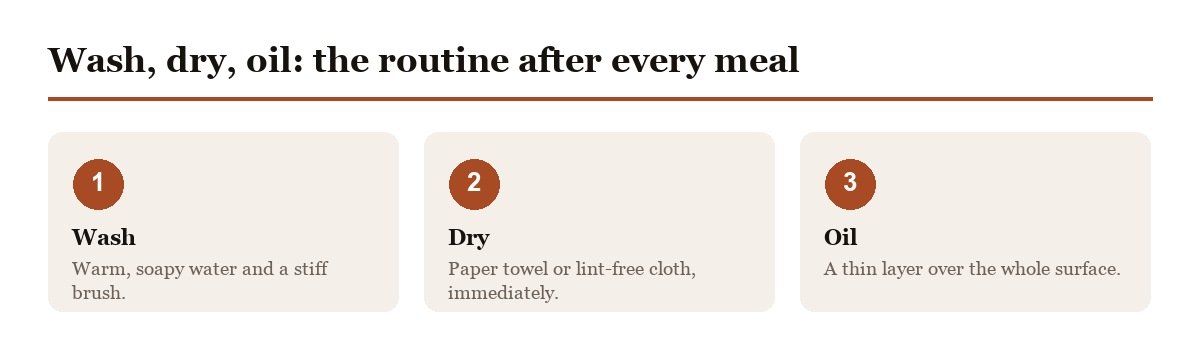
Lodge’s cleaning routine is wash, dry, oil, and it takes a minute.
- Wash in warm, soapy water with a stiff-bristled brush or a scrubbing pad.
- Dry completely with a paper towel or lint-free cloth.
- Oil with a thin layer spread over the whole surface with a paper towel.
On the soap question Lodge could not be plainer: soap is totally okay, because modern dish soap is no longer strong enough to remove seasoning, and it is an easy way to prevent buildup. The myth dates from an era of lye-based soaps that no longer exist in a domestic kitchen. Drying properly is the part that genuinely matters, and a lint-free cloth does it faster than a tea towel.
What Causes Rust, and How to Reverse It
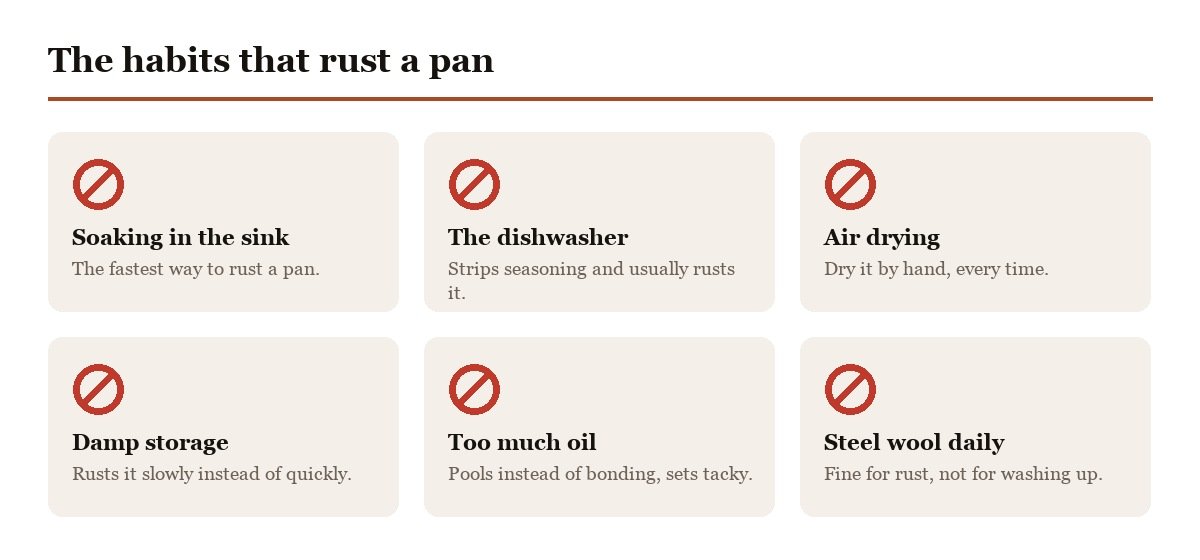
Lodge names four habits that rust a pan: leaving it to soak in the sink, putting it in the dishwasher, letting it air dry, and storing it somewhere damp. All four come down to water sitting on bare iron. The appliance beside it has the opposite problem, because scale builds where water sits inside: our guide to the best electric kettles favours the ones you can get a hand into. Scale is the equivalent failure on a coffee machine, which our guide to the best home espresso machines treats as the job that decides how long one lasts.
- Never soak it. For stuck-on food use a nylon brush or a pan scraper and rinse under warm water.
- Never put it in the dishwasher, which strips the seasoning and usually causes rust.
- Never let it air dry. Dry it by hand, immediately.
- Steel wool is fine for rust, though Lodge does not recommend it for daily cleaning.
Recovery is straightforward. Scour the rust off with a rust eraser or a steel wool scrubber, washing in warm soapy water and drying completely. Apply a very thin, even layer of oil inside and out. For light rust that is the end of it. For heavier rust, run the full oven cycle above and the pan is back in service. Nonstick coatings fail differently and cannot be recovered at all, which our guide to the best air fryers explains.
Enamelled Cast Iron Is Not the Same Pan
One distinction saves a lot of confusion, because the two products share a name and share almost no care instructions. Everything above applies to bare, seasoned cast iron.
- Seasoned cast iron is bare metal with a polymerised oil layer you maintain.
- Enamelled cast iron is iron under a glass coating, and it has no seasoning at all.
- Lodge says to hand wash enamel in warm, soapy water, and nothing more.
- Never oil enamel after washing, because there is no iron exposed for it to bond to.
The failure modes differ too. Bare iron rusts when it stays wet; enamel chips when it is heated empty or cooled too fast. If your pan is a colour other than black all the way through, treat it as enamel and skip the seasoning entirely.
Everyday Habits That Keep It Going
- Cook in it often, which is the seasoning method Lodge recommends above all others.
- Dry it on a warm hob for thirty seconds if you want certainty about moisture.
- Store it dry and uncovered, or with a paper towel between stacked pans.
- Do not judge it by colour, since patchy and brown is a stage, not a fault.
Cast iron is also the default for cooking over a fire, which is part of why it outlasts everything else in the cupboard. If your cooking happens away from a kitchen, our comparison of portable power stations covers keeping a light and a cool box running at the same site.
Frequently Asked Questions
How long does it take to season a cast iron skillet?
About an hour and a quarter, of which an hour is baking and most of the rest is cooling. The oven runs at 450 to 500 degrees Fahrenheit for that hour, then you switch it off and leave the pan inside to cool, which is when the seasoning finishes bonding to the iron.
Can you use soap on cast iron?
Yes. Lodge states that soap is fine, because the dish soap sold today is not strong enough to strip seasoning, and washing with it prevents buildup. Soaking and the dishwasher are the things to avoid, not soap itself.
What temperature do you season cast iron at?
450 to 500 degrees Fahrenheit for one hour, with the pan upside down on the centre rack and foil on the rack below to catch drips. Turn the oven off afterwards and let the pan cool inside it.
Why is my cast iron sticky after seasoning?
Too much oil, almost always. Lodge specifies a layer so thin it will not drip or run when the pan is tilted. Excess oil pools instead of polymerising and sets tacky. Wipe more off next time and bake it upside down so gravity helps.
Do you need to season a new cast iron skillet?
Not if it is sold pre-seasoned. Lodge seasons every piece at the foundry and says it is ready to use from the box with no seasoning required at home. Seasoning in the oven is for stripped, scoured or rusted pans.