Sites like Etsy fall into two groups that are easy to confuse and expensive to mix up. Some are marketplaces, where a fee buys access to people already shopping. The rest are store platforms, where the fee is small and nobody arrives unless you bring them.
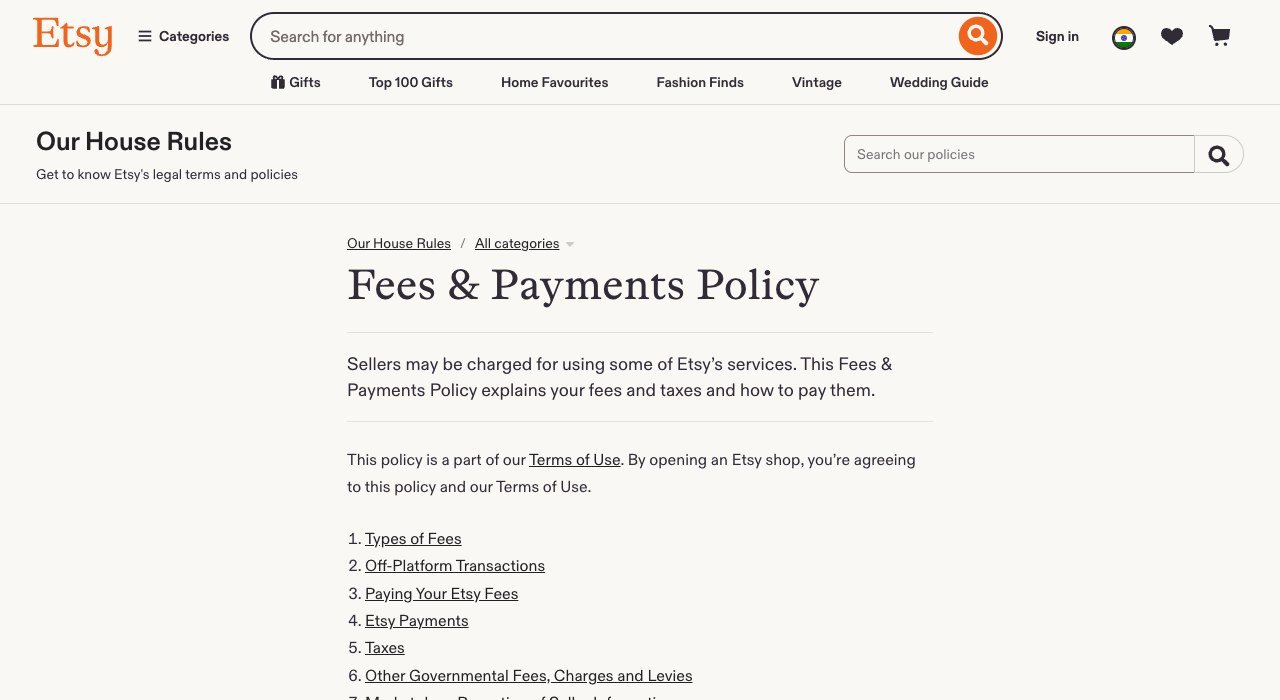
Etsy itself charges in three places: $0.20 to list an item, 6.5 percent when it sells, and up to 15 percent again if the buyer came through an Etsy advertisement. The ten below are compared against that stack.
The Three Fees Etsy Charges
Each number is modest on its own, which is why the total surprises people. Etsy publishes all of them openly.
| Charge | How it is applied |
|---|---|
| Per listing | Twenty cents an item, charged again each time one of them sells |
| Per sale | Six and a half percent of the price shown, plus the shipping you charge |
| Offsite Ads | Fifteen percent of an attributed order, falling to twelve above $10,000 a year |
| Etsy Plus | Ten dollars a month, taken only if you opt in |
Run a $25 order through it. The listing costs $0.20, the transaction fee takes $1.63, and Etsy has $1.83 before payment processing. Expressed as a percentage that is about 7.3, and almost nobody would call it unfair.
Then suppose that order was attributed to an Offsite Ad. At the 15 percent rate another $3.75 goes, taking the total to $5.58 on a $25 item, which is 22.3 percent of the sale. Shops below $10,000 in trailing annual sales may opt out of the programme entirely; above that threshold it is compulsory at 12 percent.
Sites Like Etsy Compared on Fees and Audience
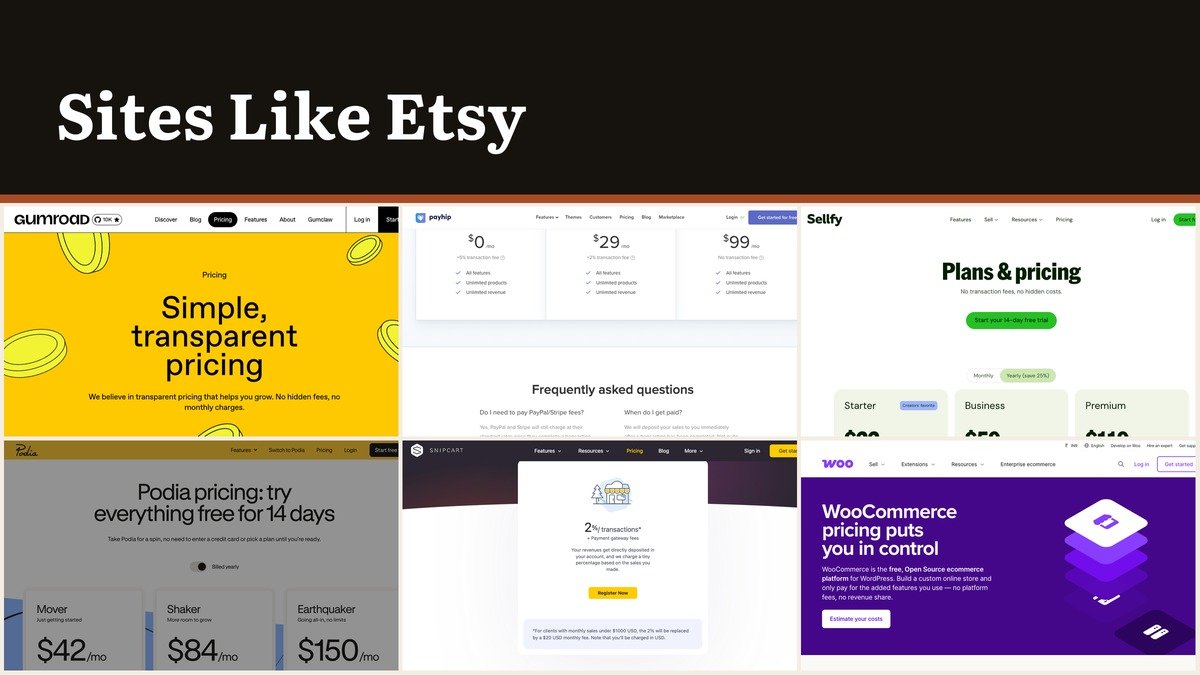
Marketplaces first, then store platforms by price. Read the traffic column alongside the fee, because the two are the same decision seen from either end.
| # | Platform | Traffic | Entry price | Cut per sale | Strength |
|---|---|---|---|---|---|
| 1 | eBay | Marketplace | $4.95 a month on a yearly Store | Final value fees by category | Buyers already searching, fees by category |
| 2 | Amazon Handmade | Marketplace | $39.99 a month Professional account | Referral fees by category | Amazon traffic, with the resellers screened out |
| 3 | Gumroad | Your own audience | $0 a month | 10% + $0.50 a sale | Nothing monthly, a tenth of each sale |
| 4 | Payhip | Your own audience | $0 a month | 5% free, 2% at $29, 0% at $99 | Free to open, cheaper as you grow |
| 5 | Big Cartel | Your own audience | $15 a month | None | Fifteen dollars and none of your revenue |
| 6 | Snipcart | Your own audience | $20 a month minimum | 2% of sales | A checkout for the site you already run |
| 7 | Sellfy | Your own audience | $22 a month | None, revenue capped by plan | Downloads and merch under one subscription |
| 8 | BigCommerce | Your own audience | $29 a month billed yearly | None | A proper storefront with no commission |
| 9 | Podia | Your own audience | $42 a month billed yearly | 5% on the entry tier, none above | For makers whose products are files |
| 10 | WooCommerce | Your own audience | $0 platform fee | None from the platform | The shop is yours, and so is the maintenance |
The Ten Platforms in Detail
1. eBay: Buyers already searching, fees by category
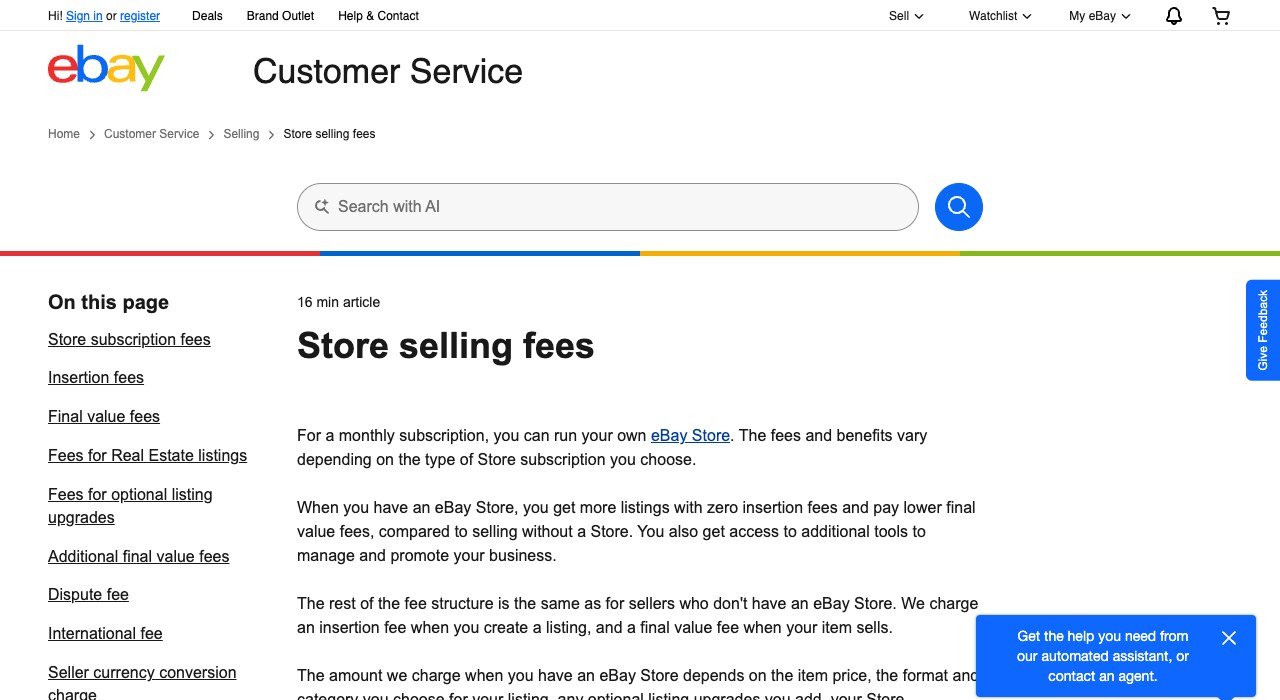
Traffic: Marketplace. Costs from: $4.95 a month on a yearly Store. Takes: Final value fees by category.
eBay is the marketplace most Etsy sellers try next, because the audience is already there and already shopping. A Store subscription runs from $4.95 a month on yearly renewal or $7.95 monthly, through Basic at $21.95, Premium at $59.95 and Anchor at $299.95 on yearly terms.
Final value fees apply on top and differ by category, which is the number that actually matters for your products. Higher subscription tiers buy listing allowances and reduced fees, so the cheapest tier is frequently not the cheapest result.
2. Amazon Handmade: Amazon traffic, with the resellers screened out
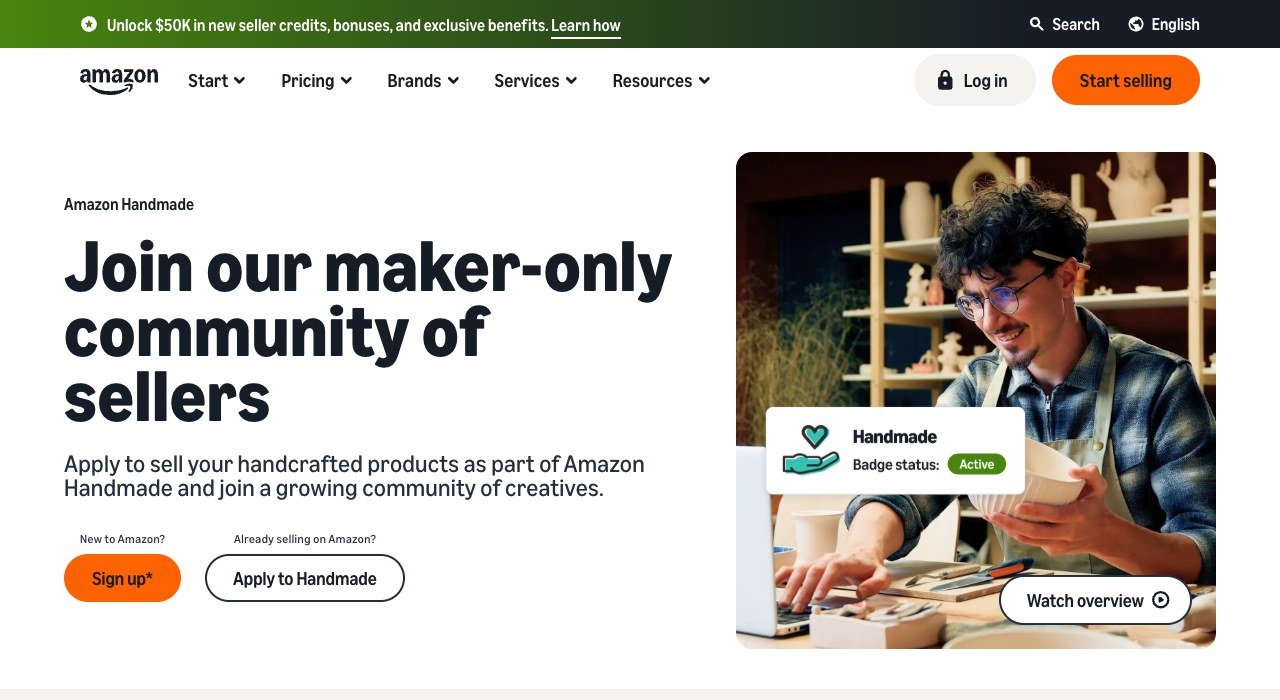
Traffic: Marketplace. Costs from: $39.99 a month Professional account. Takes: Referral fees by category.
Amazon Handmade is a curated corner of Amazon, with an application and audit process intended to keep mass-produced goods out. Selling requires a Professional account at $39.99 a month, with category referral fees on top.
Amazon’s own seller page states that approved Handmade sellers can save $480 a year after a one-time first-month payment, which is that monthly fee waived. The decision therefore turns on the referral percentage for your category rather than on the subscription.
3. Gumroad: Nothing monthly, a tenth of each sale
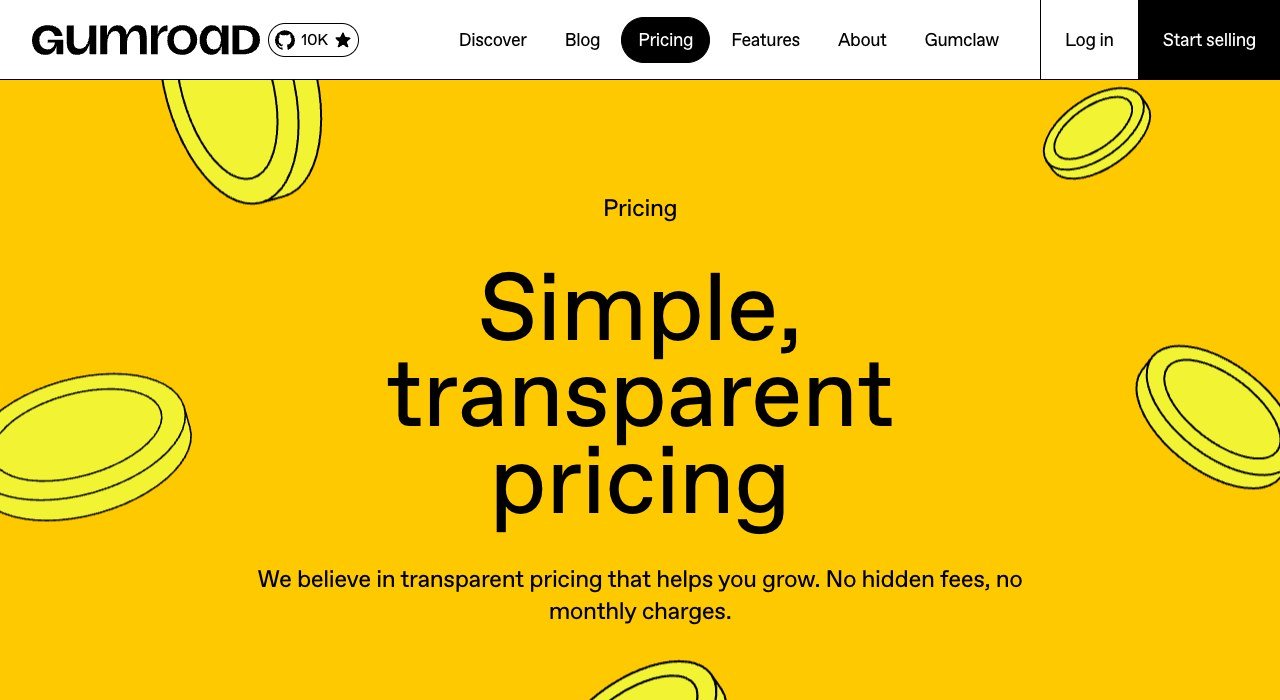
Traffic: Your own audience. Costs from: $0 a month. Takes: 10% + $0.50 a sale.
Gumroad charges nothing monthly and nothing to list. It takes 10 percent plus 50 cents on sales through your own links, rising to 30 percent when a buyer finds you through Gumroad’s own discovery.
Per sale that is dearer than Etsy. Per month it is free, which for a maker with irregular orders and an audience of their own is usually the better shape. Nothing is owed in a quiet season.
4. Payhip: Free to open, cheaper as you grow
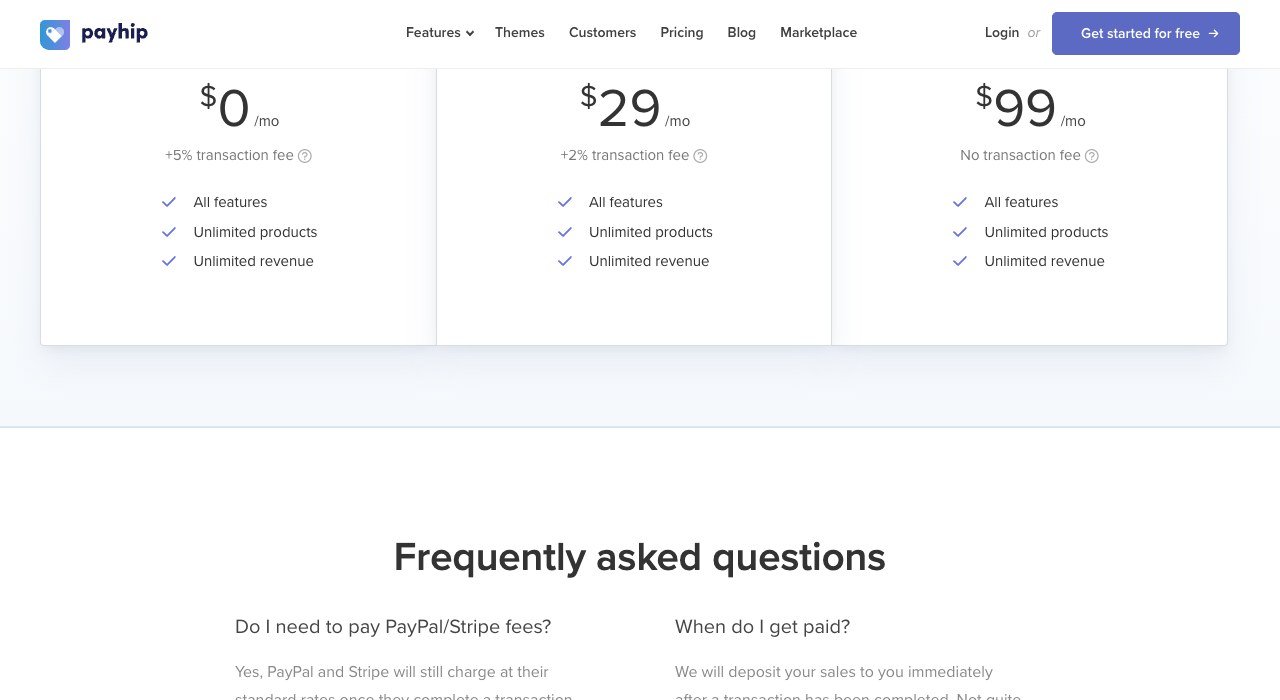
Traffic: Your own audience. Costs from: $0 a month. Takes: 5% free, 2% at $29, 0% at $99.
Payhip opens free with a 5 percent cut, drops to 2 percent at $29 a month and to nothing at $99. Products and revenue are unlimited on every tier, so only the rate moves.
That makes upgrading a calculation rather than a judgement. Around $1,000 a month in sales the free plan and the $29 plan cost the same, and past that the paid tier wins. Check your own crossover and act on it.
5. Big Cartel: Fifteen dollars and none of your revenue
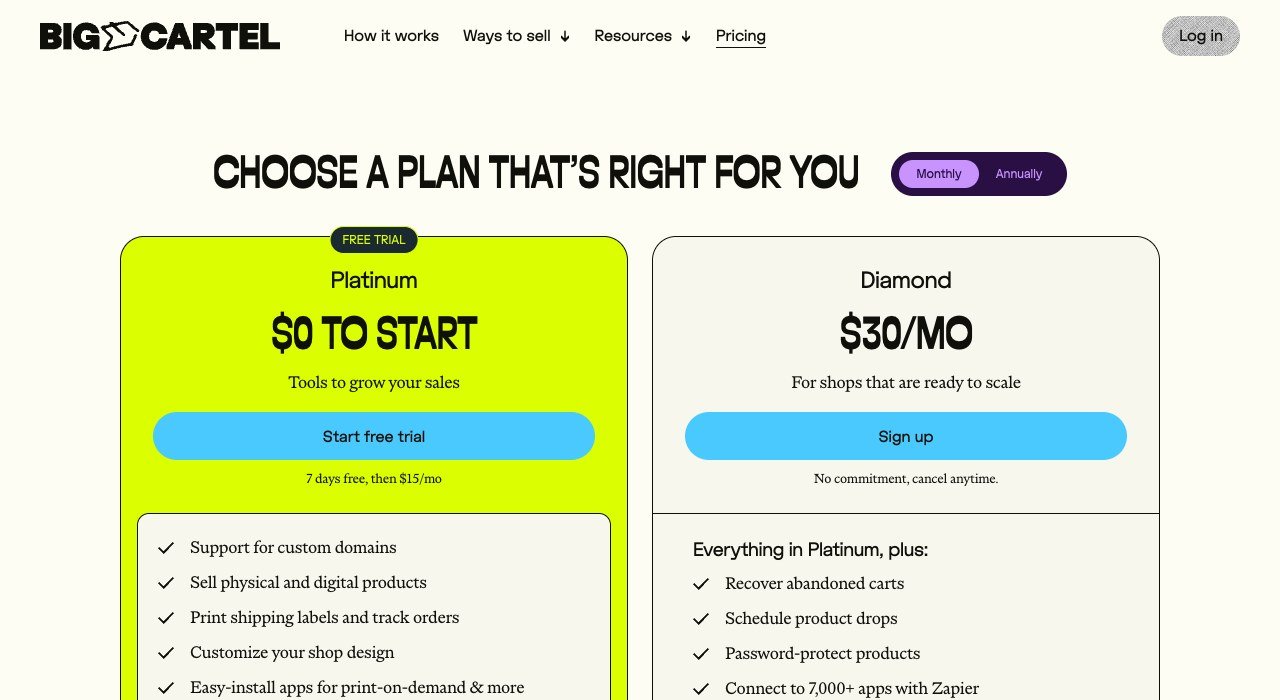
Traffic: Your own audience. Costs from: $15 a month. Takes: None.
Big Cartel is $15 a month for Platinum and $30 for Diamond, and takes no percentage of anything. For a maker sending out a few hundred orders a month, that is the entire platform cost.
No marketplace comes attached, so every visitor is one you found. That is the bargain running through this whole list: the commission disappears and the responsibility for traffic lands on you.
6. Snipcart: A checkout for the site you already run
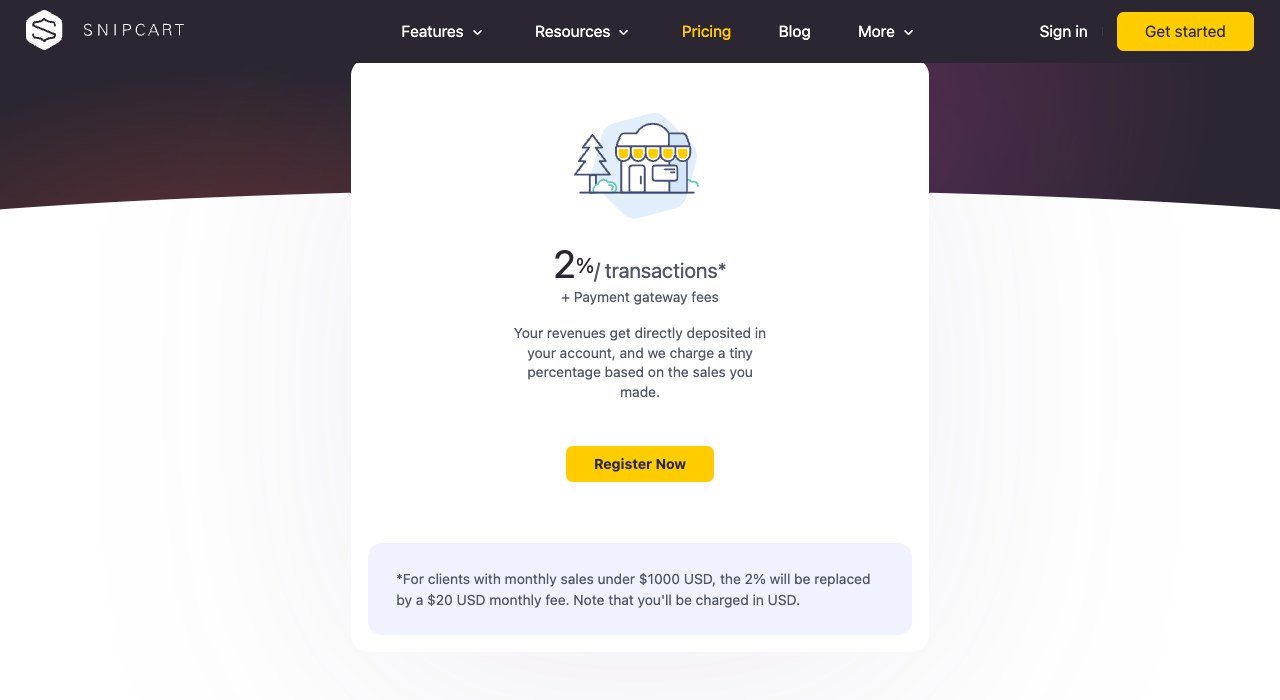
Traffic: Your own audience. Costs from: $20 a month minimum. Takes: 2% of sales.
Snipcart adds a checkout to a website that already exists, for 2 percent of sales. A maker with a portfolio site or a blog can start selling from it without rebuilding anything.
Under $1,000 a month in sales a $20 monthly minimum replaces the percentage, so very small shops pay proportionally more. Beyond that it is among the cheapest ways to sell from somewhere you already control.
7. Sellfy: Downloads and merch under one subscription
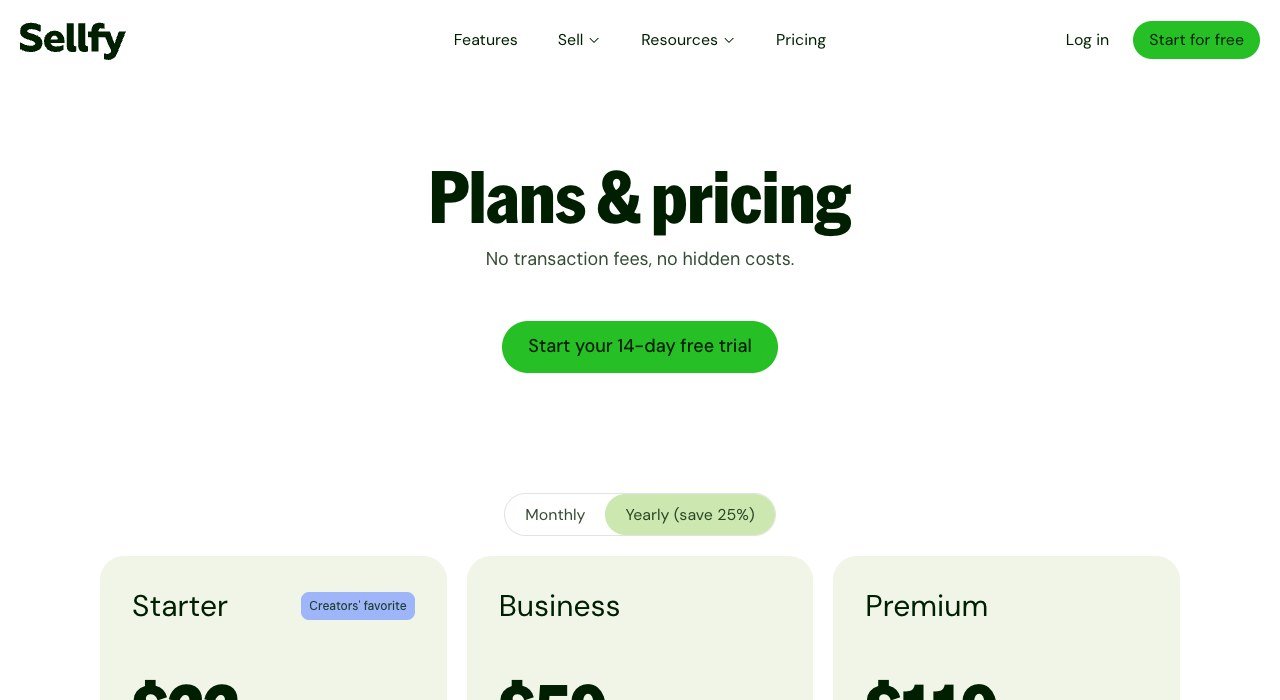
Traffic: Your own audience. Costs from: $22 a month. Takes: None, revenue capped by plan.
Sellfy carries downloads, subscriptions and print-on-demand merchandise together, at $22 a month for Starter, $59 for Business and $119 for Premium, taking no percentage.
What limits you is a revenue ceiling: $10,000 a year on the entry plan, $50,000 on the next and $200,000 above that. The effective rate therefore jumps at each ceiling rather than rising smoothly with sales.
8. BigCommerce: A proper storefront with no commission
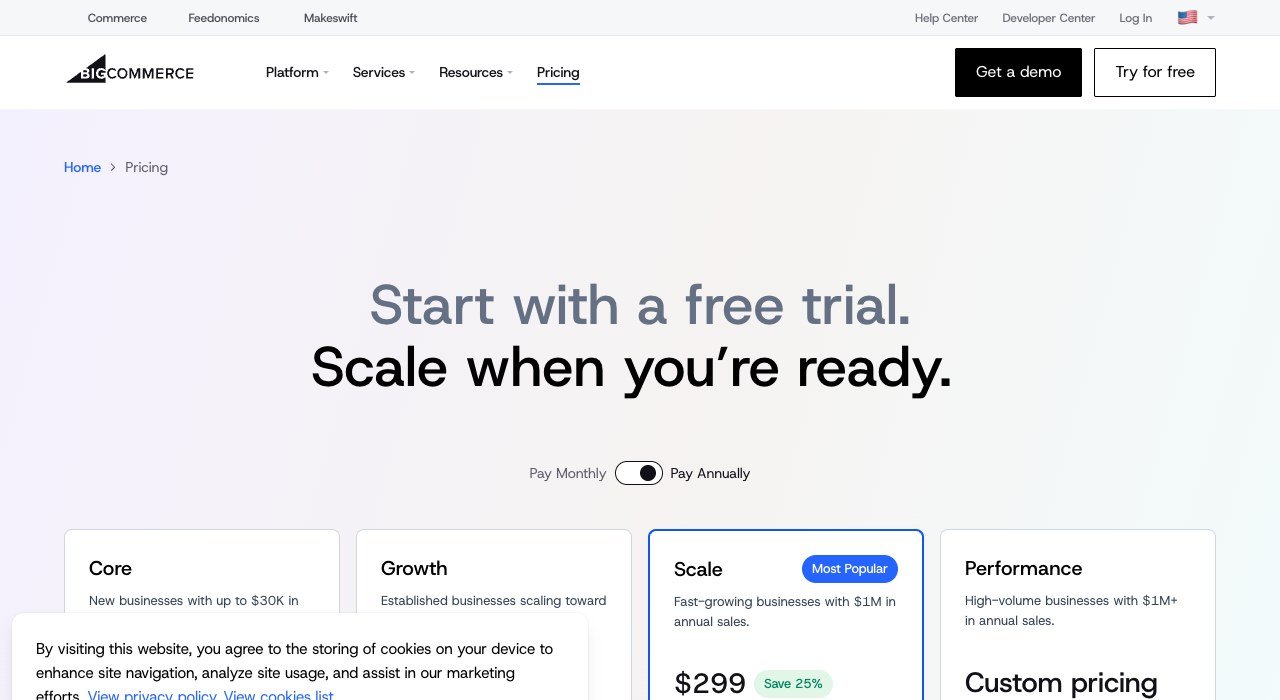
Traffic: Your own audience. Costs from: $29 a month billed yearly. Takes: None.
BigCommerce is a complete hosted storefront that charges no transaction fee of its own, at $29 a month billed annually and $79 for the tier above.
Plans are bounded by trailing annual sales rather than by features, so the entry tier covers up to $30,000 before moving you up automatically. For a shop that has outgrown marketplace fees, it is the most direct replacement here.
9. Podia: For makers whose products are files
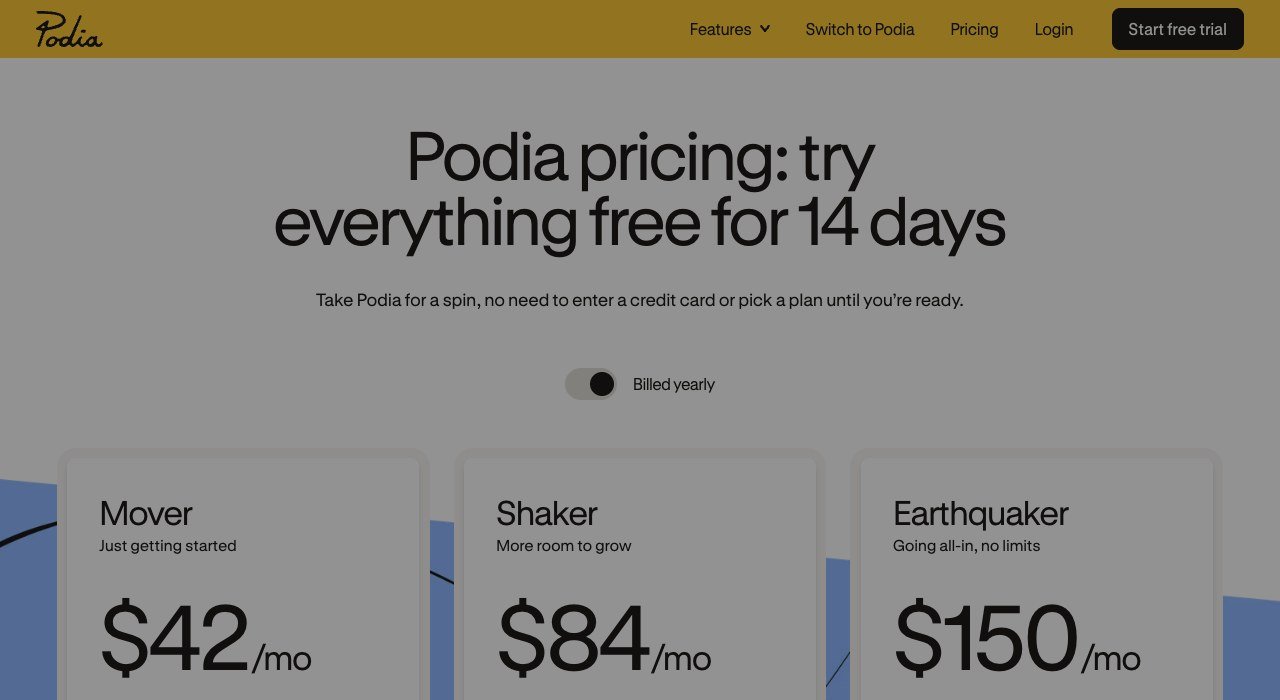
Traffic: Your own audience. Costs from: $42 a month billed yearly. Takes: 5% on the entry tier, none above.
Podia fits makers whose products are files rather than parcels, combining downloads, courses, email and community. Mover is $42 a month billed yearly, with $84 and $150 above it.
The entry tier carries a 5 percent fee that the higher plans remove, so upgrading buys the cut back. Plans are capped by email subscriber count rather than sales, which is worth measuring against your list before committing.
10. WooCommerce: The shop is yours, and so is the maintenance
Traffic: Your own audience. Costs from: $0 platform fee. Takes: None from the platform.
WooCommerce costs nothing to install. Being a WordPress plugin, the spending moves to hosting at roughly $25 to $350 a month and to extensions at $29 to $299 a year each.
There is no platform fee, no commission and no revenue cap, which makes it the cheapest option at volume. It also makes you the shop’s engineer, and a checkout failure on a busy weekend is yours alone.
Work Out Where Your Orders Came From First
The fee comparison is meaningless until you know what the fee has been buying. Two sellers with identical revenue can get opposite answers from the same table.
- Look at last year’s orders and separate the ones that came from marketplace search from the ones that came from your own social accounts or mailing list.
- If most arrived through search on the marketplace, a cheap standalone store is not a saving, it is a shop with no front door.
- If most arrived from your own audience and simply paid on Etsy, you have been paying 6.5 percent for a checkout, and almost everything below is cheaper.
- Check the Offsite Ads line on your statements specifically. For shops under the $10,000 threshold it is optional, and plenty of sellers never realised they could opt out.
Most established makers end up running both: a marketplace for discovery and their own shop for repeat buyers, accepting the higher fee on first purchases and keeping the margin on the rest. If the plan is a full storefront, the broader platform comparison sits in our Shopify competitors guide.
What Changes When You Leave a Marketplace
A marketplace quietly absorbs work that becomes visible the moment you stop paying it. Two items in particular move onto your desk.
Sales reporting follows the money. The IRS sets out when a Form 1099-K is issued for payment card and third-party network transactions, and the reported figure is gross, before refunds and fees. Selling in two places means reconciling two of them against one set of books.
Protecting your designs is the other. Your work is generally protected as soon as it is created, and the US Copyright Office explains what copyright covers and who owns it. Marketplaces run takedown processes for sellers; on your own store, pursuing a copy is entirely your job.
- Export listings, customers and order history before closing anything down.
- Run both shops in parallel for a season rather than switching off a revenue source in one go.
- Budget for traffic. The money saved on commission is often the money now needed for advertising or content.
- Confirm your category is permitted. Handmade marketplaces audit applications and some store platforms restrict what can be sold.
Choosing Between Them
Pick on where the buyers come from, then on what you sell.
- You need an audience, not a shop: eBay or Amazon Handmade.
- You already have the audience: Big Cartel at $15, or Payhip free.
- Sales come in bursts: Gumroad, where an empty month costs nothing.
- Your products are downloads: Podia, or Sellfy if merch is involved too.
- You already run a website: Snipcart.
- This is the whole business: BigCommerce or WooCommerce.
Running two shops doubles the bookkeeping before it doubles the revenue, so settle how the two ledgers will reconcile before opening the second one. Our QuickBooks alternatives comparison covers the tools that import from both without manual re-entry.
Frequently Asked Questions
What does Etsy charge per sale?
A $0.20 listing fee per item plus 6.5 percent of the displayed price and the shipping you charge. On a $40 order that is $2.80 before payment processing. Offsite Ads add 15 percent of attributed orders, or 12 percent once a shop passes $10,000 in trailing annual sales.
Which site like Etsy is free to start?
Payhip opens free with a 5 percent cut and Gumroad charges nothing monthly, taking 10 percent plus 50 cents per sale. Neither charges to list items, which is the fee most Etsy sellers notice first when they have a large catalogue.
Is Amazon Handmade cheaper than Etsy?
It depends on your category, because referral fees vary. The Professional selling account is $39.99 a month, and Amazon states approved Handmade sellers can save $480 a year after a one-time first-month payment, effectively waiving it. Compare the referral percentage against Etsy’s 6.5 percent.
Will I lose sales by leaving Etsy?
If your orders currently come from Etsy search, yes, and sharply. If they come from your own social following or mailing list and Etsy is only handling checkout, the loss is usually small and the fee saving immediate. Check your own traffic sources before deciding.