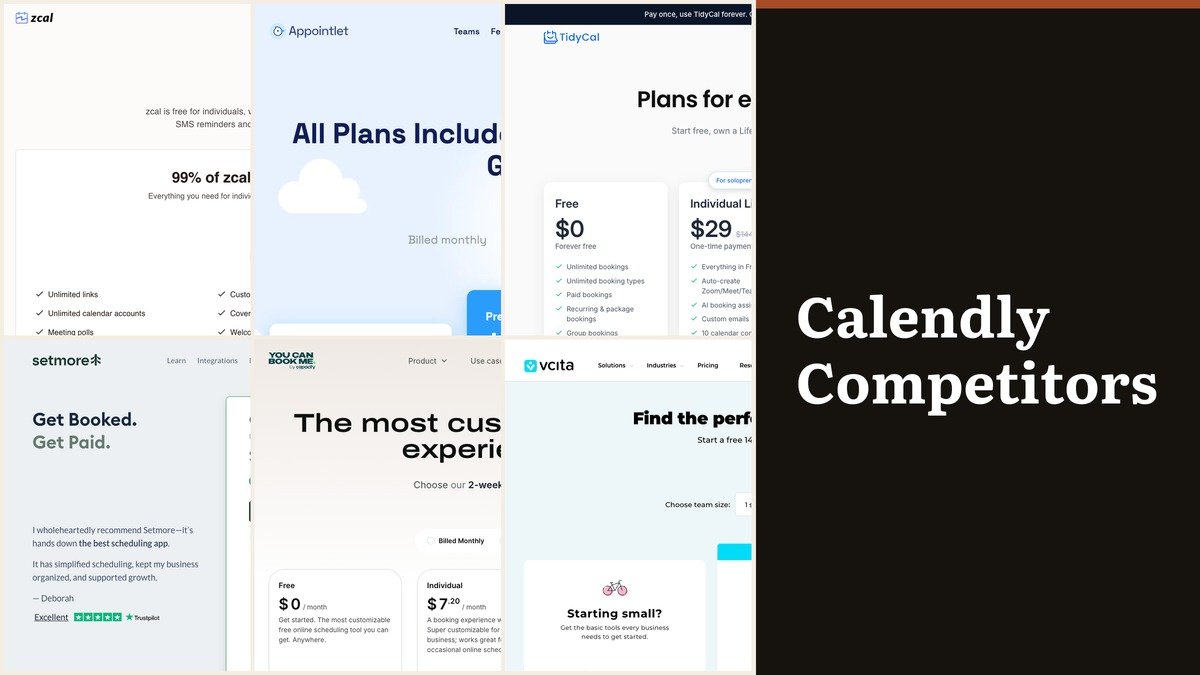
Calendly competitors are best judged on one question: what does the free plan actually let you do. Calendly’s allows a single event type and one calendar connection, which is the wall nearly every new user hits within a fortnight.
Beyond it, Calendly charges $10 a seat a month and $16 for teams. Of the ten tools below, five run free plans that remove that limit outright, one sells a lifetime licence, and one can be hosted on your own server.
The Limit That Ends the Free Plan
Calendly charges per seat, and only the host needs one. Invitees book without an account, which is worth establishing before anyone buys licences for people who are only ever being booked.
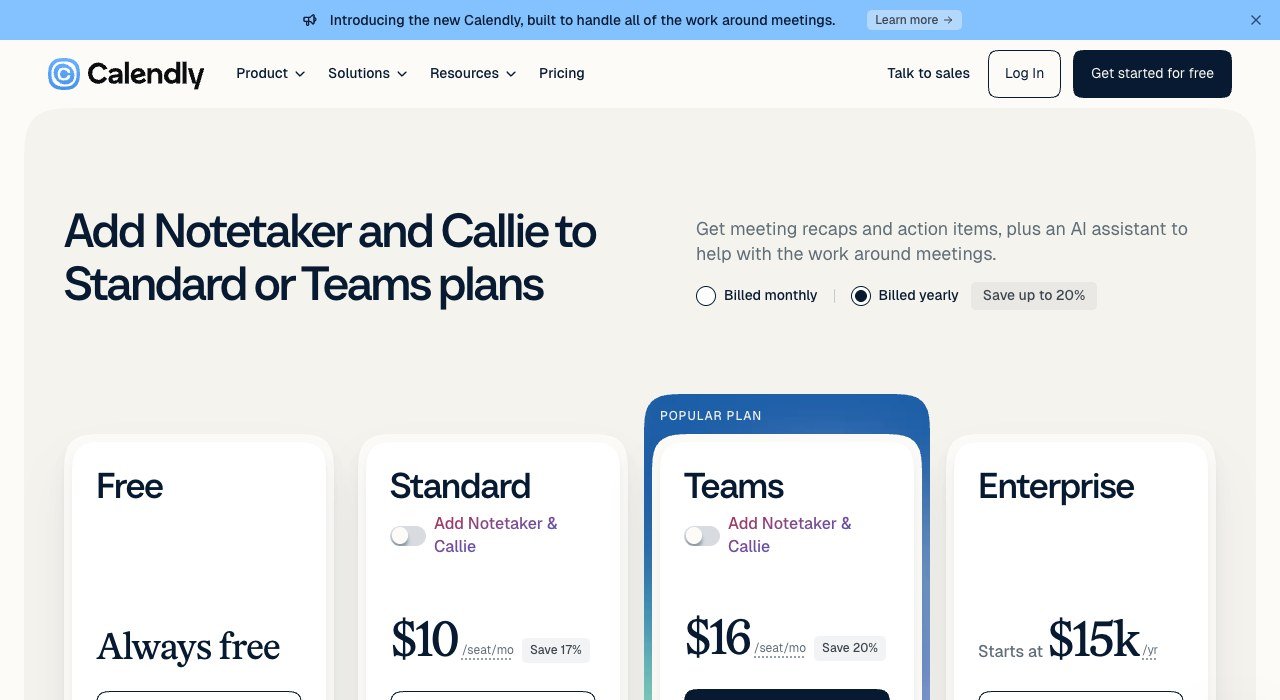
| Plan | Cost | What it includes |
|---|---|---|
| Free | $0 | One event type, one calendar connection |
| Standard | $10 per seat a month | Unlimited event types, multiple calendars |
| Teams | $16 per seat a month | Round robin and team routing |
| Enterprise | From $15k | Quoted annually |
One event type is the constraint that matters. As soon as a short call and a long session need to be separate links, the free tier is spent. Several tools below hand that over at no charge, which is why the comparison is worth making before paying.
Calendly Competitors Ranked by Free Plan
Ordered from the most generous free tier downward, finishing with the tools that have none. The pricing model column matters as much as the number beside it.
| # | Tool | Free tier | Paid from | Priced by | Strength |
|---|---|---|---|---|---|
| 1 | zcal | Yes, almost everything | $7 per user a month | Per user | Almost everything, free forever |
| 2 | Appointlet | Yes, unlimited bookings | $9 per member a month | Per member | Unlimited meeting types at no cost |
| 3 | TidyCal | Yes, unlimited bookings | $29 once, lifetime | Lifetime or $12 a month | Twenty-nine dollars, once |
| 4 | Cal.com | Yes, individuals | $12 per user a month billed yearly | Per user or self-host | Open source, run it yourself |
| 5 | Setmore | Yes | $5 per user a month | Per user | Five dollars a user for appointments |
| 6 | YouCanBook.me | Yes | $7.20 a month | Per booking page | A booking page you can actually brand |
| 7 | SavvyCal | No, free trial | $10 per user a month | Per user | Built around the person you are inviting |
| 8 | Acuity Scheduling | No, 7-day trial | $16 a month | Per account by staff count | Priced by account, not by seat |
| 9 | Motion | No, free trial | $19 per seat a month | Per seat | The calendar reorganises itself |
| 10 | vcita | No, free trial | $29 a month billed annually | Per account by seats | Bookings as part of a client system |
The Ten Booking Tools in Detail
1. zcal: Almost everything, free forever
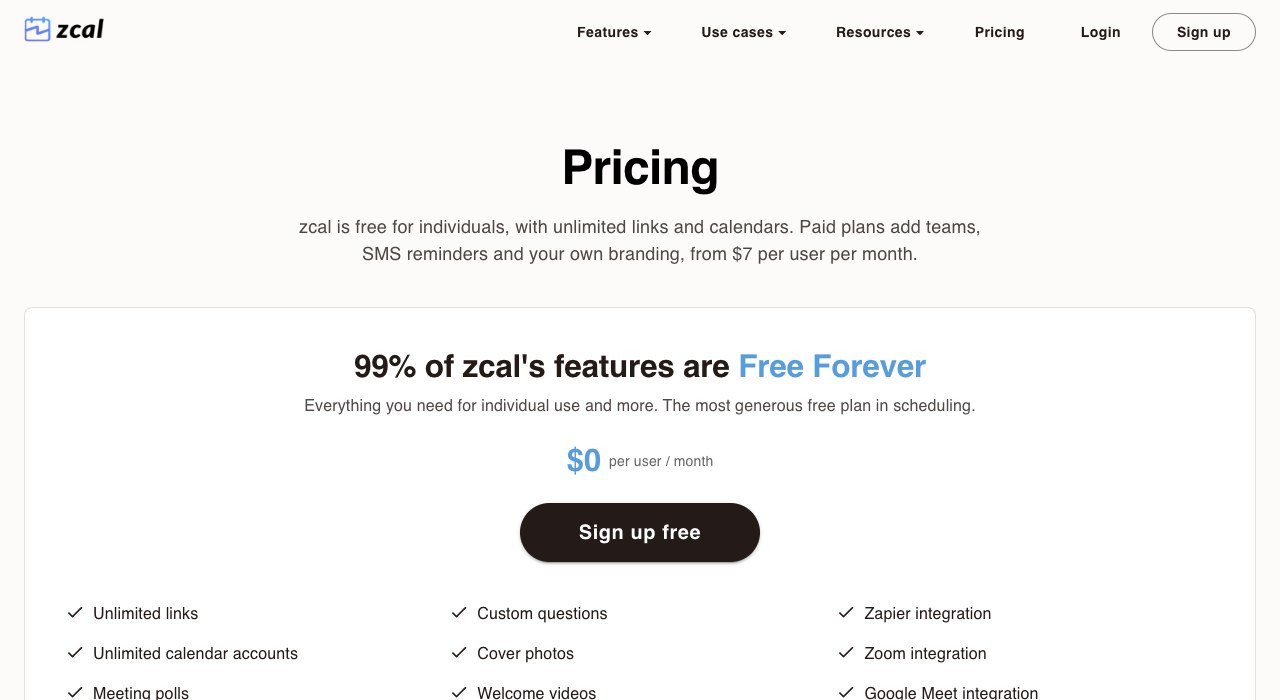
Free plan: Yes, almost everything. Paid from: $7 per user a month. Charged by: Per user.
zcal states plainly that 99 percent of its features are free forever, and the free plan includes unlimited links and unlimited connected calendars. Paid plans begin at $7 a user a month.
What you buy by paying is teams, SMS reminders and your own branding on the page. Branding is the usual trigger, because a free link carrying somebody else’s name is a small but real cost when it goes to clients.
2. Appointlet: Unlimited meeting types at no cost
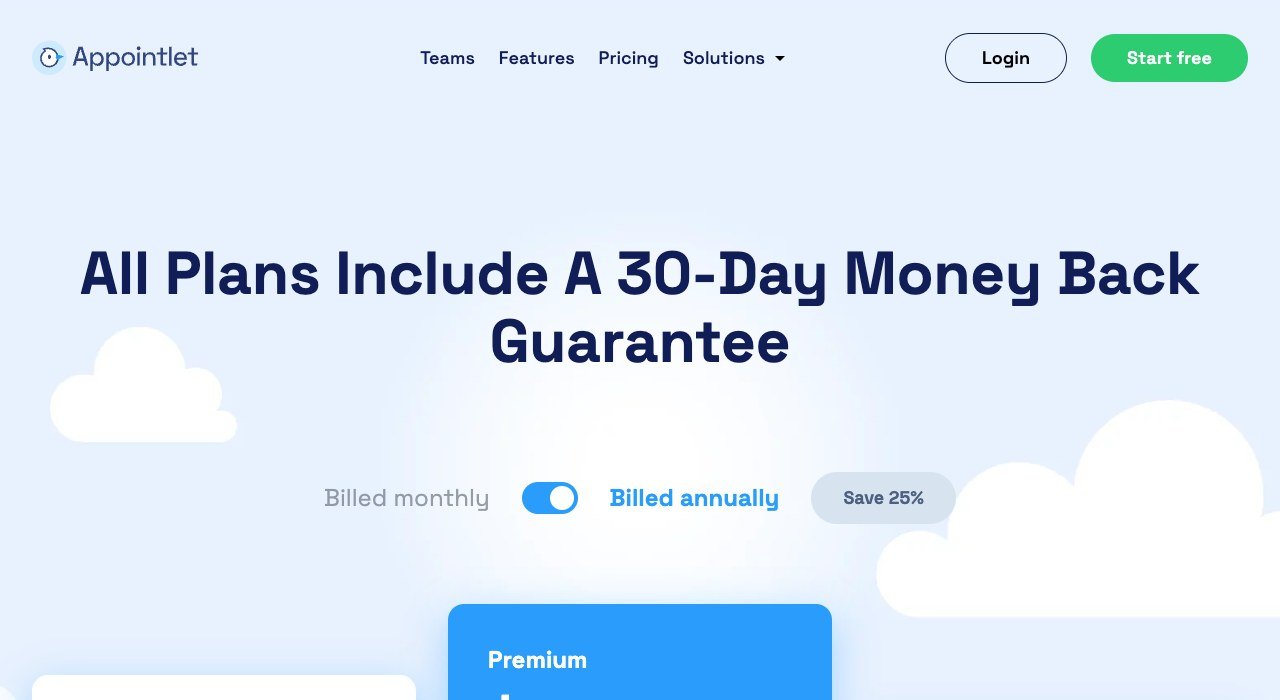
Free plan: Yes, unlimited bookings. Paid from: $9 per member a month. Charged by: Per member.
Appointlet gives away unlimited bookings and unlimited meeting types, which is precisely the limit that ends most free Calendly accounts. Premium costs $9 a member a month.
Paying adds automated reminders, deeper integrations and removal of the Appointlet name. For a freelancer who needs a fifteen-minute call and an hour-long session as separate links and nothing more, the free plan is the end of the problem.
3. TidyCal: Twenty-nine dollars, once
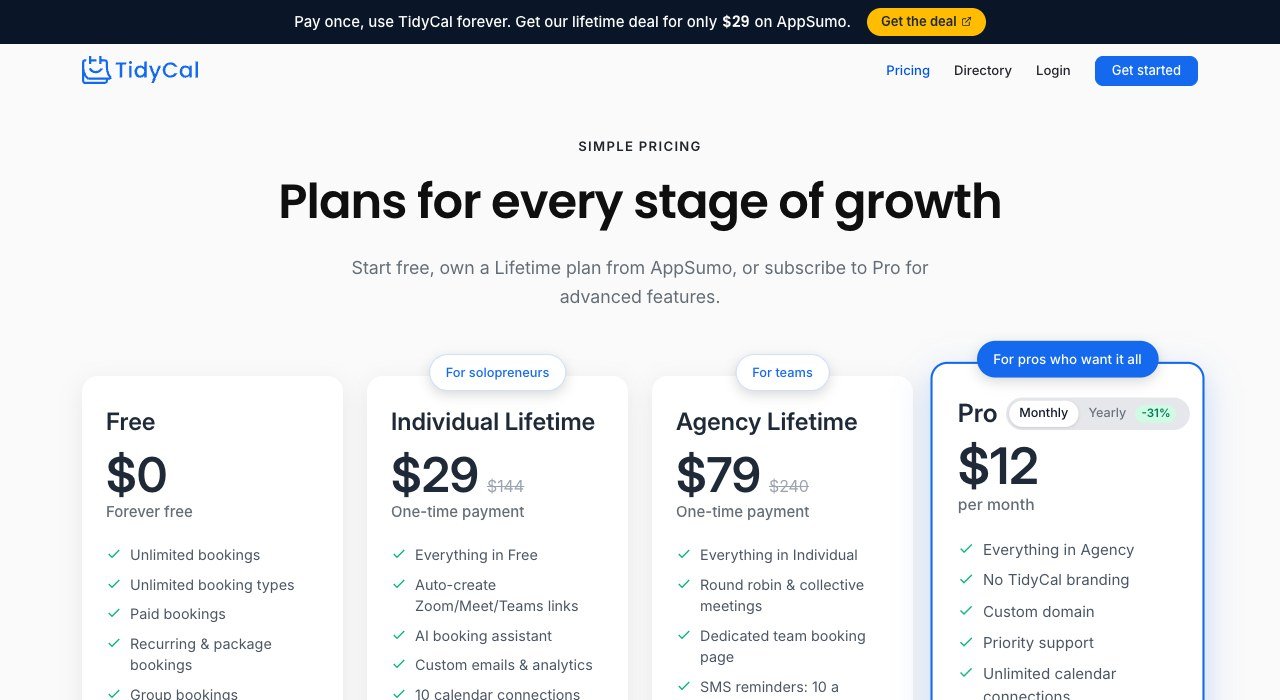
Free plan: Yes, unlimited bookings. Paid from: $29 once, lifetime. Charged by: Lifetime or $12 a month.
TidyCal sells a licence rather than a subscription: $29 once for an individual, with an agency tier above it, and a $12 monthly plan for anyone who prefers that shape.
Set against $10 a seat a month elsewhere, the lifetime deal clears its cost inside a quarter. The free plan already allows unlimited bookings, so the purchase is about advanced features rather than about escaping a cap.
4. Cal.com: Open source, run it yourself
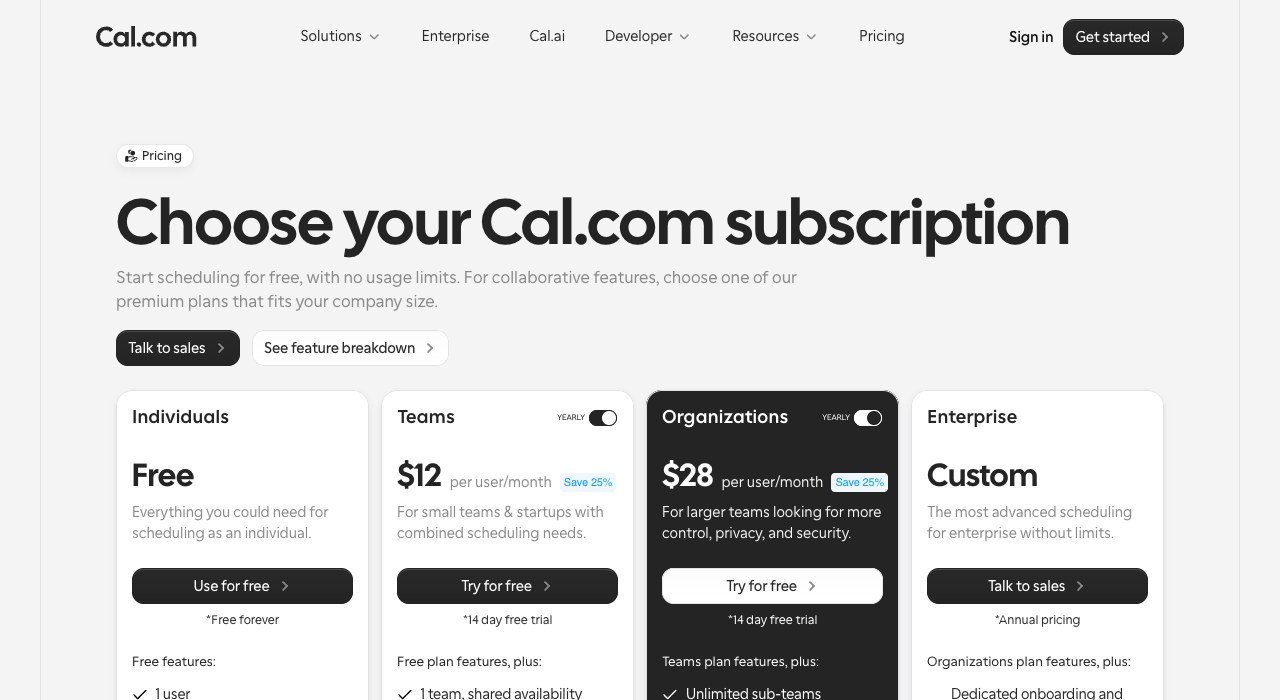
Free plan: Yes, individuals. Paid from: $12 per user a month billed yearly. Charged by: Per user or self-host.
Cal.com is open source and built to be self-hosted, which makes it the only option here where your calendar data need not sit with a third party. Individuals use it free, Teams is $12 a user a month billed yearly and Organizations $28.
Running it yourself removes the per-seat charge entirely and replaces it with the cost of a server and somebody to maintain it. For organisations whose objection is data residency rather than price, nothing else on this page answers the question.
5. Setmore: Five dollars a user for appointments
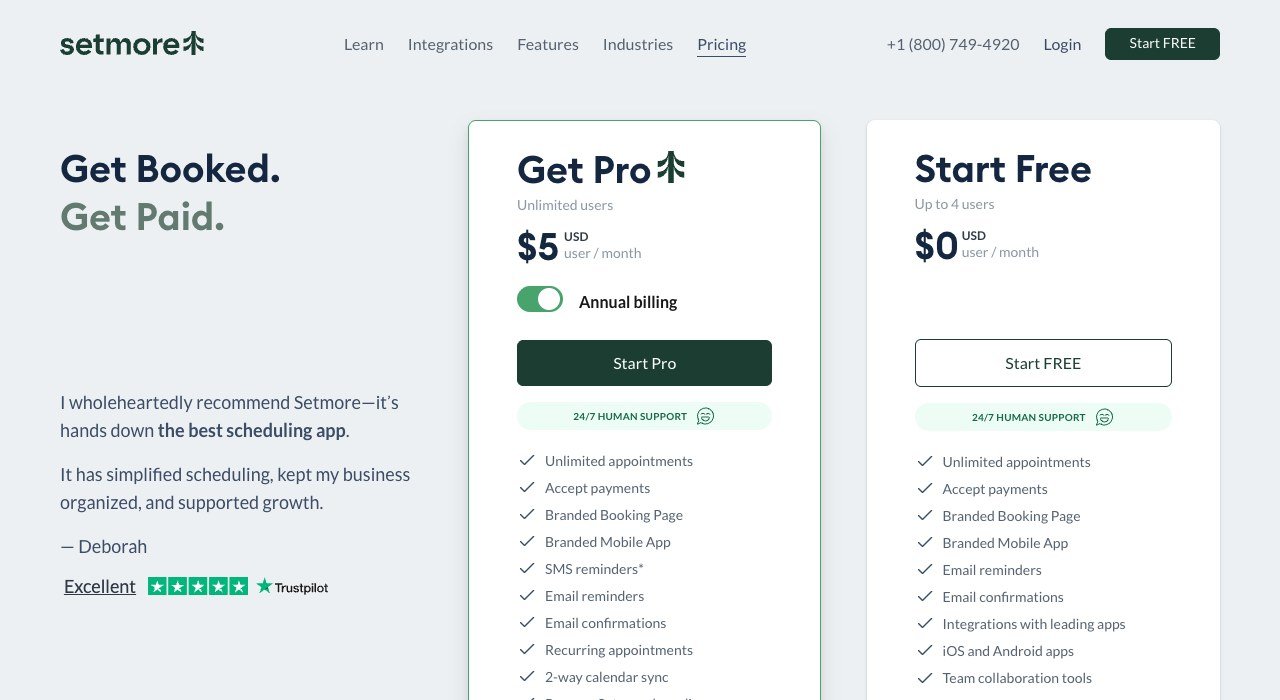
Free plan: Yes. Paid from: $5 per user a month. Charged by: Per user.
Setmore serves businesses taking appointments rather than arranging meetings: clinics, salons, tutors, trades. There is a working free plan and Pro costs $5 a user a month on annual billing.
That is half the usual rate and includes payments, reminders and a booking page a customer can use without signing up for anything. A two-person practice runs the whole thing for $10 a month.
6. YouCanBook.me: A booking page you can actually brand
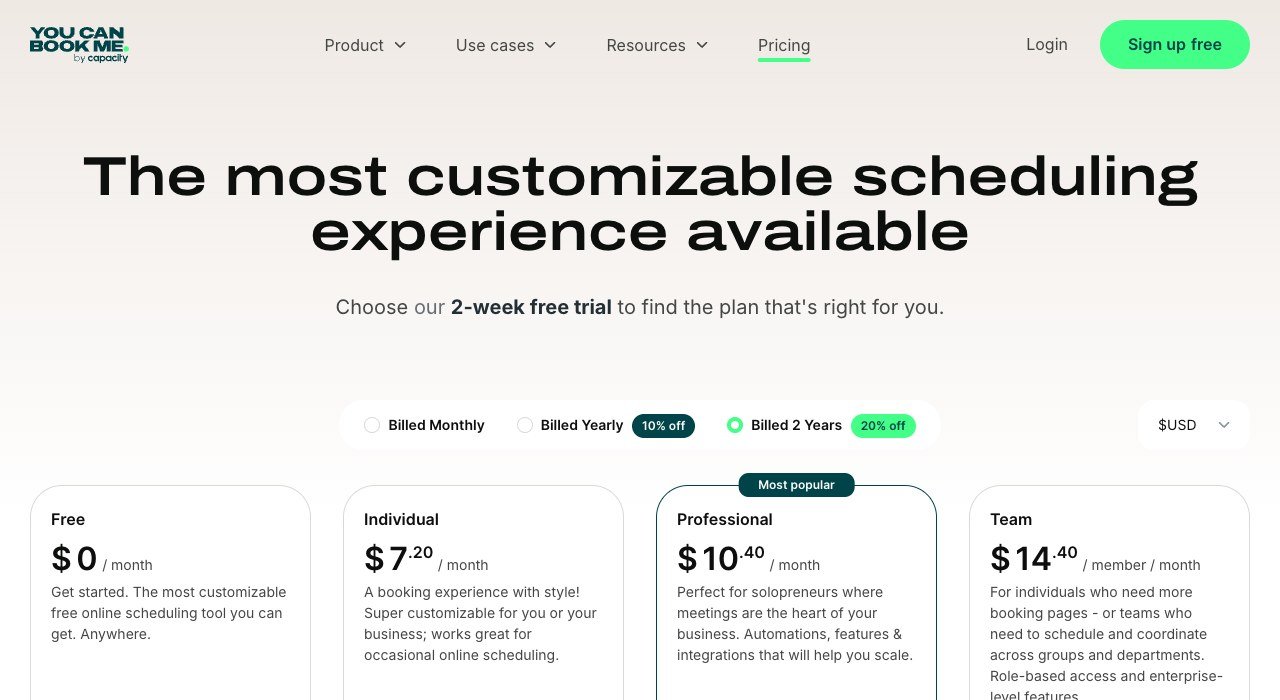
Free plan: Yes. Paid from: $7.20 a month. Charged by: Per booking page.
YouCanBook.me concentrates on the booking page itself: colours, custom questions, confirmation wording and follow-up messages are all adjustable. Free exists and Individual is $7.20 a month.
It earns its place when the page is customer-facing and a generic template looks wrong beside your branding. For an internal link shared among colleagues, that customisation is work nobody will ever notice.
7. SavvyCal: Built around the person you are inviting
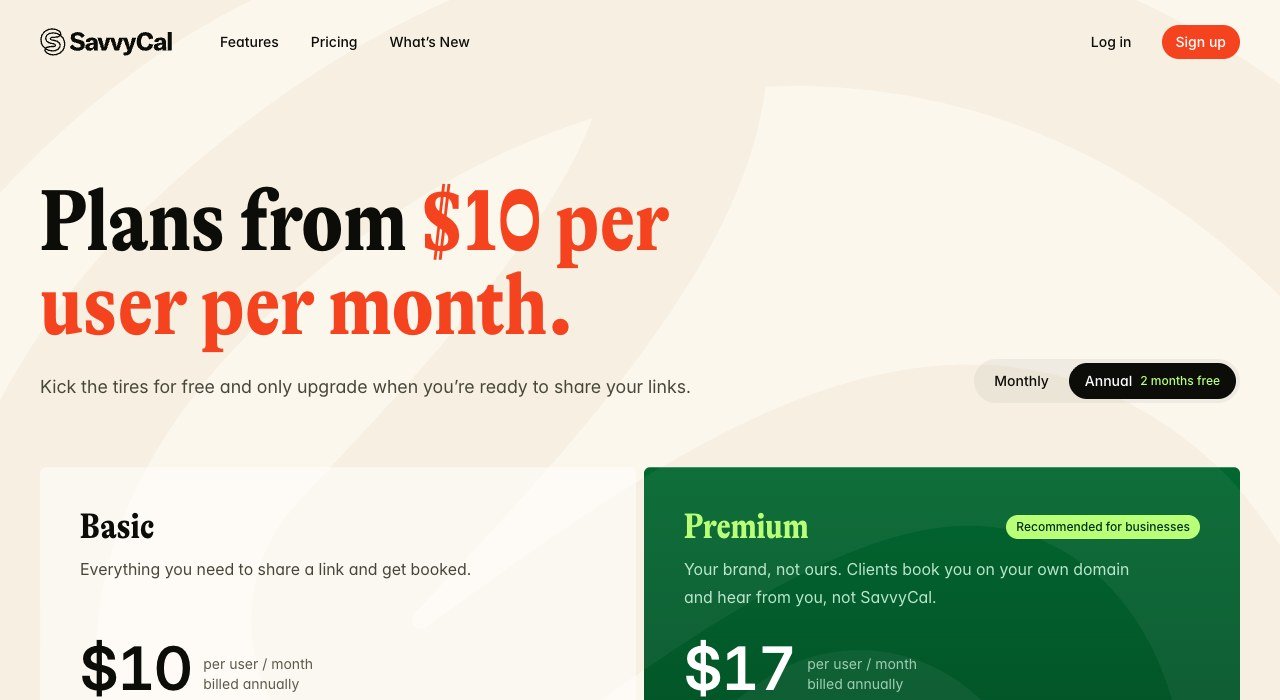
Free plan: No, free trial. Paid from: $10 per user a month. Charged by: Per user.
SavvyCal turns the usual flow around. Rather than presenting your availability, it lets the invitee lay their own calendar over yours and choose a time that genuinely suits both, for $10 a user a month at the entry tier and $17 above it.
The price matches the obvious incumbent and the money is spent on the recipient instead of the host. Where your links go to clients and senior people rather than teammates, that is exactly the right place to spend it.
8. Acuity Scheduling: Priced by account, not by seat
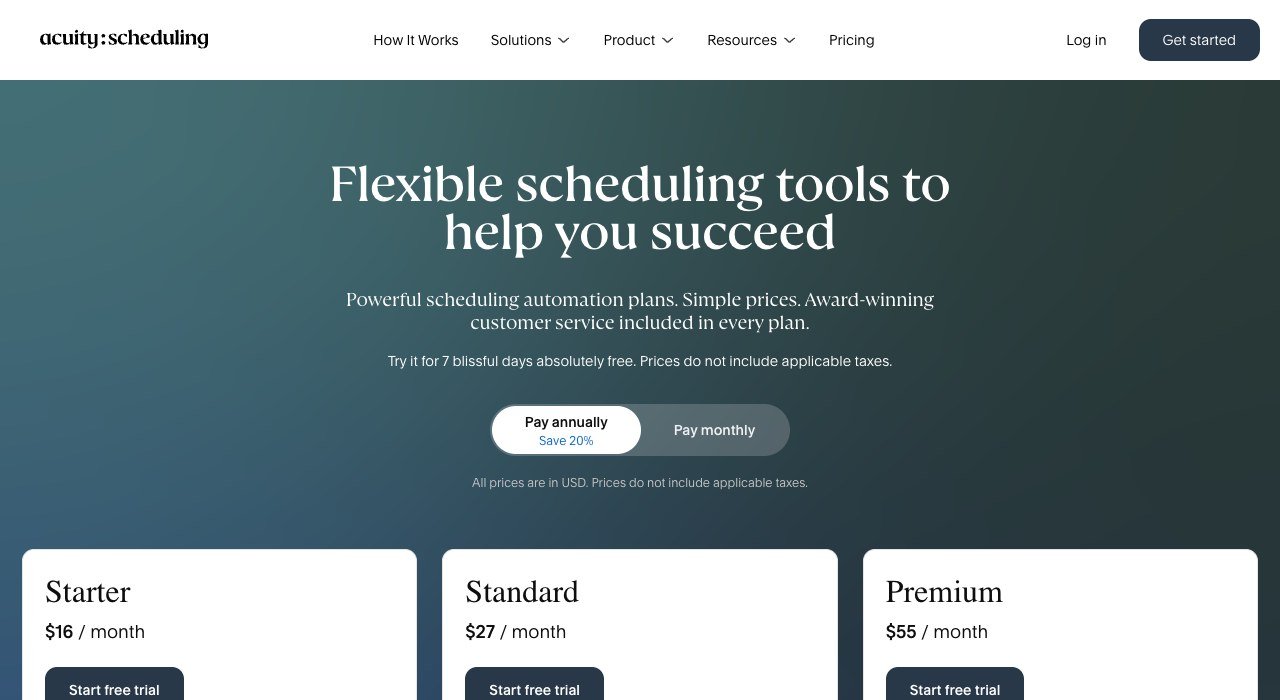
Free plan: No, 7-day trial. Paid from: $16 a month. Charged by: Per account by staff count.
Acuity Scheduling is for selling time: classes, packages, memberships and appointments with deposits taken up front, from $16 a month at the entry tier, $27 in the middle and $55 at the top.
Crucially it charges by account and staff count rather than per seat, so a six-person clinic pays once. That makes it dramatically cheaper than per-seat tools for any business where several people are bookable.
9. Motion: The calendar reorganises itself
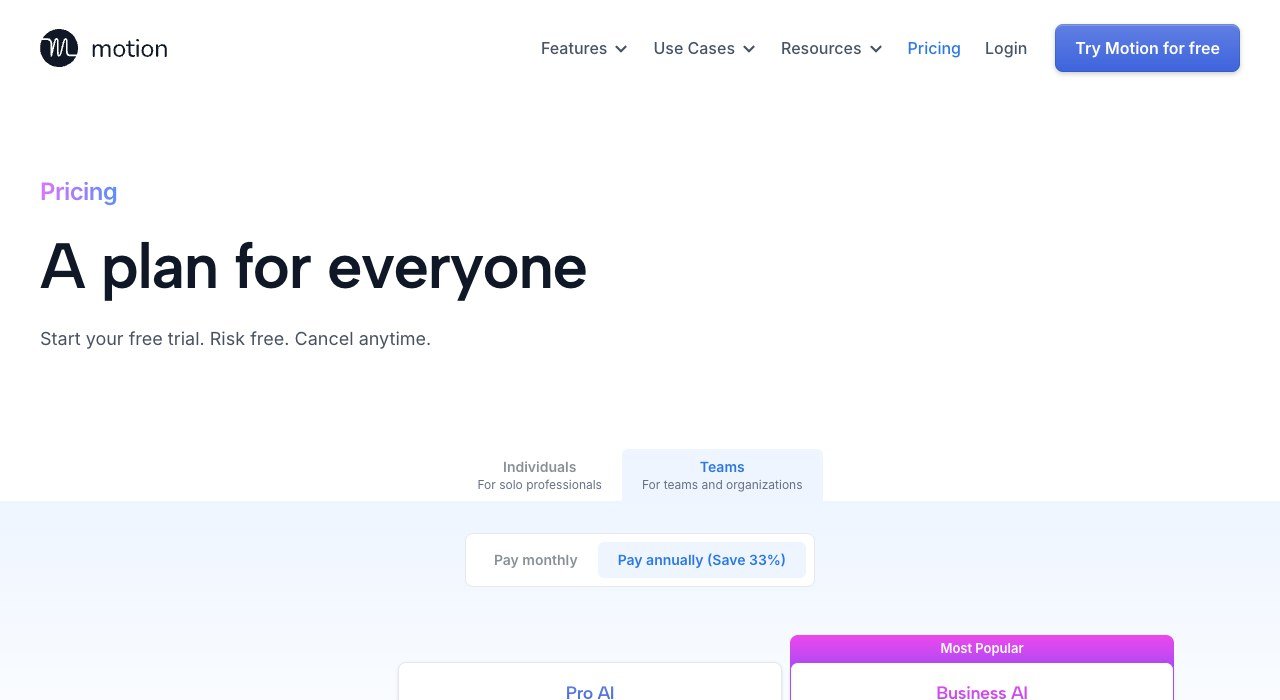
Free plan: No, free trial. Paid from: $19 per seat a month. Charged by: Per seat.
Motion puts tasks and meetings on one calendar and rearranges them automatically when something overruns, at $19 a seat a month for professionals and $29 for businesses.
It is the dearest entry here and answers a broader question than when to meet: it is about what a meeting pushes aside. As a booking link it is poor value; as a planning system it is priced fairly.
10. vcita: Bookings as part of a client system
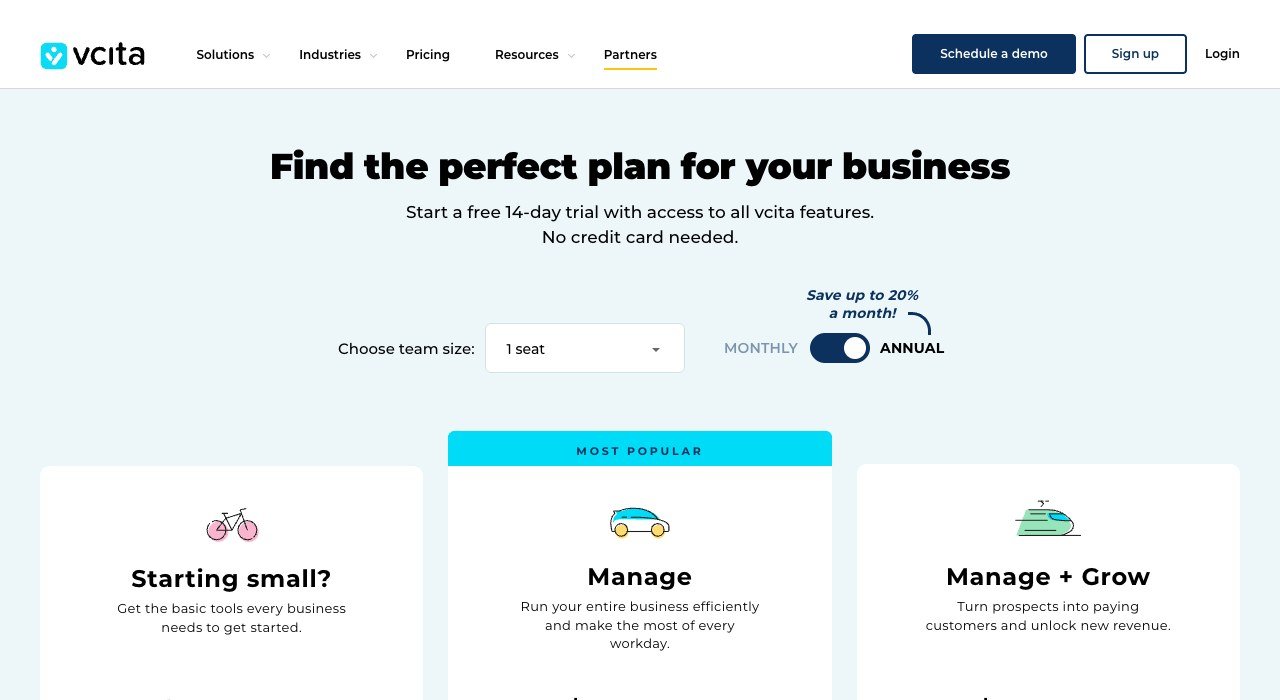
Free plan: No, free trial. Paid from: $29 a month billed annually. Charged by: Per account by seats.
vcita places scheduling inside client management, payments and marketing for service businesses that would rather run one system than five. Kickstart is $29 a month billed annually, with the fuller tier at $54.
Seats come in bands rather than individually, so costs move in steps. It suits a small practice replacing a scheduler, an invoicing tool and a contact database together, and makes no sense for someone replacing a calendar link.
Per Seat Against Per Account
Two charging models sit side by side in this list and they diverge the moment a second person becomes bookable.
- Per seat (Calendly, SavvyCal, Cal.com, Appointlet, zcal, Setmore, Motion): every bookable person is another line on the invoice.
- Per account (Acuity, vcita): one subscription covers the business, with staff or seat bands setting the tier.
- Bought outright (TidyCal): a licence rather than a rental.
- Self-hosted (Cal.com): no seat charge at all, replaced by running the service yourself.
A six-person clinic pays $27 a month on Acuity Standard and $60 on a $10 per seat tool for the same job. That gap is far larger than any feature difference between them, and it is invisible until you multiply the headline figure by your own headcount.
What a Scheduling Tool Can See
These products connect to your calendar, which means they can read when you are free, who booked you and frequently what the meeting is about. That is a detailed record of how you spend your working week.
Cal.com is MIT licensed and can be self-hosted, which is the only configuration here where that record never leaves infrastructure you control. Every other option is a hosted service, with the ordinary trade-offs that implies.
There are obligations attached to the invitee data too. California’s Consumer Privacy Act gives residents rights over information a business holds about them, and a booking tool quietly accumulates names, email addresses and meeting histories. Set a retention period rather than accepting whatever the default happens to be.
Choosing Between Them
Decide what the link is for first. A page customers book and pay through is a different product from an internal meeting link, even though both look like a calendar.
- You only outgrew the single event type: Appointlet or zcal, free.
- You would rather buy than rent: TidyCal at $29 once.
- Several staff take bookings: Acuity, priced per account.
- Customers pay when they book: Setmore or Acuity.
- The page represents your brand: YouCanBook.me.
- Calendar data cannot leave the building: self-hosted Cal.com.
If those meetings feed a sales process, confirm how the tool writes back to your CRM before you commit, because a broken sync wastes more time than the subscription ever saves. The HubSpot alternatives comparison covers that half, and the same seat arithmetic appears again in the Notion alternatives.
Frequently Asked Questions
What does Calendly’s free plan actually include?
One event type and one calendar connection, with a customisable booking page and the browser extension. The single event type is the limit most people hit, because a short call and a long meeting need to be separate links.
Which Calendly competitor is free for unlimited meeting types?
Appointlet, whose free plan carries unlimited bookings and unlimited meeting types, and zcal, which advertises 99 percent of its features as free forever with unlimited links and calendars. Branding removal is the usual reason to pay on either.
Is there a scheduling tool I can buy outright?
TidyCal sells an individual lifetime licence for $29, with an agency tier above it, alongside a $12 monthly plan. It is the only outright purchase here, and it clears its cost against a $10 a month subscription in roughly three months.
Which is cheapest for a business where several people take bookings?
Acuity Scheduling, because it charges by account and staff count rather than per seat. Standard is $27 a month for the business. Six people on a $10 per seat tool would cost $60 a month for the same work.