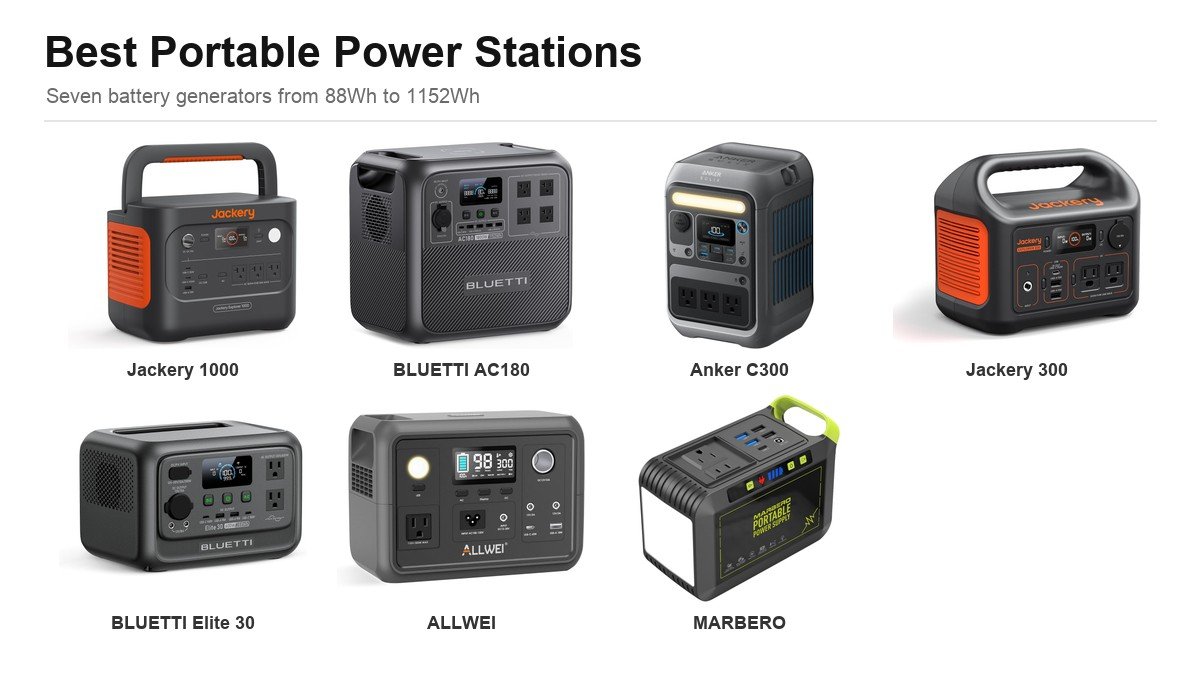
A portable power station is a lithium battery, an inverter and a set of sockets in a box. The specification that decides whether it suits you is not the one printed largest on the listing, and the two numbers that matter are routinely confused with each other by people about to spend several hundred dollars.
Watt-hours tell you how much energy it stores. Watts tell you how much it can deliver at once. A 1,000Wh station with a 300W inverter cannot run a 1,500W kettle for a second, and a 300W station with a huge inverter will run one for four minutes. The seven below span 88Wh to 1,152Wh, and every figure quoted is the manufacturer’s own.
CanyonWire is an Amazon Associate. We earn from qualifying purchases made through links on this page, at no extra cost to you. Prices and availability change often, so check the listing before you buy.
The Seven Compared
Read the two columns in the middle together. Capacity without output is useless, and output without capacity runs flat.
| Model | Capacity | Continuous output | Battery chemistry |
|---|---|---|---|
| Jackery Explorer 1000 v2 | 1,070Wh | 1,500W, 3,000W surge | LiFePO4 |
| BLUETTI AC180 | 1,152Wh | 1,800W, 2,700W boost | LiFePO4 |
| Anker SOLIX C300 | 288Wh | 300W, 600W surge | LiFePO4 |
| Jackery Explorer 300 | 292Wh | 300W, 600W surge | LiFePO4 |
| BLUETTI Elite 30 V2 | 288Wh | 600W, 1,500W lifting | LFP |
| ALLWEI 300W | 256Wh | 300W pure sine wave | LiFePO4 |
| MARBERO 88Wh | 88Wh | 120W surge | Lithium |
1. BLUETTI AC180: The Largest Battery and the Strongest Inverter
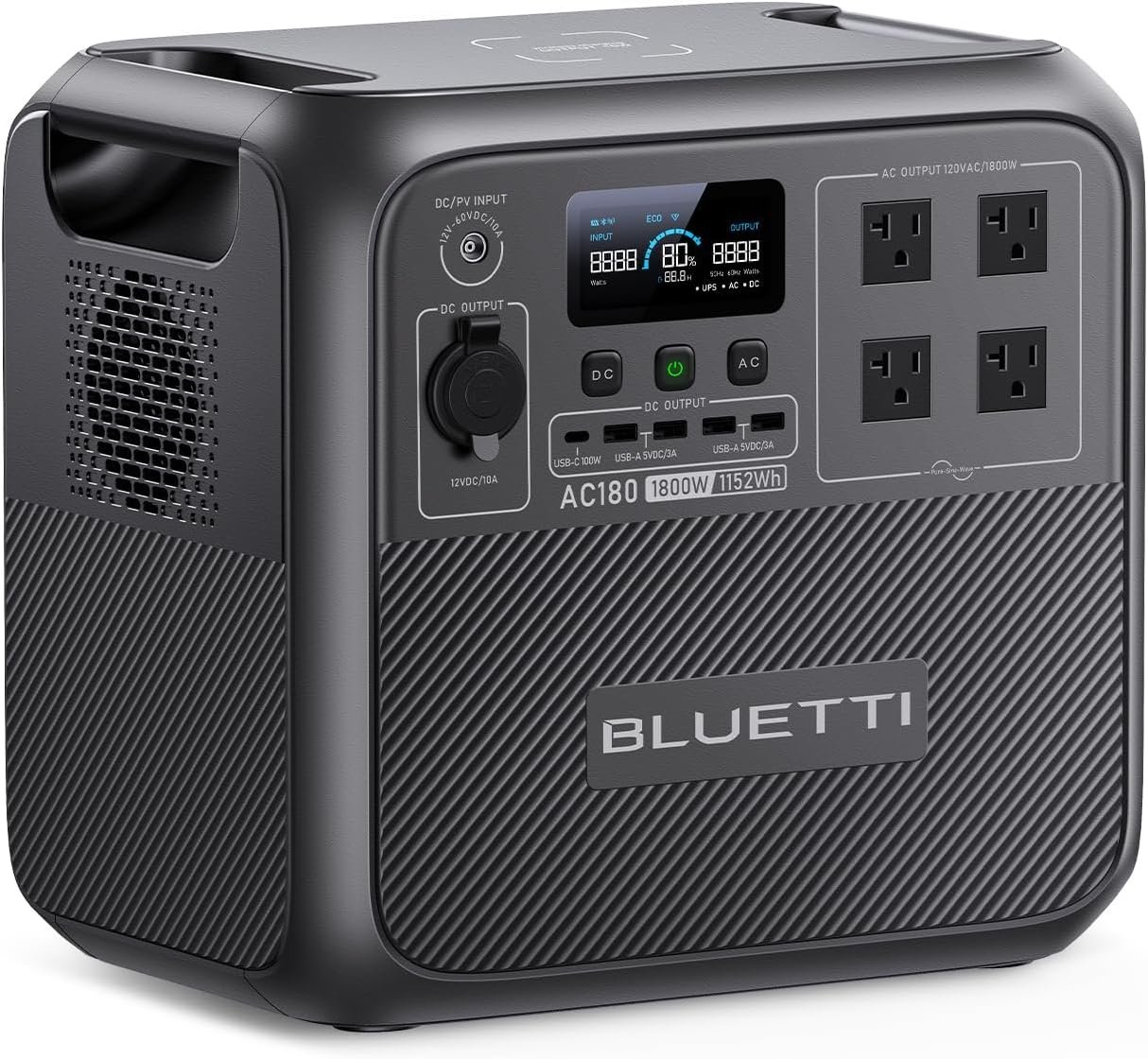
At 1,152Wh this holds the most energy here, and its 1,800W inverter is the only one that will run a typical kettle, a microwave or a hair dryer without tripping. BLUETTI also offers a boost to 2,700W through its app, which handles the brief surge that motors draw on startup.
Charging is the other standout. BLUETTI states a full charge in one hour at 1,440W AC input, which changes how you use the thing: you can top it up during a lull in a power cut rather than planning around an overnight charge. There are eight outlets, which is more than most people will use but avoids the adapter juggling that smaller units force.
What it does well
- 1,152Wh, the largest capacity in this group.
- 1,800W continuous, enough for kettles and microwaves.
- Full charge in one hour at 1,440W input.
- Eight outlets and app control.
What to know before buying
- Heavy enough that portable means car boot, not backpack.
- App boost to 2,700W requires a phone to hand.
2. Jackery Explorer 1000 v2: The Same Class, With a 3,000W Surge Headroom
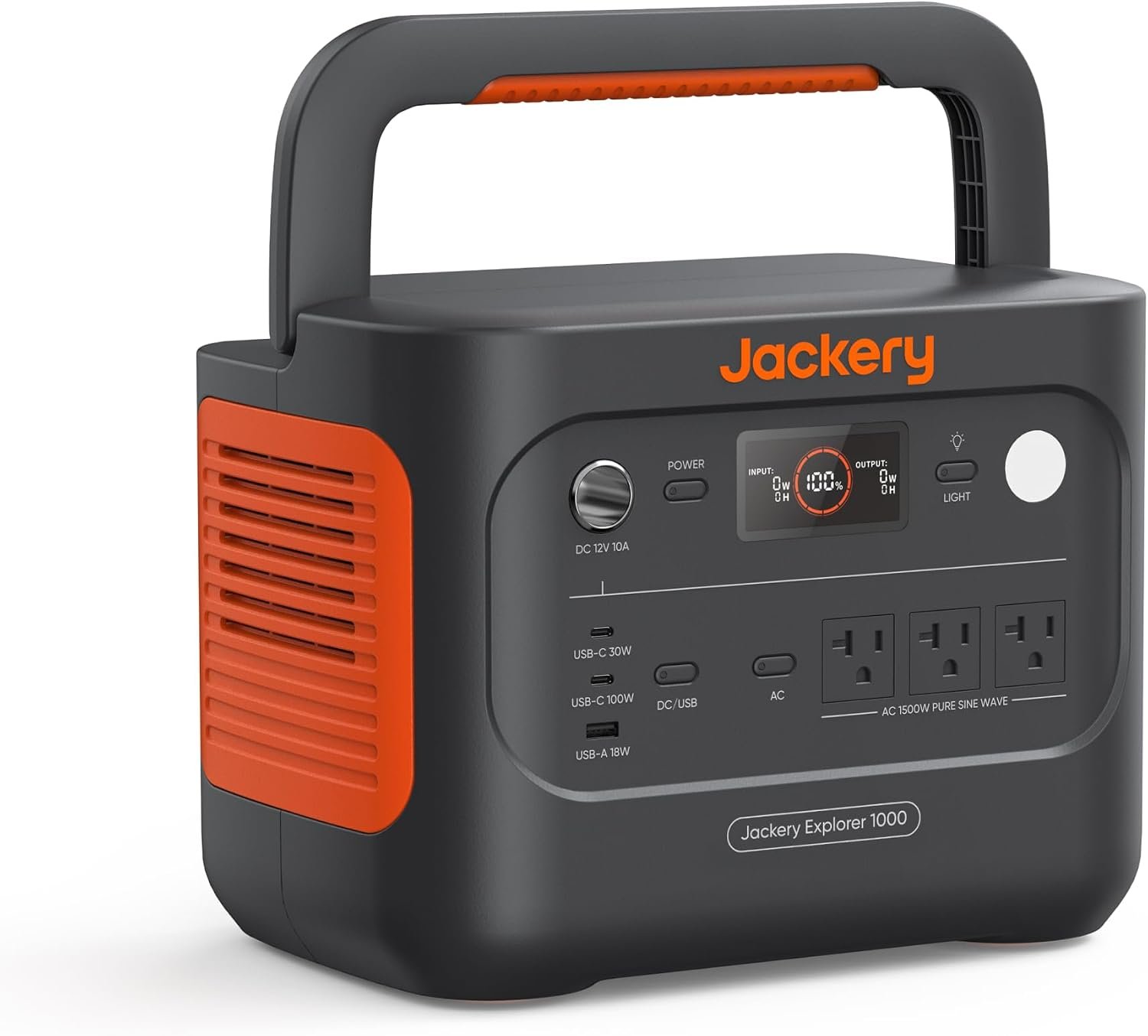
Jackery is the name most people reach for first, and the 1000 v2 is its mainstream flagship: 1,070Wh of LiFePO4 capacity with a 1,500W inverter and a 3,000W surge peak.
That surge figure is the one to note. Fridges, pumps and power tools draw several times their running wattage for a fraction of a second when the motor starts, and a station that cannot supply it will shut down even though the running load is well within range. A 3,000W peak against a 1,500W continuous rating is generous headroom. Jackery quotes a zero to one hundred percent charge in one hour with emergency charging enabled through its app.
What it does well
- 3,000W surge peak handles motor startup loads.
- 1,070Wh with a 1,500W continuous inverter.
- One hour fast charge via the app.
- The most widely supported brand for accessories and panels.
What to know before buying
- Slightly less capacity than the BLUETTI for a similar footprint.
- Fast charging is app-gated rather than a physical switch.
3. Anker SOLIX C300: The Best-Connected Small Unit
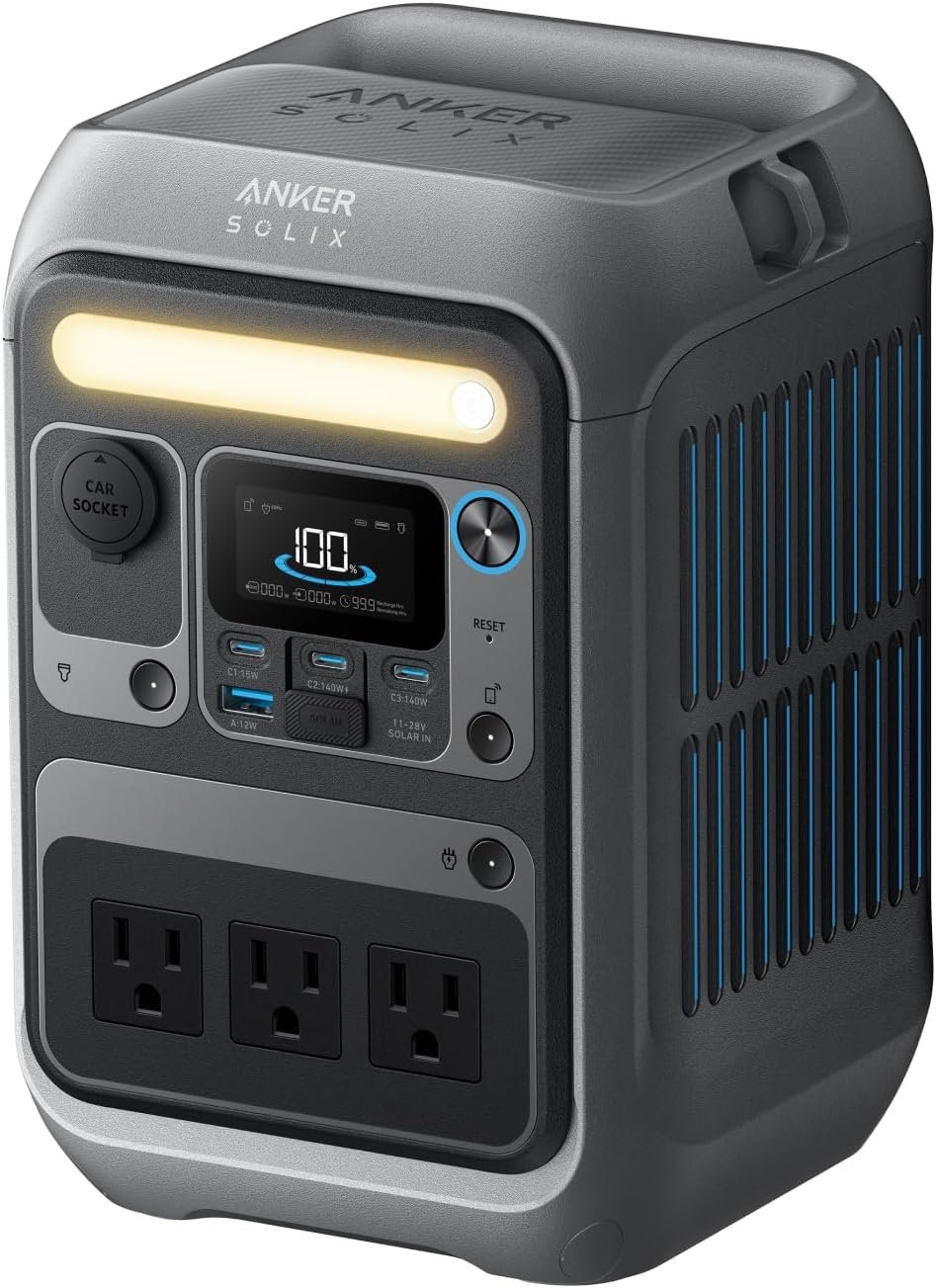
At 288Wh and 300W this is a camping and desk-power unit rather than a house backup, and Anker has aimed it squarely at people carrying laptops, cameras and drones rather than running appliances.
The port selection is why it stands out in a crowded segment: eight outlets in total, with three AC sockets sharing 300W, a 120W car socket and two USB-C ports that do 140W two-way. That 140W figure matters, because it means the C300 charges itself quickly over USB-C and can also fast-charge a modern laptop without going through the inverter, which wastes less energy than converting to AC and back.
What it does well
- 140W two-way USB-C, so it charges fast and charges laptops fast.
- Eight ports including three AC and a car socket.
- LiFePO4 chemistry in a genuinely portable size.
- Anker’s support and warranty network is among the best here.
What to know before buying
- 300W ceiling rules out kettles, heaters and hair dryers.
- 288Wh is roughly one laptop-week, not a house backup.
4. Jackery Explorer 300: The Lightest of the 300W Class
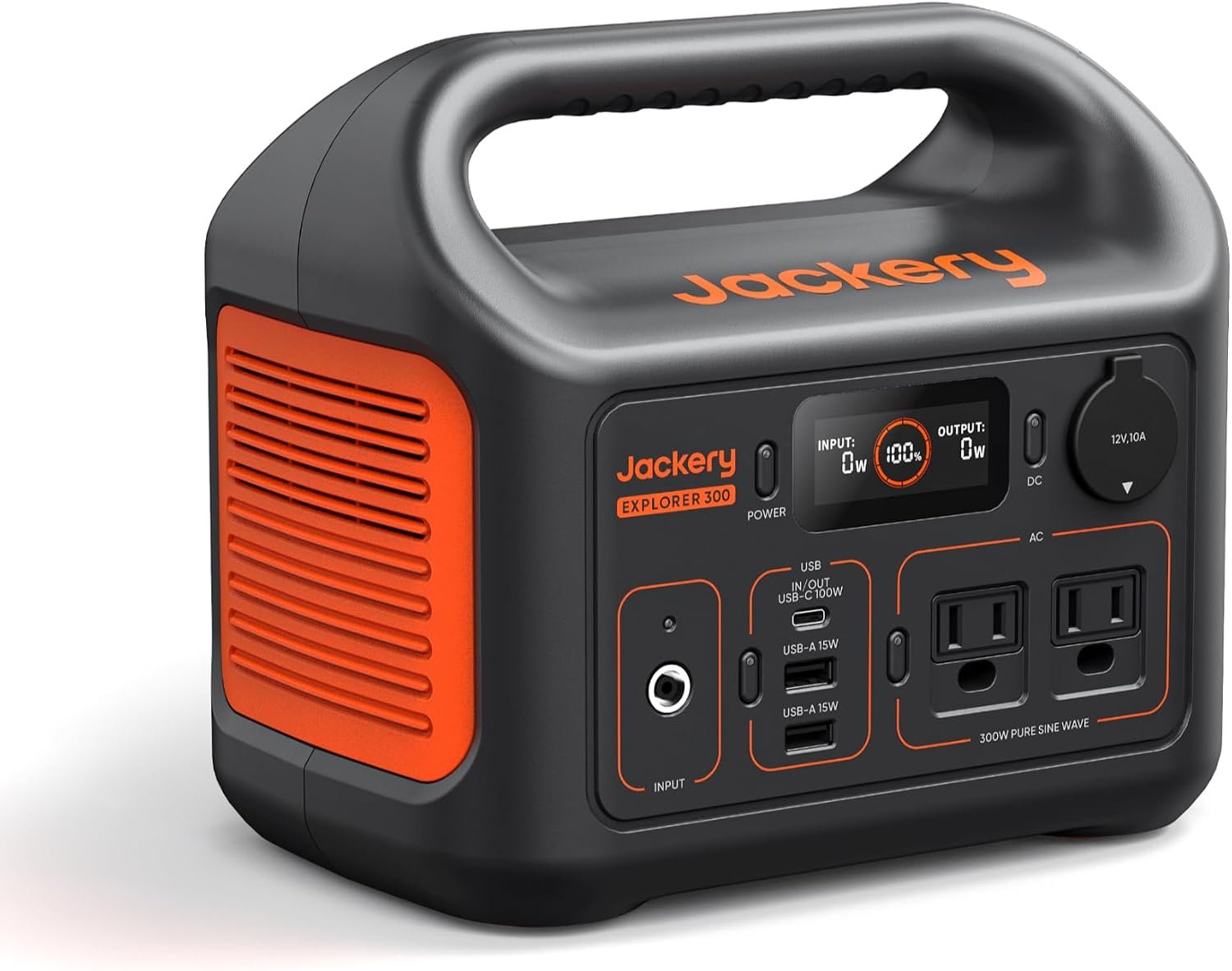
Jackery states this weighs 7.5 lbs and is 17% lighter than the industry average for its capacity, which is the entire argument for it over the other 300W units here. At 292Wh it holds marginally more than the Anker and the BLUETTI Elite in the same class.
Ports cover six devices: two AC outlets, a 100W USB-C PD port, two USB-A and a 120W car port, with a 300W rated output and 600W peak surge. It is the straightforward choice if you are carrying it any distance, because the weight difference over a day is more noticeable than a few watt-hours of capacity.
What it does well
- 7.5 lbs, the lightest unit in the 300W class here.
- 292Wh, marginally the largest of the compact group.
- 100W USB-C PD plus a 120W car port.
- Integrated handle designed for carrying.
What to know before buying
- 100W USB-C is slower than the Anker’s 140W.
- 300W output, so appliances are out of scope.
5. BLUETTI Elite 30 V2: Twice the Output of Its Size Class
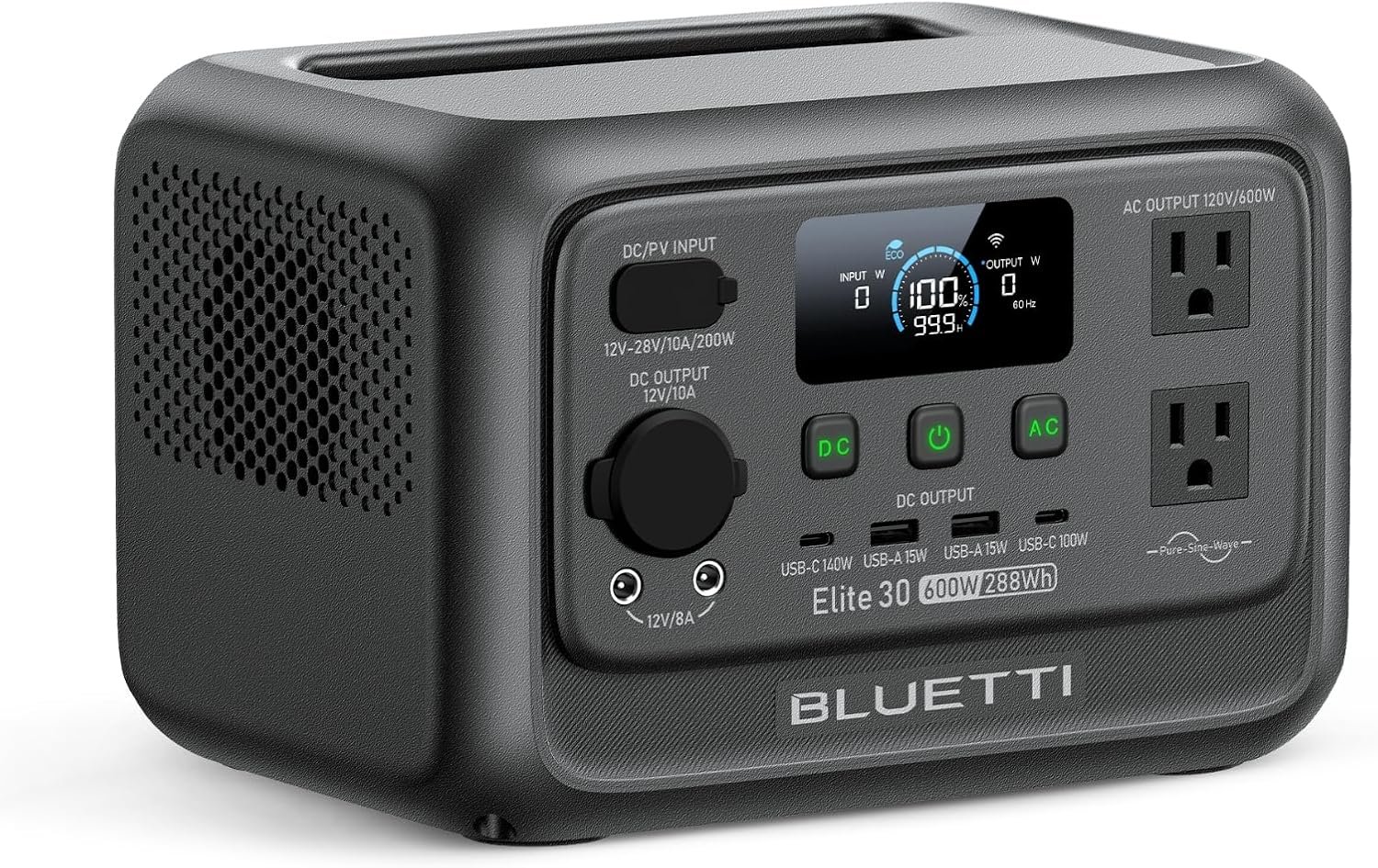
This is the interesting one in the compact group. Same 288Wh capacity as the Anker, but 600W of continuous output rather than 300W, which BLUETTI points out directly is twice what comparable units manage. Power Lifting Mode raises the ceiling to 1,500W for resistive loads.
The practical consequence is that a 288Wh battery can now run things a 300W inverter simply refuses: a small heater, a coffee machine, some power tools. Runtime will be short because the battery is small, but short runtime on a device that works beats any runtime on a device that will not start. At 9.4 lbs it is heavier than the Jackery 300 but still carryable.
What it does well
- 600W continuous, double the usual for 288Wh.
- Power Lifting Mode reaches 1,500W for resistive loads.
- LFP chemistry at 9.4 lbs.
- Runs appliances the other compact units cannot start.
What to know before buying
- 288Wh drains fast at 600W, roughly half an hour at full load.
- Heavier than the Jackery 300 for the same capacity.
6. ALLWEI 300W: Pure Sine Wave at the Budget End
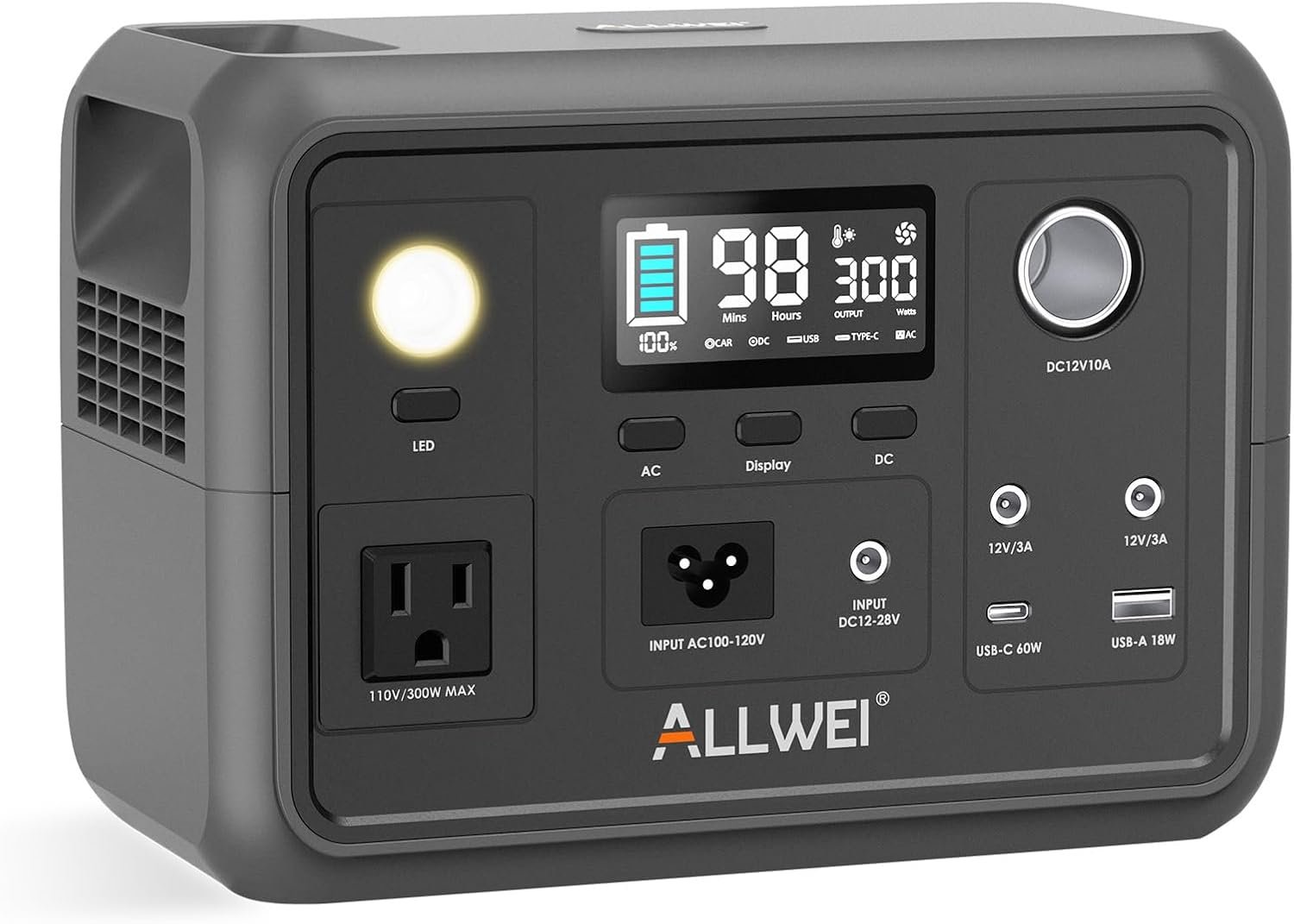
The specification cheap power stations quietly omit is the inverter waveform, and ALLWEI states this one is pure sine wave. That matters more than the price difference suggests.
A modified sine wave inverter approximates mains AC with a blocky stepped waveform. Simple resistive loads do not care, but anything with a motor, a transformer or sensitive electronics can run hot, buzz audibly or refuse to work: CPAP machines are the usual example, along with some laptop chargers and medical equipment. At 256Wh and 300W with LiFePO4 cells, this is the budget unit that does not cut the corner that actually matters.
What it does well
- Pure sine wave output, stated explicitly.
- LiFePO4 chemistry rather than cheaper NMC.
- 256Wh and 300W at the lowest price in the group.
- Straightforward, no app dependency.
What to know before buying
- Solar panel is sold separately despite the solar generator label.
- 256Wh is the smallest of the practical units here.
7. MARBERO 88Wh: The One You Can Take on a Plane
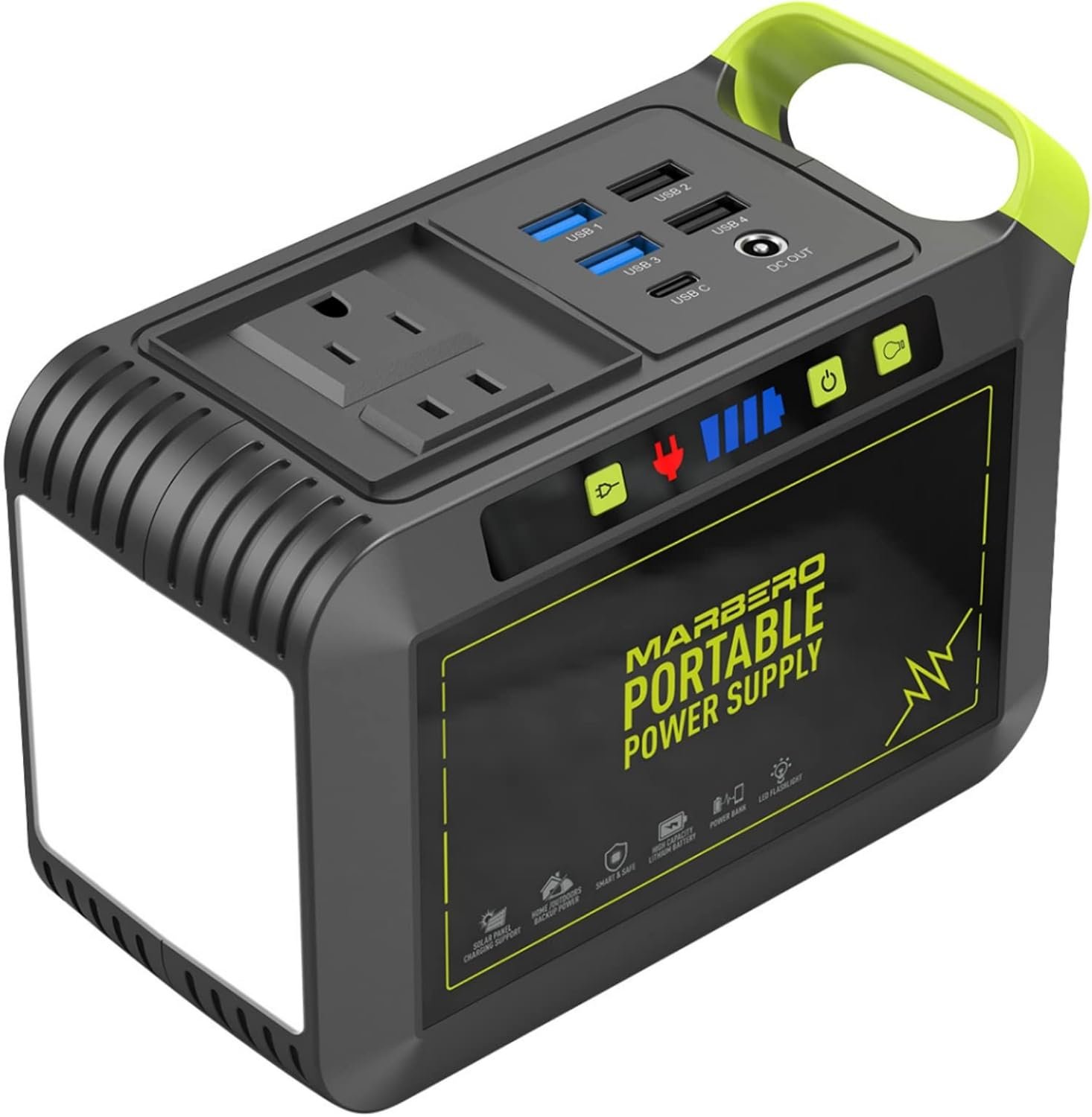
At 88Wh this is barely a power station and that is the point. MARBERO describes it as about the size of a basic DSLR at 3.2 lbs, with a 120W surge rating and a 24,000mAh cell.
The number to notice is 88Wh, because the FAA limits lithium ion batteries to a rating of 100 watt hours per battery in carry-on baggage, with larger spares needing airline approval. That single fact makes it a different product from everything else here: the larger units cannot fly at all. It charges from zero to 80% in two hours and can charge other devices while charging itself. Treat it as a very large power bank with an AC socket attached rather than a backup supply.
What it does well
- 88Wh sits under the usual 100Wh airline carry-on limit.
- 3.2 lbs, roughly DSLR-sized.
- 0 to 80% in about two hours.
- Pass-through charging while plugged in.
What to know before buying
- 120W surge is enough for laptops and phones only.
- 88Wh is a fraction of the other units here.
- Confirm your airline’s battery policy before travelling.
Watt-Hours Versus Watts, and How to Size One
Watt-hours are the tank. Watts are the tap. A 1,000Wh station stores a thousand watt-hours of energy. A 1,500W inverter can deliver 1,500 watts at any instant. Both limits apply independently, and running out of either stops the device.
The arithmetic is simple. Divide capacity by the device’s draw. A 60W laptop on a 288Wh station runs for roughly four hours before conversion losses, so call it three and a half. A 1,200W kettle on a 1,152Wh BLUETTI runs for about 55 minutes in theory and will boil several times in practice, because it only draws power while heating.
Surge is the hidden third number. Anything with a compressor or motor, meaning fridges, pumps and most power tools, briefly demands several times its running wattage. Check the surge rating, not just the continuous one, or the station will cut out on startup.
Budget 10 to 15% for conversion loss. Turning DC battery power into AC mains is not free. Published runtime estimates rarely subtract it.
Why LiFePO4 Appears on Almost Every Listing Here
Six of the seven state LiFePO4 or LFP chemistry, and it has become the default for good reason. BLUETTI and the rest have converged on it across the whole category. Lithium iron phosphate cells tolerate far more charge cycles than the NMC lithium chemistry used in phones and older power stations, and they are substantially more thermally stable, which is the polite way of saying they are much less inclined to catch fire when damaged or overcharged.
The trade is energy density. An LFP battery is heavier and bulkier than an NMC battery of the same capacity, which is why phones still use NMC and why these boxes are heavy. For something that sits in a cupboard for months and then has to work during a power cut, cycle life and stability are worth far more than saving a pound of weight.
If a listing does not state its chemistry, assume NMC and price it accordingly. The gap in usable lifespan is measured in thousands of cycles.
Which Power Station to Buy
For home backup, the BLUETTI AC180 is the pick. It has the largest battery here at 1,152Wh, the only inverter that will run a kettle or a microwave at 1,800W, and a one-hour recharge that makes it practical during an intermittent outage rather than after one.
Take the Jackery Explorer 1000 v2 instead if you expect to run something with a motor, because the 3,000W surge headroom is the most generous in this group and startup surge is what actually trips these units. For camping and desk use, the Anker SOLIX C300 has the best port selection and 140W two-way USB-C, while the Jackery Explorer 300 is the one to carry any distance at 7.5 lbs. The BLUETTI Elite 30 V2 is the compact unit that will actually start appliances thanks to its 600W output. The ALLWEI is the budget option that still specifies pure sine wave, and the MARBERO is the only one here you can take on a plane.
Whatever you buy, check the continuous output against the wattage label of the single hungriest thing you intend to plug in, before you consider capacity at all. If it is a laptop and a phone, our guide to cloud storage and file sharing covers keeping the work on them safe, and the privacy guide covers the rest of the travel kit.
Frequently Asked Questions
What size portable power station do I need?
Work from the hungriest device, not the total. Phones and laptops need 200 to 300Wh and 300W of output. A fridge during an outage needs 1,000Wh or more and at least 1,500W with a high surge rating. Kettles, heaters and hair dryers need 1,500W continuous minimum regardless of capacity.
What is the difference between watt-hours and watts?
Watt-hours measure stored energy, so they determine how long something runs. Watts measure instantaneous output, so they determine whether it runs at all. A large battery with a small inverter cannot power a kettle for even a moment.
Is LiFePO4 better than regular lithium?
For this application, yes. LiFePO4 cells last thousands more charge cycles and are considerably more thermally stable than the NMC lithium used in phones. They are heavier for the same capacity, which matters little in a device you carry occasionally and store often.
Can I take a power station on a plane?
Only very small ones. Airlines generally restrict lithium batteries in carry-on baggage to 100Wh without prior approval, which rules out every unit here except the 88Wh MARBERO. Check your specific airline before travelling.